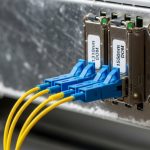
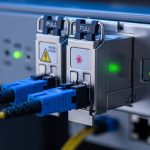
If you manage industrial networks, a wrong optics choice can turn routine commissioning into repeated downtime. This article helps engineers and field technicians select the right Moxa switch fiber SFP modules by mapping real-world constraints—distance, temperature, connector type, and optical budget—into a practical decision workflow. You will also get troubleshooting patterns tied to common failure modes observed during plant rollouts and rail substations.
Top 7 SFP fiber choices that pair well with Moxa industrial switches
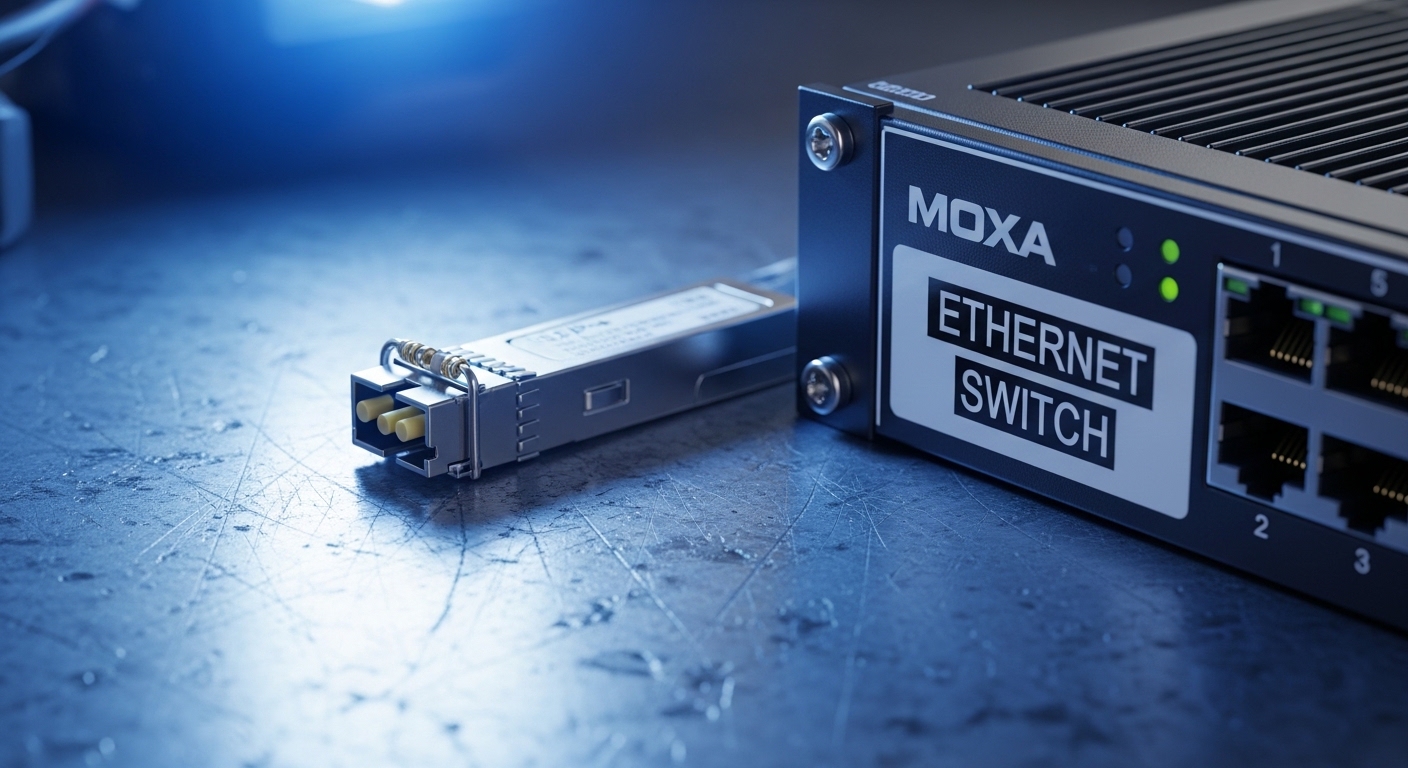
Industrial Ethernet switches from Moxa are commonly deployed with SFP ports to keep wiring flexible across zones and distances. In practice, most field failures trace back to selecting the wrong reach class, wavelength band, or connector standard rather than an SFP “defect.” Start by classifying your link: short-reach multimode inside a control cabinet, or long-reach single-mode between buildings.
10GBASE-SR over multimode (OM3/OM4) for short indoor spans
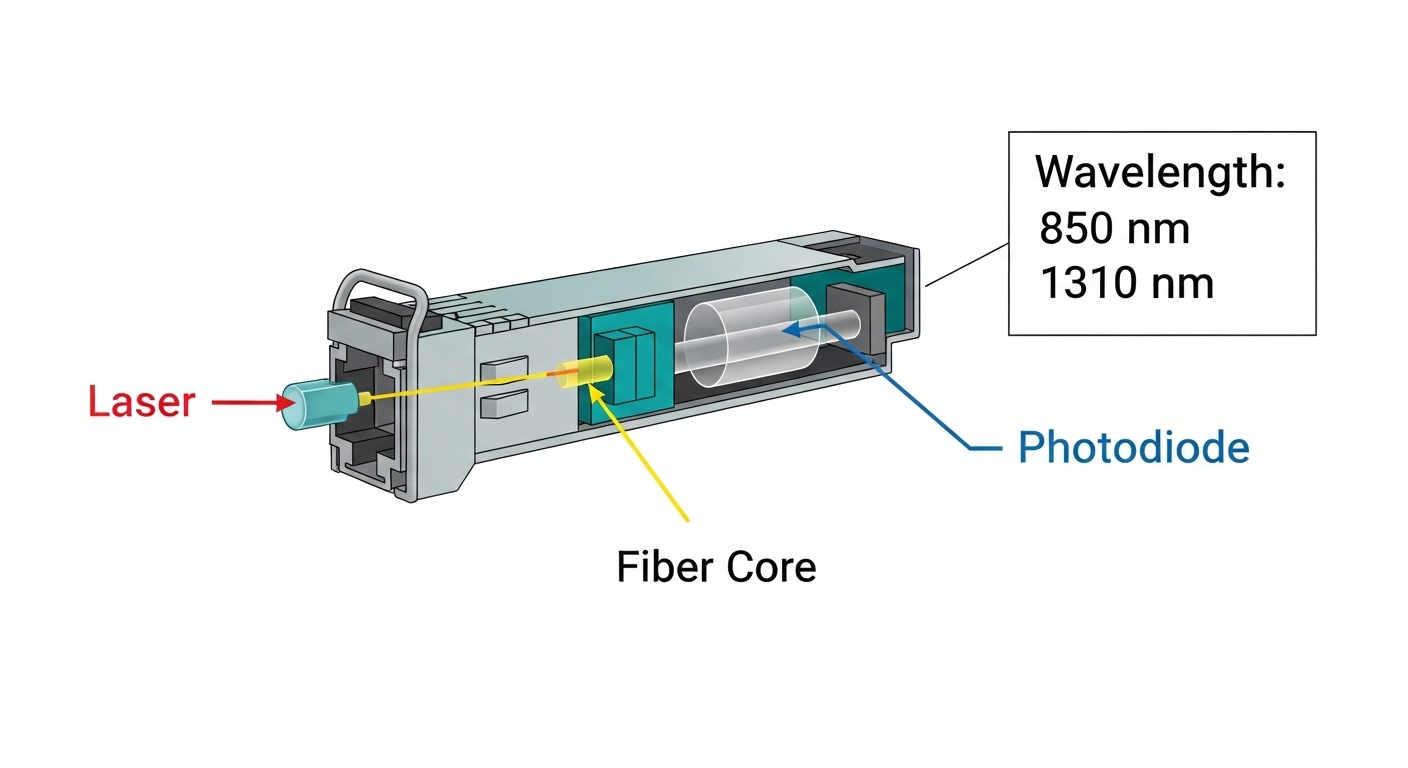
For many factories, 10GBASE-SR is the fastest commissioning path because it uses 850 nm optics and multimode fiber. Typical reach targets are 300 m on OM3 and 400 m on OM4 under realistic link budgets when you account for connector losses and patch cords. This option is usually chosen for ToR-to-aggregation segments where patching is frequent.
- Best-fit scenario: Control rooms with structured cabling and OM4 backbone
- Pros: Lower cost per port, easier handling
- Cons: Distance limits; sensitive to poor fiber terminations
10GBASE-LR over single-mode (1310 nm) for campus links
When you need building-to-building connectivity, 10GBASE-LR at 1310 nm is a common default. Typical specifications target 10 km reach on single-mode fiber, assuming a compliant optical budget and correct patch loss accounting. In ISO 9001 terms, you treat this as a controlled “standard link class” and document acceptance criteria for attenuation and end-to-end loss.
- Best-fit scenario: Between two industrial buildings connected by single-mode trunk
- Pros: Longer reach, more forgiving of multimode modal issues
- Cons: Requires single-mode infrastructure; LC cleanliness still critical
1000BASE-SX over multimode for legacy 1G industrial ports
Some Moxa deployments include mixed 1G/10G segments, especially when retrofitting brownfield plants. 1000BASE-SX uses 850 nm optics and multimode fiber, typically supporting 550 m on OM2 and 300 m on OM3 depending on the exact transceiver class. It is often the lowest-risk choice for speed-matching older access switches and managed media converters.
- Best-fit scenario: Connecting legacy cameras, sensors, or PLC gateways at 1G
- Pros: Compatibility with older multimode cabling
- Cons: Limited by multimode attenuation and patch cord quality
1000BASE-LX over single-mode (1310 nm) for moderate reach
For single-mode runs where you do not need 10G, 1000BASE-LX at 1310 nm offers a pragmatic middle ground. Many modules target 5 km to 10 km depending on vendor and fiber grade. This is frequently used for line-of-sight links across substations or between remote control cabinets.
- Best-fit scenario: Remote RTU site backhaul using existing single-mode
- Pros: Stable optics; good for constrained cabinet footprints
- Cons: Must validate connector end-face condition and loss
BiDi (bidirectional) single-fiber optics for tight duct space
When conduit capacity is limited, BiDi optics can reduce fiber strand count by using different wavelengths for transmit and receive on one fiber. In field terms, this can cut installation labor where pulling multiple fibers is costly. However, BiDi requires strict wavelength pairing and careful labeling, otherwise you can create a “silent” link failure that looks like a dead port.
- Best-fit scenario: Retrofit where only one spare fiber is available in a duct
- Pros: Saves fiber strands and reduces civil work
- Cons: Higher risk of wrong pairing; cleaning and labeling must be disciplined
CWDM or DWDM SFP variants for multi-tenant or wavelength-routed designs
In some industrial networks, especially where multiple clients share a backbone, wavelength multiplexing can be used to isolate traffic streams. CWDM/DWDM SFPs are not universal, and compatibility depends on the Moxa switch optical budget, wavelength plan, and the presence of external mux/demux equipment. Treat these as “system-level optics,” not a drop-in replacement.
- Best-fit scenario: Shared single-mode backbone with wavelength plan governance
- Pros: Supports many logical links per fiber
- Cons: Requires strict engineering controls and acceptance testing
Industrial-grade SFPs with extended temperature and enhanced diagnostics
Even when the wavelength and reach match, industrial environments can exceed the operating envelope of standard transceivers. Moxa switch deployments often see vibration, dust, and cabinet temperature swings; therefore, you should prioritize SFPs rated for wide temperature ranges and with robust DOM (digital optical monitoring) support. In reliability terms, you reduce infant mortality risk by selecting modules with proven thermal stability and stable output power over aging.
- Best-fit scenario: Hot cabinets near drives, compressors, or outdoor enclosures
- Pros: Better environmental tolerance; faster root-cause using DOM
- Cons: Higher unit cost than standard commercial optics
Specs that matter: wavelength, reach, power, connector, and temperature
Engineers often start with “SR vs LR,” but field success depends on matching the optical budget end-to-end. Your acceptance test should include fiber attenuation, patch cord length, and connector loss; then you verify the SFP’s transmit power and receiver sensitivity. For Ethernet link standards, consult the underlying physical layer requirements aligned with IEEE Ethernet specifications. IEEE 802.3 Ethernet Standard
| Item | Typical SFP class | Wavelength | Nominal reach | Fiber type | Connector | Operating temperature |
|---|---|---|---|---|---|---|
| Short reach 10G | 10GBASE-SR SFP+ | 850 nm | 300 m (OM3) / 400 m (OM4) | OM3/OM4 multimode | LC | Industrial modules: often -40 to +85 C |
| Long reach 10G | 10GBASE-LR SFP+ | 1310 nm | 10 km | Single-mode (9/125) | LC | Industrial modules: often -40 to +85 C |
| Legacy 1G short reach | 1000BASE-SX | 850 nm | 550 m (OM2) / 300 m (OM3) | OM2/OM3 multimode | LC or SC (varies) | Commercial: often -5 to +70 C; industrial models wider |
| Legacy 1G moderate reach | 1000BASE-LX | 1310 nm | 5 km to 10 km (vendor-dependent) | Single-mode (9/125) | LC | Industrial modules: often -40 to +85 C |
When you validate a link, compare required optical budget against actual installed losses. In my deployments, a typical “gotcha” is patch cord length: a connectorized LC trunk plus two patch cords can consume several dB quickly, even before you measure the cable. If DOM is available, log TX optical power and RX power at commissioning, then set alert thresholds for drift.
Decision checklist: how to pick the right Moxa switch fiber SFP
Use this ordered checklist during procurement and pre-install verification. It is designed to reduce rework and align with reliability practices used in regulated industrial environments, where change control and traceability matter.
- Distance class and fiber grade: Confirm OM2/OM3/OM4 for SR links, or 9/125 single-mode for LR/LX. Verify measured attenuation with an OTDR or certified fiber tester.
- Wavelength and transceiver type: Match 850 nm vs 1310 nm, and avoid mixing SX with LX or SR with LR.
- Connector standard: Ensure the SFP connector matches the patch system (commonly LC). Plan for adapters only if you can verify insertion loss and cleanliness.
- Switch compatibility and DOM behavior: Check Moxa compatibility guidance for SFP/optics support and whether DOM is exposed via the switch management interface.
- Operating temperature and enclosure conditions: Validate the SFP rating against cabinet ambient, sun load, and worst-case shutdown-to-startup cycling.
- Optical budget margin: Compare SFP transmit power and receiver sensitivity to installed loss, including connectors, splices, and patch cords.
- Vendor lock-in risk and spares strategy: Prefer modules with stable part numbering and documented standards. Maintain at least one known-good spare per site or per critical ring.
For physical layer test approaches and optical measurement concepts, the Fiber Optic Association provides practical guidance on loss budgeting and connector handling. Fiber Optic Association
Pro Tip: In the field, “link up” is not the same as “link healthy.” If you can read DOM, record TX/RX power at commissioning and then during routine maintenance; a gradual RX power decline often predicts a connector contamination or fiber micro-bend long before the port drops.
Common mistakes and troubleshooting patterns for Moxa switch fiber
Below are failure modes I have seen repeatedly during industrial cutovers. The goal is to shorten mean time to recovery by linking symptoms to root causes and then to specific corrective actions.
Selecting the wrong reach class for installed fiber
Root cause: Choosing 10GBASE-SR when the installed multimode run effectively behaves like a higher-loss link due to long patch cords or poor terminations. The port may come up intermittently or fail under temperature change.
Solution: Measure end-to-end attenuation and connector loss, then compare to SFP optical budget. If you cannot guarantee multimode cleanliness and loss, move to single-mode LR optics with verified budget margin.
Connector contamination and inadequate cleaning SOP
Root cause: LC end-faces are contaminated by dust or fiber debris, causing excess insertion loss. This can be worse after repeated insertions during maintenance activities.
Solution: Implement a cleaning SOP: inspect with a scope, clean with approved wipes and alcohol, then re-check. For recurring issues, replace patch cords instead of repeatedly cleaning the same worn connector face.
BiDi or wavelength-pair mismatch on single-fiber links
Root cause: Using a BiDi SFP with an incompatible wavelength pair, or mixing TX/RX roles. The result can be a “no light” condition or a low-power link that fails link training.
Solution: Verify the exact wavelength pair labeling on both ends and ensure both sides use the correct complementary transceivers. Label fibers and maintain a wavelength plan document in your change management system.
Temperature-rated optics installed in overheated cabinets
Root cause: Using commercial transceivers rated for limited ambient conditions in cabinets near heat sources. Laser output characteristics can drift, and error rates increase.
Solution: Confirm cabinet ambient and worst-case temperature. Replace with industrial-grade SFPs rated for the required range, and improve airflow or thermal management if margins are insufficient.

Cost and ROI: what to budget for SFP modules and lifecycle reliability
Pricing varies by speed, reach, and temperature rating. As a realistic rule of thumb in many procurement cycles, commercial SFP modules may cost less upfront, while industrial-rated options often cost more but reduce repeat failures during harsh duty cycles. In my experience, the true cost driver is not only the unit price; it is installation labor, truck rolls, and downtime associated with repeated optics swaps.
For a rough TCO view: if a third-party module fails early and triggers two site visits plus a few hours of downtime, the labor and risk often exceed the savings versus an OEM or a validated third-party module. For mission-critical ring topologies, maintaining spares can reduce MTTR, and DOM-capable modules can improve predictive maintenance by giving you measurable drift signals.
When evaluating vendors, ask for test evidence such as compliance to optical performance requirements and stable part numbering. If you standardize on a small set of validated SFP models per link type (SR, LR, SX, LX), you also reduce operator error during maintenance.
standard fiber optic loss budgeting
Summary ranking: best SFP fiber picks for typical Moxa switch fiber links
Use this ranking table as a practical starting point. Your final selection should still be driven by measured optical loss, temperature conditions, and Moxa port/DOM compatibility.
| Rank | SFP type | Primary strength | Best-fit distance | Main risk |
|---|---|---|---|---|
| 1 | 10GBASE-SR SFP+ | Low-cost short reach with common multimode | Up to 300 to 400 m | Multimode loss and termination quality |
| 2 | 10GBASE-LR SFP+ | High reach margin on single-mode | Up to 10 km | Single-mode infrastructure mismatch |
| 3 | 1000BASE-LX | Moderate reach for legacy 1G | 5 to 10 km | Incorrect single-mode cable grade |
| 4 | 1000BASE-SX | Best reuse for existing multimode 1G | 300 to 550 m | Multimode limitations and patch cord buildup |
| 5 | BiDi SFP | Single-fiber retrofit when ducts are constrained | Varies by module class | Wavelength pairing mistakes |
| 6 | CWDM/DWDM SFP | High density shared backbone designs | System-level | System compatibility and mux/demux alignment |
| 7 | Industrial temperature-optimized SFP | Reliability under harsh cabinet conditions | Depends on optics class | Higher upfront unit cost |
Next step: align your optics selection with your fiber measurements and your switch management strategy. Start with the internal topic standard fiber optic loss budgeting and then confirm your planned module part numbers against Moxa port requirements.
FAQ
Which SFP fiber types are most common for Moxa industrial Ethernet switches?
Most deployments use SR on multimode for short spans and LR on single-mode for longer building-to-building links. For legacy 1G ports, SX and LX are common. The exact choice depends on your existing fiber grade, distance, and cabinet temperature.
Can I use third-party SFP modules with Moxa switch fiber ports?
Often yes, but you must validate compatibility and DOM behavior for your exact switch model and firmware. In industrial environments, I recommend using a small set of pre-approved optics models and keeping a known-good spare for each link type.
How do I verify link budget before installation?
Measure end-to-end attenuation with an OTDR or certified tester, then sum connector and patch losses. Compare that installed loss to the SFP’s specified receiver sensitivity and transmit power, leaving margin for aging and maintenance. If DOM is supported, log TX and RX power at commissioning.
What causes intermittent link drops even when the port initially comes up?
Common causes include insufficient optical margin, connector contamination that worsens under vibration, or a temperature-driven drift in output power. BiDi mismatch can also produce intermittent training. Clean and inspect connectors, re-check fiber loss, and review DOM trends if available.
What temperature rating should I require for harsh industrial cabinets?
At minimum, the SFP operating range should cover your worst-case cabinet ambient plus any localized heating near the switch. Many industrial-grade modules target ranges such as -40 to +85 C, but you must confirm the rating on the specific datasheet and compare to your measured conditions.
Should I prioritize DOM support when selecting Moxa switch fiber SFPs?
Yes, especially for high-availability rings where you want measurable signals before failures. DOM allows trend monitoring of TX power and RX receive power, enabling earlier corrective actions like connector re-cleaning or patch cord replacement.
Author bio: I am a reliability-focused field engineer who designs and validates industrial Ethernet links using measurable optical budgets, DOM telemetry, and environmental test planning. I have supported commissioning and MTBF improvement efforts across plant networks, including optics qualification and failure-mode troubleshooting.