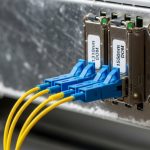
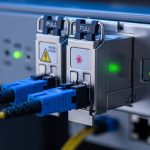
If you manage industrial networks, you have likely seen the same failure pattern: the switch boots, the link stays down, and the maintenance window evaporates. This article helps network engineers and IT directors plan and govern HARTING SFP deployments for ha-VIS and Industrial IP switches with an emphasis on interoperability, optics budget, and operational risk. You will get practical selection criteria, a specs comparison table, and troubleshooting steps that match real field conditions.
How HARTING SFP modules integrate with ha-VIS and Industrial IP switch ports

Industrial IP switches used in plants, depots, and smart infrastructure often combine hardened switching silicon with strict power, thermal, and EMI expectations. In that environment, an SFP is not just a “plug and play” optics item; it is a governed hardware component that must match the switch’s transceiver support matrix, DOM handling, and link budget assumptions. For ha-VIS style deployments, the practical goal is consistent link establishment under temperature swings, vibration, and field-grade cabling variability.
What the switch expects from the SFP
Most managed industrial switches read Digital Optical Monitoring (DOM) values over the I2C management interface inside the SFP. Engineers typically rely on DOM metrics such as received optical power (Rx power), laser bias current, and transceiver temperature to detect aging optics and prevent nuisance outages. For standards alignment, Ethernet optics are defined by IEEE 802.3 specifications for electrical and optical characteristics, especially for reach and receiver sensitivity. IEEE 802.3 Ethernet Standard
Why “works on the bench” can still fail in the field
On a bench, you may test with a short patch cord and stable room temperature. In a plant, you might run multi-segment fiber, connectors that were re-polished under time pressure, or patch panels with higher insertion loss than design assumed. The result is often a marginal optical power budget that crosses the receiver sensitivity threshold at cold start or after dust accumulation. Governance matters because it forces you to define acceptable DOM thresholds, fiber grading, and change control.
Key technical specs to compare before you buy HARTING SFP
When you evaluate a HARTING SFP for industrial IP switching, you should compare the optics and electrical envelope, not only the fiber type and nominal reach. The most common procurement mistake is buying the right “speed class” but missing wavelength, connector standard, or temperature class. Below is a practical comparison template engineers use for typical 1G and 10G SFP optics classes seen in industrial designs. Note that exact module availability and part numbers depend on switch firmware and transceiver qualification.
| Spec item | 10G SR (850 nm multimode) | 10G LR (1310 nm single-mode) | 1G SX (850 nm multimode) |
|---|---|---|---|
| Target data rate | 10.3125 Gbps | 9.95 to 10.3125 Gbps | 1.25 Gbps |
| Wavelength | 850 nm | 1310 nm | 850 nm |
| Typical reach (realistic planning) | Up to 300 m OM3 / OM4 often higher | Up to 10 km over single-mode | Up to 550 m OM2 / OM3 higher |
| Fiber type | OM3/OM4 multimode (often) | OS2 single-mode | OM2/OM3 multimode |
| Connector | LC duplex typical | LC duplex typical | LC duplex typical |
| Optical power concept | Short-reach budget, higher Rx margin needed for dirty connectors | Long-reach budget, careful splice and attenuation control | Lower rate, still sensitive to patch panel loss |
| Operating temperature (planning) | Industrial often -40 C to 85 C | Industrial often -40 C to 85 C | Industrial often -40 C to 85 C |
| DOM support | Common: yes (Rx power, Tx bias, temperature) | Common: yes | Common: yes |
DOM and alarm behavior: the silent governance lever
In managed industrial environments, you want alarms that are actionable, not noisy. Define what constitutes “degrading optics” by setting thresholds on DOM values. For example, you can alert when Rx optical power drifts downward by a defined delta versus baseline taken after commissioning. If your switch firmware supports it, tie alerts to maintenance tickets and require a fiber cleaning and inspection cycle before replacement.
Selection criteria for HARTING SFP in industrial switch projects
Procurement and architecture teams often separate “optics selection” from “switch qualification.” For HARTING SFP in ha-VIS and Industrial IP switch projects, treat optics like a governed subsystem: you validate compatibility, define acceptable operating margins, and record the module identity in your configuration management database.
- Distance and link budget: compute end-to-end loss using fiber attenuation, connector loss, splice loss, and margin for aging and cleaning cycles.
- Switch compatibility matrix: confirm the switch model and firmware version supports the specific SFP class and DOM behavior.
- Wavelength and fiber type alignment: SR and SX modules at 850 nm require correct multimode grading; LR uses 1310 nm on single-mode.
- Connector standard and field tolerances: LC duplex is common, but verify polarity and patch panel compatibility (especially for duplex fiber).
- DOM support and monitoring hooks: ensure the switch reads DOM reliably and that your NMS can store and trend Rx power and temperature.
- Operating temperature and derating: confirm industrial temperature rating and validate airflow or enclosure thermal design so the module stays within spec.
- Vendor lock-in risk and spares strategy: decide whether you will standardize on OEM-branded modules or use qualified third-party optics with documented compatibility.
Governance pattern that reduces outage time
In a real rollout, we maintained a “transceiver bill of materials” per site type: leaf-spine aggregation cabinets, cell-area switches, and perimeter media converters. Each cabinet had a small defined optics set (SR for short intra-cabinet runs, LR for backbone). When a link failed, technicians swapped the module and immediately compared DOM baselines. This shortened mean time to restore service because the team did not improvise part numbers during an outage.
Cost and ROI: what changes when you standardize HARTING SFP
Pricing for HARTING SFP modules varies by wavelength, reach class, and whether you buy OEM-branded parts or qualified equivalents. In many enterprise industrial programs, typical street prices can range from roughly $50 to $250 for short-reach 1G/10G optics and $150 to $600 for long-reach or higher-spec industrial variants, depending on volume and lead times. Your total cost of ownership (TCO) is driven less by unit price and more by stocking strategy, failure handling, and downtime penalties.
TCO levers that matter in industrial environments
First, consider failure rates and warranty terms. A cheaper module that is not fully qualified can cause intermittent link flaps, which increases technician dispatch and can trigger production slowdowns. Second, incorporate power and thermal impacts: optics modules draw modest power, but in sealed cabinets every watt affects cooling margins. Third, plan for spares: having the correct SFP class on hand can reduce outage duration, which often dominates ROI calculations.
Pro Tip: Before you approve a transceiver for industrial use, capture DOM baselines on day one and again after fiber cleaning. Teams often discover that “marginal but working” optics only fail after months because the receiver power drift was never trended in the NMS.
Common mistakes and troubleshooting tips for HARTING SFP deployments
Even experienced teams stumble when optics meet real-world fiber and switch behavior. Below are frequent failure modes we see in industrial IP networks, with root causes and practical fixes.
Link stays down after installation
Root cause: Wrong wavelength/fiber type pairing (for example, 850 nm multimode optics used on a single-mode run) or duplex polarity swapped on LC connectors. Solution: Verify fiber grade (OM2/OM3/OM4 vs OS2), inspect patch panel labeling, and confirm Tx/Rx polarity. Clean connectors and re-seat the module to ensure proper contact.
Intermittent flaps during temperature changes
Root cause: Thermal mismatch, insufficient enclosure airflow, or module temperature outside its intended operating range. Another cause is a marginal optical budget that only passes at room temperature. Solution: Check switch and module DOM temperature readings and compare to baseline. If the Rx power is near the threshold, re-evaluate link budget and consider reducing loss (better patch cords, fewer splices, higher-grade multimode cabling).
DOM alarms are noisy or missing entirely
Root cause: DOM support mismatch, firmware incompatibility, or your monitoring tool not interpreting DOM fields correctly. Some switch models also treat non-supported transceiver identities differently. Solution: Confirm firmware compatibility with the specific SFP class, validate DOM visibility in the switch UI, and update NMS parsing rules. If DOM is required for governance, use modules that are explicitly qualified for your switch family.
“Works at first, fails weeks later” due to connector contamination
Root cause: Dirty LC endfaces after repeated maintenance. Industrial environments accumulate dust from airflow, machining, and vibration. Solution: Establish a cleaning SOP with inspection and lint-free materials, then re-test Rx power after cleaning. Require that technicians record cleaning events and module swaps in a change log.
FAQ for engineers sourcing HARTING SFP for industrial IP switching
Which HARTING SFP types usually fit ha-VIS and industrial switch use cases?
Most deployments align to common Ethernet optics classes such as 10G SR at 850 nm for short multimode runs and 10G LR at 1310 nm for single-mode backbone links. The exact fit depends on the switch model and firmware qualification, so confirm compatibility before you standardize a part number. SNIA
Do I need DOM support, or will link LEDs be enough?
For industrial governance, DOM is strongly recommended because it enables trend-based alerts rather than reactive troubleshooting. Link LEDs tell you state, but DOM helps you detect degradation in received power and temperature drift before outages occur. If your operations team is accountable for uptime, DOM-based monitoring typically reduces mean time to restore service.
Can I mix HARTING SFP modules from different vendors in the same switch?
You can sometimes, but it is not always safe. Switch firmware and optics qualification can affect DOM readability, alarm thresholds, and even whether the transceiver is accepted. If you must mix, require a compatibility test that includes DOM capture and a temperature cycling check.
How do I calculate the optical budget for a link with patch panels and splices?
Use the module’s transmitter power and receiver sensitivity from the vendor datasheet, then subtract estimated losses from fiber attenuation, splice loss, and connector insertion loss. Add a margin for cleaning and aging based on your maintenance cadence. For guidance on structured fiber practices, consult reputable cabling references from the Fiber Optic Association. Fiber Optic Association
What are the fastest troubleshooting steps when an SFP link fails?
Start with fiber type and wavelength match, then verify duplex polarity and connector seating. Next, check DOM values for Rx power and temperature to distinguish “no light” from “marginal light.” Finally, clean and re-test using a consistent patch cord set so you can isolate whether the issue is the fiber path or the transceiver.
How should I plan spares so HARTING SFP replacements do not extend downtime?
Standardize on a small set of optics classes per site type and keep spares for each class, not every possible variant. Record which modules were used during commissioning and store DOM baselines so field swaps can be validated quickly. This approach reduces both lead-time risk and the chance of installing an incompatible optics class.
Choosing HARTING SFP for ha-VIS and Industrial IP switches is ultimately a governance exercise: match optics to the fiber and switch qualification, monitor DOM for early warning, and manage spares with link budget discipline. If you want the next step, review your transceiver lifecycle and operational change control using fiber optics transceiver governance to align procurement, engineering, and maintenance.
Author bio: I have led industrial network rollouts where optics failures were resolved by DOM baselining, link budget recalculation, and strict transceiver qualification across switch firmware versions. I write from hands-on field experience translating vendor datasheets and IEEE requirements into practical uptime and cost outcomes.