
Edge computing networks live under constraints: limited rack power, mixed vendor optics, outdoor or hardened enclosures, and strict uptime targets. This article helps field engineers and network leads make transceiver selection decisions that match real link budgets, connector reality, and operational temperature limits. You will get a practical checklist, a comparison table for common optics, and troubleshooting patterns seen in deployments. Update date: 2026-05-04.
Why edge links fail: the hidden variables behind transceiver selection
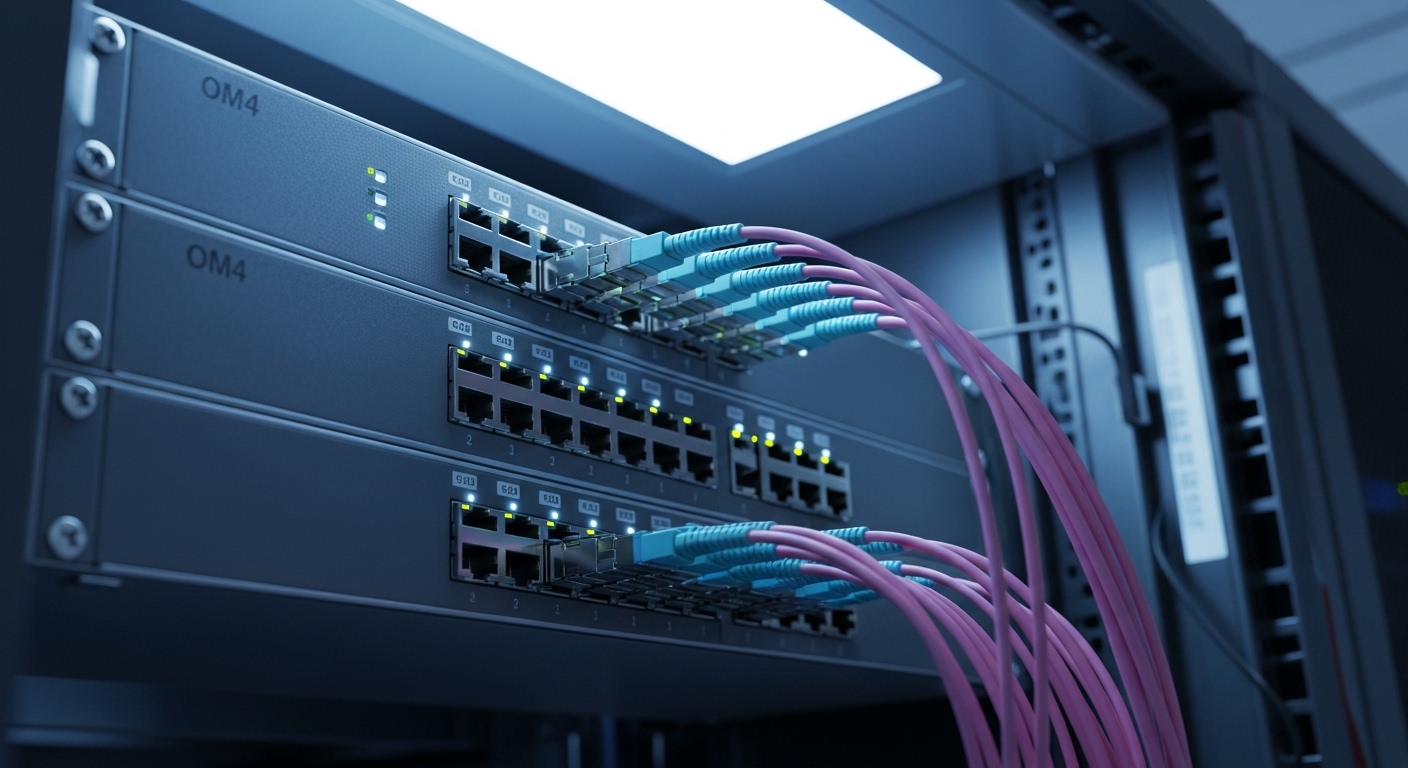
In edge environments, failures often look like “random link flaps,” but the root cause is usually predictable: marginal optical power, connector contamination, incorrect fiber type, or thermal stress on the module. Edge sites also mix equipment generations, so DOM interpretation (vendor-specific thresholds) and optics compatibility matter more than in a clean lab. For standards alignment, start with the Ethernet physical layer requirements in IEEE 802.3 and vendor datasheets for the specific transceiver family you plan to deploy. IEEE 802.3 Ethernet Standard
Key edge constraints you must quantify before ordering optics:
- Budget and power: transceivers differ in typical power draw by several watts; that impacts PoE backplanes, PSU sizing, and thermal design.
- Temperature: many SFP/SFP28 modules are rated to 0 to 70 C; edge often needs -20 to 85 C or vendor “extended” variants.
- Connector cleanliness: outdoor and dusty sites amplify insertion loss from APC/UPC mismatch and contamination.
- DOM and monitoring: you need predictable thresholds for laser bias current, received power, and temperature to detect drift early.
transceiver compatibility
optical power budget
DOM monitoring
Edge optics spec map: what to match to your fiber and data rate
Before you compare part numbers, lock the Ethernet interface speed and optics type (SR/LR/ER, CWDM, or copper). Then map to the fiber plant: core diameter, multimode vs single-mode, and expected link length with splice and connector losses. For deployments, engineers typically use fiber plant loss assumptions aligned with ANSI/TIA cabling guidance and verify with an OTDR and a loss test report. ANSI/TIA standards
The table below consolidates common optics families used in edge computing. Values are typical; always confirm in the vendor datasheet for the exact SKU and temperature grade.
| Transceiver family (examples) | Standardized use case | Wavelength | Reach (typ.) | Fiber type | Connector | Data rate | Typical TX power / RX sensitivity (typ.) | Temperature range (common) |
|---|---|---|---|---|---|---|---|---|
| SFP-10G-SR (e.g., Cisco SFP-10G-SR, FS.com SFP-10GSR-85) | Leaf-to-edge within buildings, short runs | 850 nm | 300 m (OM3) / 400 m (OM4) | MMF OM3/OM4 | LC | 10G | TX ~ -1 to 0 dBm; RX sensitivity ~ -9 to -11 dBm | 0 to 70 C or -20 to 85 C variants |
| SFP28-25G-SR (25G SR) | Edge aggregation with high density | 850 nm | 100 m (OM3) / 150 m (OM4) | MMF OM3/OM4 | LC | 25G | TX ~ -3 to 0 dBm; RX sensitivity ~ -14 to -16 dBm | 0 to 70 C |
| SFP+ 10G-LR (e.g., Finisar FTLX8571D3BCL) | Single-mode campus and fenced edge sites | 1310 nm | 10 km | SMF | LC | 10G | TX ~ -2 to 0 dBm; RX sensitivity ~ -14 to -18 dBm | -5 to 70 C or -20 to 85 C variants |
| QSFP28 100G-LR4 / 40G-LR4 (vendor dependent) | Edge core uplinks | ~1310 nm (4 wavelengths) | 10 km (typ.) | SMF | LC | 40G/100G | TX/RX per lane; total budget varies widely | 0 to 70 C |
| Copper SFP+ / SFP28 (DAC/AOC) | Short-rack interconnect | n/a | Up to ~7 m DAC (typ.) | Copper | Integrated | 10G/25G | n/a | 0 to 70 C |
At the edge, the most critical selection inputs are often not “reach” alone, but the margin between your calculated power budget and the module’s specified minimum/maximum. If your link has higher-than-expected splice loss or you plan future reroutes, you need extra headroom.
Decision checklist: transceiver selection steps engineers can execute
Use this ordered checklist to prevent rework. It is designed for edge computing rollouts where you must ship quickly but safely.
- Confirm the exact interface type: SFP, SFP+, SFP28, QSFP+, QSFP28, or QSFP-DD. Do not assume “same speed” equals same form factor.
- Lock the fiber type and plant loss: MMF OM3 vs OM4 vs SMF. Pull the fiber acceptance report; if missing, schedule OTDR verification.
- Compute the optical link budget: include fiber attenuation, splice loss, connector loss, and any patch panel effects. Maintain a practical safety margin (commonly several dB) for aging and contamination.
- Choose temperature grade: select modules explicitly rated for your enclosure environment. If you expect -20 C starts or summer soak at 60 to 70 C internal air, insist on extended temperature SKUs.
- Verify transceiver compatibility: check vendor compatibility matrices for the exact switch model and firmware. Use optics with known vendor support to reduce “unsupported module” errors.
- Validate DOM monitoring behavior: confirm the switch reads temperature, laser bias current, and received power correctly. Plan alert thresholds and logging.
- Assess power and thermal impact: compare typical power draw and maximum module temperature behavior. Ensure airflow and PSU headroom support worst-case.
- Mitigate vendor lock-in risk: evaluate third-party optics from reputable sources, but test in a pilot site. Track return rates and failure modes.
- Plan spares and lifecycle: standardize on fewer SKU families where possible to simplify inventory and field swaps.
optics compatibility
edge thermal design
Pro Tip: In edge deployments, the fastest way to avoid “mystery link loss” is to correlate DOM “received power” trends with cleaning schedules. If your received power slowly degrades over weeks, you likely have intermittent contamination or micro-movement at patch points, not an optics hardware defect.
Real-world edge deployment scenario: 10G SR vs 10G LR in a municipal rollout
Consider a municipal edge program with 12 sites connecting to a central aggregation point. Each site has a 48-port 10G ToR switch and two uplinks to a rugged aggregation cabinet, totaling 2 x 10G per site. In Site A (indoor corridor), the fiber runs are 180 m on OM4 with an estimated 0.35 dB connector loss per end and 6 splices at 0.2 dB each. Engineers selected 10G SR (850 nm) SFP+ optics (LC) because the calculated margin stayed above the module’s minimum receive threshold, and the sites needed minimal power and fewer procurement SKUs.
In Site B (outdoor fenced enclosure), the runs are 6.5 km of single-mode fiber with 8 splices and multiple patch panel transitions. Here, 10G LR (1310 nm) SFP+ optics were selected to support the distance with adequate budget headroom. During commissioning, field teams used a light meter and DOM readings to confirm received power fell in the expected window across temperature cycling. This prevented later “works at night, fails in heat” incidents caused by choosing optics rated only for 0 to 70 C.
Common mistakes and troubleshooting tips in edge transceiver selection
Edge failures are usually diagnosable quickly if you follow a disciplined approach. Below are common pitfalls with root causes and practical fixes.
Link comes up then flaps under load
Root cause: marginal optical power budget due to underestimated splice/connector loss or dirty optics. In SR systems, OM4 launch conditions and connector cleanliness strongly affect received power.
Solution: clean LC connectors with proper lint-free wipes and approved cleaning tools; verify with an inspection scope; re-test with a light meter; compare DOM received power during flaps vs stable periods. If margin is tight, swap to a higher-budget variant (for example, extended reach within the same wavelength family) and re-commission.
“Unsupported transceiver” or link refuses to negotiate
Root cause: switch firmware compatibility matrix mismatch, vendor ID checks, or DOM threshold handling differences. Some switches enforce strict module authentication policies.
Solution: confirm the exact switch model and firmware version; use optics explicitly listed as compatible by the switch vendor or validated third-party SKU. In a pilot, validate DOM readouts and link state transitions across cold start and warm restart cycles.
Silent performance degradation: higher BER, reduced margin, or intermittent CRC errors
Root cause: a fiber plant that passes basic loss tests but fails under stress due to microbends, patch panel strain relief issues, or APC/UPC mismatch causing back-reflection sensitivity problems.
Solution: run OTDR to locate high-loss events and inspect patch panel strain relief; verify connector polishing type (APC vs UPC) matches the transceiver and mating hardware; check for physical stresses at cable entry points and secure routing.
Over-temperature shutdown or throttling
Root cause: selecting a module rated only for 0 to 70 C in an enclosure that reaches 75 C internal air. Laser bias control can drift and cause receiver instability.
Solution: measure enclosure internal temperature with a calibrated probe; select extended temperature optics; improve airflow or adjust fan curves; confirm with DOM temperature readings after 2 to 4 hours of sustained traffic.
Cost and ROI note: how to budget total transceiver cost at the edge
Transceiver selection is not only about unit price. In edge deployments, total cost of ownership (TCO) includes spares handling, truck rolls, cleaning consumables, and downtime risk. Typical street pricing varies widely by OEM vs third-party and by temperature grade; as a practical range, many 10G SR SFP+ optics are commonly found in the $50 to $150 per module range, while extended temperature and higher-budget variants can cost more. 10G LR SFP+ optics often land in the $80 to $250 range depending on vendor and DOM features.
OEM optics can reduce compatibility risk and provide consistent DOM behavior, but they may carry higher upfront cost. Third-party optics can be cost-effective if you run a pilot and track failure rates; field reality shows that the “cheapest” module can be expensive if it triggers unsupported-module events or requires more frequent cleaning due to packaging or connector QC differences. A conservative ROI model should include: expected transceiver lifetime (use observed MTBF from your own fleet if available), annual truck roll cost, and the cost of maintenance windows.
FAQ: edge transceiver selection questions field teams ask
Q1: How do I choose between 10G SR and 10G LR at the edge?
A: Use your fiber plant distance and verified link budget. If you are within SR reach on the correct MMF (OM3/OM4) with solid margin, SR usually simplifies deployment. If distance is several kilometers or fiber is SMF, choose LR or an appropriate long-reach option.
Q2: Does DOM support matter for transceiver selection?
A: Yes. DOM enables proactive maintenance by exposing temperature, laser bias, and received power. Ensure the switch reads DOM fields correctly and that you set alert thresholds aligned with your operational baseline, not only the vendor’s nominal values.
Q3: Can I mix OEM and third-party optics in the same edge switch?
A: You can, but you should validate compatibility per switch model and firmware. The biggest risk is “unsupported module” behavior or inconsistent DOM interpretation. Run a pilot at one representative site and confirm link stability across cold start and high-temperature operation.
Q4: What is the fastest troubleshooting path for link flaps?
A: Start with connector inspection and cleaning, then check DOM received power and temperature during failures. Next, verify correct fiber type and patching, and confirm that the optical budget has sufficient margin under worst-case assumptions.
Q5: What temperature grade should I require for edge enclosures?
A: Require an explicit extended temperature rating if your enclosure can exceed 70 C internal air or experience cold starts below 0 C. Measure with a calibrated probe during peak conditions and then select modules rated for that environment.
Q6: Do I need APC vs UPC checks during transceiver selection?
A: Yes when using fiber connectors that have different polish types, especially in long-distance and high-sensitivity scenarios. Verify the mating hardware and connector polish type to avoid excess back-reflection or connector mismatch losses.
For robust edge computing, transceiver selection should be treated like an engineering acceptance process: match interface form factor, verify fiber type, compute link budget with margin, and enforce temperature and DOM requirements. Next step: review optical power budget and standardize a short list of optics families for your switch fleet to reduce field variability.
Author bio: I have led fiber and optics rollouts for edge and regional networks, including commissioning with OTDR verification and DOM-based acceptance checks. I focus on field-operational outcomes like uptime, thermal reliability, and fast fault isolation across mixed switch generations.


