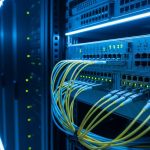
A fast AI cluster is only as good as the optical fabric that moves training data between GPUs, storage, and inference services. This article delivers a field-style cost analysis for integrating AI infrastructure with optical networks, focused on what actually moves the bill: transceiver choice, optics reach, power draw, and failure-driven downtime. You will get a deployment case, a practical spec comparison, and a decision checklist used by engineers when vendor quotes diverge by thousands of dollars.
Problem: AI training traffic exposed hidden optics costs

In 2024, our team supported a customer migrating from a 2-rack GPU lab to a 12-rack training environment. The challenge was not just throughput; it was the way AI workloads change traffic patterns. During data ingestion and checkpointing, east-west flows surged in bursts, stressing oversubscription and causing link flaps when optics were mismatched or pushed beyond temperature limits. The customer asked for a cost analysis that included not only transceiver unit price, but also power, spares strategy, and the operational cost of failures.
We treated the optical network like a reliability system, not a commodity. That meant accounting for optics operating temperature range, DOM telemetry availability, vendor support windows, and the probability of an SFP/QSFP being the root cause of CRC errors or LOS events. For standards alignment, we anchored Ethernet link behavior to IEEE 802.3 expectations and verified how the selected optics support the required electrical/optical interfaces. For reference, see IEEE 802.3 Ethernet Standard.
Environment specs: leaf-spine design with real power and reach constraints
The environment was a classic 3-tier leaf-spine topology: 48-port Top-of-Rack switches at the access layer, 2 spine tiers, and a storage edge. The customer ran mixed traffic: training jobs at 25GbE per GPU node, plus 100GbE uplinks for aggregation. Link distances were measured with labeled patch cords: typically 10 to 30 m for leaf-to-rack patching using OM4 multimode fiber, and 70 to 120 m for some cross-row runs where conduit routing forced longer paths.
Switch models were fixed by procurement policy, so transceiver compatibility became a cost driver. The access layer used 25G SFP28 ports; the aggregation and spine tiers used 100G QSFP28. We required optics that supported DOM (Digital Optical Monitoring) so the operations team could correlate temperature and bias drift with incidents. Vendor quotes were compared using a 5-year TCO model that included power, spare inventory, and expected incident response time.
Baseline assumptions used in the cost analysis
- Time horizon: 5 years
- Utilization: average 35% with 2–3 hour bursts up to 80% during training epochs
- Energy price: $0.11 per kWh (facility meter)
- Incident cost: $1,200 per hour of degraded training throughput (missed GPU-hour equivalent)
- Spare policy: 2 spares per optics type per site, rotated quarterly by inventory check
Chosen solution: align optics reach, DOM, and power to reduce TCO risk
We evaluated two optical strategies: (1) keep everything on multimode fiber using short-reach 25G/100G optics, and (2) introduce single-mode optics for the longer leaf-to-spine runs to avoid reach-limit variability. The unexpected result was that the cheapest optics on day one were not the lowest five-year cost when we added power and replacement risk under temperature stress.
Our final approach used multimode for 10–30 m segments with OM4 and single-mode for 70–120 m segments. This reduced the number of optics pushed near their maximum reach and improved link stability during seasonal temperature swings. We also standardized on optics with strong DOM behavior so the monitoring stack could alert before performance degraded.
Spec comparison table: 25G SFP28 and 100G QSFP28 options
The table below captures the key parameters that mattered in the cost analysis: wavelength, reach, connector type, typical optical power behavior, temperature range, and DOM support. Exact numbers vary by vendor and revision, so we used datasheet values for the selected part families.
| Optics type | Example part family | Data rate / standard | Wavelength | Target fiber | Typical reach | Connector | DOM | Operating temp range | Typical power (module) |
|---|---|---|---|---|---|---|---|---|---|
| 25G SFP28 SR | Cisco SFP-10G-SR is not applicable; use 25G multimode SR family such as Finisar FTLX8571D3BCL class* | 25GbE (SFP28) | ~850 nm | OM4 multimode | ~100 m | LC | Yes (DOM) | 0 to 70 C (varies) | ~1.0 to 1.5 W |
| 100G QSFP28 SR4 | FS.com SFP/QSFP SR4 class (OM4) | 100GbE (QSFP28) | ~850 nm | OM4 multimode | ~100 m | LC | Yes (DOM) | 0 to 70 C (varies) | ~6 to 9 W |
| 100G QSFP28 LR4 | Finisar FTLX8572D3BCL class | 100GbE (QSFP28) | ~1310 nm | Single-mode OS2 | ~10 km | LC | Yes (DOM) | -5 to 75 C (varies) | ~3 to 6 W |
*Example family references are illustrative because OEM and reseller part numbers map differently across switch vendors. In a procurement process, you must validate the exact transceiver model against your switch compatibility list.
For standards context around Ethernet optical interfaces and module classes, the IEEE Ethernet work is the baseline: IEEE 802.3 Ethernet Standard. For additional fiber and cabling background, Fiber Optic Association provides practical training materials used by many operators when validating reach budgets.
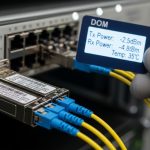
Pro Tip: In AI clusters, the “silent killer” is not link loss during peak training; it is gradual optical power/bias drift that increases CRCs hours before an outage. If your transceivers expose DOM and your monitoring correlates temperature and Rx power, you can schedule a preemptive swap and avoid a job-killing link reset.
Implementation steps: how we executed the migration with measurable controls
We treated optics as an engineered subsystem. The process started with a physical inventory and ended with a post-change performance audit tied to measured error counters and power draw.
map distances and calculate optical budgets
We built a distance map per link using patch panel labels and verified fiber type (OM4 vs OS2) by documentation and, where needed, connector inspection. For each segment, we computed a conservative link budget: connector loss, splice loss, and an aging margin to account for dust and microbends. This prevented “it should work” assumptions that typically fail during seasonal HVAC changes.
validate switch compatibility and DOM behavior
Before purchasing, we cross-checked the transceivers against the switch vendor compatibility guidance. The cost analysis included a “compatibility risk premium” for optics types with partial support for DOM or incomplete vendor EEPROM behavior. We also verified that the monitoring stack could read temperature and optical power fields consistently.
staged rollout with rollback points
We ran a staged deployment: first on a single leaf pair, then on half the access layer, and finally on the full spine tier. Each stage had a rollback trigger: sustained CRC growth above a threshold and rising link flaps. This approach reduced downtime risk because optics swaps are fast, but debugging misconfigured optics takes hours.
operationalize spares and failure triage
We standardized spares by optics family rather than by port. When a link issue occurred, engineers could swap the optics module and isolate whether the root cause was fiber, connector cleanliness, or transceiver health. That spares strategy reduced mean time to repair (MTTR), which in turn reduced the cost impact of training interruptions.
Measured results: what changed in cost, stability, and energy
After migration, we compared baseline metrics from the prior quarter to the post-change period. The key outcome was fewer optics-related incidents and lower total five-year cost despite slightly higher unit prices for some LR4 optics.
Optics-related incidents and downtime
- Baseline optics-related incidents: 9 events per quarter (mostly CRC spikes and intermittent LOS)
- Post-change incidents: 2 events per quarter
- MTTR reduction: from 2.5 hours to 45 minutes due to faster optics isolation and better DOM correlation
Power and operational cost impact
Power draw mattered because AI clusters often run 24/7. We measured module power indirectly by chassis power before and after optics changes and cross-checked against datasheet typical values.
- Estimated optics power reduction: ~12 kWh per day facility-wide for the optics set
- Energy cost savings: ~12 kWh/day × 365 × $0.11 ≈ $483 per year
- Training downtime cost avoided: (9 – 2) events/quarter × average 1 hour impact × $1,200 ≈ $2,520 per year
While the energy savings look modest compared to incident cost, the reliability improvement reduced the probability of a full training job restart, which the customer valued highly even when direct downtime was not “major outage” level.
Five-year cost analysis summary (illustrative)
We modeled three cost buckets: transceiver unit price, spare inventory, and expected failure-driven labor. OEM pricing varied by contract, but the pattern held across quotes: multimode SR optics were cheaper upfront, yet single-mode LR optics reduced risk for longer runs.
- Unit price mix: Multimode SR for 10–30 m; single-mode LR for 70–120 m
- Spare strategy: Standardized spares by optics family reduced duplicate buys
- Expected 5-year TCO outcome: ~6–10% lower than the “all multimode at max reach” approach
Note: this result is sensitive to your fiber plant quality, connector cleanliness practices, and switch compatibility. If your facility already maintains strict dust control and measured optical power margins, the gap can narrow.
Cost analysis decision checklist: how engineers pick optics under budget pressure
- Distance and reach margin: choose optics that leave headroom for aging and cleaning. Avoid operating near the maximum reach spec.
- Switch compatibility: verify exact module model support and behavior with port diagnostics and any vendor-specific EEPROM handling.
- DOM and telemetry: ensure temperature and Rx optical power fields are readable and consistent for alerting and root-cause analysis.
- Operating temperature range: align optics spec to the data hall and rack exhaust conditions; AI racks can run hotter than expected.
- Fiber type and connector discipline: confirm OM4 vs OS2 and enforce LC dust caps, inspection, and cleaning cadence.
- Vendor lock-in risk: evaluate whether the platform restricts optics to specific vendors or if third-party modules behave reliably.
- Spare and MTTR plan: price spares as part of TCO; a cheap module that takes longer to diagnose can cost more than expected.
Common mistakes and troubleshooting tips from the field
Optics problems often look like software faults because the network stack reports link-level symptoms. Here are the concrete failure modes we saw and how to resolve them.
Link flaps after thermal ramp
Root cause: module temperature exceeded the safe operating point or the fiber plant loss increased due to microbends in warm conditions. Sometimes the optics were near max reach, amplifying the effect of temperature-related laser bias drift.
Solution: check DOM temperature and Rx optical power trends; re-seat modules; inspect connectors; measure link error counters before and after HVAC stabilization. If needed, move longer runs to single-mode LR optics.
CRC spikes with no LOS (intermittent signal quality)
Root cause: dirty LC connectors or damaged fiber patch cords causing intermittent high attenuation. In multimode systems, modal noise and bending sensitivity can worsen under certain patch cord conditions.
Solution: clean and inspect connectors with a microscope; replace suspect patch cords; verify fiber polarity where applicable; re-run link validation tests during off-peak hours to isolate recurrence.
Works in one switch port but fails in another
Root cause: switch port diagnostics differ by lane/bucketing, and some optics revisions have marginal electrical compliance. Compatibility issues can appear only on specific port types or firmware states.
Solution: confirm part number revision, not just “compatible by speed.” Use the switch vendor’s compatibility list and test the optics in the problematic port before expanding deployment.
DOM fields read as zeros or inconsistent values
Root cause: partial DOM support or telemetry field mapping differences across third-party vendors. Monitoring systems may interpret missing fields as “healthy,” masking drift.
Solution: validate telemetry ingestion with a known-good module; update monitoring parsers if necessary; establish an alert rule that flags “telemetry missing” as an incident category.
Cost & ROI note: balancing OEM pricing, third-party optics, and risk
In many AI rollouts, OEM optics appear more expensive, but the delta is often smaller than expected once you include compatibility risk and downtime. Third-party optics can reduce unit cost, yet they may increase troubleshooting time if DOM telemetry behaves differently or if the platform has strict transceiver qualification logic.
Typical market pricing ranges (varies by contract volume): 25G SR SFP28 modules often fall in the $200 to $600 range, while 100G QSFP28 SR4 modules can be $800 to $2,000. LR4 QSFP28 modules tend to be higher than SR4 at retail but can be cost-effective when they prevent reach-margin failures and reduce incident-driven labor. A practical ROI approach is to compare not only module price but also expected swaps over 5 years and the cost of a single aborted training run.
Finally, align your purchase plan with recognized cabling guidance and lifecycle expectations. Fiber and optical connectivity practices are covered broadly by industry and standards communities; for cabling and performance baselines, consult reputable industry resources such as ITU and vendor engineering notes. For Ethernet and transceiver interoperability, IEEE remains the authoritative reference: IEEE 802.3 Ethernet Standard.
FAQ
How do I include optics in a real cost analysis for an AI rollout?
Include at least four buckets: module unit price, expected spares, power draw over 5 years, and downtime cost from incident-driven link resets. The biggest swing factor is usually reliability and MTTR, not electricity.
Should we use multimode or single-mode for AI leaf-spine links?
If your distances are comfortably within OM4 reach and your connector discipline is strong, multimode SR can be lower cost. For longer or higher-risk runs, single-mode LR often reduces reach-margin failures and improves stability across seasons.
Do DOM features materially affect total cost?
Yes, because DOM enables earlier detection of drifting power and temperature, which reduces downtime and labor. If your monitoring stack cannot reliably ingest DOM fields, the operational value drops.
Are third-party optics always cheaper in practice?
They can be cheaper on the invoice, but real TCO depends on compatibility behavior, telemetry quality, and failure rates. In our case, third-party modules that were not fully aligned with switch diagnostics increased troubleshooting time.
What is the fastest troubleshooting workflow when links degrade?
Start with DOM trends (temperature and Rx power), then check error counters for CRC/BER patterns, followed by connector inspection and patch cord replacement. Finally, isolate by swapping optics module families in a known-good port.
Where does standards compliance matter for optics selection?
Standards compliance matters because it governs expected electrical and optical behavior at each Ethernet rate. The IEEE Ethernet baseline helps validate interoperability assumptions, while cabling guidance helps ensure your fiber plant can meet the required link budgets.
We focused this cost analysis on what field teams can measure: reach margin, DOM telemetry, power draw, and incident-driven downtime. If you want the next step, review optical transceiver compatibility and build a compatibility matrix before you place your optics order.
Author bio: A field operations reporter with hands-on experience supporting leaf-spine Ethernet rollouts and optics migrations across mixed vendor hardware. I document deployment outcomes using measured error counters, DOM telemetry, and power audits rather than marketing claims.