
AI training and inference are pushing data centers and campus networks toward higher throughput, tighter latency budgets, and faster change cycles. If your optical network is not engineered for failure tolerance, a single transceiver, patch panel, or fiber event can cascade into outage windows that disrupt workloads. This article helps network engineers and field technicians build measurable optical network resilience as traffic grows, using practical checks, vendor-validated components, and operational guardrails.
Prerequisites for an optical network resilience implementation
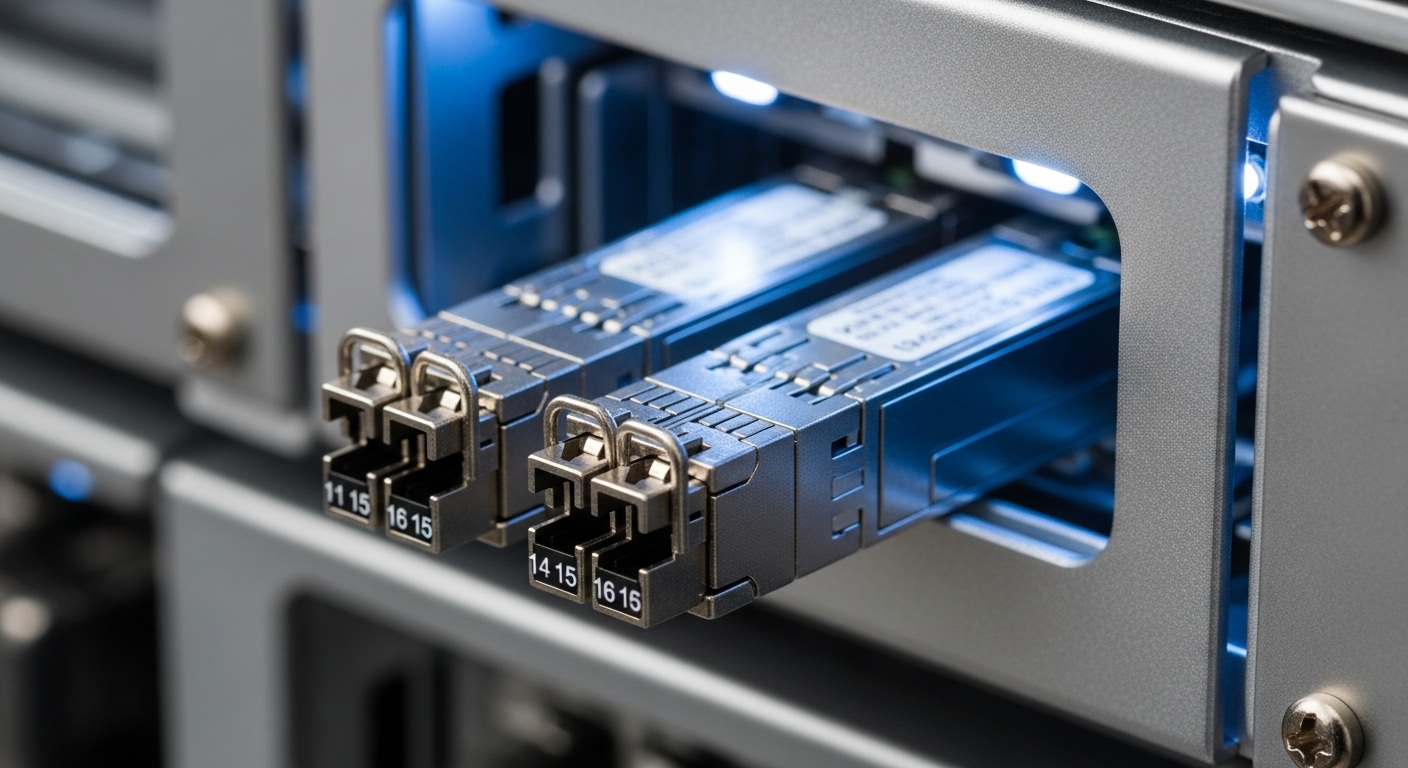
Before you touch optics, confirm you have the visibility and change control needed to validate resilience outcomes. This includes link telemetry, optical power baselines, spare inventory, and documented physical plant details for fiber routes and connectors.
Also align on standards and interoperability expectations. Ethernet over fiber is typically governed by IEEE 802.3 for the electrical and optical behaviors of Ethernet PHYs, while cabling performance is governed by ANSI/TIA fiber cabling guidance for channel loss and reflectance control. For optical transceiver behavior and diagnostics, rely on vendor datasheets and SFF multi-source agreements when applicable, and validate DOM fields during commissioning. IEEE 802.3 Ethernet Standard
What you should have on hand
- Optical power baseline per link: receive power (Rx) in dBm, transmit power (Tx), and margin targets.
- DOM readings from day 0: laser bias current, Tx/Rx power, temperature, and error counters.
- Spare plan: at least 1 spare transceiver per critical link group and spare fiber jumpers for patch panel hotspots.
- Documentation: fiber route map, connector types (LC, MPO), patch panel locations, and splice/termination counts.
- Failure simulation permission: maintenance window and rollback plan for controlled tests.
Expected outcome
By the end of this prerequisites phase, you can correlate optical measurements to service health, and you can safely test resilience without guessing.
Step-by-step implementation: make optical network failures survivable
This numbered plan is designed for engineers deploying or upgrading an optical network in response to AI growth. It emphasizes measurable resilience: link redundancy, fast detection, and controlled physical plant changes.
-
Step 1: Define resilience targets per traffic class
Separate AI-critical flows (training east-west, storage replication, and microservice dependency chains) from best-effort traffic. For each class, define acceptable outage impact and recovery behavior: for example, target sub-second convergence at the routing layer and no manual intervention for transient optical errors when possible. Capture this as an engineering requirement before selecting optics.
Expected outcome: A written target that guides redundancy choices, monitoring thresholds, and maintenance windows.
-
Step 2: Inventory optics and validate reach vs actual fiber plant
Do not select “SR is SR” based only on marketing reach. Measure your installed link loss budget including patch cords, MPO/MTP breakout components, and any splices. For example, in a 10G or 25G short-reach design, a practical approach is to keep Rx power within the vendor’s recommended operating range and maintain enough margin for aging and cleaning variability.
Expected outcome: A per-link reach verdict that is grounded in installed measurements rather than assumptions.
-
Step 3: Standardize transceiver types and enable DOM-based monitoring
Use a consistent transceiver family across the same switch model line to reduce unexpected behavior. Prefer modules with robust digital optical monitoring (DOM): laser bias current trends, Tx/Rx power telemetry, and temperature. Validate that your switch platform exposes these fields in telemetry (SNMP/streaming telemetry) and that alarms trigger before error counters spike.
For concrete part examples you may encounter in the field: Cisco SFP-10G-SR, Finisar/II-VI style FTLX8571D3BCL, and FS.com short-reach modules such as SFP-10GSR-85 (exact compatibility depends on switch vendor and firmware). Always verify with the host vendor’s compatibility list and run a commissioning test.
Expected outcome: Early warning capability so resilience is “preventive,” not just reactive.
-
Step 4: Add physical-layer redundancy where it matters most
For AI growth, the most common optical failures are physical: dirty connectors, broken fibers, or patch panel mis-cabling. Implement redundancy at the physical layer using dual-homed paths (two independent uplink sets, two patch panel paths, or separate fiber routes). Ensure that redundant links terminate on different patch panels and, when feasible, different cable trays or conduit runs to reduce correlated failures.
Expected outcome: A single fiber event does not remove both paths for critical workloads.
-
Step 5: Engineer maintenance procedures for fast recovery
Resilience includes how quickly you restore service. Pre-stage labeled fiber jumpers and transceiver spares, and define a “swap procedure” with timing targets. For instance, if a link goes down with Tx/Rx power out of range, the first response should be to inspect and clean connectors, then reseat, then swap the transceiver, before re-splicing. Use consistent labeling across patch panels to prevent cross-connection errors.
Expected outcome: Measured mean time to repair (MTTR) reduction, especially during peak AI deployment hours.
-
Step 6: Implement optical health thresholds and automated actions
Set thresholds using DOM data and correlate with interface error counters. Common operational thresholds include Tx/Rx power drift (for example, “alarm when Rx power drops more than a configured dB from baseline”), temperature excursions, and rising CRC or FEC-corrected error counts (depending on PHY). Automate actions such as raising a ticket when thresholds breach, not when the link is already flapping.
Expected outcome: Faster detection and fewer “surprise outage” events.
-
Step 7: Validate resilience with controlled failure tests
Use a maintenance window to test realistic failure modes: remove a patch jumper on a redundant path, reseat a transceiver, and verify that the network converges as expected. Confirm that monitoring triggers within your target detection window and that recovery occurs without prolonged packet loss. Keep the tests limited to avoid cascading failures, and document outcomes for future upgrades.
Expected outcome: Proof that your optical network resilience plan works under controlled conditions.
Optical transceiver selection: specs that actually affect resilience
Resilience depends on the optics behaving predictably across temperature, aging, and installed loss variations. When AI growth increases link utilization, you also increase the value of stable optics and consistent monitoring.
Below is a practical comparison table for common Ethernet optics used in optical network upgrades. Treat it as a starting framework: always confirm the exact vendor datasheet for power class, connector type, and DOM support.
| Module type | Typical wavelength | Target reach | Connector | DOM | Operating temperature (typ.) | Common use |
|---|---|---|---|---|---|---|
| SFP-10G-SR (short reach) | 850 nm | Up to ~300 m over OM3, ~400 m over OM4 (varies by link budget) | LC | Often supported | 0 to 70 C (varies by vendor) | Leaf-spine and ToR within data halls |
| SFP+/SFP28-25G SR | 850 nm | ~70 m to ~400 m depending on fiber grade and design | LC | Often supported | 0 to 70 C (varies) | High-density AI clusters |
| QSFP28-100G SR4 | 850 nm | ~100 m to ~300 m depending on OM4/OM5 and link budget | MPO/MTP | Often supported | 0 to 70 C (varies) | Spine uplinks in high-speed fabric |
| QSFP56/CFP2 coherent (if used) | 1550 nm region | Multiple km to tens of km (depends on optics and line system) | Varies | Vendor-specific | Vendor-specific | Metro and longer-haul resilience |
How to translate specs into resilience
- Reach vs installed loss: allocate margin for patch panel changes and connector cleaning variability.
- DOM granularity: ensure your monitoring can detect drift before link errors become visible.
- Temperature range: verify module class matches your switch airflow pattern; AI racks often increase ambient heat.
- Connector type and cleanliness: MPO/MTP systems are efficient but require strict cleaning and polarity handling.
Pro Tip: In many field incidents, the “mystery” optical network outage is not the fiber loss being too high; it is a connector cleanliness or polarity issue that only shows up after a transceiver warms up or after a maintenance reseat. Use DOM drift monitoring and pair it with a connector inspection cadence to catch issues before they become hard failures.
Real-world AI growth scenario: where resilience breaks first
Consider a 3-tier data center leaf-spine topology with 48-port 10G ToR switches upgraded to support AI micro-bursts, plus 12-spine switches each providing 100G uplinks. The network now carries east-west replication and model checkpoint traffic that peaks during scheduled training windows. Over six months, the operations team notices that link events correlate with frequent patch panel activity for new GPU pods, and they also see Rx power drift on a subset of SR links.
The resilience plan focuses on three areas: physical redundancy (dual independent uplink sets), monitoring (DOM-based alarm when Rx power drops beyond baseline by a set dB threshold), and operational speed (pre-staged transceivers and labeled jumpers). The key measurement is that MTTR drops from roughly 60 to 120 minutes to under 20 to 30 minutes for common patch-panel-related failures, while link flaps drop during deployment windows.
Decision checklist: picking optics and architecture for resilience
Use this ordered checklist during planning and procurement. It is written for engineers who must balance performance, compatibility, and operational risk.
- Distance and installed loss budget: measure or model patch cords, splitters, splices, and connector counts; then validate against the vendor link budget.
- Switch compatibility: confirm the transceiver is supported by the switch platform and firmware revision; test in a staging rack first.
- DOM support and telemetry integration: ensure your monitoring system reads the relevant parameters and can alert before errors escalate.
- Connector and fiber type fit: LC vs MPO/MTP; OM3 vs OM4 vs OM5; confirm polarity and cleaning requirements.
- Operating temperature and airflow: match module temperature class to switch inlet conditions, especially when AI racks raise ambient temps.
- Vendor lock-in risk and spare strategy: consider multiple qualified vendors, but verify interoperability and keep a consistent part number strategy for spares.
- Maintenance and restoration speed: pre-stage spares and jumpers; define a swap workflow with timing and decision points.
For cabling practices and channel performance expectations, align your physical plant checks with established fiber cabling guidance such as ANSI/TIA documents as referenced by fiber cabling vendors and integrators. Fiber Optic Association
Common pitfalls and troubleshooting: top failure modes in optical network resilience
Even well-designed optical network plans fail when operational details are missed. Below are common pitfalls with root causes and fixes that field teams repeatedly encounter.
Rx power low or drifting after routine maintenance
Root cause: dirty connectors or incomplete cleaning before reseating, especially after patch panel changes. MPO/MTP systems are particularly sensitive to contamination and polarity mismatch.
Solution: follow a cleaning workflow with inspection before mating, verify polarity, reseat carefully, and compare DOM Rx power against baseline. If drift persists, swap the transceiver to isolate whether the issue is optical output vs link attenuation.
Link flaps despite “within spec” optical power
Root cause: marginal signal integrity due to incorrect module type, incompatibility, or a mismatch in PHY expectations after a firmware upgrade. Sometimes the power is acceptable but the module behavior (thresholds, laser bias control) is not stable under the new conditions.
Solution: confirm module compatibility with the switch model and firmware; revert firmware in a controlled manner for testing; check interface error counters and DOM laser bias current trends to see whether the module is aging or misconfigured.
Correlated failures across redundant paths
Root cause: “redundant” fibers are actually routed together in the same tray or terminated on the same patch panel set, so one physical incident (construction damage, water ingress, or a single patch panel mis-termination) knocks out both paths.
Solution: validate physical separation: independent routes, separate patch panels, and different cable management zones. During commissioning, test failover by removing a jumper on one path and confirming the other remains stable.
Cost and ROI note: budgeting resilience without overspending
Resilience investments often look expensive upfront, but they reduce outage cost during AI growth, when maintenance windows shrink. Typical pricing varies by vendor and speed class: short-reach optics for 10G/25G may range from roughly $30 to $120 per transceiver depending on brand and qualification, while higher-speed optics (like 100G SR4) can be $200 to $700 each. OEM optics may cost more than third-party equivalents, but the operational risk and compatibility testing effort may be lower.
For TCO, include power and cooling impacts (more ports and higher utilization increase heat), labor for cleaning/inspection, and the cost of extended downtime. A realistic ROI model should weigh reduced MTTR and fewer link incidents during deployment waves; even a small reduction in outage minutes can offset the incremental cost of better monitoring, spares, and connector hygiene.
FAQ
How do I measure optical network health before users complain?
Start with DOM telemetry and optical power baselines per link. Set alerts for Rx power drift and rising error counters, then correlate with physical events like patching. Commission new links in staging and confirm your alert thresholds catch problems before packet loss becomes noticeable.
Are third-party optics safe for an optical network resilience plan?
They can be safe, but you must validate switch compatibility, DOM behavior, and error characteristics under your firmware. Use a controlled staging test and keep part-number consistency for spares. If you cannot measure DOM fields reliably, you lose a major resilience benefit.
What connector practices matter most for SR and MPO-based links?
Connector cleanliness and polarity handling are critical. Use inspection before mating, clean with approved methods, and verify polarity for MPO/MTP breakout assemblies. Treat patch panel changes as high-risk operations and require the same verification steps every time.
How much spare inventory should we keep for AI growth?
A common field approach is to keep at least one spare transceiver per critical link group and spares for the most frequently used speed class. Expand spares when you are scaling rapidly or when a specific module type has a history of higher failure rates in your environment.
Should we prioritize redundancy at the routing layer or the optical layer?
Both, but optical-layer redundancy prevents a single fiber or transceiver event from removing all paths. Routing-layer redundancy helps convergence after failures, yet it cannot fix physical-layer outages. For AI traffic, combine dual physical paths with fast convergence at the routing layer.
How do we validate resilience without causing extended outages?
Run controlled failure tests during a maintenance window using redundant links. For example, remove a jumper on one redundant path and confirm the other path remains stable while monitoring alarms trigger promptly.


