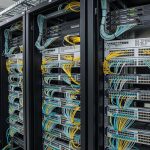
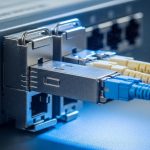
Planning an 800G network transition sounds simple until you price optics, upgrade lead times, and the hidden electrical and cooling impacts. This article helps network and data center engineers do budgeting that actually matches field reality: line-item costs, compatibility constraints, and a practical decision matrix for choosing optics and hardware paths. If you are forecasting capex and risk for leaf-spine, spine upgrades, or high-performance storage fabrics, you will get a repeatable estimation workflow.
Budgeting accuracy: what changes in an 800G transition
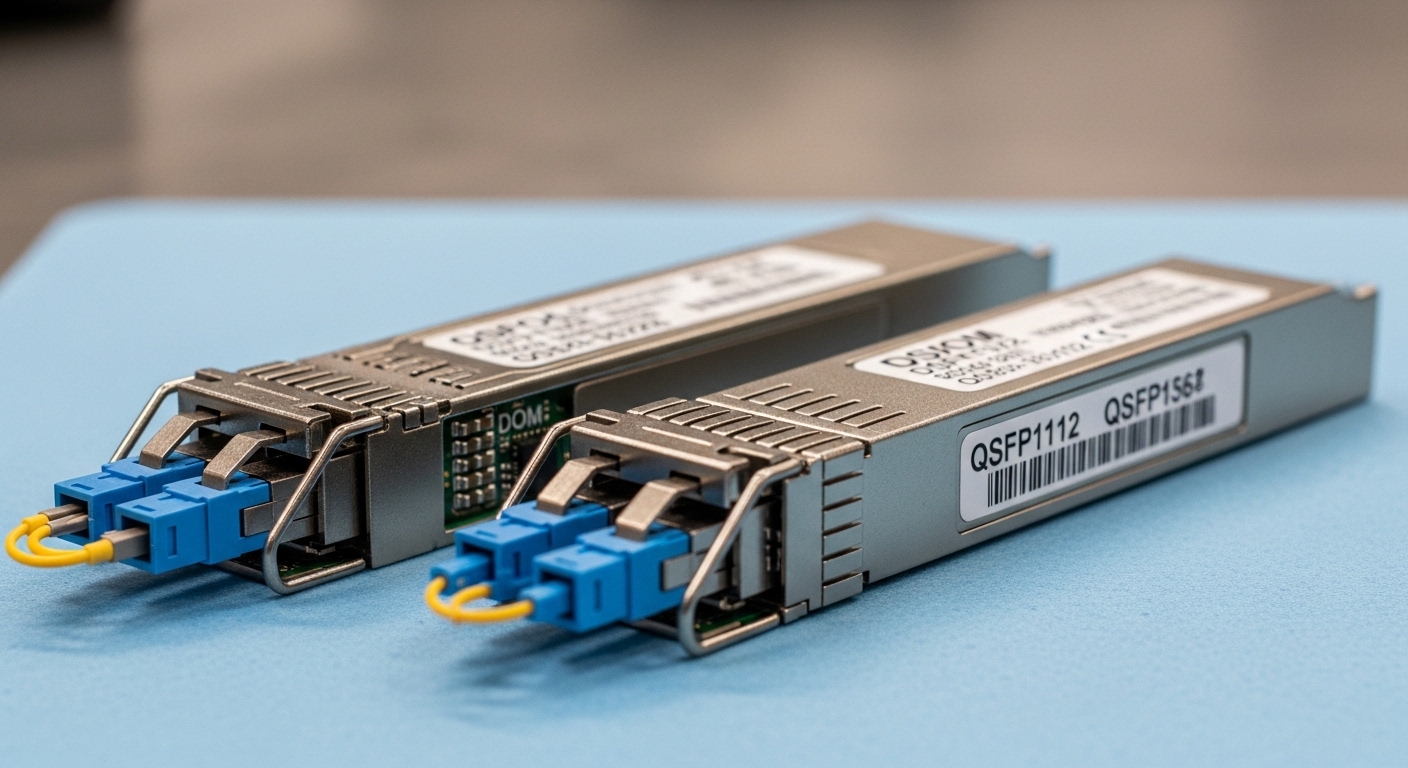
At 800G, the math stops being only about ports and starts being about optics density, lane mapping, and power-per-bit. In practice, your budget can swing by 20-40% depending on whether you standardize on short-reach optics, mix reach options, or delay upgrades while you validate link behavior. The biggest budgeting trap is underestimating integration work: optics qualification, optics inventory planning, and transceiver vendor compatibility checks.
From an engineering deployment standpoint, you are also budgeting for operational risk. If your cabling plant, patch panel labeling, or MPO/MTP polarity handling is inconsistent, you may pay twice: once for rework time and once for replacement optics. In my field installs, the “small” line items like patch cords, cleaning kits, and spare transceivers often become the difference between a smooth cutover and a week-long rollback.
Baseline your scope like a field engineer
Before you price anything, lock the scope in measurable terms: number of 800G ports, target topology (leaf-spine, spine-leaf, or DCI), and fiber reach categories (for example, 100m to 300m for SM or 50m for OM4/OM5 depending on optic type). Then map how many links you need for each device pair, including any dual-homing or maintenance overlap. This is also where you decide whether you are doing a “big bang” cutover or a phased migration with interim 400G/800G coexistence.
For standards context, your link behavior and coding assumptions come from IEEE Ethernet specifications and vendor implementation details. It helps to anchor your planning with the base Ethernet standard so your budgeting aligns with what the optics ecosystem expects. A good reference point is IEEE 802.3 for Ethernet line rates and PHY behaviors: IEEE 802.3 Ethernet Standard.
Performance vs cost: 400G-to-800G optics choices that move your budget
Head-to-head, your biggest cost drivers are optics type, reach, and how many lanes and transceivers you need per link. In most 800G designs, you will be choosing between coherent vs direct-detect, and between short-reach multimode vs long-reach single-mode variants. For data center transitions, direct-detect short-reach is common, but you still need to budget for cleaning, polarity, and transceiver power draw.
From a photographer’s eye, I think of it like lighting a scene: you can use a cheaper bulb, but if the beam angle forces more fixtures, your final cost rises. Optics behave similarly: a “lower unit price” transceiver can require more spares, more rework, or additional cooling if it runs hotter under your vendor’s thermal limits.
Key optics parameters that you should price, not assume
When budgeting, do not only compare reach. Compare wavelength, connector type (LC vs MPO/MTP), optical interface (direct-detect vs coherent), Tx/Rx optical power and receiver sensitivity (when available), and the operating temperature range that matches your rack environment. Also track DOM support (Digital Optical Monitoring) because it can affect troubleshooting time and whether your NMS can ingest alarms cleanly.
Example comparison table: budgeting-ready optics specs
Below is a budgeting-oriented comparison of typical 800G optics categories you will see in transitions. Exact numbers vary by vendor and part number, so treat this as a framework for building your line items from datasheets.
| Optics category | Typical wavelength | Reach (typical) | Connector | Data rate | DOM | Operating temp (typical) | Budget impact note |
|---|---|---|---|---|---|---|---|
| Direct-detect short-reach (multimode) | 850 nm class | Up to ~100m (OM4/OM5 dependent) | MPO/MTP | 800G | Usually supported | 0C to 70C or -5C to 75C | Lower fiber cost, but more cleaning and polarity discipline |
| Direct-detect long-reach (single-mode) | 1310 nm class | Up to ~2 km or more (vendor-specific) | LC or MPO (varies) | 800G | Usually supported | -5C to 75C (varies) | Higher unit optics cost, simpler cabling in some plants |
| Coherent optics (DWDM) | ITU grid (varies) | Many km | LC type (varies by design) | 800G-class | Usually supported | -5C to 75C | Higher BOM but fewer sites for long-haul reach |
For turn-up and link budget discipline, ITU grid and optical layer assumptions matter when you move beyond short reach. For general guidance on optical interfaces and wavelength planning, you can reference ITU materials: ITU-T.
Pro Tip: In budgeting models, price a “spare optics buffer” as a percentage of deployed quantity (often 3% to 7% for major migrations). If you do not, you will feel it during cutover when one failed cleaning attempt or a marginal patch cord forces overnight replacements.
Head-to-head: cost, risk, and operational effort for each migration path
There are three migration paths that show up in real 800G projects: phased upgrades with coexistence, parallel build-outs, and direct big-bang cutovers. Budgeting changes dramatically because labor and downtime risk are not linear with port counts. The cheapest optics on paper can become expensive if the migration path multiplies troubleshooting time.
Path A: phased upgrade with coexistence (400G and 800G side-by-side)
This path is common when you have a steady traffic load and cannot risk a long outage window. Budgeting includes dual inventory: you keep some 400G optics and you add 800G optics for new ports. It also includes validation time for optics compatibility, especially when your platform vendor supports a “known good” list that may differ by transceiver manufacturer.
Operationally, you budget for additional spares and more frequent link testing. I have seen teams underestimate how many patch panel changes are required when you move from 400G to 800G lane groupings and adjust MPO breakout mapping.
Path B: parallel build-out (new fabric, then cutover)
Parallel builds cost more capex up front because you duplicate some equipment and optics. But risk can be lower because you validate the new fabric in advance. Budgeting is easier when the new fabric is isolated, and you can schedule optics cleaning and polishing work as a controlled production-style process.
In this path, the “photographic” mindset helps: you stage the environment so every connector sees consistent handling. When you do that, link failure rates drop, and your contingency budget shrinks.
Path C: big-bang cutover (fast switch, minimal overlap)
Big-bang cutovers can minimize equipment duplication, but they shift costs into downtime, labor surges, and emergency parts. Budgeting should include standby engineering, after-hours cleaning supplies, and a pre-validated spare kit. I usually recommend budgeting a higher spare buffer here because the schedule compresses troubleshooting cycles.
Decision checklist for budgeting: what engineers verify before buying
When I help teams with budgeting spreadsheets, I insist the decision checklist is ordered. If you start with brand preference, you will repaint your budget later. Use this list to keep costs controlled and avoid compatibility surprises.
- Distance and reach category: measure actual link length from patch panel to transceiver, including slack and vertical runs; do not rely on “as-built” guesses.
- Fiber type and plant health: confirm OM4 vs OM5, or SMF core specs, and check endface cleanliness and insertion loss history; plan for cleaning time.
- Switch and line-card compatibility: verify transceiver part numbers against the platform vendor’s compatibility matrix; some ports behave differently by PCB revision.
- DOM and monitoring requirements: confirm your NMS can read alarms and thresholds; budget time for integration if you need custom telemetry mapping.
- Operating temperature and airflow: use your rack’s measured inlet temperature and confirm transceiver operating range; budget for airflow upgrades if you are near limits.
- Vendor lock-in risk: price both OEM and third-party options, but include validation labor and potential RMA friction in your TCO.
- Spare strategy: budget 3% to 7% spares for major cutovers, more if you are doing first-time vendor optics on a new platform.
- Lead times and staging: transceivers can have unpredictable delivery windows; stage spares early to avoid schedule-driven premium freight.
If you need a structured view of how optical transceivers fit into storage and infrastructure planning, you can also align your telemetry and operational metrics with data management best practices. SNIA’s materials are useful for thinking about how to operationalize monitoring data: SNIA.
Common pitfalls and troubleshooting patterns that blow up your budget
Here are the failure modes I see most often during 800G transitions. Each one has a root cause you can catch early, and a practical solution you can budget for up front.
Pitfall 1: Underestimating MPO/MTP polarity and lane mapping errors
Root cause: MPO/MTP polarity mismatch or incorrect lane group mapping causes receive-side optical power to be too low, so the link never comes up or flaps under load. With 800G, the number of lanes and the density of connectors make “one wrong cassette” more expensive.
Solution: standardize on a polarity methodology (for example, MPO polarity A/B with labeled cassettes), verify with a continuity test, and run an end-to-end optical verification step before rack closeout. Budget time for a labeling pass and a cleaning-and-inspection workflow for every connector you touch.
Pitfall 2: Ignoring transceiver operating temperature and airflow constraints
Root cause: transceivers can derate or fail if the rack inlet is above their rated range or if airflow is blocked by high-density cable routing. This shows up as intermittent link errors, CRC errors, or DOM warnings, often during peak cooling load.
Solution: measure inlet temperature at the exact rack position before you finalize the optics population. If you are above safe headroom, budget for blanking panels, better cable management, or airflow upgrades. Also confirm transceiver datasheets for the specific temperature class and derating behavior.
Pitfall 3: Buying “compatible” optics without validating DOM thresholds and alarm semantics
Root cause: third-party optics might report DOM values, but your switch software or monitoring stack may interpret thresholds differently. Result: you get noisy alarms, delayed detection, or missing critical events during early life failures.
Solution: run a pilot with your exact switch OS version and monitoring integration. Budget for telemetry mapping and for a short observation window where you confirm alarm behavior under normal and stressed conditions.
Pitfall 4: Treating fiber link budget as static when it is not
Root cause: patch cords, connector aging, and repeated cleaning attempts change optical loss. A link that passes at install time can fail later if the plant is near the margin for that optic type.
Solution: include an optical margin policy in your budgeting: reserve headroom for cleaning variability and connector aging, and avoid sourcing patch cords of unknown insertion loss specs.
Cost and ROI note: realistic budgeting ranges for 800G
Pricing varies by vendor, reach, and volume, but you can model realistic ranges for budgeting. In many enterprise and colocation deals, short-reach 800G direct-detect optics are often priced lower than long-reach single-mode, while coherent optics can cost more per link but reduce the number of intermediate sites. A common budgeting approach is to separate optics unit cost, installation labor, and spares buffer so you can see where overruns originate.
For TCO, include failure and turnaround costs: an OEM optics RMA might be faster but more expensive; third-party optics can reduce unit price but may increase validation effort and downtime risk. In my experience, the hidden cost is labor time during cutover and the operational penalty of discovering incompatibility after you have already staged hardware.
Power and cooling can also move the budget. Even if optics power draw looks small, higher density and tighter thermal margins can force airflow upgrades. That is why budgeting should include rack-level power measurements and cooling capacity checks, not just optics BOM totals.
Concrete example: how a spreadsheet line item can swing
Say you deploy 24 x 800G ports on a leaf switch and need full-mesh uplinks to dual spines for redundancy. If you budget 2 optics per port for the link pair, you might plan 48 optics per switch. If spares are 5%, that is an extra 2 to 3 optics. If your initial polarity and cleaning process causes 1% to 2% rework failures, the spare buffer can absorb it; if not, you pay expedite shipping and after-hours labor.
Which option should you choose? recommendation by reader type
Use this recommendation map to decide what to prioritize in your budgeting model. It is not about “best” optics; it is about which constraints matter most in your environment.
| Reader type | Primary constraint | Recommended budgeting strategy | Optics approach |
|---|---|---|---|
| Data center operator with OM4/OM5 plant | Capex control and fast deployment | Standardize short-reach optics and invest in cleaning workflow + spares | Direct-detect multimode for in-rack and short links |
| Enterprise with mixed cabling lengths | Compatibility and risk reduction | Budget time for validation across switch OS versions and ensure DOM integration | Direct-detect single-mode for uncertain runs |
| Service provider or DCI team | Reach and fewer intermediate hops | Budget for optical planning and operational monitoring, not just optics BOM | Coherent optics when distance margins exceed direct-detect limits |
| Teams doing a first-time 800G platform bring-up | Schedule certainty | Use a pilot batch, keep higher spares, and lock compatibility before scaling | Choose optics with strong platform vendor validation |
If you are budgeting for a fast, low-risk migration inside a data center, I usually recommend direct-detect short-reach optics with strict polarity discipline and a spares buffer that reflects cutover reality. If your cabling distances vary or your fiber plant is uncertain, budget for single-mode variants or add time for end-to-end verification so you do not pay for rework later. For long-haul constraints, coherent optics can reduce the number of sites, but your ROI depends on operational maturity and optical planning.
Next step: build your optics line items using a consistent method and map them to your monitoring plan. If you are also evaluating transceiver form factors and reach classes, see budgeting fiber optic transceivers for a structured way to compare options across ports and distances.
FAQ
How do I start budgeting for an 800G transition without guessing?
Start with measurable scope: the count of 800G ports, the topology, and the actual measured fiber distances between patch panels. Then build a reach category list and pull vendor datasheet specs for temperature, connector type, and DOM. Finally, add labor and rework contingency based on your polarity and cleaning workflow maturity.
Is it cheaper to mix optics types to save money?
Sometimes, but mixing can increase validation time and spare complexity. If you mix reach categories or vendors, budget for a pilot, DOM alarm verification, and additional spares for each optic type. In many projects, the “savings” disappear once you include operational overhead.
What spare ratio should I include in budgeting?
A common field approach is 3% to 7% spares for major migrations, higher for first-time platform bring-ups or for environments with high cutover pressure. If you are doing a big-bang cutover, consider the higher end because you cannot wait for replacement lead times.
Do third-party optics reduce TCO or increase risk?
Third-party optics can reduce unit cost, but TCO depends on validation labor, compatibility with your switch OS, and RMA friction. Budget for a pilot window and include potential downtime impact if DOM alarms or optics behavior differ from OEM expectations. If you already have a proven third-party workflow, it can be a good lever.
How does power impact budgeting beyond optics prices?
Optics power draw is only part of the story; the bigger issue is rack-level thermal headroom and cooling capacity. Higher density can push you into airflow upgrades or derating protection, which is often where budgets get surprised. Measure inlet temperatures and check thermal design margins before finalizing optics quantities.
Where can I find authoritative guidance for Ethernet behavior and planning?
Use IEEE Ethernet references to confirm line-rate and PHY assumptions, then rely on vendor datasheets for the specific optics and platform limits. IEEE 802.3 and vendor implementation notes are the best combination for budgeting decisions that depend on actual link behavior: IEEE 802.3 Ethernet Standard.
Author bio: I am a field-focused photographer who also documents real network installs, from rack airflow to connector handling, because optics failures are often process problems. I write budgeting guidance from hands-on deployments, including measured temperatures, cutover checklists, and post-turnup troubleshooting notes.