
AI workload networks fail in very specific, very expensive ways: intermittent link drops, CRC storms, and silent BER degradation that only shows up under sustained training. This article helps data center and network operations engineers select optical modules that stay stable from commissioning through peak utilization. You will get a top list of eight module types, the real-world constraints that matter, and a practical reliability checklist aligned with IEEE 802.3 optics expectations and vendor datasheet limits.
Top 8 optical module selections for AI workload reliability
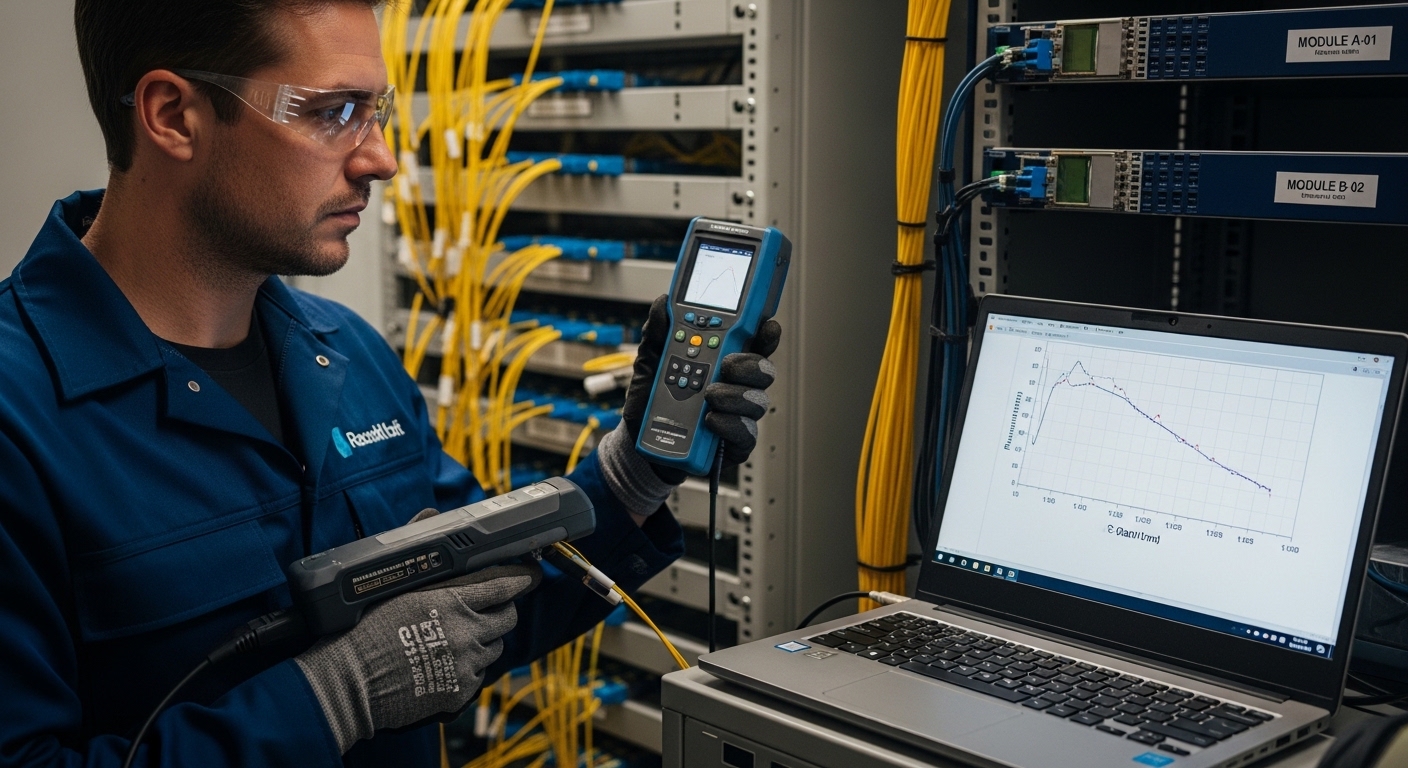
When you design for AI workload reliability, treat the optics path as a system: transceiver, fiber plant, patch cord loss, optics temperature behavior, and switch port implementation. The safest approach is to choose modules that match the switch vendor’s supported optics list and that meet reach and link budget requirements under worst-case conditions. I have seen training clusters become unstable after “it negotiated fine” optics swaps because the new transceiver’s DOM reporting, lane power, or receiver sensitivity did not match the original assumptions.
Selection framing (what “reliable” means in practice)
Reliability targets usually translate to measurable link health: stable link up/down behavior, low error counters (CRC, FCS, symbol errors), and consistent BER margin. In IEEE 802.3 Ethernet links, optical receivers are specified for sensitivity and tolerance, but real deployments are limited by connector cleanliness, patch cord attenuation, and modal effects in multimode fiber. For AI workload traffic, you often run higher utilization and longer continuous flows, so marginal optics show up faster.
10G SFP+ SR (850 nm multimode) for smaller AI workload pods
For legacy or intermediate layers, 10G SFP+ SR at 850 nm is still common where the fiber plant is already multimode and distances are short. Typical reach is 300 m on OM3 and 400 m on OM4, assuming a compliant fiber plant and patch cords. In AI workload environments, 10G often appears as east-west traffic between smaller compute racks or as uplink from older storage appliances.
Key specs to verify
- Data rate: 10.3125 Gb/s (10G Ethernet)
- Wavelength: 850 nm VCSEL
- Connector: LC duplex
- Temperature range: typically 0 to 70 C for standard; industrial variants may support lower/higher
- DOM: often present; verify monitoring support on your switch
Best-fit scenario
A 3-tier data center with 10G ToR aggregation for a small GPU lab: 8 racks, each with 10G storage and management, and multimode OM4 trunks limited to 120–180 m patching. Here, SR saves cost versus LR optics while keeping link behavior predictable.
Cons: limited reach; multimode modal bandwidth and connector loss can erode margin.
25G SFP28 SR for dense AI workload leaf-spine access
25G SFP28 SR at 850 nm is a common stepping stone for AI workload networks when you need more throughput without changing the fiber plant to single-mode. Many deployments target short reach within a row or across adjacent rows, typically within 70–100 m for OM3/OM4 patching depending on optics and link budget. The reliability advantage comes from using a deterministic, well-understood short-reach design with manageable latency.
Key specs to verify
- Data rate: 25.78125 Gb/s
- Wavelength: 850 nm
- Reach: check OM3 vs OM4; vendors typically list 300 m (OM3) and 400 m (OM4) for compliant links
- Receiver sensitivity: confirm per datasheet; do not assume equivalence across vendors
- DOM: verify switch compatibility for alarms and thresholding
Best-fit scenario
In a leaf-spine fabric where compute racks connect to ToR at 25G, you might use SR for intra-row links: 48-port ToR switches with 25G SFP28 downlinks and single-mode uplinks. If your patch cords are kept under 5 dB total end-to-end and you verify with an OTDR/OLTS process, SR is usually stable under AI workload bursts.
Cons: requires careful multimode fiber quality and connector hygiene.
25G SFP28 LR (1310 nm) for longer single-mode within rows
When you need longer reach but still want SFP28 form factor, 25G SFP28 LR at 1310 nm is a frequent choice. Typical reach is 10 km on single-mode fiber, but reliability depends on link budget and dispersion behavior at 1310 nm. For AI workload networks, LR is often used for row-to-row or cross-hall connections where you want fewer fiber transceiver swaps.
Key specs to verify
- Wavelength: 1310 nm
- Reach: commonly 10 km
- Fiber type: single-mode (OS2), confirm core diameter and splice quality
- Connector: LC duplex
- Power levels: transmit power and receiver sensitivity from datasheet for budget calculation
Best-fit scenario
A training cluster spanning two adjacent rooms: ToR in Room A connects to aggregation in Room B over 2.5–6 km of OS2. LR keeps the design simple while meeting reach, and it reduces the risk of multimode bandwidth limitations. The key is to measure actual fiber loss with OLTS and ensure the margin remains after connectors and patch cords.
Cons: higher per-port cost than SR; requires single-mode plant.
40G QSFP+ SR4 for legacy consolidation and mixed-speed AI workload
40G QSFP+ SR4 uses four lanes over 850 nm multimode. It is still useful when you have legacy 40G switching, but in many modern AI workload fabrics you are migrating to 100G or 200G. Reliability is strongly tied to lane-level behavior and consistent multimode bandwidth across the fiber plant.
Key specs to verify
- Data rate: 40.0 Gb/s aggregate (4x10G)
- Wavelength: 850 nm
- Connector: MPO/MTP (common) or adapter to LC depending on module
- Reach: typically 100–150 m depending on OM grade and vendor
- DOM: some platforms support monitoring, some do not
Best-fit scenario
Consolidating older storage and interconnects feeding GPU clusters: a storage array with 40G uplinks connects to an aggregation switch using SR4 over 80–120 m OM4. This can work reliably if you validate MPO polarity and clean end faces, because bad polarity leads to “link flaps” that resemble optics failures.
Cons: MPO polarity and multimode plant quality can be major failure drivers.
100G QSFP28 SR4 for high-density AI workload ToR fan-in
100G QSFP28 SR4 at 850 nm is popular for leaf-spine designs where the cabling is short and you want maximum ports per switch. It typically uses four lanes of 25G signaling, making the link sensitive to lane-level margins and consistent fiber conditioning. For AI workload reliability, you should treat SR4 like a “high-performance multimode” path: measure, clean, and verify.
Key specs to compare
Engineers usually compare reach, optical budget, and monitoring features before purchase. Below is a practical comparison of common module families used in AI workload fabrics. Always validate exact reach with your switch vendor optics compatibility list and measured fiber loss.
| Module family | Wavelength | Typical reach | Form factor / lanes | Connector | DOM | Operating temp (typ.) |
|---|---|---|---|---|---|---|
| 10G SFP+ SR | 850 nm | 300 m (OM3) / 400 m (OM4) | SFP+ / 1 lane | LC duplex | Often supported | 0 to 70 C |
| 25G SFP28 SR | 850 nm | 300 m (OM3) / 400 m (OM4) | SFP28 / 1 lane | LC duplex | Often supported | 0 to 70 C |
| 25G SFP28 LR | 1310 nm | 10 km (OS2) | SFP28 / 1 lane | LC duplex | Common | 0 to 70 C |
| 40G QSFP+ SR4 | 850 nm | 100 to 150 m (OM4 varies) | QSFP+ / 4 lanes | MPO/MTP | Varies by platform | 0 to 70 C |
| 100G QSFP28 SR4 | 850 nm | 100 m class on OM4 (vendor-specific) | QSFP28 / 4 lanes | MPO/MTP | Common | 0 to 70 C |
| 100G QSFP28 LR4 | 1310 nm (4 wavelengths) | 10 km class (OS2) | QSFP28 / 4 lanes | LC duplex | Common | 0 to 70 C |
| 200G QSFP56 DR4 | 850 nm | ~100 m class (OM4 varies) | QSFP56 / 8 lanes | MPO/MTP | Common | 0 to 70 C |
Cons: multimode MPO polarity and insertion loss sensitivity.
100G QSFP28 LR4 for single-mode spine links in AI workload fabrics
100G QSFP28 LR4 is a workhorse for AI workload spine and interconnect links where you want predictable OS2 behavior and longer reach. It uses wavelength-division multiplexing across multiple wavelengths around 1310 nm, which improves scalability over standard SR designs. Reliability depends on correct fiber type, low-loss splicing, and avoiding connector contamination.
Key specs to verify
- Wavelength: 1310 nm LR4 multi-wavelength
- Reach: commonly 10 km on OS2
- Connector: LC duplex
- Optical power: transmit power and sensitivity for link budget
- Transceiver compatibility: ensure the switch supports the module vendor and DOM format
Best-fit scenario
In a leaf-spine fabric with 100G spine uplinks, you may run 1–6 km between buildings or across long corridors. LR4 reduces the risk of multimode bandwidth roll-off and makes error behavior easier to attribute to fiber loss rather than modal dispersion. This is especially valuable during AI workload training windows that run for days without operator intervention.
Cons: typically higher cost than SR; optics and fiber must be budgeted precisely.
200G QSFP56 DR4 for next-gen AI workload cabinet interconnects
200G QSFP56 DR4 targets higher bandwidth density using short-reach multimode signaling, often over OM4 with MPO/MTP cabling. In practice, you choose DR4 when you need to feed large numbers of GPUs and you can keep the fiber plant within the vendor’s specified loss and reach class. Reliability hinges on consistent MPO polishing standards and strict adherence to polarity rules.
Key specs to verify
- Data rate: 200 Gb/s aggregate
- Wavelength: 850 nm class
- Reach: typically around 100 m class on OM4 (validate with datasheet)
- Connector: MPO/MTP
- Lane count and equalization: confirm switch supports the required optics profile
Best-fit scenario
A GPU cabinet with a high-speed uplink to an aggregation switch: you might use DR4 for 60–90 m fiber runs inside the same row and reserve longer reach for coherent or LR optics. This approach keeps the AI workload data path short and reduces the number of intermediate routing hops that can amplify congestion.
Cons: multimode MPO handling is unforgiving; requires tight installation discipline.
Coherent optics (QSFP-DCO style) for long-haul AI workload aggregation
When AI workload fabrics extend beyond standard datacenter distances or when you need high capacity across campuses, coherent transceivers can be the reliability choice. They use DSP-based compensation for dispersion and nonlinear effects, which helps stabilize signal quality over longer OS2 spans than typical direct-detect modules. The tradeoff is complexity: you must manage configuration, firmware compatibility, and optics certification requirements.
Key specs to verify
- Reach: depends on modulation and configuration; commonly tens to hundreds of kilometers in vendor classes
- Fiber: OS2
- Connector: LC duplex or patch cables depending on model
- DSP settings: confirm the transceiver and line system agree on rate, modulation, and FEC
- Operational temperature: validate against room and cabinet airflow profiles
Best-fit scenario
Two data centers supporting the same AI training pipeline: 40–80 km of routed OS2 between sites, with 200G to multi-Tbps capacity. Coherent optics reduce the probability of “it works on day one” failures by using receiver-side DSP to maintain performance, but you must follow vendor commissioning steps and monitor alarms continuously.
Cons: higher CAPEX; more configuration and firmware dependency.
Selection criteria checklist engineers actually use
Use the ordered checklist below during procurement and commissioning for AI workload links. It is designed to prevent the “wrong optics for the plant” problem that shows up as intermittent training instability.
- Distance and reach class: confirm vendor reach for your fiber type (OM3/OM4 vs OS2) and your measured end-to-end loss.
- Optical link budget math: include patch cords, connectors, splices, and worst-case temperature drift if listed.
- Switch compatibility: verify the switch model’s optics support matrix; do not rely on generic “standards-based” claims.
- DOM and diagnostics: confirm DOM access method and thresholds; ensure your monitoring stack can ingest alarms without suppressing critical events.
- Operating temperature and airflow: validate the module’s rated range and measure chassis inlet temperature during peak AI workload.
- Vendor lock-in risk: compare OEM vs third-party total cost, including RMA rates and whether the switch rejects non-OEM optics.
- FEC and equalization assumptions: for higher speeds, confirm the switch and optics profile support the required signaling and error correction behavior.
- Install tooling and hygiene: ensure MPO polarity tools, fiber microscopes, and cleaning supplies are available before rollout.
Pro Tip: In AI workload networks, the fastest way to avoid “mystery instability” is to baseline optics behavior during a controlled load test. Capture per-port DOM metrics (Tx/Rx power, temperature, laser bias if exposed) and correlate them with CRC/FCS and link flaps; many marginal optics fail only when thermal equilibrium is reached, not at initial link bring-up.
Common mistakes and troubleshooting tips
Below are field-tested failure modes that repeatedly show up in AI workload deployments, along with root causes and fixes.
References & Further Reading: IEEE 802.3 Ethernet Standard | Fiber Optic Association – Fiber Basics | SNIA Technical Standards
-
Mistake: Swapping SR optics between vendors without re-validating reach and receiver margin.
Root cause: receiver sensitivity and transmitter power can differ enough that the link budget becomes negative under connector contamination or aging.
Solution: run OLTS/OTDR to measure actual loss, clean connectors, and verify DOM power levels stay within the switch’s expected thresholds. -
Mistake: Ignoring MPO polarity and assuming “it should negotiate anyway.”
Root cause: polarity reversal can present as intermittent link training success, especially when equalization retries occur under load.
Solution: enforce polarity labeling, use polarity adapters correctly, and verify with a fiber tester before energizing ports. -
Mistake: Treating DOM as “nice to have” and not integrating it into monitoring.
Root cause: you lose early warning signals like rising Rx power degradation or temperature drift, so errors appear only during AI workload peaks.
Solution: ingest DOM into your telemetry system, alert on thresholds for Tx/Rx power and temperature, and correlate with interface error counters. -
Mistake: Overlooking temperature and airflow during maximum training runs.
Root cause: transceiver laser bias and receiver sensitivity shift with temperature; some chassis run hotter under real utilization than during commissioning.
Solution: measure inlet air temperature at the switch during peak load
