
If your enterprise is planning a move from 400G to 800G investment for AI-ready networks, the question is not just “can we buy the optics.” You also need to validate switch lane compatibility, fiber plant readiness, power and cooling impact, and the real total cost of ownership (TCO). This article helps network and finance stakeholders build a defensible cost analysis and implementation plan with fewer surprises in the lab and in production.
Prerequisites for an 800G investment decision (before buying anything)
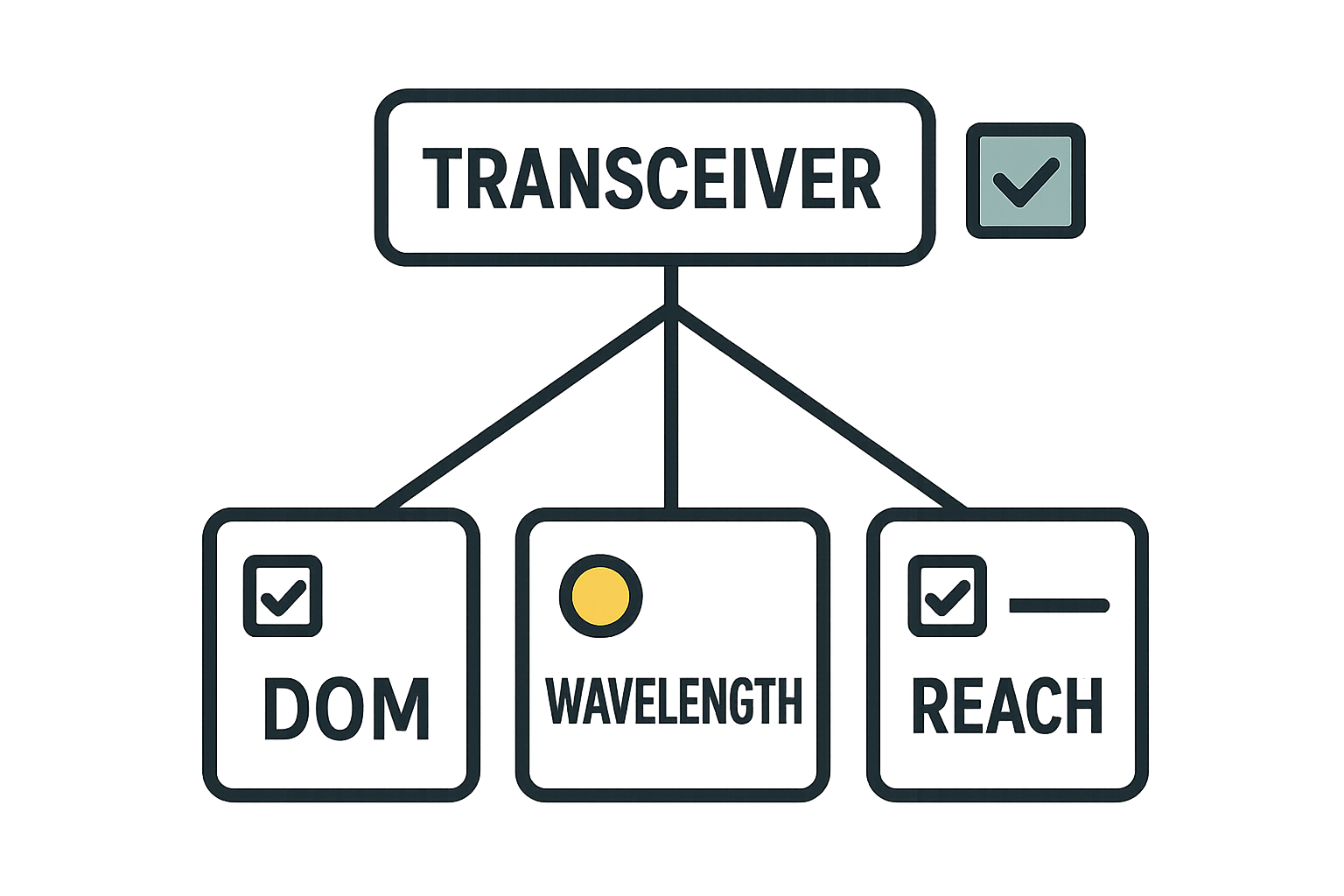
Before you model costs, confirm the operational constraints that usually decide whether 800G is a net win. You will need accurate inventory data for switch model numbers, optics SKUs, and the existing fiber layout (including connector types and estimated loss). Finally, align the decision with the traffic profile: if your utilization is low, some performance benefits will not translate into measurable ROI.
Lock the target switch platform and lane map
Start with the exact switch family you are considering (for example, a leaf-spine platform with 800G ports). In the lab, verify whether the platform supports 800G QSFP-DD or OSFP style optics and whether it uses a fixed lane architecture (for example, 8x100G) or a different internal mapping. Record the port breakout rules and any constraints on mixing optics types across adjacent ports.
Expected outcome: A compatibility matrix that maps each 800G port to the required transceiver form factor and lane configuration, plus a list of unsupported optics and firmware versions to avoid.
Audit the fiber plant and connector standards
Collect: fiber type (OM4/OM5/OS2), core size, current link distances, and connector type (LC vs MPO/MTP). If you plan to use parallel optics, check whether your patch panels and harnesses are MPO/MTP with correct polarity and cleaning state. For standards grounding, reference IEEE Ethernet expectations for 800G-class operation via the IEEE 802.3 working group materials. IEEE 802.3 Ethernet Standard
Expected outcome: A list of links that already meet the reach budget and a separate list needing re-termination, patch changes, or new transceiver reach grades.
Define the measurement method for transceiver power and link budgets
Transceiver power is a major driver of 800G investment TCO because it affects both PSU loading and cooling. Use vendor datasheets to capture typical and maximum optical module power; then validate in your environment using platform telemetry (idle and active modes). For optical budgets, compute link loss including measured fiber attenuation, connector insertion loss, and expected aging margins.
Expected outcome: A spreadsheet that estimates per-link electrical power, optical budget headroom, and the “worst-case” scenario if a module runs near its upper temperature limit.
Optics and standards reality check: what 800G links actually require
800G enterprise deployments typically rely on coherent-less high-speed optics (for short reach) or coherent solutions (for longer reach). The decision hinges on reach class, wavelength, connector, and whether you can use multi-lane parallel optics without violating polarity rules. If you are planning a near-term 800G investment, the most common path is short-reach optics in data center cabling, because it minimizes the need for new long-haul coherent optics.
Choose reach class and optical interface type
For enterprise data centers, the most relevant choices are short-reach multimode (SR variants) and occasionally long-reach single-mode (LR/ER variants). Even within “SR,” vendors may offer different reach tiers (for example, 70–100m on OM4 vs higher on OM5 depending on configuration). The table below compares typical 800G optics characteristics you will see during procurement and acceptance testing.
| Parameter | Example 800G SR (Multimode) | Example 800G LR/FR (Single-mode) | What it changes for cost |
|---|---|---|---|
| Target use | Leaf-spine within data halls | Inter-row or inter-building | Fiber plant upgrade scope |
| Data rate | 800G | 800G | Port utilization ceiling |
| Wavelength | 850 nm class | 1310 nm class | Multimode vs single-mode cabling |
| Reach | Typically tens to ~100 m (depends on OM type) | Typically up to multiple km (depends on variant) | Whether you need new fiber runs |
| Connector | MPO/MTP (parallel optics) | LC (single-fiber per lane set) | Patch panel and polarity handling |
| Form factor | Commonly QSFP-DD or OSFP style (platform-dependent) | Platform-dependent | Compatibility and firmware validation |
| Power (typical) | Often higher than 400G per port | Varies widely by tech | Cooling and PSU budgeting |
| Temperature range | Commercial or industrial grade options | Spare strategy for hot aisles |
When you evaluate specific modules, rely on vendor datasheets and part numbers. For example, enterprises often compare OEM and third-party optics such as Cisco-branded or compatible models, and you may see third-party transceivers like Finisar/II-VI variants or FS.com offerings (always validate with your exact switch). Example part numbers you may encounter during short-reach evaluation include Cisco SFP-10G-SR for older generations, but for 800G you will be dealing with higher-capacity equivalents in QSFP-DD or OSFP families, with strict compatibility requirements.
Expected outcome: A short list of optics SKUs that match your reach class and connector constraints, plus a test plan for acceptance and interoperability.
Confirm DOM and telemetry integration
During pilot testing, confirm the module supports Digital Optical Monitoring (DOM) and that the switch reads key thresholds correctly (Tx power, Rx power, bias current, temperature). If your operations team depends on alarms for pre-failure detection, verify alarm thresholds and event syslog formatting. Ensure your NMS can correlate optics telemetry with interface counters (CRC, FEC, BER proxies).
Expected outcome: A telemetry mapping document your operations team can implement in monitoring dashboards and incident playbooks.
Cost analysis model: where the 800G investment really pays off or fails
A proper cost analysis splits the total cost into hardware, optics, installation labor, power and cooling, and risk. Many teams underestimate the “hidden” costs: re-cabling labor, polarity errors that cause link flaps, and the time spent validating mixed-vendor optics. The ROI case strengthens when you can either increase traffic capacity without doubling ports, or reduce oversubscription by upgrading spine bandwidth.
Build a TCO worksheet with power and cooling assumptions
Use platform-level power telemetry if available. Estimate per-port electrical draw using module typical power and switch ASIC overhead; then convert to facility impact using your PUE and cooling efficiency. For quick scenario math, assume that doubling link speed can increase per-port power modestly or significantly depending on module type; validate with real measurements from a pilot module rather than relying solely on marketing claims.
Expected outcome: A TCO per port-year that includes electrical power, cooling, and expected maintenance labor.
Include optics procurement strategy and vendor lock-in risk
OEM optics can reduce compatibility risk but may carry a premium. Third-party optics often reduce unit cost but can increase validation time and the likelihood of firmware-specific issues. If you plan an 800G investment across multiple sites, add a “compatibility tax” line item for lab validation per switch firmware release.
For data management and observability considerations (especially if you tie optics telemetry into storage analytics), review SNIA materials on storage and data infrastructure best practices. SNIA
Model deployment cadence and failure/replace rates
Use historical failure rates for comparable optics generations in your environment, not generic assumptions. If your enterprise has a high rate of connector contamination events, the ROI model should include cleaning supplies, MPO cleaning workflows, and spare module inventory. Also account for downtime risk: a higher-speed module may require more careful handling during swaps.
Expected outcome: A “go/no-go” threshold that includes both cost and operational risk tolerance.
Implementation guide: a low-risk rollout plan for an 800G investment
Procurement without staged validation is the fastest way to turn an 800G investment into a calendar slip. The goal is to validate compatibility, optical performance, and operational monitoring in a controlled pilot, then scale with repeatable procedures. Treat each switch firmware update as a new “compatibility release” for optics validation.
Pilot in a controlled topology with measured acceptance criteria
Pick a pilot area such as a single leaf-spine pair or a single rack group where fiber lengths match your expected distribution. In a 3-tier data center leaf-spine topology, for example, you might pilot on 2 spines and 8 leaves with 16 uplinks at 800G total, using existing short-reach cabling. Set acceptance criteria like “no interface CRC errors beyond baseline,” “optics Rx power within vendor thresholds,” and “no link resets over a 72-hour soak test.”
Expected outcome: Measured optics telemetry stability and switch counters that meet your defined thresholds.
Standardize optics handling and fiber polarity workflows
In parallel optics, polarity mistakes are common and can be hard to diagnose remotely. Create an SOP: clean connectors before insertion, label MPO/MTP ends, document polarity orientation, and verify with a light source and power meter if you have that capability. Align the SOP with ANSI/TIA practices for fiber handling and testing where applicable, and ensure your technicians follow consistent cleaning steps. Fiber Optic Association
Expected outcome: Lower operational incidents and faster troubleshooting during the scale-out phase.
Scale out with staged firmware and monitoring readiness
Roll out to a second site or second rack group only after you confirm that monitoring, alerting, and incident response are functioning end-to-end. Ensure you can correlate optics DOM events with interface errors and link state transitions. If you use automated orchestration, verify that it does not overwrite module-specific thresholds.
Expected outcome: Predictable scaling with fewer “unknown unknowns” during the 800G investment rollout.
Pro Tip: In field testing, teams often find that the “it lights up” moment hides future instability. Run a 48- to 72-hour soak and watch DOM trends (Tx bias current drift and Rx power margin), not only link up/down events; a link that passes day one can still fail during thermal cycling or after connector micro-movements.
Selection criteria checklist for the 800G investment (engineer + finance friendly)
- Distance and reach budget: verify measured fiber attenuation and connector insertion loss against the optics reach class.
- Switch compatibility: confirm exact form factor (QSFP-DD vs OSFP), port lane mapping, and supported optics list for your firmware.
- DOM and telemetry requirements: ensure DOM fields and thresholds are readable and integrate with your monitoring stack.
- Operating temperature and airflow: validate module temperature range against your hot-aisle or high-density row conditions.
- Power and cooling impact: compute per-port power draw and translate to facility TCO using your PUE and cooling model.
- Vendor lock-in risk: compare OEM vs third-party, but include validation time and firmware-change re-testing costs.
- Spare strategy: plan spares by reach grade and form factor, and decide whether to keep one or two “known good” optics SKUs.
Common mistakes and troubleshooting tips during 800G rollout
Even experienced teams run into predictable failure modes when scaling to 800G. Below are the top issues with root causes and practical fixes.
Failure mode 1: Link comes up, then flaps under load
Root cause: marginal optical power margin, often due to connector contamination, excessive insertion loss, or a polarity mismatch on MPO/MTP.
Solution: clean both ends using approved MPO cleaning tools, re-check polarity orientation, and measure Rx optical power against vendor thresholds. If you have to choose, prioritize cleaning and polarity correction before replacing hardware.
Failure mode 2: “Unsupported transceiver” or degraded performance after firmware update
Root cause: firmware-specific optics compatibility changes, where the switch’s validation logic rejects certain third-party optics or expects different DOM threshold scaling.
Solution: pin optics to a firmware-supported list; stage upgrades by rack group and run the 72-hour soak test again after each firmware change.
Failure mode 3: Monitoring shows temperature spikes and optical alarms in specific racks
Root cause: airflow short-circuiting or obstructed vents near high-density port areas, pushing modules toward their upper temperature range.
Solution: inspect baffles and cable routing, verify fan speed profiles, and compare module temperature telemetry across racks. Add airflow verification to your acceptance checklist for future 800G investment sites.
Cost and ROI note: realistic pricing ranges and TCO levers
In practice, the unit price of 800G optics varies widely by reach tier, vendor, and volume commitments. As a planning heuristic for enterprise budgeting, teams often see short-reach 800G optics priced materially higher than 400G optics, with third-party options typically cheaper but requiring additional validation and potentially more frequent replacements if handling standards are inconsistent. Include labor for re-termination and cleaning workflow updates, because MPO/MTP handling is where many TCO surprises emerge.
ROI improves when the upgrade reduces the number of oversubscribed uplinks needed to support AI workloads, or when it avoids a larger mid-term refresh by matching the next wave of server NIC and fabric capacity. If your traffic growth is uncertain, negotiate phased delivery and keep spares of the exact optics SKUs that pass your lab acceptance tests.
FAQ
What does an 800G investment usually include besides the transceivers?
Most budgets include switch port licensing (if applicable), optics (QSFP-DD or OSFP style), fiber patch changes, cleaning and MPO handling tools, and labor for re-termination and acceptance testing. Many teams also include a small validation lab cost for soaking and monitoring setup.
How do we compare OEM vs third-party optics in a cost analysis?
Compare unit price, but also add validation time and the operational risk of firmware-specific compatibility. A third-party optic can be cheaper per module yet cost more in total TCO if it increases downtime, troubleshooting time, or rework during firmware upgrades.
What is the fastest way to validate optics reach without buying too many modules?
Use your measured fiber plant data first: connector types, insertion loss estimates, and actual link lengths. Then pilot with a small number of modules that match the reach tier, and validate with DOM telemetry and error counters over a 48- to 72-hour soak.
Can we mix optics vendors on the same switch?
Often you can, but compatibility depends on your exact switch model, firmware version, and supported optics list. Even when the switch accepts multiple optics, performance and telemetry thresholds may vary, so plan to standardize during the rollout and validate mixed scenarios only if you have a strong operational reason.
How much power and cooling impact should we expect from 800G ports?
Expect higher total power per active port compared to older generations, but the exact delta depends on module power draw and the switch platform. The best approach is to measure in a pilot rack and then use your facility PUE model for TCO forecasting.
What should we monitor to detect early optical problems?
Track DOM metrics such as Rx power margin, Tx bias current, and temperature, and correlate them with interface counters like CRC and link resets. A stable link on day one is not enough; look for gradual drift during thermal cycles.
Updated May 2026. If you want to turn an 800G investment into a controlled business case, start with switch and fiber compatibility, validate optics telemetry in a pilot, then scale with standardized handling and monitoring. Next, review How to calculate fiber link budgets for high-speed optics to tighten your reach and acceptance criteria before you commit to volume procurement.
Author bio: I have led field deployments of high-speed Ethernet fabrics, including optics validation, DOM telemetry integration, and acceptance testing across multi-rack pilots. I write from hands-on experience balancing engineering constraints with measurable TCO and operational risk.


