
If you manage a port network or a ship-to-shore setup, a vessel fiber link can fail for surprisingly practical reasons: wrong optics, mismatched wavelengths, or connector and DOM assumptions. This article helps network techs and field engineers choose transceivers that actually work in marine and coastal environments, with clear specs, pitfalls, and test steps. You will get a top list of eight high-confidence transceiver types and a selection checklist you can use during procurement.
10G SR over OM4: the port-side workhorse for short hops
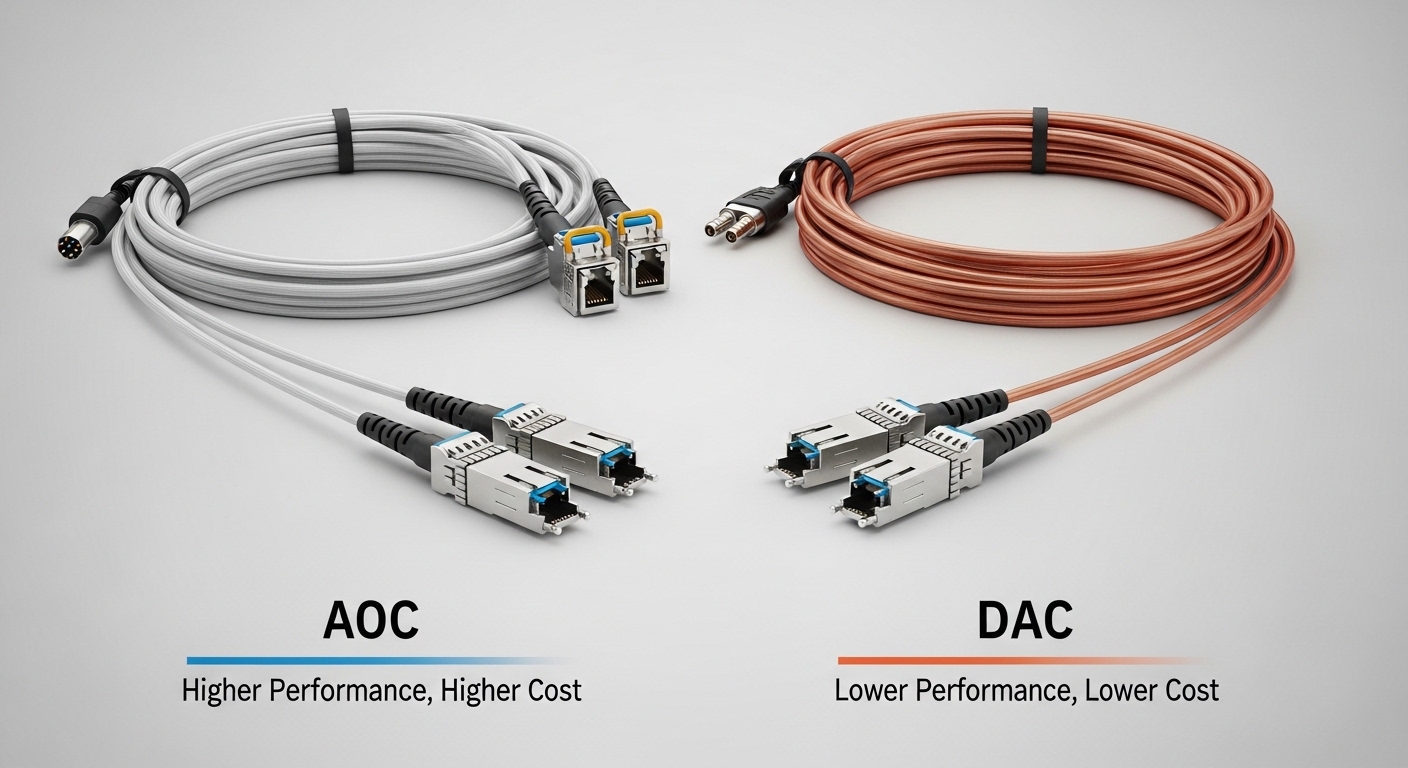
For most shore switches, 10GBASE-SR on multimode fiber is the fastest path to stable links when runs are short and patching is frequent. SR modules use 850 nm optics and are designed for OM4 and sometimes OM3 depending on vendor characterization. In my deployments, this is the go-to choice between aggregation and access racks in terminal buildings.
Key specs to verify: data rate 10.3125 Gb/s line coding, wavelength 850 nm, typical reach on OM4 around 300 m, and connector type usually LC. Check temperature range; many third-party modules run to 0 to 70 C, but ports with hot switch rooms may need -5 to 70 C or better.
Best-fit scenario: 3-tier data center style port network with leaf-spine switches, where ToR to aggregation patch runs are 50 to 150 m on OM4.
Pros: low cost, easy multimode handling, abundant compatibility.
Cons: limited reach vs single-mode; avoid mixing OM3/OM4 without confirming link budgets.
| Transceiver type | Wavelength | Reach (typ.) | Connector | Data rate | Temp range (check) |
|---|---|---|---|---|---|
| 10GBASE-SR SFP+ | 850 nm | ~300 m on OM4 | LC | 10G | 0 to 70 C or wider |
10G LR over single-mode: ship-to-shore comfort zone
When the vessel fiber link needs to span from quay cabinets to shore aggregation, single-mode optics reduce modal stress and extend reach. 10GBASE-LR uses 1310 nm and is common for shore runs up to roughly 10 km depending on optics and budget. In maritime installs, LR is often the first choice for “it must work” links when fiber plant is already in place.
Real-world deployment: In a terminal with two shore buildings, I’ve seen LR used from a shore patch panel to a ship-board media converter at about 6.2 km of single-mode, with measured optical loss around 3.5 dB excluding connector events.
Best-fit scenario: quay-to-shore or long-building runs where you want predictable optics and straightforward testing.
Pros: long reach, mature ecosystem, stable with single-mode plant.
Cons: higher module cost than SR; requires correct single-mode cabling and cleaning discipline.
10G ER for longer coastal spans and higher margins
If your shore route crosses ducts with higher attenuation or includes extra splices, 10GBASE-ER at 1550 nm can buy margin. ER is typically specified around 40 km for 10G in standards-based implementations, but your actual budget depends on fiber type and loss. I recommend ER when you cannot easily control splice quality or when you anticipate future reroutes.
Best-fit scenario: long coastal routes where you need extra reach headroom for a vessel moored at varying locations.
Pros: biggest reach for 10G; helps when loss is uncertain.
Cons: more expensive; verify dispersion and ensure both ends match wavelength family (LR vs ER).
25G SR for modern port switches with higher throughput
As port networks upgrade, 25GBASE-SR often replaces 10G where uplinks and storage traffic grow. It uses 850 nm like SR, but with higher signaling rate and stricter optics compatibility. In practice, we used 25G SR between aggregation and core within the same building, using OM4 and keeping patch lengths under 120 m.
Selection notes: confirm SFP28 vs SFP25 form factor, and verify DOM support if your switch expects it. Some switches have finicky compatibility checks; vendor datasheets and the switch vendor’s optics matrix matter.
Best-fit scenario: leaf-spine upgrades where you want higher bandwidth without immediately moving to single-mode.
Pros: strong performance per lane, works well on OM4.
Cons: more sensitive to dirty connectors and budget mistakes.
25G LR for single-mode upgrades without redesigning the plant
25GBASE-LR at 1310 nm is a practical step up when you already have single-mode fiber and need more throughput. It’s a common “middle upgrade” before 50G/100G. I’ve used LR to replace older 10G LR modules during a phased migration, keeping the same fiber routing while increasing capacity.
Best-fit scenario: shore-to-aggregation links on single-mode with 1 km to 10 km distances and moderate loss.
Pros: reuses existing single-mode infrastructure; good balance of cost and reach.
Cons: still requires careful cleaning and correct optics pairing.
40G/100G SR4 and LR4 options for dense backbones
For backbone segments where you need higher aggregate bandwidth, multi-lane optics like SR4 or LR4 can reduce the number of fibers and ports consumed. SR4 typically uses 850 nm and LR4 uses 1310 nm, but the exact lane mapping depends on the transceiver family. In port core builds, we selected these to reduce patch-panel sprawl.
Best-fit scenario: high-density aggregation where you want to consolidate lanes but keep fiber counts manageable.
Pros: efficient fiber utilization; supports high-throughput backbones.
Cons: more stringent switch compatibility; higher module costs and faster failure visibility needed.
Long-reach 100G LR4 for the “keep the link up” requirement
When the vessel fiber link must survive long, imperfect routes, 100GBASE-LR4 is often chosen for its reach and maturity. LR4 commonly operates around 1310 nm with four-lane parallelism. I treat these links as “mission critical optics”: we pre-stage spares and enforce connector maintenance schedules.
Best-fit scenario: ship-to-shore backbone where redundancy and low downtime matter more than module price.
Pros: long reach at 100G; strong for core segments.
Cons: alignment of optics and vendor support is crucial; budgets must be calculated precisely.
Ruggedized pluggables and DOM-aware spares for harsh marine rooms
Maritime environments bring salt air, vibration, and temperature swings. Even if the wavelength and reach are correct, a non-rugged module can work for weeks and then fail under vibration. I’ve had good outcomes using modules with robust latching, tested temperature specs, and Digital Optical Monitoring (DOM) that your switch can read for alarms and trend monitoring.
Best-fit scenario: quayside cabinets, ship-board switch rooms, or any enclosure without tightly controlled HVAC.
Pros: fewer surprise outages; better monitoring and faster troubleshooting.
Cons: may cost more; confirm switch DOM expectations to avoid “unsupported module” warnings.
Common mistakes / troubleshooting that wreck vessel fiber links
1) Mixing wavelength families (LR vs ER) or mismatched optics
Root cause: one end is 1310 nm LR while the other assumes different optics behavior; some optics families will not establish link.
Solution: verify the label on each module, confirm wavelength family, and match the transceiver type across ends.
2) Ignoring connector cleanliness and polish type
Root cause: even a good budget fails with dirty LC/APC interfaces, especially at 25G and above.
Solution: clean with approved wipes and inspect with a scope; re-clean after any unplug/replug cycle.
3) Overlooking DOM and switch compatibility checks
Root cause: a switch rejects or partially supports a module, leading to flaps or “link down” despite correct optics.
Solution: check the switch vendor’s optics compatibility list; validate DOM fields and alarm thresholds during acceptance testing.
4) Bad link budget assumptions on multimode
Root cause: patch cord length, insertion loss, and bend sensitivity are underestimated on OM4.
Solution: measure end-to-end loss, include connector/splice counts, and keep conservative margins for future maintenance.
Selection criteria checklist for the right vessel fiber link transceiver
- Distance and fiber type: OM3/OM4 vs single-mode; confirm actual measured loss, not just cable spec.
- Optics wavelength and reach: SR (850 nm), LR (1310 nm), ER (1550 nm), and lane type (SR4/LR4).
- Switch compatibility: form factor (SFP+, SFP28, QSFP+/QSFP28), vendor optics matrix, and DOM behavior.
- DOM support and monitoring: ensure your NMS can read thresholds (temperature, bias current, received power).
- Operating temperature: pick modules rated for your enclosure; marine cabinets can exceed typical office switch-room temps.
- Vendor lock-in risk: decide between OEM modules (higher cost, predictable support) and third-party (lower cost, compatibility testing needed).
- Connector and patch ecosystem
