
Autonomous vehicles are stitched from high-speed senses, real-time compute, and safety interlocks, all of which must exchange data without hesitation. This article explains the use case of optical modules inside vehicle and edge architectures, helping systems engineers and fleet deployment teams choose optics that survive vibration, temperature swings, and strict latency budgets. You will get practical selection criteria, a troubleshooting playbook, and a realistic cost and reliability view grounded in standards and vendor behavior.
Why optical modules matter in an autonomous vehicle use case
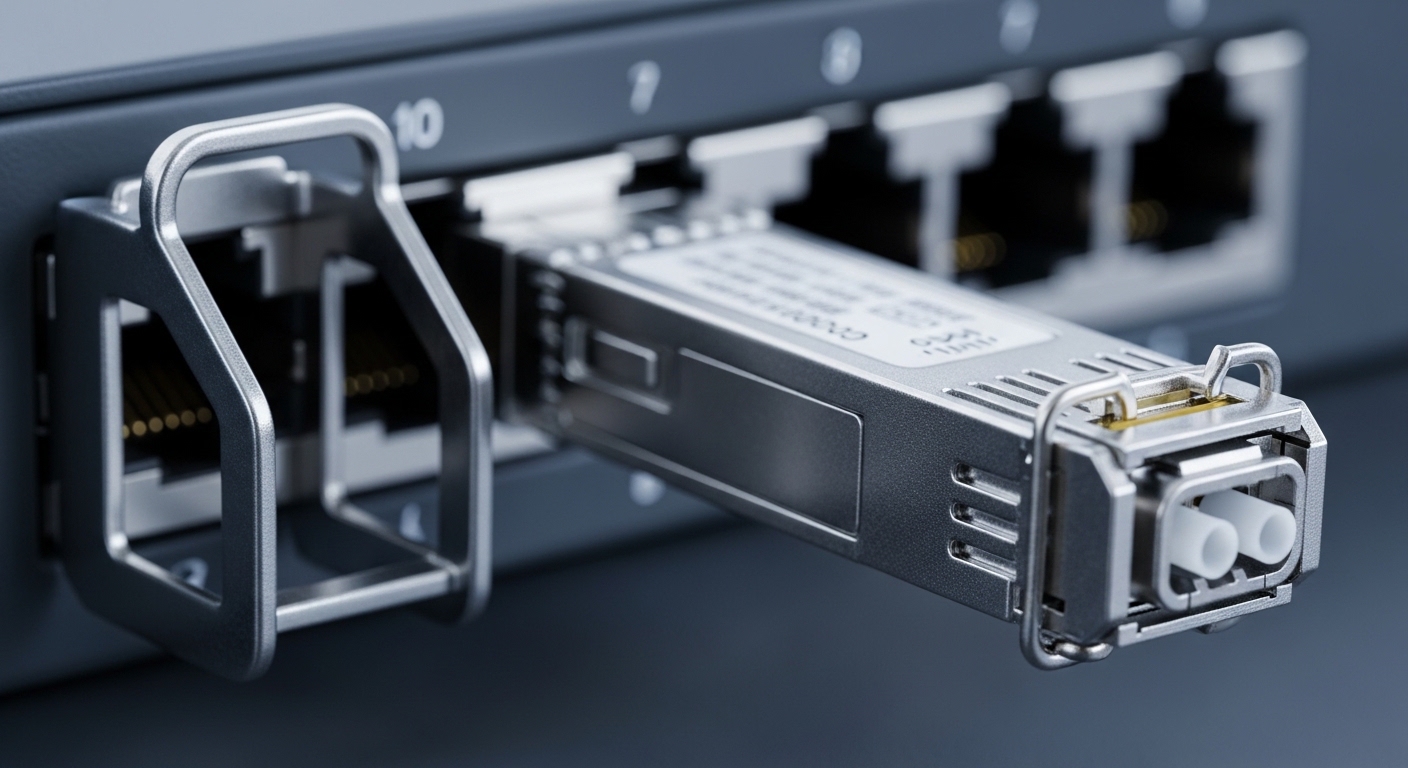
In a modern autonomous stack, the optical link often becomes the quiet metronome: cameras, LiDAR processing, radar fusion, and driving control exchange large payloads over deterministic or near-deterministic paths. Copper can work for short hops, but vehicle harnesses grow heavy and noisy as bandwidth rises, while electromagnetic interference and ground offsets degrade signal integrity. Optical transceivers reduce susceptibility to EMI, enable longer reach across the vehicle body, and help isolate noisy power domains.
From a standards perspective, many vehicle deployments align with Ethernet-based transports. IEEE 802.3 defines physical layer behaviors for common high-speed Ethernet classes, and optics are selected to meet those electrical and optical requirements. For example, 10GBASE-SR and 100GBASE-SR use short-reach optics over multimode fiber, while longer-reach variants use single-mode fiber; the exact mapping depends on the system’s switch ASIC and optics form factor. anchor-text: IEEE 802.3 physical layer standard
Pro Tip: In vehicle builds, teams often size optics for link rate and reach, then forget the field reality: connector micro-misalignment and dust control dominate uptime more than the nominal optical budget. If you can measure link loss margin during commissioning, you can avoid “it passed in the lab” failures later on the proving ground.
Where optics land in the vehicle data path
Common placements include a drive-by-wire compute domain, a perception compute rack, and distributed sensor hubs. Optical modules frequently connect: (1) sensor preprocessing boards to an edge GPU complex, (2) redundant safety controllers across segregated network segments, and (3) time-synchronized telemetry paths feeding logging and fleet management. In practice, engineers choose optics to keep lane speeds aligned with switch backplanes and to preserve latency determinism for control loops.
Key optical specifications engineers must verify
Optical modules are not interchangeable by name alone. In an autonomous vehicle use case, the engineer must confirm wavelength, data rate, reach class, fiber type, connector interface, optical output power, receiver sensitivity, and operating temperature. Vehicle-grade requirements can push beyond typical datacenter ranges, so you need evidence from the manufacturer’s datasheet and burn-in history.
Below is a compact specification comparison for typical short-reach and medium-reach Ethernet optics that often appear in vehicle and edge networks. Always verify that the transceiver is electrically compatible with the destination switch or NIC, including supported speed and modulation class.
| Parameter | 10GBASE-SR (MMF) | 25GBASE-SR (MMF) | 100GBASE-LR4 (SMF) |
|---|---|---|---|
| Typical data rate | 10.3125 Gb/s | 25.78125 Gb/s | 103.125 Gb/s |
| Wavelength | 850 nm | 850 nm | ~1310 nm (4 lanes) |
| Fiber type | Multimode (OM3/OM4) | Multimode (OM3/OM4) | Single-mode (OS2) |
| Representative reach | ~300 m on OM3/OM4 | ~100 m on OM4 (varies by vendor) | ~10 km (class dependent) |
| Connector | LC duplex (common) | LC duplex (common) | LC (common) |
| Operating temperature | Often -5 to 70 C (confirm) | Often -5 to 70 C (confirm) | Often -5 to 70 C (confirm) |
| Digital diagnostics | Typically supported via DOM | Typically supported via DOM | Typically supported via DOM |
For concrete part examples, engineers may evaluate vendor options such as Cisco SFP-10G-SR, Finisar FTLX8571D3BCL, or FS.com SFP-10GSR-85, then validate them against vehicle qualification targets. Note: these catalog modules are often datacenter-oriented; vehicle programs usually require temperature cycling, vibration testing, and connector retention validation beyond standard telecom expectations. anchor-text: Cisco SFP-10G-SR datasheet
Selection criteria checklist for the autonomous vehicle use case
Choosing optics is a negotiation between physics, integration constraints, and operational risk. The checklist below is how field engineers typically decide when deploying a use case that must keep perception and control paths alive under motion and heat.
- Distance and fiber type: measure end-to-end loss including connectors and splices; decide MMF versus SMF early to avoid redesign.
- Link rate compatibility: confirm the switch ASIC supports the exact module speed and lane mapping; match Ethernet PHY expectations from IEEE 802.3. anchor-text: IEEE 802.3 working group
- Connector and harness constraints: verify LC duplex vs other interfaces, and check bend radius requirements in the harness routing plan.
- DOM and monitoring strategy: ensure the module exposes temperature, bias, TX power, and RX power (DOM) so you can alert before failure.
- Operating temperature and derating: use vendor temperature ratings and apply derating for worst-case cabin and under-hood profiles.
- Operating environment qualification: vibration, shock, and repeated thermal cycling; validate connector retention and dust ingress control.
- Vendor lock-in risk: check compatibility with the host switch and whether third-party optics pass vendor diagnostics and firmware checks.
- Spare strategy and lead time: plan for stocking by part number and revision; optical modules can be sensitive to firmware and optics calibration.
Decision shortcuts that prevent costly rework
Start with the switch and NIC ecosystem, then work outward to the fiber plan. If the vehicle architecture uses centralized switching, select optics that match the switch’s supported transceiver types and diagnostics behavior. Only after that should you finalize MMF vs SMF and connectorization, because harness routing changes can be more expensive than swapping optics.
Common pitfalls and troubleshooting tips in the field
Optical links often fail in ways that look like software issues. The fastest path to recovery is disciplined measurement: verify physical layer health first, then move up the stack.
“Link up, but errors climb” after harness installation
Root cause: excessive bend loss or micro-bending from tight routing, especially near seat frames or cable troughs. The module meets nominal sensitivity, yet the margin collapses under stress. Solution: re-check bend radius compliance, inspect for kinks, and measure receive power at commissioning; replace questionable cable runs.
Intermittent link drops under temperature cycling
Root cause: thermal mismatch between module and host environment, or connector contact degradation that worsens when plastics contract. Solution: monitor DOM temperature and TX power drift, then perform a thermal cycle test while logging RX power; consider higher-grade connectors and improved retention hardware.
“Works with vendor optics, not with third-party optics”
Root cause: host switch compatibility checks, DOM interpretation quirks, or unsupported diagnostic thresholds. Some systems enforce optics vendor policies or require specific vendor-specific calibration behavior. Solution: validate optics against the exact host model and firmware revision; keep a qualification matrix and lock approved part numbers for production.
Wrong fiber type assumption during integration
Root cause: using OM3-rated optics expectations on a run that is actually OM1 or has unknown core diameter distribution, producing unpredictable margin. Solution: verify fiber plant with OTDR and certify core specs; label harnesses and implement acceptance testing before system-level integration.
Cost and ROI note: what budgets usually underestimate
Optical modules themselves can be inexpensive compared with system downtime, but total cost of ownership includes qualification labor, spares, and rework risk. In many programs, OEM-grade or vehicle-qualified optics may cost roughly 2x to 5x the price of generic datacenter modules, especially when temperature range and ruggedization are included. Third-party modules can reduce unit cost, yet compatibility and field failure rates can erase savings if requalification becomes necessary.
ROI typically comes from reduced troubleshooting time and fewer harness-related returns, not from raw module price. If DOM monitoring is integrated into fleet telemetry, you can forecast degradation and schedule proactive replacements, which can materially lower unplanned service costs. Track mean time between failures by optics lot, not just by switch port, and include connector hygiene processes in your operational model.
FAQ
What is the best use case for optics inside a vehicle?
A common use case is high-bandwidth sensor and compute interconnect where copper would require heavy shielding and shorter runs. Engineers often choose optical links for EMI immunity, reach flexibility across the chassis, and easier isolation between noisy subsystems.
Do I need DOM support for an autonomous vehicle deployment?
DOM is strongly recommended because it enables monitoring of TX power, RX power, and module temperature. In field operations, DOM data helps you detect aging or connector degradation before the link fails.
How do I choose MMF versus SMF for the use case?
Use MMF when distances are short and you can control connector cleanliness and bend radius within the harness. Choose SMF when you need longer reach or when the vehicle design benefits from lower modal dispersion sensitivity.
Will standard datacenter optics survive vehicle vibration and temperature?
Not automatically. Many datacenter optics are rated for typical telecom temperatures and may not meet vehicle qualification requirements for shock, vibration, and repeated thermal cycling, so you must verify with the vendor or run your own qualification program.
What are the quickest troubleshooting steps when a link is intermittent?
Start with DOM readings and RX power, then inspect connectors and harness routing for bends or partial insertion. Finally, confirm host firmware compatibility and validate that the fiber type and end-to-end loss match the assumed optical budget.
How should I plan spares for production fleets?
Stock by exact part number and optics revision, and keep spares for both sides of the link when possible. Pair spares with a commissioning checklist that verifies receive power margin and DOM thresholds immediately after installation.
If you want the next step, map your vehicle network topology to an optics budget plan and then validate with a commissioning test that records DOM baselines. Use the selection criteria checklist above as your working document, and align it with your switch compatibility matrix via related topic
Author bio: Field-deployed optical systems engineer focused on link budgets, DOM telemetry, and qualification test plans for harsh environments. Research scientist in high-speed interconnects, translating IEEE physical-layer constraints into practical vehicle integration outcomes.
