
Enterprises planning upgrade strategies from 400G to 800G usually hit the same wall: switch fabric expectations, optics availability, and power-per-bit targets collide in the same procurement cycle. This article helps network architects and data center field teams choose a practical path by comparing optics options, migration sequencing, and operational risk. You will get a spec comparison, a decision checklist, common failure modes, and a clear recommendation by reader type.
400G-to-800G upgrade strategies: performance and reach tradeoffs
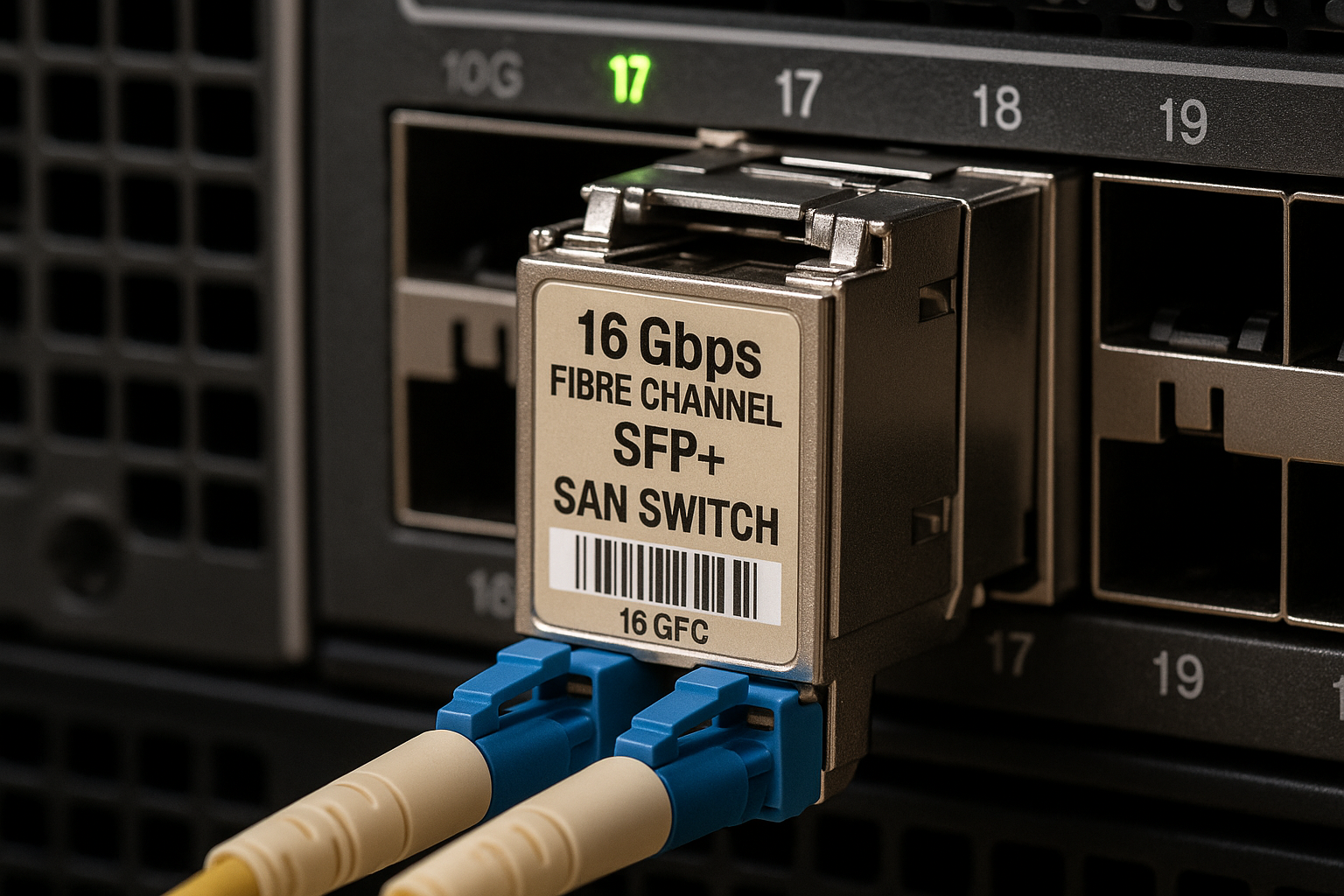
The jump from 400G to 800G typically preserves the same overall topology patterns (leaf-spine, spine-core), but doubles the per-port payload. That means your optics must meet the right electrical interface (often PAM4-based on modern pluggables) and your fiber plant must support the required reach with acceptable optical power budgets and link margins. In practice, the easiest path is to standardize on a single optics family per distance class (short-reach multimode vs long-reach single-mode) and then align switch SKU and DOM behavior before ordering inventory.
At a protocol level, most deployments still rely on IEEE Ethernet framing, with SerDes and FEC behavior defined by vendor implementations. For standards context, the physical layers for 400G/800G Ethernet are governed by IEEE 802.3 specifications and transceiver requirements; verify the exact clause mapping for your switch line card family. For authoritative background, review IEEE 802.3 Ethernet PHY guidance via [Source: IEEE 802.3].
Key operational reality: 800G optics often increase host-side power consumption and thermal load. If you are upgrading in racks with marginal airflow, you may pass link bring-up but fail long-run stability tests due to elevated temperature affecting laser bias and receiver sensitivity.
Quick spec comparison (what engineers actually verify)
Below is a practical head-to-head comparison for common 800G Ethernet optics classes used in enterprise migrations. Exact ordering options depend on switch vendor and the transceiver vendor’s compatibility matrix, but the physical constraints remain consistent.
| Optics / Interface Class | Typical Wavelength | Reach Class | Connector | Target Data Rate | DOM / Monitoring | Operating Temp (typ.) |
|---|---|---|---|---|---|---|
| 800G SR (multimode, parallel) | ~850 nm | Up to ~100 m (MMF) | LC (often MPO/MTP on high-density) | 800G Ethernet | Supported (I2C) | 0 to 70 C (varies by vendor) |
| 800G LR (single-mode, CWDM/duplex) | ~1310 nm band | Up to ~10 km | LC | 800G Ethernet | Supported (I2C) | -5 to 70 C (varies by vendor) |
| 800G FR (single-mode, extended) | ~1550 nm band (varies) | Up to ~2 km | LC | 800G Ethernet | Supported (I2C) | 0 to 70 C (varies by vendor) |
Migration sequencing: how to upgrade without taking the fabric down
Enterprise uptime constraints typically force a phased migration. Most teams use a “capacity shadowing” approach: bring up 800G links in parallel where possible, then shift traffic and retire 400G only after verification. If your spine-leaf design has strict oversubscription assumptions, you must recalculate ECMP hashing impact and ensure your load-balancing policy is compatible with 800G interface counters and telemetry granularity.
Field-proven sequencing pattern
- Phase 0: Compatibility pre-check — confirm your switch line card supports the exact optics SKU family and that DOM reads correctly via I2C.
- Phase 1: Pilot rack — swap one ToR pair and verify BER/FEC lock stability over 24 to 72 hours.
- Phase 2: Spine aggregation — upgrade the uplinks next, because spine ports concentrate traffic and amplify any mismatch in link training behavior.
- Phase 3: Decommission — remove 400G optics after telemetry shows stable utilization and no CRC/FCS anomalies.
Operationally, you also need a rollback plan. Keep 400G optics staged with known-good labels and test them in a non-production port first, because connector contamination or MPO polarity errors can masquerade as compatibility problems.
Compatibility and optics sourcing: OEM, third-party, and DOM realities
Compatibility is the most time-consuming variable in upgrade strategies. Switch vendors often publish optics compatibility lists, and some line cards enforce stricter optics parameter checks than others. DOM support is usually required for alarms and threshold-based monitoring; however, third-party modules may report slightly different vendor IDs, temperature scaling, or alarm thresholds, which can trigger false positives in your monitoring stack.
In real deployments, teams choose between OEM transceivers and vetted third-party optics based on lead time, price, and warranty terms. For example, OEM and widely supported third-party models include 400G/800G-capable coherent or direct-detect optics depending on platform; always validate with your specific switch model. For short-reach 10G/25G examples, vendors like Finisar and FS have published module datasheets; for 800G, consult the exact product datasheet and the switch vendor’s compatibility guide.
Authoritative starting points: IEEE 802.3 for Ethernet PHY context, and vendor datasheets for DOM and electrical interface behavior. See [Source: IEEE 802.3] and [Source: Cisco SFP/SFP+/QSFP compatibility documentation] for platform-specific constraints, plus the transceiver vendor datasheets.
Pro Tip: Before you schedule the production swap, run a “DOM sanity test” by reading temperature, laser bias current, and received power right after insertion, then compare values against expected ranges from the module datasheet. If the values drift or alarm thresholds behave differently than expected, you can catch a compatibility or calibration mismatch without risking link flaps during a traffic cutover.
Cost and ROI: what actually drives TCO in 800G rollouts
In many enterprise cases, the optics BOM dominates the incremental cost, but the bigger TCO drivers are power, cooling, and operational risk. Third-party optics can reduce unit cost, yet you may pay the difference in engineering time if the compatibility path is slower or monitoring thresholds require tuning. A realistic budgeting approach is to model: (1) optics unit price, (2) expected failure/DOA rate, (3) tech labor for swaps, and (4) power draw increase per port over a multi-year horizon.
Typical price ranges vary heavily by vendor and distance class. As a planning baseline, many enterprises see OEM optics priced at a premium (often higher by 10% to 40% versus vetted third-party) when including warranty and integration support. If your 800G optics increase rack power by even a few hundred watts per row, cooling CAPEX can become the hidden cost. Always capture your current airflow measurements and calculate whether your existing CRAH or CRAC profile can maintain target transceiver temperatures under full utilization.
Selection criteria checklist for 400G-to-800G upgrade strategies
- Distance and fiber type — confirm MMF vs SMF availability, MPO/MTP fanout plan, and expected link budget margins.
- Switch compatibility — use the vendor’s optics compatibility matrix for your exact line card and firmware revision.
- Data rate and interface match — ensure the optics supports the required 800G Ethernet mode for your platform (not just “800G capable”).
- DOM support and monitoring behavior — verify alarm thresholds and sensor scaling match what your NMS expects.
- Operating temperature — validate -5 to 70 C or 0 to 70 C ranges against your measured rack inlet temps.
- Vendor lock-in risk — compare OEM lead times vs third-party supply resilience, and confirm warranty terms.
- Operational tooling — confirm your cable management, polarity, and cleaning SOPs for the exact connector type.
Common mistakes and troubleshooting tips
Most 400G-to-800G issues are not “mystery failures.” They are predictable failure modes with clear root causes.
-
Mistake: MPO polarity and cleaning shortcuts
Root cause: Dirty endfaces or reversed polarity cause low received power and FEC/BER instability.
Solution: Use an approved fiber inspection scope, clean with validated procedures, and verify polarity with a consistent mapping workflow before insertion. -
Mistake: Assuming “any compatible optics” will work after firmware upgrades
Root cause: Switch firmware can tighten parameter validation, changing acceptance behavior for third-party modules.
Solution: Pair optics qualification with the exact target firmware; run pilot swaps after the firmware change window. -
Mistake: Ignoring thermal margin during port density increases
Root cause: Elevated inlet temperature shifts receiver sensitivity and triggers intermittent link renegotiation.
Solution: Measure rack inlet temperatures under load, then keep transceiver operating conditions within datasheet limits; adjust airflow baffles if needed. -
Mistake: Telemetry blind spots (DOM alarms not wired to NMS)
Root cause: Monitoring misses early warnings like rising laser temperature or power degradation.
Solution: Confirm DOM fields are ingested and thresholds are calibrated; alert on trends, not just hard link-down events.
Head-to-head decision matrix for enterprise upgrade strategies
Use this matrix as a practical decision support tool. Weight factors based on your environment: distance mix, uptime requirements, and sourcing constraints.
