
When an enterprise core starts feeling “full” but the budget cycle cannot stretch, the real challenge is not bandwidth math. It is planning upgrade strategies that preserve link stability, optical margins, and switch interoperability while moving from 400G to 800G. This case study walks through a leaf-spine refresh where we doubled capacity using measured optics, staged cutovers, and disciplined validation.
Troubling the bottleneck: why 400G stopped being enough
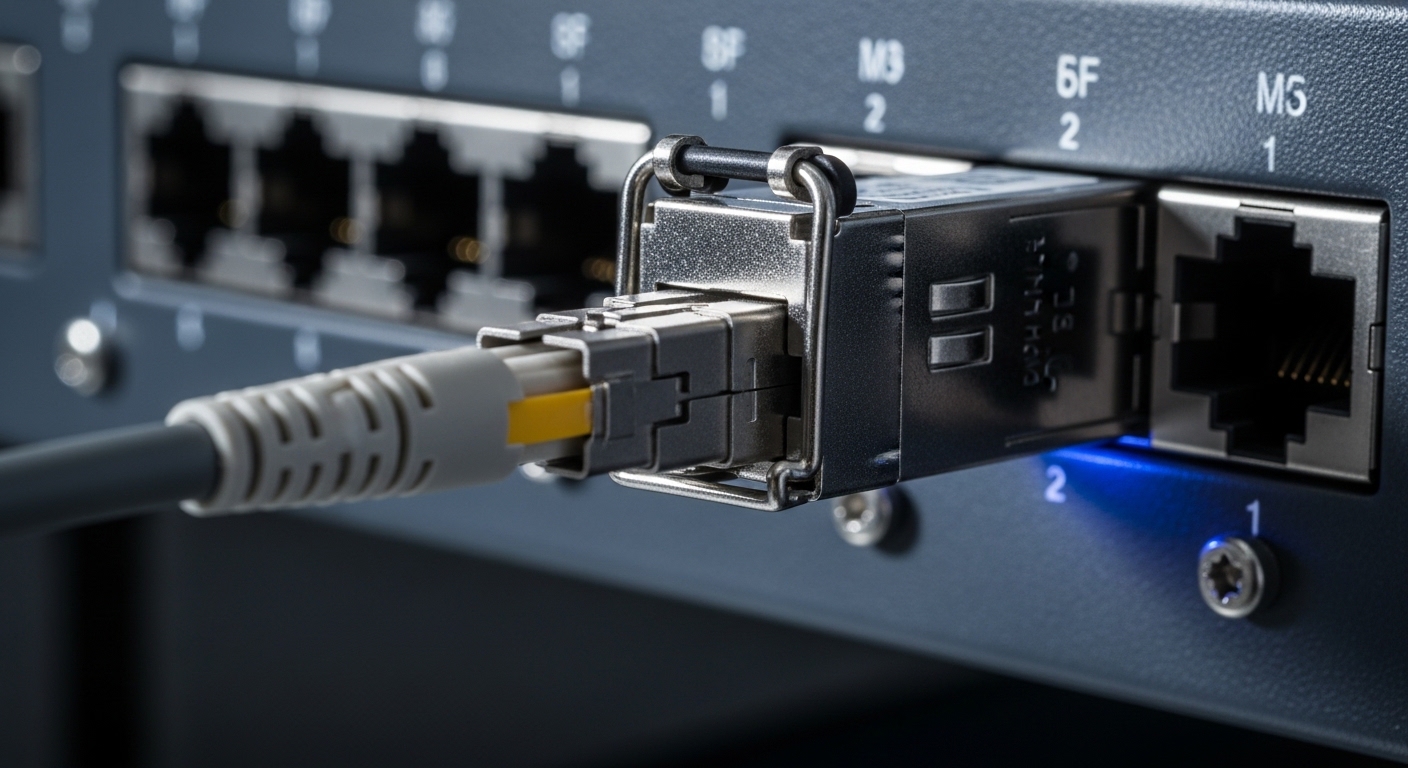
In our deployment, the trigger was simple: quarter-end batch analytics and sustained east-west traffic pushed multiple top-of-rack uplinks toward saturation. In a 3-tier layout (ToR, aggregation, core), we saw sustained utilization around 78 to 92 percent on selected 400G uplinks during peak windows, with microbursts causing queue growth. The network team needed headroom for at least 12 months, but could not accept long maintenance windows.
We also had a hidden constraint: the core platform supported 800G only through specific optics and vendor-certified transceiver firmware behavior. The decision was therefore less about “buy 800G” and more about aligning optics, switch software, and optics quality-of-service behavior. Standards-wise, the physical layer expectations track IEEE Ethernet specifications for 400G/800G operation; the practical details still come from vendor datasheets and the IEEE 802.3 family for Ethernet link behavior. anchor-text: IEEE 802.3 family
Environment specs: the optics and switching realities we measured
We operated in a modern enterprise data center with multimode and single-mode fiber plants. For the core-to-aggregation and aggregation-to-core tiers, we targeted single-mode reach with deterministic latency. For ToR fan-in, we used shorter single-mode spans and kept patching flexible to reduce rework.
Before any purchase orders, we measured link budgets and confirmed temperature and power constraints. We validated that the switch vendor’s optics compatibility list covered the exact part numbers we planned to deploy, including DOM (Digital Optical Monitoring) behavior. DOM is important because it allows optics telemetry collection (laser bias, received power, temperature) that we can alert on during and after cutover.
| Specification | 400G (Common choice) | 800G (Common choice) |
|---|---|---|
| Typical form factor | QSFP-DD / CFP2 (platform-dependent) | QSFP-DD or OSFP (platform-dependent) |
| Data rate | 400 Gbps | 800 Gbps |
| Wavelength | SR4 or LR4 variants (module-dependent) | FR4 / LR8 / ER8 variants (module-dependent) |
| Connector | LC duplex (typical) | LC duplex (typical) |
| Reach examples | Up to ~10 km (LR/ER classes) | Up to ~10 to 40 km (LR8/ER8 classes) |
| Temperature range | 0 to 70 C (commercial typical) | -5 to 70 C or 0 to 70 C (module-dependent) |
| DOM support | Required for monitoring | Required for monitoring |
In this case, we used switch-certified 800G coherent-leaning optics only where the platform required it, and direct-detect 800G optics where the fiber plant allowed it. Example module families we considered included vendor and third-party optics such as Finisar/Flex products (e.g., FTLX8571D3BCL class optics for compatible platforms) and enterprise-grade third-party options like FS.com equivalents (for example, SFP/SFP-DD and higher-rate fiber transceivers with documented DOM behavior). Always confirm the exact SKU against your switch model.
Chosen solution: staged optics swap with compatibility-first filtering
Our chosen approach was staged cutover rather than a “big bang.” Each aggregation pair moved from 400G to 800G using optics that were explicitly validated for the core switch model and software release. We selected modules with consistent DOM telemetry and verified that the receiver power thresholds matched the switch’s expected sensitivity window.
We also avoided mixed-generation optics on the same logical link group. Even when links come up, inconsistent laser power aging characteristics can create uneven margins that become a maintenance headache in six months. Our internal policy for upgrade strategies was: keep link behavior consistent across a tier, and treat optics telemetry as a production signal, not a curiosity.
Pro Tip: During pre-checks, compare DOM “received optical power” against historical baselines from the 400G links after you swap only one direction. If the delta is larger than expected, it often indicates a patch-panel polarity or connector cleanliness issue, not a laser mismatch.
Implementation steps: how we executed the transition safely
We ran the upgrade in three phases: lab validation, pilot, then bulk rollout. In the lab, we loaded the same switch software release as production, installed the exact optics SKUs, and verified link training, error counters, and DOM telemetry collection. We also tested failover behavior by administratively disabling one member link and confirming convergence time met our operational expectations.
In the pilot, we upgraded 8 uplinks between aggregation and core during a 90-minute maintenance window. We pre-staged fiber patches so that the physical swap was under 15 minutes per link, minimizing exposure to dust or connector wear. After cutover, we monitored CRC errors, FEC statistics where applicable, and queue depth for at least 24 hours to confirm traffic stability.
Bulk rollout followed the same pattern: 16 uplinks per night over five nights, with rollback plans that reverted to 400G optics if error counters exceeded thresholds. The measured result was that all upgraded links came up on first attempt, with no sustained error-rate anomalies.
Measured results and lessons learned from the field
Post-upgrade, we reduced congestion events during peak analytics windows. Average utilization on the migrated uplinks dropped from roughly 85 percent to 52 to 60 percent, and peak queue growth during microbursts became noticeably flatter. In terms of reliability, we saw no sustained CRC spikes and DOM telemetry remained within expected power and temperature ranges.
Financially, the move was not “cheap,” but it was predictable. Typical 800G optics pricing varies widely by reach and vendor; in practice, many enterprise deployments see optics in the hundreds to low-thousands of dollars per module range depending on wavelength and certification requirements, and the labor cost dominates when you include maintenance windows and testing. TCO improved because we postponed a larger fabric replacement and reduced the need for additional line cards.
Common mistakes / troubleshooting during 400G to 800G upgrades
- Mismatched optics compatibility: Root cause is using a transceiver SKU not certified for the exact switch model or software build. Solution: validate in the optics compatibility list and confirm DOM support before staging.
- Connector contamination after re-patching: Root cause is microscopic dust on LC ends causing low received power and intermittent link drops. Solution: clean with approved fiber cleaning tools, re-seat connectors, then re-check DOM received power and link margin.
- Assuming “link up” equals “healthy”: Root cause is ignoring early warning counters like CRC, FEC corrections, or DOM temperature drift. Solution: define acceptance thresholds and monitor for at least 24 hours after cutover.
- Uneven patch loss across parallel paths: Root cause is asymmetric fiber routing or different patch-panel paths between member links. Solution: standardize patching, measure insertion loss where possible, and keep link groups consistent.
Selection criteria checklist for upgrade strategies
- Distance and reach class: choose the right wavelength and reach (LR8/ER8 style vs SR classes), then verify your fiber plant loss budget.
- Switch compatibility: confirm the optics are supported by your exact switch model and software release.
- DOM and telemetry behavior: ensure DOM fields populate correctly and alerts integrate with your monitoring stack.
- Operating temperature: account for worst-case intake air temps and module spec limits; plan for airflow changes during maintenance.
- Power and cooling impact: verify total power draw per chassis and ensure fans/airflow profiles remain stable.
- Vendor lock-in risk: compare OEM vs third-party optics with documented interoperability and warranty terms; avoid “mystery” firmware behavior.
- Risk management: stage pilots, define rollback triggers, and keep spare optics on-site for rapid replacement.
FAQ
What makes 400G to 800G upgrades harder than a simple line-speed bump?
The optics and switch software compatibility constraints are stricter at higher speeds, and error visibility depends heavily on DOM telemetry and counter interpretation. You also need to preserve optical margins, not just achieve link training.
Do I need single-mode or multimode fiber for 800G?
It depends on the reach class you
