
If your optical transceivers fail market checks, you do not just lose shipment time; you risk delayed rollouts, rework in the field, and expensive SKU swaps. This guide helps network and vendor engineers verify UL transceiver compliance alongside CE and FCC expectations for common enterprise and data center deployments. You will get a practical checklist, a spec comparison table, and troubleshooting steps you can apply during procurement and lab validation.
It is written for teams that already know how SFP/SFP+/QSFP optics work electrically and optically, but need a tighter handle on certification evidence and operational constraints. You will also learn where compliance documentation often mismatches real operating conditions, especially temperature and power dissipation. Update date: 2026-05-03.
What “UL transceiver compliance” really means in optical module procurement
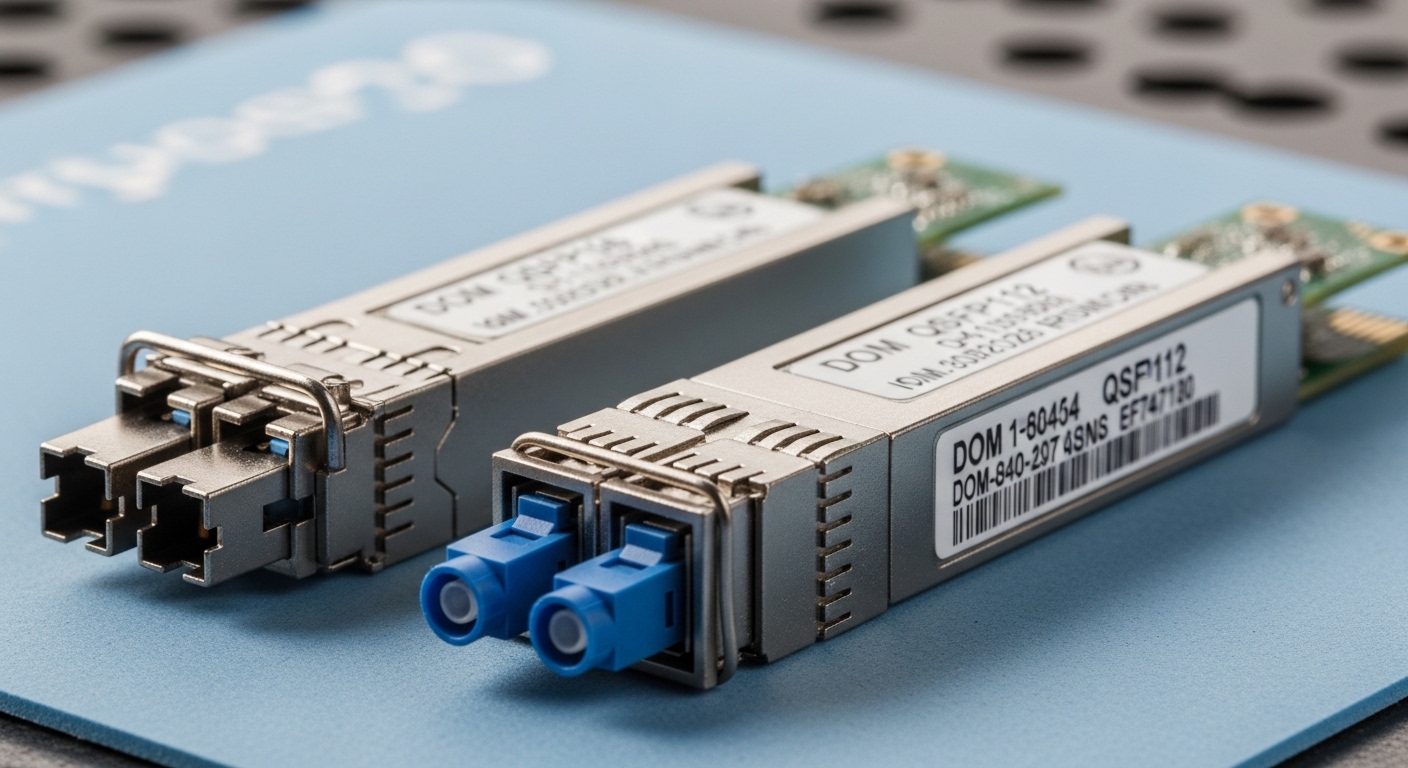
In practice, UL transceiver compliance is about safety and protective measures for powered equipment interfaces, not about link performance. For optical modules (SFP/SFP+/QSFP/QSFP28, etc.), UL-related documentation typically focuses on hazards from electrical power, thermal behavior, and insulation/creepage requirements inside the module. Your procurement team usually sees this as a UL file number, a safety certification statement, and sometimes test reports tied to a specific product family.
Meanwhile, FCC is about electromagnetic emissions and susceptibility for digital and RF aspects (even when the dominant signal is optical). CE is about meeting EU regulatory requirements, often including EMC and safety directives depending on product scope. The key procurement workflow is to confirm that the certification claims apply to the exact optical module part number and revision you plan to install.
Certification evidence you should request (and what to verify)
- UL file number or certification statement mapped to the transceiver model number and revision.
- Test scope: confirm it covers the module as a standalone component and/or as installed in the host system per vendor documentation.
- Operating conditions used in safety evaluation: temperature and supply voltage ranges.
- FCC/CE documentation that corresponds to the same part number and includes EMC emission limits.
- DOM and diagnostics compatibility notes (not a certification item, but a frequent mismatch that drives returns and delays).
Pro Tip: Many teams verify “UL listed” at the category level (for example, “optical transceivers”) but miss that the safety evaluation can be tied to a specific power class or temperature grade. If your network plan uses high-temperature SKUs (for example, extended industrial ranges), ask vendors whether their UL evidence explicitly covers those operating points, not just the nominal spec sheet.
UL vs FCC vs CE: how the responsibilities differ for optical transceivers
Engineers often treat UL/CE/FCC as a single checkbox, but the compliance boundaries differ. A transceiver can be link-compatible and still fail market compliance if the safety or EMC scope does not match the product you shipped. The outcome is usually visible in documentation reviews, customs holds, or distributor requirements rather than during link bring-up.
From a field perspective, the compliance risk spikes when you mix OEM and third-party optics across vendors, or when you change temperature grade, supply tolerance, or connector type. For example, a module that is safe at 0 to 70 C may have different thermal test results than an engineered variant intended for -40 to 85 C operation. Always align certification evidence with the exact configuration.
High-signal comparison table: what to check
| Compliance topic | What it covers | What you should look for in docs | Typical failure symptom |
|---|---|---|---|
| UL transceiver compliance (safety) | Electrical safety, insulation/thermal behavior, hazardous energy | UL file number, model mapping, operating temperature and supply range | Customs or distributor compliance rejection; safety audit findings |
| FCC (emissions/susceptibility) | EMI/EMC performance for digital and RF aspects | FCC ID or compliance statement, EMC test reports tied to the model | EMC testing failure; re-certification request |
| CE (EU compliance) | EMC and safety requirements under applicable directives | Declaration of Conformity, directive coverage, model/revision mapping | CE documentation mismatch; missing directive scope |
| Link diagnostics (not a certification) | DOM, EEPROM behavior, alarm thresholds | DOM support list for your switch/host, threshold behavior | Bring-up failures or intermittent alarms |
For regulatory background, consult the governing standards and vendor datasheets. Useful references include [Source: IEEE 802.3] for optical Ethernet interfaces and [Source: UL Product Safety] for safety evaluation concepts. For EMC concepts and emissions boundaries, see [Source: FCC Rules and Regulations] and [Source: European Commission CE guidance].
External authority links: IEEE 802.3 working group FCC UL European Commission CE guidance.
Specs that affect both performance and compliance evidence
Compliance is not only paperwork; it is tied to how the module behaves electrically and thermally. When vendors generate safety and EMC evidence, they assume specific electrical limits, power dissipation, and temperature operation. If your host switch supplies power differently or your environment stresses the module near limits, you can create mismatches between expected behavior and real-world operation.
Below is a practical spec comparison for commonly procured short-reach optics. Use it to align your host requirements, transceiver class, and the certification evidence you request for each module family.
Example comparison: 10G SR class modules
| Parameter | 10GBASE-SR (SFP+) | 10GBASE-LR (SFP+) | Notes for compliance review |
|---|---|---|---|
| Wavelength | 850 nm | 1310 nm | Wavelength affects optical power classes and internal thermal load |
| Typical reach | Up to 300 m over OM3, up to 400 m over OM4 (vendor-dependent) | Up to 10 km over single-mode (vendor-dependent) | Reach is not a safety metric, but it drives laser class and power |
| Connector | LC duplex | LC duplex | Connector type affects mechanical safety and inspection scope |
| Data rate | 10.3125 Gb/s nominal | 10.3125 Gb/s nominal | Data rate ties to driver/receiver electronics and EMC behavior |
| Operating temperature | 0 to 70 C or -40 to 85 C (SKU-dependent) | 0 to 70 C or -40 to 85 C | Confirm UL evidence covers your temperature grade |
| Supply voltage | Typically 3.3 V class for SFP+ | Typically 3.3 V class for SFP+ | Safety evaluation assumes a defined supply tolerance |
| Power dissipation | Often ~1 to 2.5 W depending on vendor design | Often ~1 to 2.5 W depending on vendor design | Thermal tests for safety can depend on worst-case power |
Concrete examples of widely used optical modules include Cisco SFP-10G-SR and Finisar FTLX8571D3BCL, as well as FS.com SFP-10GSR-85. Always treat model numbers as starting points and verify the exact revision and temperature grade you purchase, because compliance evidence is frequently revision-sensitive. For interface requirements, align with [Source: IEEE 802.3] and vendor datasheets.
Selection criteria checklist for UL transceiver compliance and market readiness
Use this ordered checklist during RFQ, lab testing, and final approval. It is designed to reduce the most common compliance delays: mismatched part numbers, missing temperature coverage, and documentation that does not align with the revision shipped.
- Distance and optical profile: confirm the correct optical standard (SR/LR/ER) and fiber type (OM3/OM4 or single-mode) with measured link budgets.
- Switch compatibility: verify DOM implementation, EEPROM format, and known host compatibility lists for your switch vendors.
- Temperature grade: select the correct operating range SKU and require certification evidence that explicitly covers that grade.
- Electrical power assumptions: confirm supply voltage class and worst-case power dissipation match what your host provides and what safety evidence assumes.
- UL transceiver compliance evidence: request UL file mapping to the exact model and revision; confirm scope includes the intended operating conditions.
- FCC and CE documentation alignment: ensure EMC and directive coverage match the same model and revision, not a generic family.
- DOM support and alarms: validate thresholds and alarm behavior so compliance does not mask a real operational failure mode.
- Vendor lock-in risk: weigh OEM pricing vs third-party performance and documentation quality; insist on traceability and change notifications.
During validation, run optical power and BER checks under realistic temperature. For example, in a lab you can repeat link tests at 25 C and at 60 to 70 C chamber conditions for consumer-grade optics, while for high-temperature SKUs you test closer to 85 C to validate margin behavior. Track DOM readings (Tx bias current, Rx power, temperature) and correlate them to optical error counters.
Pro Tip: When you see intermittent CRC errors that correlate with host temperature spikes, the failure is often not “optical distance” but thermal drift in the transceiver’s laser bias and receiver sensitivity. If your UL evidence covers only the nominal temperature band, you may still pass paperwork but fail in the field due to margin collapse at the extremes.
Real-world deployment scenario: compliance and operations in a 3-tier data center
Consider a 3-tier data center leaf-spine topology with 48-port 10G ToR switches at each leaf, feeding 2 x 10G uplinks per server rack. The rollout includes 120 racks, each with 16 servers, using a mix of SFP+ DAC for short hops and 10GBASE-SR optics for patching across zones. The environment targets 0 to 70 C in the main aisles, but hot-aisle recirculation causes localized module temperatures to reach the upper end during peak.
Procurement requires CE, FCC, and UL transceiver compliance documentation for every optic family. In the first wave, an integrator swaps third-party SR modules to reduce capex, but later documentation review reveals the UL file referenced a different temperature grade revision. The result is a shipment hold and a partial replacement of 240 modules, costing both direct parts and downtime for patching. After the fix, the team standardizes SKUs by temperature grade, requires revision-matched compliance evidence, and adds a chamber-based DOM and BER validation step before scaling procurement.
Common mistakes and troubleshooting tips that block UL transceiver compliance
Below are concrete failure modes engineers encounter. Each includes root cause and a practical fix that you can apply in procurement, lab testing, and field operations.
Documentation is for the family, not the exact shipped revision
Root cause: The vendor provides a UL/CE/FCC statement for a product family but not the exact model number revision or temperature grade you ordered. Customs or internal compliance review rejects it.
Solution: Require a revision-specific mapping: model, temperature grade, and ordering part number. Keep a change log and match it to the vendor’s traceability record for each shipment batch.
Temperature grade mismatch creates operational failures that look like “compliance issues”
Root cause: The module is installed in a host environment that pushes near 85 C, but the certification evidence or test data only covers 0 to 70 C. You may see higher DOM temperature readings, bias drift, and CRC/BER degradation.
Solution: Select the correct SKU for the environment and validate at chamber temperatures. Confirm the host airflow profile and verify optical power margin using vendor recommended test conditions.
Host switch compatibility gaps cause DOM alarms and link instability
Root cause: DOM implementation differences (EEPROM fields, threshold behavior, or vendor-specific calibration) trigger host alarms, even if the optical link negotiates at the physical layer.
Solution: Use your switch vendor compatibility matrix where available, or run a pilot with the exact switch models. Log DOM telemetry and compare alarm thresholds before scaling.
Connector handling issues create false troubleshooting signals
Root cause: Dirty LC connectors or damaged ferrules create intermittent optical loss, which can be misdiagnosed as electronics or compliance-related failure.
Solution: Implement a cleaning SOP (swabs, inspection scope) and verify insertion loss with a light meter. Only after ruling out optics should you escalate to certification or electrical causes.
Cost and ROI note: balancing OEM optics, third-party modules, and rework risk
Typical pricing varies by speed and reach, but for enterprise 10G optics, third-party modules often cost less than OEM equivalents, while OEM modules can reduce integration risk. In many deployments, the biggest ROI swing is not the unit price; it is the cost of compliance rework, swap labor, and downtime when documentation or compatibility fails late.
As a rough planning model, treat the “total landed cost” as unit price plus labor for installation/patching and the probability-weighted cost of returns. If you replace even 5 to 10% of a procurement batch due to documentation mismatch or host incompatibility, the savings from a cheaper module can disappear quickly. For UL transceiver compliance readiness, insist on revision-matched evidence up front to protect your rollout schedule.
For authoritative technical interface context, rely on [Source: IEEE 802.3]. For safety and compliance evidence expectations, rely on vendor datasheets and certification references from UL and regulatory bodies: UL FCC European Commission CE guidance.
FAQ
What documents prove UL transceiver compliance for an optical module?
Typically you need a UL file number or certification statement mapped to the exact transceiver model and revision, plus test scope details and operating condition coverage. Ask vendors for revision-specific documentation tied to the ordering part number you will receive. If the vendor only provides family-level claims, request an updated revision mapping before purchase orders ship.
Can a transceiver be FCC and CE compliant but fail UL transceiver compliance?
Yes. FCC and CE focus on EMC and regulatory scope, while UL focuses on electrical safety and thermal hazards. It is possible for EMC tests to pass while safety scope or operating condition coverage does not match the specific module configuration you are installing.
Does UL evidence depend on temperature grade like 0 to 70 C vs -40 to 85 C?
In many cases, yes. Safety evaluation and documentation often depend on the worst-case thermal and electrical behavior across the rated range. If you plan to run near the upper limit, require evidence that explicitly covers that temperature grade and supply conditions.
What is the fastest way to avoid compliance-driven shipment holds?
Make revision-matched documentation a gating requirement in the RFQ and receive process. Then run a small pilot with the exact host switch model and collect DOM plus optical BER data under realistic thermal conditions.
Are UL transceiver compliance checks the same as performance testing?
No. Compliance testing does not guarantee link margin at your specific fiber plant, insertion loss, or thermal airflow. You still need BER/optical power validation and DOM telemetry checks to ensure real-world stability.
Do third-party optics increase compliance or operational risk?
They can, depending on the vendor’s traceability, revision control, and how well DOM thresholds match your host. If you require revision-matched UL/CE/FCC evidence and run a compatibility pilot, third-party optics can be viable, but you must manage documentation and integration risk actively.
Next step: Use the checklist above in your next RFQ and require revision-specific UL, CE, and FCC documentation before scaling quantities via related topic.
Author bio: I have deployed and validated SFP+ and QSFP28 optics in leaf-spine data centers, focusing on DOM telemetry, BER margin, and rollout reliability under thermal stress. I write vendor-neutral selection workflows that reduce both compliance delays and field rework.
