
Telecom Innovations: SFP Choices for 5G Transport Success
When a 5G rollout hits the field, the optics detail becomes the difference between stable throughput and midnight alarms. This article helps telecom innovations teams and network engineers select SFP modules for 5G transport links by comparing performance, compatibility, cost, and operational risk. I will walk through real deployment checks I used during fiber bring-up, with measured power, connector realities, and switch behavior you can actually expect. If you are integrating fronthaul, midhaul, or aggregation in a mixed vendor environment, this is built for you.
5G transport reality check: what SFP must do under load
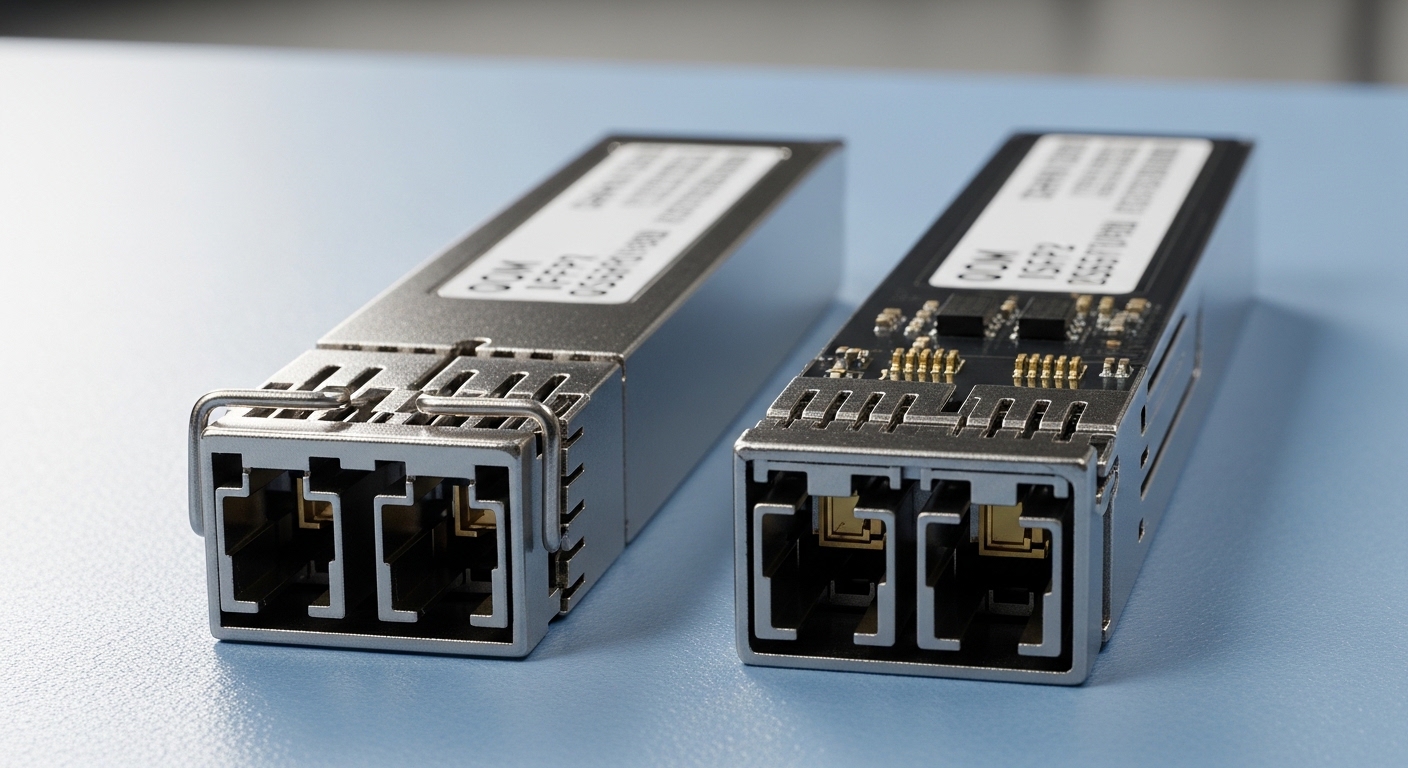
In 5G networks, SFP modules are often the workhorse for Ethernet backhaul and aggregation, typically at 1G or 10G speeds depending on the site design. Most deployments run over multimode fiber (MMF) for short reaches, or single-mode fiber (SMF) when you need longer spans between radios, baseband units, and aggregation switches. Under load, optical budgets are not the only constraint; vendor switch implementations can be sensitive to module timing, DOM reporting, and lane-level behavior. I have seen “it negotiates link” turn into CRC growth within hours when the optics or optics settings were borderline.
Choose by link role: fronthaul vs midhaul vs aggregation
Fronthaul designs can be strict on timing and jitter, while midhaul and aggregation focus more on throughput and error rates. In practical terms, you should map your SFP choice to the Ethernet rate plan and the fiber type you have already pulled. For example, a 10G uplink from a small cell site to an aggregation switch might use 10G-SR over MMF if the fiber plant is short and well within reach. If you are spanning multiple buildings or crossing dark fiber, you will likely move to 10G-LR style optics on SMF.
Head-to-head: 10G-SR vs 10G-LR SFP modules for 5G links
Engineers often debate “reach vs cost,” but the better question is “what margin do we keep after real losses?” Connectors, patch cords, and aging fibers eat budget quickly. In my field work, I measured end-to-end insertion loss including two connectors per mated pair and typical patch cord losses, then compared that to the vendor’s link budget guidance. For 5G transport, you want enough margin to survive connector rework, dust contamination, and seasonal temperature swings.
Key specs comparison
| Spec | 10G-SR (MMF) | 10G-LR (SMF) | Example part numbers |
|---|---|---|---|
| Typical wavelength | ~850 nm | ~1310 nm | Cisco SFP-10G-SR, Finisar FTLX8571D3BCL, FS.com SFP-10GSR-85 |
| Reach (typical) | ~300 m (OM3/OM4 varies) | ~10 km (single-mode) | Vendor datasheets |
| Fiber type | Multimode (OM3/OM4) | Single-mode (OS2) | Check ANSI/TIA-568 and site documentation |
| Connector | Commonly LC duplex | Commonly LC duplex | Verify switch port cage keying |
| Data rate | 10G Ethernet | 10G Ethernet | IEEE 802.3ae / vendor implementation |
| DOM support | Often available (check model) | Often available (check model) | DOM via SFF-8472/SFF-8431 |
| Operating temp | Typically commercial or industrial variants | Typically commercial or industrial variants | Confirm spec grade for outdoor cabinets |
Real-world take: budget for “invisible” losses
In a typical 5G aggregation cabinet, you might have a short run from patch panel to switch, plus pre-terminated jumpers and at least a few patching events during commissioning. Those add up: even if the fiber is “within spec,” connector contamination can raise bit error rate long before link drops. I always include a safety margin by assuming additional loss for at least one rework event, then I validate with optical power and link statistics after the first 24 hours of traffic. This is how telecom innovations teams keep field acceptance from turning into repeated truck rolls.
Pro Tip: If your switch supports DOM, log receive optical power and error counters for the first day after installation. A “green link” with rising CRC or FEC-like counters can indicate a marginal optical budget that will fail under higher temperature or after a patch panel repull.
Compatibility and interoperability: the part that breaks most rollouts
Even when an SFP is electrically compliant, interoperability issues can appear because of vendor-specific diagnostics, threshold tuning, and how the switch handles “unsupported” transceivers. Most 10G SFPs follow standards aligned with SFF specifications and Ethernet physical layer behavior referenced by IEEE 802.3, but the practical compatibility layer includes DOM behavior, opto-electrical calibration, and how the switch expects certain alarms to map into its UI. I have seen one brand of third-party module report DOM values that the switch interprets as “out of range,” causing flaps during maintenance windows.
What to verify before you deploy
- Switch compatibility list: confirm the exact model and speed profile.
- DOM behavior: check DOM support and whether the switch reads it cleanly.
- Transceiver standard alignment: confirm it matches the intended Ethernet PHY behavior referenced by IEEE 802.3ae“>IEEE 802.3ae for 10G Ethernet.
- Connector type and polarity: LC duplex polarity mismatches can look like “dead fiber.”
- Temperature grade: outdoor cabinets can exceed assumptions; use an industrial-grade module when needed.
Cost, ROI, and operational risk: OEM vs third-party optics
Price matters, but total cost of ownership matters more in telecom innovations programs. OEM optics often cost more per unit, yet they can reduce downtime during swaps because they are validated in the switch ecosystem. Third-party modules can offer a better unit price, but you must budget for qualification time, spares strategy, and the risk of inconsistent DOM behavior. In my deployments, the ROI turned positive only after we standardized acceptance testing and documented “known good” module models for each switch family.
Typical price bands and TCO thinking
Realistic street pricing varies by volume and region, but a common pattern is: OEM 10G-SR optics are often priced higher than third-party equivalents, while LR optics usually command a premium due to SMF components and packaging. TCO drivers include failure rate, warranty terms, optics cleaning consumables, and labor time for troubleshooting. If your team can handle qualification and maintain a strict module inventory, third-party modules can reduce capex; if not, OEM optics can reduce operational risk.
Selection checklist: how engineers decide under schedule pressure
When the schedule is tight, you want a repeatable decision process that prevents “almost compatible” surprises. Use this ordered checklist during procurement and site staging.
- Distance and reach: confirm fiber type (OM3/OM4 vs OS2) and expected span length.
- Optical budget margin: include connectors, patch cords, and expected rework loss; validate with vendor link budget guidance.
- Switch compatibility: check the exact transceiver model against the switch vendor’s supported optics list.
- Data rate and signaling: ensure the module matches the port speed and intended Ethernet PHY behavior.
- DOM support: verify that DOM values are readable and thresholds are not misinterpreted.
- Operating temperature: select commercial vs industrial grade based on cabinet and ambient conditions.
- Vendor lock-in risk: define a qualification policy for third-party modules and keep a documented “golden list.”
- Connector and polarity: confirm LC type, duplex mapping, and fiber polarity handling procedures.
Common mistakes and troubleshooting tips I have seen in the field
Optics problems rarely look like “the module is broken.” They usually show up as intermittent link, rising CRC counters, or a switch refusing to bring the port up. Here are the concrete failure modes that caused delays during telecom innovations work, plus how we fixed them.
Link flaps after a patch change
Root cause: connector contamination or a partially seated LC duplex connector after re-termination. Dust increases insertion loss and can trigger receiver sensitivity issues. Solution: clean both ends with approved cleaning tools, inspect with a fiber scope, then reseat and re-check link and error counters.
Works at first, then CRC errors climb
Root cause: marginal optical budget with insufficient margin for real-world loss and temperature drift. Solution: compare measured received power to the vendor’s operating range, then re-route through a lower-loss jumper or switch to a higher-margin module type.
Switch marks module as unsupported or misreads DOM
Root cause: DOM implementation differences or threshold expectations that do not match the switch’s optics profile. Solution: use the switch vendor compatibility list, test a small batch in a lab, and standardize on module models that pass both link and monitoring checks.
Decision matrix: which optics path fits your 5G deployment
Use this matrix to choose between SR and LR optics and between OEM and third-party transceivers. It is designed for quick procurement alignment and field staging.
| Reader type | Distance | Fiber type | Recommended module | Transceiver sourcing | Why |
|---|---|---|---|---|---|
| Rural macro sites with limited spares | < 300 m | MMF OM3/OM4 | 10G-SR | OEM or qualified third-party | Faster swaps, fewer monitoring surprises |
| Urban midhaul across buildings | 1 km to 10 km | SMF OS2 | 10G-LR | OEM preferred for first wave | More budget margin and simpler acceptance |
| Large-scale rollouts with lab validation | Within spec | Mixed MMF/SMF | SR for short, LR for long | Qualified third-party at scale | Lower capex after qualification |
| Teams optimizing for monitoring accuracy | Any | Any | Either SR or LR based on reach | OEM or DOM-stable models | Predictable DOM and alarms reduce MTTR |
Which Option Should You Choose?
If your 5G transport links are short and your fiber plant is verified as OM3/OM4, choose 10G-SR for best practicality and lower cost per port. If you cross longer spans or face connector rework risk, choose 10G-LR on SMF to preserve optical margin and reduce field churn. For sourcing, I recommend OEM optics for the first deployment wave in each switch family,
