
Long-haul links fail in ways that look random until you treat the optics like a reliability system: thermal margins, dispersion, OSNR, and vendor-specific control loops. This technical deep-dive helps network engineers and field reliability teams choose coherent transceivers that survive real plant conditions, from desert hutches to chilled metro headends. You will also get a practical Top 8 item checklist, a comparison table, and troubleshooting patterns we repeatedly see during acceptance testing.
Top 8 coherent optics decisions that make long-haul links behave
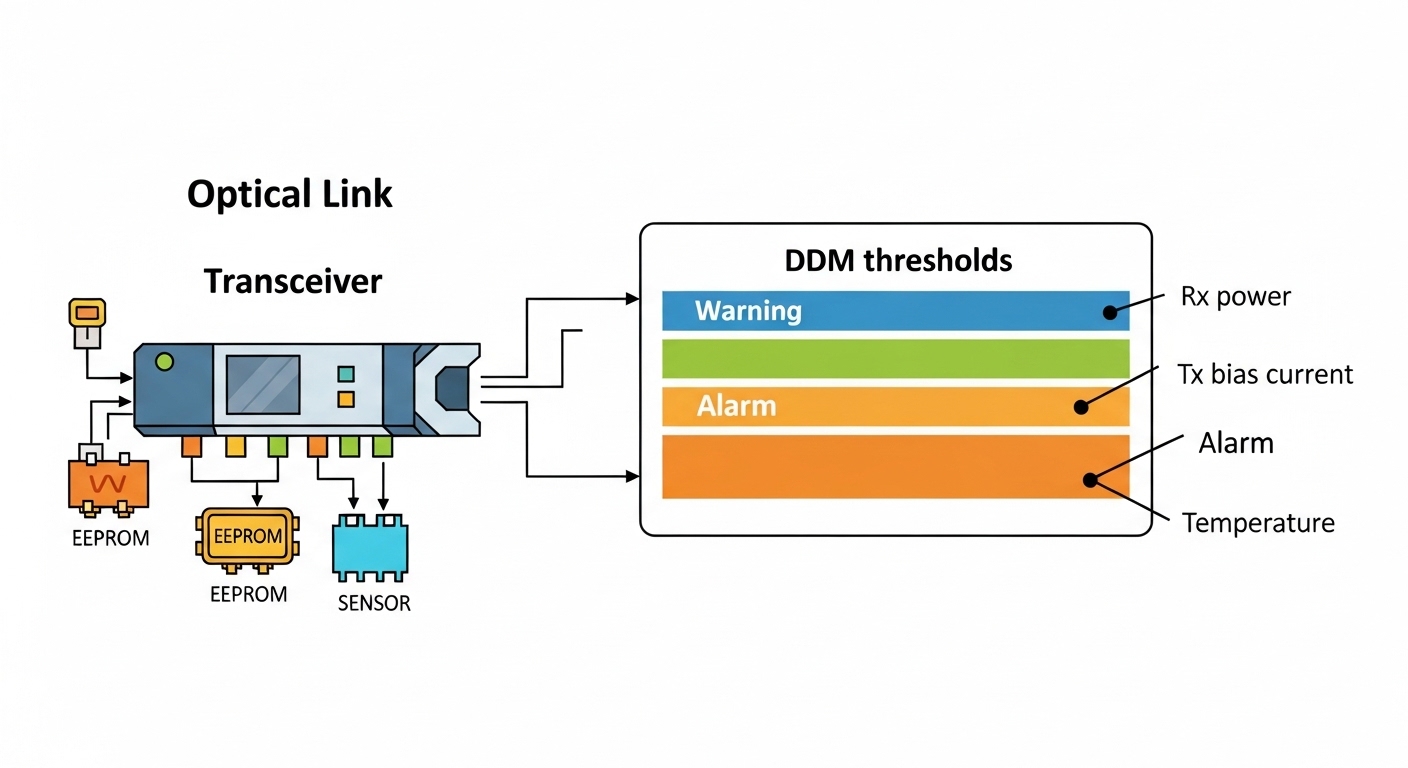
In the lab, coherent optics can look flawless. In the field, the same unit may degrade after a splice event, a temperature swing, or a firmware change. Think of coherent optics as an optical modem: it needs the right fiber physics inputs and the right operational envelope to converge its DSP and carrier recovery loops.
Pick the modulation format that matches your OSNR budget
Coherent long-haul systems commonly use DP-QPSK and DP-16QAM. DP-QPSK is typically more tolerant of OSNR and nonlinearities, while DP-16QAM squeezes more bits per symbol but demands cleaner optical signal-to-noise ratio. When you plan reach, you should convert your link budget into a realistic OSNR estimate at the receiver, not just a power budget.
Best-fit scenario: a carrier-grade operator pushing 80 km to 300 km over mixed plant fiber where amplifier noise figure and aging vary by route. DP-QPSK often reduces re-tuning events during seasonal temperature changes.
- Pros: DP-QPSK tolerates lower OSNR; easier commissioning
- Cons: Lower spectral efficiency than higher-order formats
- Watch: Ensure vendor supports your target line system and FEC mode
Match transceiver class to interface and chassis constraints
Coherent modules show up as CFP2/CFP2-DCO, QSFP-DD coherent variants, or vendor-specific pluggables. Your host switch must provide the right electrical interface and signal management, including clocking, lane mapping, and power sequencing. A mismatch here can cause link instability that resembles optical impairment, even when the fiber is clean.
Best-fit scenario: a leaf-spine network upgrade where you replace optics in a controlled chassis environment, keeping the same vendor line card family. This minimizes risk from pinout differences, DOM telemetry quirks, and control-plane defaults.
- Pros: Staying inside a known host ecosystem reduces acceptance failures
- Cons: Vendor lock-in risk and slower compatibility cycles
- Watch: Verify DOM fields and alarms match your NMS parsers
Use a spec table like an engineer: wavelength, reach, and power
When procurement compares modules, it is tempting to look only at “reach.” Reliability engineering requires you to confirm operating temperature, optical power ranges, and connector type. The table below reflects common coherent long-haul attributes you should validate against the vendor datasheet and your line system design.
| Parameter | Typical Values (Coherent Long-Haul) | Why It Matters for Reliability |
|---|---|---|
| Modulation formats | DP-QPSK; DP-16QAM (varies by model) | OSNR tolerance and DSP convergence behavior |
| Wavelength grid | ITU-T 50 GHz or 100 GHz (model-dependent) | Channel filtering alignment with ROADM mux/demux |
| Typical reach | ~80 km to 600+ km (depends on optics and line amps) | Defines dispersion and noise accumulation targets |
| Optical interface | LC/APC or SC/APC (varies by vendor) | Connector cleanliness affects reflection and OSNR |
| Operating temperature | Example: -5 C to +70 C or wider (datasheet specific) | Thermal drift impacts laser frequency and DSP margins |
| TX output power | Model-dependent; confirm allowed range | Prevents receiver overload and protects nonlinear penalties |
| Electrical data rate | Typically 100G/200G/400G coherent variants | Host interface and FEC settings must align |
Best-fit scenario: you are standardizing a mixed-route deployment where some sites run in ventilated cabinets and others sit in unconditioned hutches. The operating temperature range becomes a first-order acceptance criterion.
- Pros: Spec-driven comparisons reduce “it worked in the demo” surprises
- Cons: Datasheets can hide control-loop and FEC details
- Watch: Require written confirmation of OSNR and FEC behavior for your line plan
Control dispersion and channel filtering with the right design knobs
Coherent receivers can compensate dispersion digitally, but that compensation has limits. If your line system has unexpected dispersion slope or if ROADM filtering differs from the planning assumptions, the DSP may struggle to maintain stable lock. That shows up as rising FEC correction counts, intermittent loss of lock, or slow reacquisition after a power cycle.
Best-fit scenario: a network with dynamic ROADM reconfiguration where channels get remapped across different optical paths. In this case, you should validate performance per path, not just “per wavelength.”
- Pros: Digital compensation increases flexibility
- Cons: Limits exist; mismatch can raise BER under real noise
- Watch: Confirm channel spacing, filter bandwidth, and any inline Raman/EDFA behavior
Verify FEC and alarm telemetry alignment before you ship
Modern coherent links often rely on FEC and vendor DSP telemetry. If your NMS expects specific DOM alarm names or if the host firmware interprets FEC counters differently, you may miss early warning signals. In reliability terms, telemetry is your early-life failure sensor; without it, MTBF estimates become guesses.
Best-fit scenario: a multi-vendor lab where you must correlate link health across batches. Standardize your monitoring pipeline and require sample data from acceptance tests.
- Pros: Better telemetry enables faster MTTR
- Cons: Cross-vendor alarm semantics can differ
- Watch: Demand a DOM/telemetry mapping document and test it against your collector
Stress-test temperature and vibration like field reality
Coherent optics contain lasers and optical benches sensitive to thermal gradients and mechanical stress. We have seen batch-level issues appear only after thermal cycling that includes not just absolute temperature but ramp rate and dwell time. A typical field deployment includes sun-heated cabinets, airflow changes, and fan failures that create localized hotspots.
Best-fit scenario: outdoor or semi-outdoor sites where cabinet internal temperature can swing by 20 C between day and night. Use environmental qualification aligned with your internal standard and verify with acceptance logs.
- Pros: Environmental screening reduces infant mortality
- Cons: Overly strict screening can increase cost unnecessarily
- Watch: Include connector cleaning and re-seat tests after vibration simulation
Pro Tip: During acceptance, record FEC correction counts and loss-of-lock events for at least one full diurnal temperature cycle. We often find that the “best” OSNR snapshot in the morning hides a late-day DSP margin collapse that only appears when the laser frequency and filter response drift together.
Plan installation practices: connector cleanliness and polarity
Coherent optics are more sensitive to optical reflections and channel impairments than many legacy direct-detect links. A single dirty connector or an incorrect polarity in a patch panel can create reflection-induced noise, degrading OSNR enough to trigger instability. Field teams should use consistent cleaning workflows, documented inspection steps, and standardized patching records.
Best-fit scenario: a metro expansion where technicians re-use existing fiber jumpers under time pressure. Build an installation checklist that includes inspection with a scope and a cleaning step before first light.
- Pros: Clean patching improves OSNR stability and reduces truck rolls
- Cons: Requires disciplined process and training
- Watch: Track cleaning dates and avoid mixing connector geometries across vendors
Estimate MTBF realistically and compare total cost, not just module price
Coherent modules can be expensive, often several times the cost of direct-detect optics. However, the real TCO depends on failure rates, spares strategy, and time to restore service. If a module requires a specialized firmware profile or long commissioning windows, your operational cost grows even if the component itself is reliable.
Best-fit scenario: a long-haul operator planning a five-year lifecycle with two spares per route segment and a defined MTTR target. In this model, a slightly higher unit price can still reduce outage minutes and truck rolls.
- Pros: Better reliability engineering improves MTTR and reduces downtime
- Cons: Higher upfront cost and potential vendor lock-in
- Watch: Compare warranty terms, RMA turnaround, and firmware support duration
Common mistakes / troubleshooting patterns in coherent long-haul
Treating power budget as a complete link budget
Root cause: Engineers plan only TX power and receiver sensitivity, ignoring OSNR, FEC overhead, and noise figure contributions from EDFAs and ROADM components. The result is a link that “meets sensitivity” but fails under real noise accumulation.
Solution: Require an OSNR-based planning report and validate with acceptance tests that log FEC and loss-of-lock metrics over temperature.
Ignoring host firmware and FEC mode mismatches
Root cause: A module may support multiple FEC profiles, but the host configuration forces a different mode. Symptoms include high correction counts, unstable BER, or intermittent lock after warm reboot.
Solution: Confirm exact FEC settings and transceiver configuration via vendor guidance; freeze versions during rollout and document the configuration baseline.
Skipping connector inspection after re-patching
Root cause: Field rework introduces micro-scratches or contamination on APC/UPC interfaces. Reflections and scattering degrade OSNR, especially when channel filtering is narrow.
Solution: Enforce inspection-before-light with a fiber scope, then clean using approved methods. Re-seat the transceiver and re-check alarms after any patch panel change.
Overlooking thermal gradients rather than just ambient temperature
Root cause: A cabinet may meet the ambient spec, but local airflow failure creates a hot spot near the module. That shifts laser characteristics and can reduce DSP margin.
Solution: Measure module-adjacent temperatures during the hottest period, not only room air. Add airflow verification to acceptance and post-maintenance checks.
Selection criteria checklist for coherent optics in long-haul deployments
- Distance and span count: define reach per route and confirm amplifier layout and noise sources.
- Budget via OSNR and FEC: require vendor OSNR-based link planning, not only power budget.
- Switch and chassis compatibility: verify electrical interface, lane mapping, and supported configuration commands.
- DOM and telemetry support: confirm alarm names, FEC counters, and thresholds match your monitoring stack.
- Operating temperature and thermal design: confirm range and validate local gradients at worst-case sites.
- Connector and patching assumptions: standardize APC/UPC, polarity, and cleaning workflow.
- Firmware and upgrade risk: check release cadence, rollback procedures, and support lifetime.
- Vendor lock-in and spares strategy: evaluate RMA speed, warranty coverage, and availability of compatible spares.
For standards and validation context, review IEEE 802.3 for coherent Ethernet interfaces and vendor datasheets for module-specific parameters. For optical system planning concepts, consult ITU-T channel recommendations and vendor DSP documentation. References: IEEE Standards and ITU-T and vendor datasheets such as
