
In utility-scale photovoltaic sites, fiber links often run outdoors between inverters, string combiner cabinets, and substation gateways—where temperature swings, dust, and connector contamination can silently degrade optics. This article helps power-plant fiber engineers and field technicians choose the right solar farm SFP transceiver and avoid common failure modes. You will get an engineer-oriented, top-list set of eight module picks, plus real compatibility checks for typical switch and media converter deployments.
10GBASE-SR solar farm SFP for short intra-yard backbone
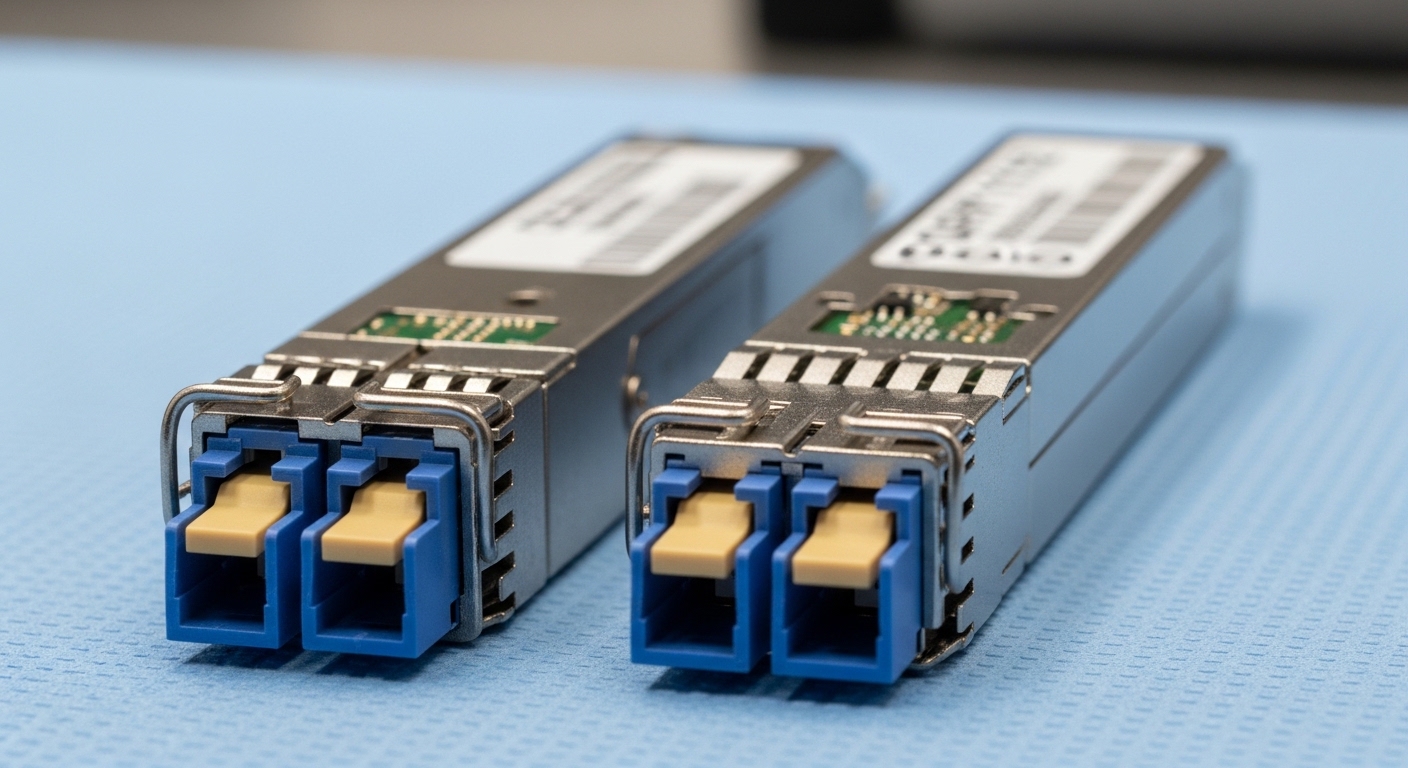
For many solar farm designs, the highest bandwidth need is within the same fenced yard: between a central plant controller, weather monitoring concentrators, and a nearby MV/LV substation comms cabinet. A solar farm SFP that supports 10GBASE-SR over multimode fiber is often the most cost-efficient option when you can keep reach within the optical budget.
Key specs to target
Engineers commonly select an SR transceiver around 850 nm with LC duplex connectors and a reach aligned to the installed OM3 or OM4 grade. Typical data rate is 10.3125 Gb/s for 10G Ethernet PHY. Operating temperature matters: outdoor enclosures frequently exceed indoor HVAC assumptions.
- Wavelength: 850 nm (nominal)
- Interface: SFP+ (10G) with LC duplex
- Typical reach: ~300 m on OM3, ~400 m on OM4 (vendor-dependent)
- Temperature: often 0 to 70 C for standard, -40 to 85 C for extended industrial
Best-fit scenario
In a 3-tier layout where 48-port 10G ToR switches aggregate to a single distribution switch located within 150 m of the plant controller building, SR on OM4 minimizes both cost and power draw versus long-reach coherent optics.
Pros: lower cost per port; abundant multimode fiber inventory; easier troubleshooting with visible fiber contamination checks. Cons: distance capped by modal bandwidth; multimode plant retrofits can be costly if legacy OM1/OM2 exists.
10GBASE-LR solar farm SFP for pole-to-substation runs
When you need longer reach than SR without committing to full DWDM, 10GBASE-LR SFP+ is a frequent choice for solar farm SFP deployments along feeder corridors. LR uses 1310 nm light over single-mode fiber, offering robust link budgets for outdoor spans.
Key specs to target
- Wavelength: 1310 nm
- Connector: LC duplex
- Typical reach: ~10 km (varies by vendor and fiber attenuation)
- Power: usually a few hundred mW class per transceiver; compare vendor thermal curves
Best-fit scenario
For a plant where the inverter field controller cabinet is 6.5 km from the substation gateway over aerial SMF with an average attenuation of 0.35 dB/km plus connector/splice losses, LR is often the lowest-risk optics choice.
Pros: long reach; single-mode compatibility with future upgrades; less sensitive to modal dispersion. Cons: higher module cost than SR; requires clean SMF termination and correct patching.
25GBASE-SR solar farm SFP28 for bandwidth growth on existing multimode
Some solar farms began with 10G and later add higher-resolution video, advanced inverter telemetry, and edge analytics. If you have OM4 and want more throughput without replacing fiber, 25GBASE-SR using SFP28 is a practical solar farm SFP upgrade path.
Key specs to target
- Wavelength: 850 nm
- Connector: LC duplex
- Typical reach: ~70 m on OM3, ~100 m on OM4 (vendor-specific)
- Form factor: SFP28 (25G)
Best-fit scenario
In a distribution cabinet where uplinks to a local aggregation switch are within 85 m over OM4, 25G SR increases headroom for event streams while preserving existing multimode conduits.
Pros: higher bandwidth per fiber; aligns with modern switch ASIC capabilities; good for staged upgrades. Cons: reach is shorter than 10G SR in many deployments; verify OM grade and patch cord lengths.
25GBASE-LR solar farm SFP28 for mid-distance single-mode consolidation
Where you have SMF but want to avoid LR4-style complexity, 25GBASE-LR SFP28 offers a balanced approach for solar farm SFP links between cabinets and regional network nodes. LR typically uses 1310 nm and targets multi-kilometer spans.
Key specs to target
- Wavelength: 1310 nm
- Connector: LC duplex
- Typical reach: often ~10 km class
- Temperature: prefer industrial-grade options for outdoor enclosures
Best-fit scenario
For a region where string monitoring cabinets are aggregated to a pole-top gateway and then to a site controller at 3.2 km, 25G LR can consolidate traffic without adding additional transceiver types.
Pros: strong link budgets; future-friendly for 25G switching; single-mode avoids modal constraints. Cons: confirm switch compatibility with SFP28 optics and verify DOM behavior.
10GBASE-ER solar farm SFP for long single-mode spans with conservative budgets
ER extends reach beyond LR for cases where you expect higher attenuation, more splices, or uncertain fiber aging. In solar farms with long aerial routes or where splicing operations were performed under time pressure, 10GBASE-ER can reduce the risk of marginal links.
Key specs to target
- Wavelength: 1550 nm class (ER)
- Connector: LC duplex
- Typical reach: often ~40 km (vendor-specific)
- Bias: requires careful link budget and fiber type confirmation
Best-fit scenario
If a substation backhaul is 28 km with an expected 0.30 dB/km SMF plus 7 dB of connector and splice loss due to multiple reconfigurations, ER provides margin when you cannot re-terminate.
Pros: more optical margin; tolerant to higher loss events. Cons: higher cost; ensure receiver sensitivity and dispersion constraints are met for your fiber plant.
Rugged industrial solar farm SFP options with extended temperature and DOM
Even if optics are “correct” electrically, outdoor reality determines reliability. For a solar farm SFP, field engineers often prioritize extended temperature ratings and accurate Digital Optical Monitoring (DOM) so that operations can detect drift before a failure.
Key specs to target
- Temperature range: target -40 to 85 C for outdoor cabinet use
- DOM: optical power, bias current, and temperature telemetry
- Optical class: ensure compliance with IEEE 802.3 transceiver specifications for your speed and reach
Best-fit scenario
In a cabinet without active HVAC where internal temperature cycles from -10 C to 75 C over seasons, standard 0 to 70 C modules may pass acceptance tests but fail intermittently during hot afternoons.
Pros: better survivability in harsh enclosures; DOM enables proactive maintenance. Cons: higher unit price; verify switch firmware supports DOM polling and alarms.
Vendor-compatible solar farm SFP vs third-party optics: operational risk model
Procurement decisions frequently become reliability decisions. While third-party optics can be cost-effective, the solar farm SFP selection must incorporate compatibility testing with your specific switch models, including DOM interpretation, reset behavior, and warning thresholds.
Key specs to target
- Standards alignment: IEEE 802.3 transceiver interfaces; ensure correct electrical lane mapping
- DOM implementation: confirm telemetry scaling matches platform expectations
- Vendor lock-in risk: evaluate return policy, RMA logistics, and cross-compatibility
Best-fit scenario
In a fleet where you maintain 200+ fiber ports across sites and swap optics during scheduled outages, you want predictable behavior: the same module SKU should not require different threshold tuning per switch model.
Pros: OEM optics can reduce integration friction; third-party can reduce capex. Cons: third-party may trigger “unsupported transceiver” alarms or exhibit different DOM thresholds.
Summary comparison: eight common solar farm SFP picks by optics, reach, and fit
The following table condenses the key selection variables that matter for solar farm SFP deployments: wavelength band, reach class, connector type, DOM/monitoring expectations, and practical operating temperature constraints. Use it to shortlist modules before you validate switch-level compatibility.
| Pick (Top item) | Typical transceiver | Wavelength | Form factor | Connector | Reach class | Best fit in solar farm | Temperature target |
|---|---|---|---|---|---|---|---|
| 1 | 10GBASE-SR | 850 nm | SFP+ | LC duplex | ~300 m OM3 / ~400 m OM4 | Intra-yard backbone | Prefer industrial (e.g., -40 to 85 C) |
| 2 | 10GBASE-LR | 1310 nm | SFP+ | LC duplex | ~10 km | Pole-to-substation runs | Industrial preferred for outdoor cabinets |
| 3 | 25GBASE-SR | 850 nm | SFP28 | LC duplex | ~70 m OM3 / ~100 m OM4 | Bandwidth growth on OM4 | Industrial preferred |
| 4 | 25GBASE-LR | 1310 nm | SFP28 | LC duplex | ~10 km class | Mid-distance SMF consolidation | Industrial preferred |
| 5 | 10GBASE-ER | 1550 nm class | SFP+ | LC duplex | ~40 km class | Long conservative links | Industrial preferred |
| 6 | Rugged industrial + DOM | Varies by speed | SFP/SFP+/SFP28 | Varies | Varies | Harsh enclosure reliability | -40 to 85 C target |
| 7 | Compatibility-validated optics | Varies | Match your port | Match your patching | Match your optical budget | Fleet-wide maintainability | Match environmental requirements |
| 8 | Pick based on fiber plant | Varies | Match your PHY | Match your patching | Budget-driven | Minimize link margin risk | Validate thermal design |
Pro Tip: In outdoor solar farm deployments, the dominant cause of “marginal optics” is often connector endface contamination and patch-cord length creep during maintenance, not the transceiver itself. Track DOM received power trends over weeks and correlate them with truck rolls; if Rx power degrades faster than the expected seasonal temperature effect, assume contamination or micro-bending in the patch path.
Selection criteria / decision checklist for solar farm SFP procurement
To avoid expensive rework, use an ordered checklist that blends optical engineering with field maintainability constraints. This is the same logic used during commissioning and during post-incident optics triage.
- Distance and fiber grade: verify SMF vs OM3/OM4, measure actual patch-cord lengths, and confirm splice/connector counts with as-built drawings.
- Optical budget and margin: include worst-case attenuation, insertion loss, and aging assumptions; do not design to “just passing” thresholds.
- Switch compatibility: confirm the exact port type (SFP vs SFP+ vs SFP28) and validate transceiver support in switch firmware documentation.
- DOM support and telemetry behavior: ensure your NMS can interpret alarm thresholds; verify that DOM polling does not trigger port flaps.
- Operating temperature and enclosure thermal profile: prefer industrial grade optics (e.g., -40 to 85 C) when cabinets lack HVAC; check vendor thermal derating curves.
- Connector standardization: ensure LC duplex polarity and cleanliness procedures match your fiber termination standards.
- Vendor lock-in risk: evaluate OEM vs third-party return logistics, warranty terms, and cross-SKU interoperability across multiple switch models.
- Commissioning plan: require connector inspection (microscope) and a documented clean procedure before optical power verification.
Common mistakes and troubleshooting tips in solar farm SFP links
Even experienced teams can lose days to preventable optics failures. Below are concrete failure modes seen in renewable-energy fiber runs, with root causes and corrective actions.
-
Mistake 1: Selecting SR based only on headline reach
Root cause: patch-cord length, excessive connectors, and unexpected OM grade (OM2 instead of OM3/OM4) shrink the modal budget.
Solution: re-calculate with measured insertion loss; standardize patch-cords; if margin is tight, switch to LR/ER or re-terminate with confirmed OM4. -
Mistake 2: Ignoring DOM alarm thresholds and misreading “weak signal”
Root cause: NMS interprets DOM scaling differently or warning thresholds are too aggressive, leading to unnecessary resets or missed early warnings.
Solution: align thresholds to vendor guidance; baseline Rx power and bias current at commissioning; only trigger major intervention when trends show persistent drift. -
Mistake 3: Connector contamination after routine maintenance
Root cause: technicians reuse caps inconsistently; dust ingress occurs during swap operations, especially in windy outdoor sites.
Solution: enforce a microscope inspection SOP; clean with lint-free wipes and approved cleaning tools; re-test with a known-good reference transceiver. -
Mistake 4: Using the wrong transceiver form factor or speed grade
Root cause: SFP vs SFP+ vs SFP28 physical compatibility is not equivalent to electrical lane support; some platforms accept insertion but refuse link training.
Solution: verify port spec and PHY mode; test in a staging rack before deploying to outdoor cabinets.
Cost and ROI note for solar farm SFP ownership
Typical street pricing varies by region and volume, but in many utility procurement cycles a 10G SR SFP+ is commonly cheaper than LR/ER single-mode optics. As a pragmatic range, engineers often see OEM modules in the low tens of dollars for short-reach (SR) and higher for LR/ER, while industrial-grade extended-temperature versions can cost materially more. Total cost of ownership (TCO) usually becomes dominated by truck-roll labor, connector cleaning consumables, spares logistics, and downtime risk rather than unit module price.
For ROI modeling, treat optics as reliability components: if an industrial (-40 to 85 C) module reduces intermittent link flaps during seasonal peaks, the labor savings and reduced incident response can outweigh the higher per-unit cost. For third-party optics, include integration test time and potential warranty friction in the TCO worksheet; a cheaper module can become expensive if it triggers port flaps or requires per-switch threshold tuning.
FAQ
Which solar farm SFP is best if my fiber is OM4 and the cabinets are 120 m apart?
For 120 m on OM4, a 25GBASE-SR SFP28 may be viable depending on the vendor’s OM4 reach guarantee and your actual patch-cord lengths. If you cannot confidently bound the link margin, consider 10GBASE-SR as a more forgiving baseline, or validate with an optical budget including worst-case insertion loss
