
SMBs often inherit an optical network that “works,” but degrades silently through marginal power budgets, aging fiber, and inconsistent optics handling. This article helps IT directors and field engineers enhance reliability and throughput by tying design decisions to IEEE 802.3 reach targets, measurable optical power, and practical governance. You will get a selection checklist, a real deployment scenario with numbers, troubleshooting pitfalls, and an ROI lens for transceiver and cabling investments.
What drives optical network performance in SMB environments
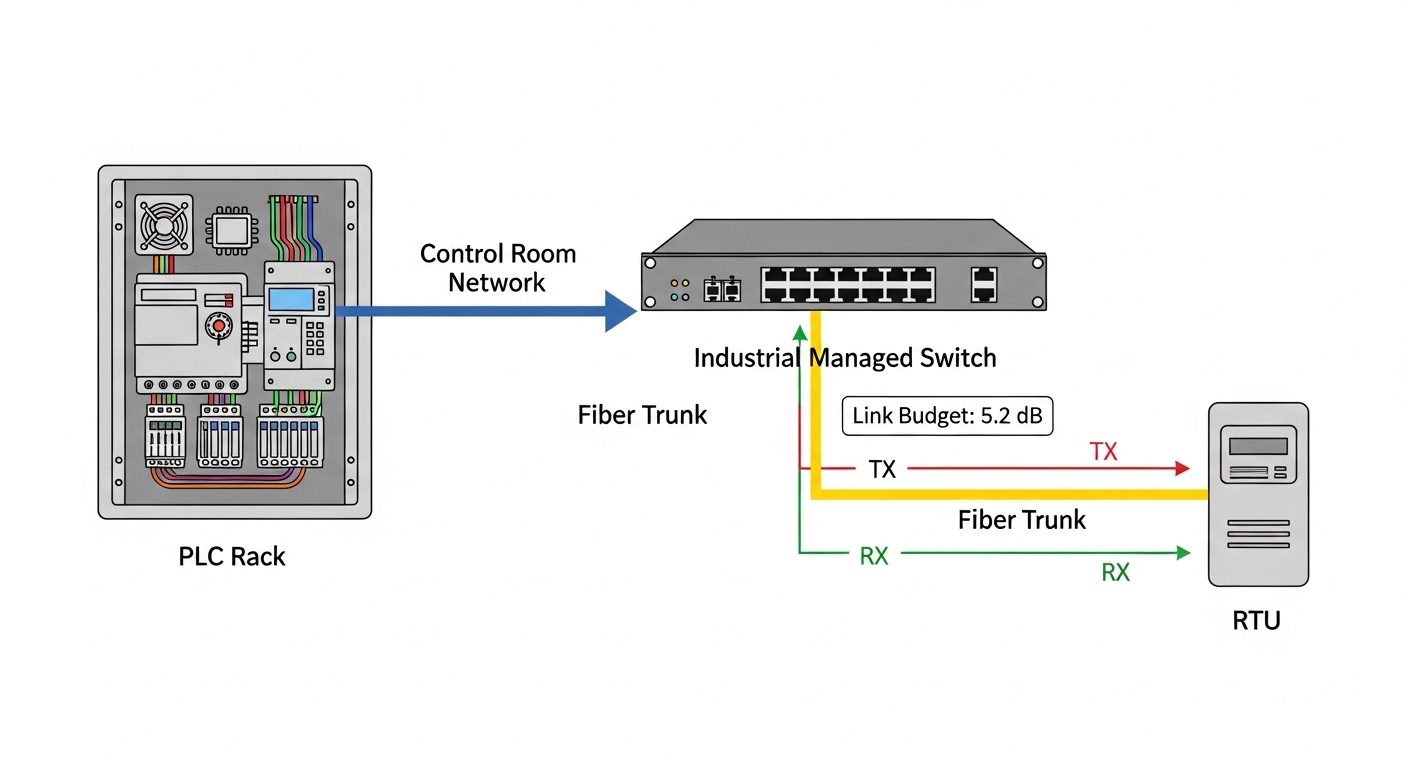
In an SMB, optical network performance is typically constrained by a few repeatable factors: link budget margin, connector cleanliness, fiber quality, and transceiver behavior under temperature and aging. Most failures are not “mystery outages”; they show up as higher bit error rates (BER), intermittent CRC errors, or flapping links during temperature swings. Engineers usually validate these with vendor-supported optics, optical power readings, and fiber test results aligned to ANSI/TIA-568 and ISO/IEC measurement practices. For Ethernet optics, the physical layer behavior is defined by IEEE 802.3 and vendor datasheets, but operations are where performance is won or lost.
Link budget math that actually impacts operations
Even when a module type matches the interface (for example, 10GBASE-SR), performance depends on real attenuation: fiber loss (dB), splice loss, connector insertion loss, and any patch panel penalties. Optical transceivers also have transmit power and receiver sensitivity limits; the difference is your available margin. In practice, teams should design for a margin that survives connector rework and patch changes. If your measured receive power is within spec but close to the sensitivity edge, you can still see elevated error rates under temperature and aging.
Why “it lights up” is not the same as “it passes”
Many SMB environments validate optics by link-up only, skipping optical diagnostics and BER-style indicators. Modern switches expose DMI/DOM telemetry such as transmit power, receive power, and temperature, but teams often do not trend these values. Without trending, you miss slow drift that precedes outages. A governance step—logging optics telemetry and alerting on thresholds—turns optical network maintenance from reactive to predictable.
Pro Tip: In the field, the most useful early warning is not absolute receive power; it is the rate of change in receive power after a patch change or seasonal temperature shift. If Rx power drifts faster than normal baseline, assume contamination or a connector seating issue before replacing optics.
Standards-based transceiver choices: SR vs LR and data rate alignment
To improve optical network performance, start with standards alignment: the transceiver must match the Ethernet PHY expectations for the target data rate and reach. For example, 10GBASE-SR uses multimode fiber and is common in SMB access and small data centers; 10GBASE-LR targets single-mode runs. If you mix module types or attempt “it should reach” assumptions, you risk marginal performance and inconsistent behavior across vendors and switch firmware revisions.
Key technical specs to verify before buying
Engineers should compare wavelengths, reach, connector type, and environmental ratings—not just data rate. For interoperability, confirm whether the module supports the switch’s DOM expectations and whether it is compliant with the switch vendor’s optics compatibility list. Also check whether the transceiver is specified for the same fiber type (OM3/OM4 multimode, or OS2 single-mode) and whether the connector style matches the patch panel (LC, SC, or MPO). A mismatch can still “work” at short distances but fail under load or after minor re-cabling.
Comparison table: common optics used in SMB optical networks
The table below shows representative specifications engineers commonly evaluate when upgrading an optical network in an SMB. Actual values vary by vendor and SKU; always confirm with the specific datasheet for the exact part number.
| Transceiver example | Data rate | Wavelength | Fiber type | Typical reach | Connector | Operating case temp | Optical power indicators |
|---|---|---|---|---|---|---|---|
| Cisco SFP-10G-SR | 10G | 850 nm | Multimode | Up to 300 m (OM3) | LC | 0 to 70 C (typical) | DOM (Tx/Rx power, temperature) |
| Finisar FTLX8571D3BCL | 10G | 850 nm | Multimode | Up to 300 m (OM3) | LC | -5 to 70 C (typical) | DOM support varies by platform |
| FS.com SFP-10GSR-85 (example) | 10G | 850 nm | Multimode | Up to 400 m (OM4) | LC | -5 to 70 C (typical) | DOM often included |
| Typical 10GBASE-LR SFP+ | 10G | 1310 nm | Single-mode OS2 | Up to 10 km | LC | 0 to 70 C (typical) | DOM (Tx/Rx power, temperature) |
Interoperability caveats you cannot ignore
Even when optics are “standard,” SMB teams can run into compatibility issues due to switch vendor firmware checks, DOM implementation details, or differences in how modules report calibration values. Some third-party optics work reliably, but the risk of intermittent DOM alarms or link instability increases when you do not test in a staging environment. An enterprise architecture lens also matters: if you standardize on one vendor ecosystem for switches and optics, governance becomes simpler, but you may pay a premium.
Fiber health, cleaning discipline, and measurable acceptance testing
For many SMBs, the biggest performance gains come not from swapping optics, but from improving the fiber system’s physical layer hygiene. Connector contamination is a top root cause of degraded receive power and intermittent failures, especially in patch panels that are opened frequently during equipment moves. A reliable acceptance test process should include fiber loss measurement, connector inspection, and basic documentation tied to the cabling record. When you connect this to optical network telemetry, you can prove improvements in reliability rather than relying on anecdotal evidence.
Acceptance testing workflow for SMB upgrades
When upgrading an optical network, teams should capture baseline measurements for each link: end-to-end loss (dB), polarity correctness, and connector inspection results. Use a test approach aligned to ANSI/TIA-568 and ensure the test method matches the fiber type and class of cabling. For multimode, validate that the installed fiber supports the required bandwidth over distance (for example, OM3 versus OM4). For single-mode, verify that the link is truly OS2 and that connectors and splices meet your organization’s loss thresholds.
DOM telemetry as an operational control
DOM telemetry is not just for troubleshooting; it can be used for governance. Establish a baseline per link: typical Tx and Rx power ranges and temperature behavior under normal load. Then alert when receive power drops beyond a defined band or when temperature trends upward unexpectedly. This creates a controlled operational loop that supports service-level expectations for the optical network.
Pro Tip: If you cannot get a clean connector inspection score for every LC or MPO termination, treat “works today” as a temporary condition. In practice, the cost of a $5 cleaning kit and 10 minutes of inspection is far lower than the labor to chase intermittent outages across multiple switches.
Selection criteria and decision checklist for SMB optical network upgrades
When enhancing optical network performance, the selection process should balance technical fit, cost, and operational risk. The checklist below is how engineers typically reduce the chance of surprises during rollout while keeping procurement aligned with budget constraints.
- Distance and fiber type: Confirm multimode versus single-mode, and verify OM3 versus OM4 if using 850 nm optics.
- Target reach vs real measured loss: Use fiber test results, not only vendor reach claims. Ensure link margin remains after patching changes.
- Switch compatibility: Validate optics against the switch vendor compatibility list and test in a staging rack with the exact switch firmware.
- DOM/telemetry support: Confirm DOM works as expected on the platform, including Tx/Rx power reporting and alarm thresholds.
- Operating temperature and airflow: Check transceiver temperature ranges and verify switch fan profiles and airflow paths in the closet or data hall.
- Vendor lock-in risk: Decide whether you will standardize on OEM optics or allow third-party modules with a defined qualification process.
- Connector and cabling governance: Ensure patch panel polarity, connector type (LC/SC/MPO), and cleaning procedures are enforceable and documented.
- Field support model: Confirm warranty terms, RMA turnaround time, and whether the vendor provides accurate failure classification.
Common mistakes and troubleshooting patterns
Even well-planned optical network projects can fail due to predictable issues. The points below include concrete failure modes, likely root causes, and practical solutions that field teams use.
Link comes up but traffic errors spike
Root cause: Marginal optical power due to high fiber attenuation, dirty connectors, or a connector that is not fully seated. In some cases, the module is within spec for power but has insufficient link margin for the actual channel loss.
Solution: Inspect and clean both ends, re-seat connectors, and re-measure receive power with DOM. If receive power is close to sensitivity limits, re-check patch cord quality and confirm the fiber type and loss class.
Intermittent flaps during temperature changes
Root cause: Transceiver temperature behavior combined with poor airflow or fan profile changes. Some modules are specified for a narrower temperature operating range, and closets with blocked vents can push them past stable conditions.
Solution: Verify airflow paths, confirm switch fan operation, and monitor DOM temperature alongside link events. If temperatures exceed typical operating conditions, improve ventilation before replacing optics.
DOM alarms after swapping optics, even though link seems stable
Root cause: DOM compatibility differences, calibration reporting mismatches, or switch firmware that interprets certain threshold values differently. This can lead to repeated “diagnostic” events that mask real problems.
Solution: Test the exact optic SKU with the target switch firmware in staging. If you must use third-party optics, qualify them with a documented test plan and adopt consistent alarm thresholds.
Polarity errors in patching
Root cause: For duplex LC and especially MPO-based cabling, polarity reversal can still produce link-up but fail at higher traffic rates or after transceiver optics initialization behavior changes.
Solution: Validate polarity end-to-end, verify correct transmit/receive mapping, and use labeling discipline for patch cords. Re-test with a known-good transceiver after correcting polarity.
Cost and ROI: transceivers, cabling work, and total cost of ownership
For SMBs, ROI is often driven by reduced downtime labor and fewer repeat visits to “hunt” intermittent optical network issues. Pricing varies by OEM versus third-party, data rate, and whether you need DOM support and strict compatibility assurance. In many deployments, OEM optics cost roughly 1.5x to 3x the price of qualified third-party modules, while cabling labor and test equipment costs can dominate during initial remediation.
Realistic budget ranges and TCO considerations
A common pattern is: spend on fiber testing, connector cleaning supplies, and a small number of qualified optics to build spares. For example, a 10G SR SFP+ OEM module may cost in the range of $60 to $150 per unit, while qualified third-party alternatives may be closer to $25 to $80. If you reduce even a couple of outage hours per year across staff and vendors, the ROI can be immediate. Also consider failure rates and warranty terms; a slightly higher upfront cost can reduce total TCO if RMA turnaround is faster and replacement is straightforward.
From a governance perspective, standardizing on a small set of optics families and enforcing acceptance testing reduces variance. That variance reduction often lowers operational risk more than the raw cost savings from choosing the cheapest module.
FAQ
How do I confirm my optical network upgrade is standards compliant?
Start with IEEE 802.3 requirements for your target data rate and link type, then verify the transceiver datasheet matches those expectations. Finally, validate with end-to-end fiber measurements and DOM telemetry to confirm the link is operating with adequate margin.
Should I use OEM optics or third-party modules in an SMB?
OEM optics reduce compatibility uncertainty, especially when you rely heavily on switch vendor diagnostics and optics compatibility lists. Third-party optics can be cost-effective if you qualify specific SKUs in staging with the exact switch firmware and document acceptance criteria.
What fiber tests matter most for optical network performance?
End-to-end loss measurements are the primary indicator for link budget margin, aligned to ANSI/TIA-568. For multimode, confirm the fiber supports your required distance class, and always verify connector cleanliness and polarity before blaming the transceiver.
Why does receive power look acceptable, but links still flap?
Flapping can be caused by temperature and airflow, connector seating issues, or polarity errors that only manifest under higher load or after re-initialization. Correlate link events with DOM temperature and Rx power trends, then re-check cleaning and patching.
How can telemetry support governance, not just troubleshooting?
Define baselines per link and alert on deviations such as abnormal Rx power drops or temperature excursions. Store these events in your monitoring system so you can trend reliability by site, rack, and patch panel, enabling targeted maintenance.
What is the fastest way to reduce optical network downtime?
Implement a connector inspection and cleaning discipline, enforce end-to-end acceptance testing, and standardize optics families. Then add DOM telemetry alerting so you catch drift before it becomes an outage.
If you want a next step, review your current cabling records and build an optics and fiber qualification standard using optical network cabling governance to reduce variance and improve reliability. With measurable baselines and governance controls, your optical network becomes predictable instead of reactive.
Author bio: IT director focused on enterprise architecture, optical transport planning, and operational governance for SMB and midmarket networks. Former field engineer who has deployed and validated Ethernet optics using DOM telemetry, end-to-end fiber tests, and standards-aligned acceptance procedures.
Author bio: Works with procurement and operations teams to quantify ROI using downtime reduction, RMA outcomes, and link budget margin validation. Updates this guidance based on vendor datasheets and field-tested troubleshooting patterns.


