
Smart city projects love big promises, but budgets love fewer surprises. This article helps network and infrastructure leaders estimate real ROI for optical transceivers powering traffic systems, utility telemetry, and public Wi-Fi backhaul. You will get engineering-grade selection criteria, a deployment scenario with numbers, and practical troubleshooting that field teams can use on call.
Why optical transceivers swing smart city ROI (and not just the datasheet)
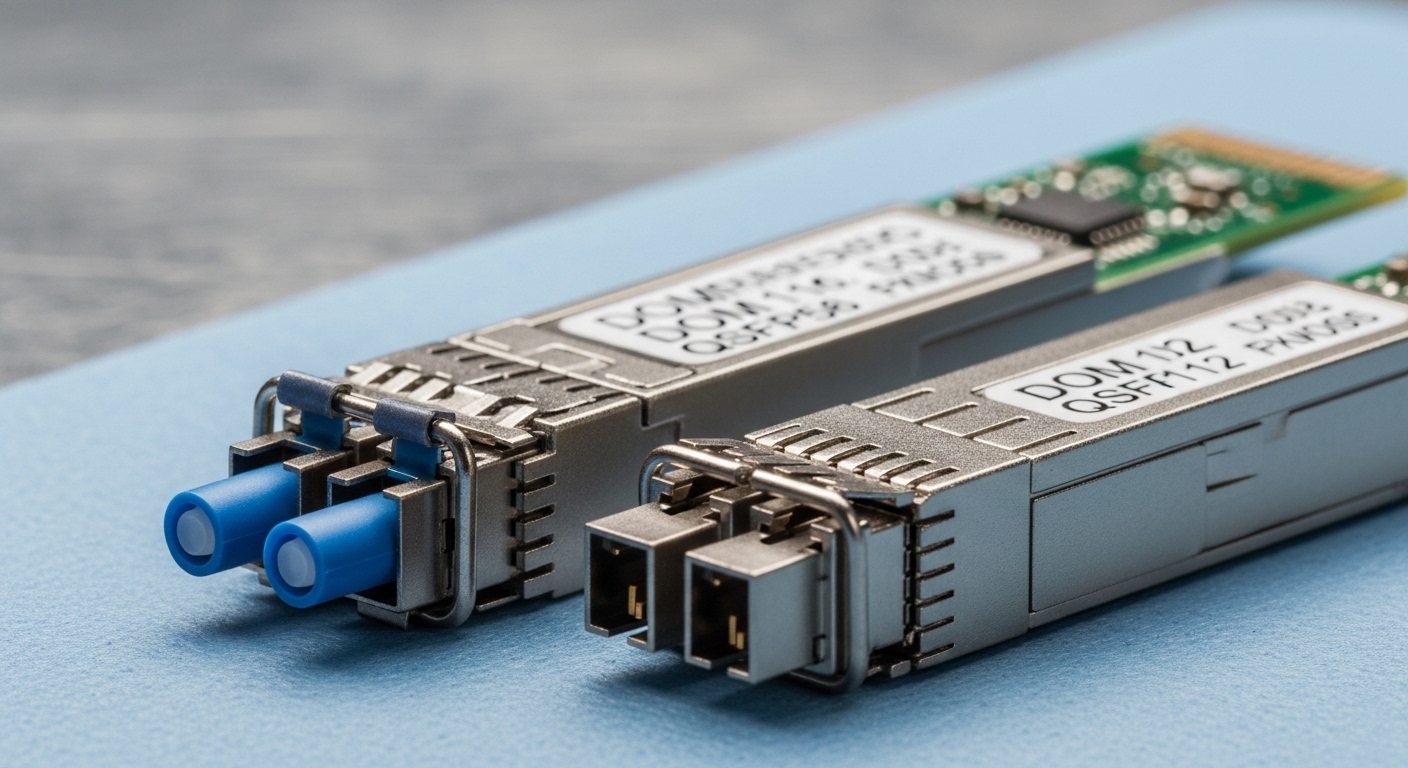
Optical transceivers are the tiny box that decides whether your fiber link behaves like a calm river or a temperamental raccoon. In smart city deployments, they sit between access switches, aggregation routers, and municipal core gear, carrying bandwidth for cameras, sensors, and LTE/5G backhaul. ROI comes from three levers: total installed cost (transceivers plus optics plus labor), operational cost (power, spares, downtime), and performance (reach, bit error rate, and link stability). When you choose correctly, you reduce truck rolls, avoid forced migrations, and keep bandwidth available during peak events.
From a standards perspective, most choices map to IEEE Ethernet over fiber requirements (for example, IEEE 802.3 for 10G/25G/40G/100G Ethernet PHY behavior) and to vendor-specific electrical/optical constraints. The practical outcome is that compatibility is not “just plug and pray.” DOM (Digital Optical Monitoring) support, optical budget alignment, and vendor temperature ratings matter when your street cabinet doubles as a mini sauna.
Let us anchor this with a measurable model. Suppose a city deploys 10 km of fiber for a camera corridor and needs 10G Ethernet. If you pick a transceiver with the wrong reach class or insufficient optical budget margin, you may see intermittent link flaps under seasonal temperature swings. That flapping becomes downtime, which becomes overtime, which becomes a budget line item that screams louder than the traffic cameras.
Key specs that determine reach, power, and failure risk
Engineers evaluate optical transceivers using parameters that directly affect link feasibility and long-term reliability. Wavelength determines fiber type compatibility (commonly 850 nm for multimode, 1310/1550 nm for single-mode). Reach is constrained by attenuation, dispersion, connector loss, and aging. Power draw affects cooling and energy costs, especially when you scale to hundreds or thousands of ports.
Below is a practical comparison of common module families you will encounter in smart city builds. Note that exact values vary by vendor and exact part number, so treat this as a field-oriented starting point, not gospel.
| Spec | 10G SFP+ SR | 10G SFP+ LR | 25G SFP28 SR | 100G QSFP28 SR4 |
|---|---|---|---|---|
| Typical wavelength | 850 nm | 1310 nm | 850 nm | 850 nm (4 lanes) |
| Typical reach (typical) | Up to 300 m over OM3, up to ~400 m over OM4 | Up to 10 km over OS2 | Up to ~100 m over OM3, ~150 m over OM4 | Up to ~100 m over OM4 (varies by vendor) |
| Connector style | LC | LC | LC | LC (MPO) |
| DOM support (common) | Often available | Often available | Often available | Often available |
| Operating temperature (common) | 0 to 70 C (some extended) | -5 to 70 C (some extended) | 0 to 70 C (some extended) | 0 to 70 C |
| Power draw (typical range) | ~0.5 to 1.5 W | ~0.8 to 2 W | ~0.8 to 2 W | ~3 to 4.5 W |
| Where it shines in a smart city | Short-reach fiber to cabinets | Longer runs between hubs | Mid-distance aggregation | High-density core or aggregation |
Examples of real-world, widely used part families include Cisco SFP-10G-SR and Cisco SFP-10G-LR, Finisar/FS.com style modules like FTLX8571D3BCL (illustrative of 10G SR form), and FS.com SFP-10GSR-85 among others. For standards grounding, consult IEEE 802.3 and the module vendors’ datasheets for link budget numbers and receiver sensitivity.
Pro Tip: In field audits, the biggest ROI killer is usually not “reach on paper.” It is insufficient optical budget margin after you account for connector contamination, patch panel losses, and aging. Add margin for real loss (cleaning state and spare patching), then verify with DOM readings after install.
For authority references, IEEE 802.3 provides the Ethernet PHY foundation, while vendor datasheets provide the optical power and receiver sensitivity ranges. See IEEE 802.3 and example vendor documentation like Cisco support pages for module and compatibility guidance.
ROI model: turn transceiver choices into measurable savings
ROI for optical transceivers is not magic; it is arithmetic with a dash of operational reality. Start with port count, module cost, installation labor, and expected lifetime. Then add downtime cost and energy cost. In smart city environments, downtime is expensive because you lose camera feeds, sensor telemetry, or Wi-Fi coverage during incidents.
Here is a field-friendly ROI approach. Compute annualized cost per link as: (module purchase cost + spares allocation + installation labor amortized) + (energy cost based on measured or datasheet power) + (expected downtime cost using failure rate and mean time to repair). Even if you do not have perfect failure statistics, you can model two scenarios: “standard compatibility modules” and “fully supported modules with DOM and matching temperature ratings.”
Energy is often underestimated. If a 10G SR transceiver averages 1.2 W and you have 400 ports active, that is 480 W. Multiply by 24/7 operation and your local energy price, and the cooling overhead can push total facility impact higher. At the same time, long-life modules with stable optics can reduce the frequency of swaps, which saves labor and avoids service interruptions.
Example ROI math you can defend in a steering committee
Assume a mid-sized smart city segment with 48 street cabinets feeding 10G aggregation. Each cabinet uses 8 fiber uplinks, so total active ports: 48 cabinets × 8 uplinks = 384 ports. You choose 10G SR optics for short runs inside the corridor and 10G LR for longer trunk segments. If your supported SR modules cost $150 each and your lower-cost third-party modules cost $95 each, the purchase delta is $55 × 384 = $21,120.
Now add operational risk. If the cheaper optics introduce even a modest increase in swap events—say 2 extra failures per year requiring 3 hours each of field labor—then labor cost might be, for example, $120/hour plus truck time and after-hours coordination. That is 2 × 3 × $120 = $720, plus overhead that can easily reach $1,000–$2,000 per event. If you also include service impact (missed camera windows), the ROI can flip quickly, especially during major events.
Finally, consider spares. Buying supported modules often reduces the time to troubleshoot because DOM thresholds and vendor-specific diagnostics align with the switch vendor’s expectations. That reduces “mystery failures,” which is the networking equivalent of chasing a ghost with a flashlight.
Decision checklist: selecting transceivers for smart city deployments
Use this ordered checklist when selecting optics for smart city projects. It is designed to prevent the classic “works in the lab, fails in the field” scenario.
- Distance and fiber type: confirm OM3/OM4 vs OS2, then map required reach to wavelength and power budget.
- Switch compatibility: verify that the exact transceiver family is supported by your switch/router model and firmware version.
- DOM and monitoring: ensure DOM works end-to-end for monitoring thresholds and proactive maintenance alerts.
- Optical budget margin: account for connector loss, patching, and expected contamination. Keep margin for aging and service changes.
- Operating temperature and enclosure conditions: street cabinets can exceed room assumptions; confirm extended temperature variants if needed.
- Data rate and optics lane type: match SFP+ vs SFP28 vs QSFP28; avoid mixing reach classes across generations.
- Vendor lock-in risk: evaluate whether third-party optics will trigger compatibility or monitoring limitations.
- Spare strategy: plan spares per site based on port count and risk profile, not just “buy a few.”
Compatibility notes that save you from late-night firmware archaeology
Many switch vendors maintain compatibility lists for optics. Even when a module “physically fits,” the switch may reject it or report DOM values outside expected ranges. That can cause link instability, alarm storms, or reduced diagnostics. Align module selection with switch vendor guidance and confirm with a pilot deployment before citywide rollout.
Common mistakes and troubleshooting tips from the trenches
Smart city networks are unforgiving because the environment is messy: dust, vibration, temperature swings, and occasional enthusiastic humans with cleaning tools. Here are concrete pitfalls, their likely root causes, and practical solutions.
Link flaps that mysteriously correlate with temperature
Root cause: optics operating outside the rated temperature range, or marginal optical budget with insufficient receiver margin. Laser output and receiver sensitivity can drift with temperature.
Solution: confirm module temperature rating (seek extended variants when cabinets exceed 70 C), then re-check link budget including connector loss and splice attenuation. Use DOM readings to validate Tx power and Rx power trends.
“Works on day one” but fails after patch panel changes
Root cause: connector contamination or additional patching loss introduced during maintenance. Fiber links are sensitive to dirty connectors, and smart city cabinets are maintenance magnets.
Solution: enforce a cleaning and inspection workflow. Include inspection with proper magnification and replace worn patch cords. After any rework, verify link with optical power measurements (where available) and monitor error counters.
DOM alarms or missing monitoring despite successful link up
Root cause: third-party optics with partial DOM implementation or values that do not align with the switch’s thresholds. Some optics may not expose all diagnostics consistently.
Solution: use supported optics for production, and test third-party modules in a pilot with the exact switch model and firmware. Ensure monitoring dashboards interpret DOM consistently, and adjust thresholds only with vendor guidance.
Wrong module type for the port speed or lane mapping
Root cause: mixing optics across generations (for example, confusing SFP28 with SFP+ behavior or using QSFP28 SR4 settings incorrectly). Even if a link can partially come up, it may negotiate suboptimal modes or fail under load.
Solution: confirm port configuration, speed, and lane mode. Validate with switch CLI and check interface counters under traffic. Keep a deployment checklist that includes module part number, wavelength, and connector type.
Cost and TCO: what you should budget beyond the sticker price
Optics pricing varies widely by vendor, temperature grade, and whether you buy OEM vs third-party remanufactured modules. In many enterprise procurement scenarios, you might see rough ranges like $80–$200 per 10G SR module and $150–$400 per 10G LR module, depending on guarantees and monitoring support. QSFP28 optics can cost more, especially for high-density lanes.
For TCO, include: module cost, spares, installation labor, testing time, and downtime risk. OEM-supported optics often cost more, but they can reduce troubleshooting time and improve predictability. Third-party modules can work well, but you must budget for validation, and you may face limitations in DOM behavior or compatibility under firmware updates.
Failure rate data is not always public, so use a practical proxy: track swap events, link error bursts, and cleaning-related incidents per site. If a specific vendor batch shows higher swap frequency, the savings evaporate faster than a city budget meeting on a Friday afternoon.
FAQ for smart city buyers evaluating optical transceivers
Which optical transceiver type is most common for smart city street cabinets?
For short runs inside a corridor, 10G SFP+ SR and 25G SFP28 SR over OM4 are common because they use 850 nm optics and LC connectors. For longer trunks between hubs, 10G SFP+ LR over OS2 with 1310 nm optics is typical. The best choice depends on your fiber type and required reach with margin.
Do I need DOM support for ROI, or is it optional?
DOM is usually worth it for smart city operations because it enables proactive monitoring of Tx power, Rx power, and diagnostics. That can reduce mean time to repair by pointing you to an optics degradation pattern before a full failure. If you do not monitor DOM, you are essentially running a traffic system without speed cameras.
Can we use third-party optics to cut costs in a smart city network?
Yes, but you should treat third-party optics like a new contractor: validate them in a pilot with the exact switch model and firmware. Confirm DOM compatibility, optical budget margins, and temperature ratings. If your operational model relies heavily on vendor diagnostics, OEM-supported optics may reduce total labor and downtime cost.
How do we estimate optical budget margin for real deployments?
Start with vendor receiver sensitivity and Tx power, then subtract fiber attenuation, connector loss, and splice or patch losses. Add a buffer for connector contamination and future maintenance changes. After installation, verify with DOM trends and interface error counters under normal and peak load.
What is the fastest troubleshooting workflow for link instability?
First, check interface counters and link event logs on the switch. Next, read DOM values (Tx/Rx power, temperature, bias current if available) to detect drift. Then inspect and clean connectors, especially after any maintenance changes, and re-test with known-good patch cords.
When should we consider upgrading from 10G to 25G or 100G?
Upgrade when demand growth (more cameras, higher-resolution analytics, or additional telemetry) causes sustained utilization near capacity. Also consider future-proofing for aggregation where you have high fan-in. Use a staged approach: validate optics and switch support in a pilot before touching the whole city ring.
If you want your smart city fiber to keep delivering uptime, treat optical transceivers as a reliability and operations investment, not just a procurement line. Next, review smart city fiber network design to align topology, reach planning, and spares strategy with your ROI targets.
Author bio: I design and review network optics workflows for real deployments, from switch port compatibility to field troubleshooting checklists. I focus on measurable uptime outcomes and aesthetic, operator-friendly monitoring experiences.
