
Smart cities do not fail because sensors are “bad”; they fail because the network backhaul and aggregation cannot keep up when cameras, traffic signals, and edge analytics spike during events. This article helps network planners and field engineers evaluate 800G transceivers for urban connectivity upgrades, including bandwidth targets, optics choices, and operational limits. You will get practical selection criteria, a specs comparison table, troubleshooting pitfalls, and a deployment scenario you can map to your own fiber plant.
Why 800G transceivers matter for smart city backhaul
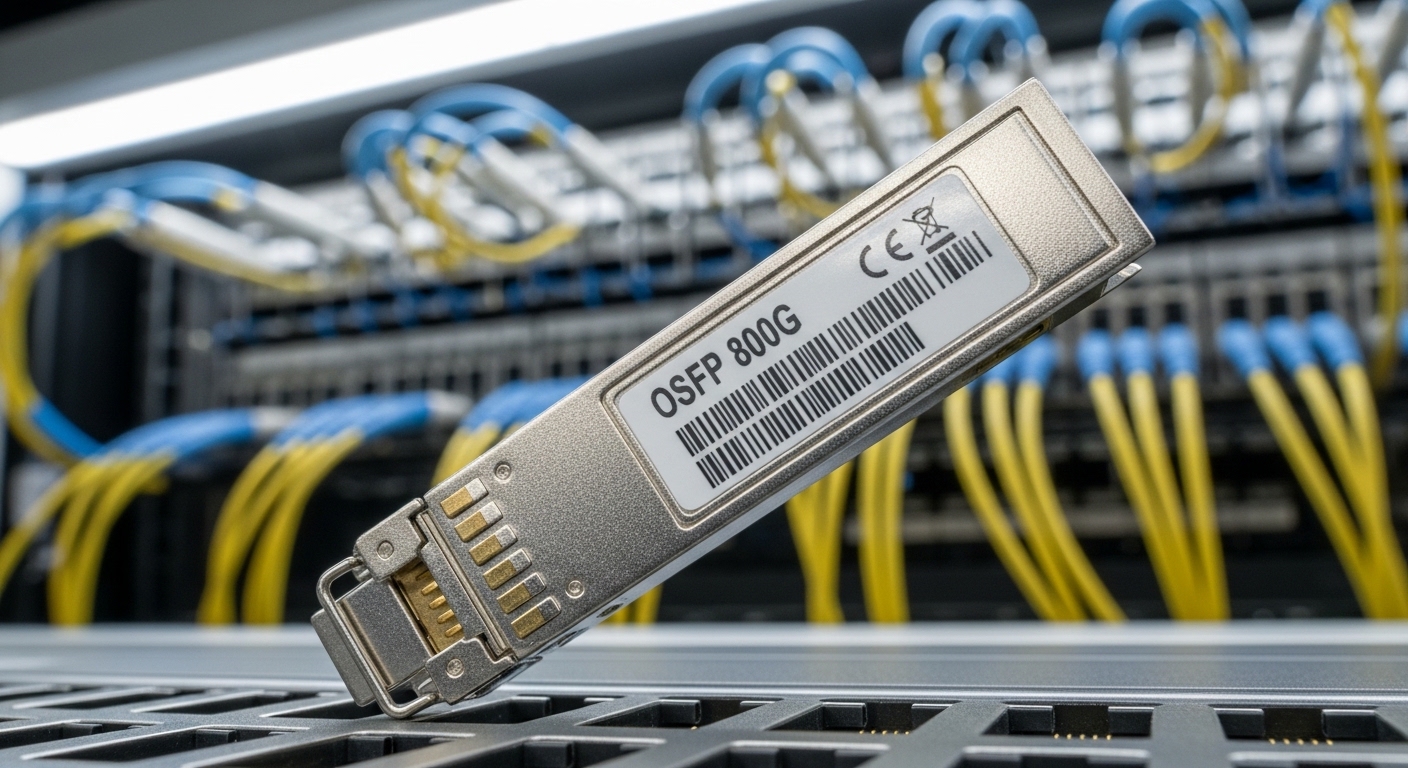
In a typical smart city rollout, you start with modest bandwidth, then expand to thousands of endpoints: high-definition CCTV, connected vehicle feeds, adaptive street lighting telemetry, and public Wi-Fi. The traffic pattern is not steady; it surges during storms, festivals, and emergency response, which stresses leaf-spine uplinks and aggregation rings. 800G transceivers reduce the number of optics and transceiver lanes needed per unit bandwidth, which can lower rack congestion and simplify upgrade paths when your switches support 800G interfaces.
From a standards standpoint, the optics ecosystem is shaped by IEEE 802.3 Ethernet physical layer specifications for high-speed links and by vendor implementations of 800G “coherent” or “400G-based lane aggregation” styles, depending on the module type. In practice, you choose based on reach (short-reach vs long-reach), fiber plant (multimode vs single-mode), and whether your switching platform supports the exact electrical interface and diagnostics you need. For smart cities, you also care about environmental robustness, because cabinets sit outdoors or in poorly controlled municipal spaces.
Pro Tip: In municipal deployments, the biggest hidden cost is usually not the optics purchase price; it is the downtime and truck roll needed to correct a marginal fiber link. If you can, validate end-to-end optical budget and connector cleanliness before you commit to a specific 800G module type.
800G transceiver types for urban fiber: SR, LR, and coherent options
“800G transceivers” is a category name, but the actual link behavior depends on the transceiver technology. Many data center and metro upgrades use short-reach optics for intra-facility fiber runs, while longer routes often rely on long-reach optics or coherent solutions where budgets and dispersion tolerance are critical.
Quick mapping: reach vs fiber plant
- SR (short reach): typically for multimode fiber (MMF) or short single-mode runs inside secured facilities; best when you have patching control.
- LR (long reach): typically for single-mode fiber (SMF) over longer distances; often used for campus-to-cabinet aggregation.
- Coherent: used when you need higher reach over challenging fiber spans, where you can trade optics cost for link margin and flexibility.
If you are upgrading “smart city” aggregation points, you may be mixing facility-based switching with municipal cabinet locations. That means you might have fiber runs that are not perfectly managed, with variable patch loss, aged connectors, and occasional splice defects. Those realities push you toward selecting optics with strong diagnostics (DOM) and predictable optical budgets.
Technical specifications comparison (common engineering targets)
Below is a practical comparison of representative 800G module families engineers consider. Exact values vary by vendor and part number, so always confirm against the specific datasheet.
| Spec | Example SR 800G (MMF) | Example LR 800G (SMF) | Example Coherent 800G (SMF) |
|---|---|---|---|
| Typical data rate | 800G Ethernet | 800G Ethernet | 800G Ethernet |
| Wavelength | Multi-wavelength near 850 nm band (vendor-dependent) | Single-mode wavelengths near 1310 nm band (vendor-dependent) | Coherent wavelength set (vendor-dependent) |
| Reach | ~100 m to 300 m typical SR class | ~2 km to 10 km typical LR class | ~40 km to 80 km+ depending on design |
| Connector | Commonly MPO/MTP | Commonly LC or MPO/MTP (varies) | LC or MPO (varies) |
| Operating temperature | Often 0 C to 70 C for indoor use | Often 0 C to 70 C (some -40 C options exist) | Often wider range, but confirm |
| Power (typical) | ~10 W to 20 W | ~10 W to 25 W | ~15 W to 35 W depending on coherent design |
| DOM / diagnostics | Supported via standard digital interfaces | Supported via standard digital interfaces | Supported with richer telemetry |
If you are deploying in outdoor municipal cabinets, you may need modules rated for extended temperature or you may need a thermal management plan (airflow, filtered fans, or liquid cooling for certain enclosures). Even when the optics are rated, the switch line cards and fan trays may become the limiting factor.
Real smart city deployment: numbers you can plan around
Consider a mid-sized city upgrading surveillance and traffic analytics. You have 48 ToR switches per district, each with 48 x 10G downlinks to edge aggregation and 8 x 400G uplinks to a small leaf-spine core. During a 6-month program, the city adds new camera zones and adaptive signal controllers, increasing aggregate northbound traffic by about 35% in peak hours and up to 2x during major events.
The engineering team decides to replace the core uplinks with 800G optics where the vendor platform supports it. In the upgrade window, each ToR now uses 2 x 800G uplinks instead of 4 x 400G (exact port mapping depends on the switch chassis). That reduces the number of optics per rack by roughly 50%, which helps with cable management and reduces the count of potential failure points (more optics means more cleaning cycles and more opportunities for dust contamination).
For the fiber plant, the city uses a mix of MMF within secured municipal buildings and SMF for cabinet-to-core runs. For the MMF segments, SR-class modules are chosen for short patch runs, while LR-class modules cover the longest cabinet spans. The team also enforces a maintenance routine: every connector is cleaned at installation and re-checked after any cabinet door open event. They track optical receive power (dom telemetry) and error counters, and they roll modules that show rising error rates before they hit hard thresholds.
Selection criteria checklist for 800G transceivers in the field
When you choose 800G transceivers for smart city networks, you are not just selecting optics; you are selecting operational risk. Use this ordered checklist in planning meetings and in your field acceptance process.
- Distance and fiber type: Confirm SMF vs MMF, measured link loss, and number of connectors/splices. Use an OTDR trace for long SMF runs and a reference MMF link budget for SR.
- Switch compatibility: Verify the exact module support list for your switch model and line card revision. Some platforms support only specific vendor optics due to electrical interface and firmware validation.
- Optical budget and margin: Include worst-case power supply variations, connector aging, and temperature drift. If you have limited margin, prefer coherent or higher-budget optics rather than “barely passing.”
- DOM support and telemetry depth: Ensure the module exposes the diagnostics your NMS can poll (TX/RX power, laser bias, temperature, and error counters). This is crucial for remote municipal operations where you cannot inspect constantly.
- Operating temperature and enclosure plan: Confirm module rating and verify that the enclosure airflow or thermal control keeps the transceiver within spec during peak summer and winter.
- Connector type and cleaning workflow: MPO/MTP cleanliness is a common failure vector. Standardize cleaning tools and inspection steps across contractors.
- Vendor lock-in risk: Consider total cost of ownership across the lifecycle. If the switch vendor restricts third-party optics, price and lead times can dominate your budget.
- Spare strategy: Plan for spares per cabinet cluster, not per city. A single bad batch can create multiple outages if you do not track serial numbers and DOM baselines.
For authority on Ethernet physical layer behavior and link requirements, review the relevant IEEE Ethernet specifications and your switch vendor’s optics guidance. For module diagnostics and digital transceiver interfaces, vendor datasheets and common DOM documentation are the practical references. For standards context, start with [Source: IEEE 802.3] and your optics vendor datasheet documentation.
IEEE 802.3 Ethernet standard Switch vendor support portals for optics compatibility Finisar optical component datasheets FS.com transceiver product pages and specs
Cost and ROI: what 800G optics change in the budget
Pricing varies widely by reach and technology, but for planning you can expect that 800G SR modules tend to be less expensive than LR or coherent, while coherent typically costs the most. In many markets, third-party compatible optics can be cheaper than OEM, but compatibility and lead time risks can offset the savings during a municipal outage. A realistic budgeting approach uses a blended cost: optics price plus expected installation labor, cleaning supplies, inspection time, and the cost of downtime if a module fails early.
Operationally, the ROI is often in reduced optics count and better scalability per rack. If you replace four 400G optics with two 800G optics on a compatible switch, you may reduce cable complexity and simplify future upgrades. However, you also concentrate risk into fewer modules: if the remaining optics fail simultaneously due to a common fiber cleanliness issue, the blast radius is larger than with more parallel optics.
Typical TCO considerations include: (1) expected annual failure rates from your historical maintenance logs, (2) spare inventory holding costs, and (3) power draw differences. Even if power differences are small per port, the aggregate impact across hundreds of uplinks can matter for municipal sustainability goals, especially when cabinets are already near thermal limits.
Common mistakes and troubleshooting tips for 800G rollouts
Even experienced teams get burned by a few repeatable issues. Here are concrete failure modes you can watch for during commissioning and after go-live.
Receiver power too low due to dirty MPO/MTP connectors
- Root cause: Dust on MPO/MTP endfaces or misaligned ferrule geometry, especially after repeated cabinet openings.
- Symptoms: Link flaps, high bit error counters, or the switch refusing to bring the port up.
- Solution: Use an inspection microscope, clean with approved tools, and re-seat carefully. Record RX power from DOM after every cleaning cycle.
Link works on day one, fails after temperature swings
- Root cause: Module rated for a different temperature class than the enclosure environment, or inadequate airflow around the switch line card.
- Symptoms: Errors increase during peak heat; sudden link drops at specific times of day.
- Solution: Validate ambient and internal cabinet temperature. Add thermal sensors and confirm module temperature telemetry stays within spec under worst-case conditions.
“Compatible” optics still fail due to platform firmware validation
- Root cause: The switch supports 800G in general, but not the specific module electrical profile or the firmware does not allow it.
- Symptoms: Port shows “module not supported” or intermittent link negotiation issues.
- Solution: Check the switch vendor optics compatibility matrix for your exact switch model and software version before field installation.
Wrong reach class selected for the actual fiber plant
- Root cause: Planning assumed ideal patch cord loss, but real spans have extra connectors, aged splices, or unplanned patching.
- Symptoms: Link comes up with low margin, then degrades as fibers age.
- Solution: Recalculate optical budget using measured loss. If you lack margin, switch to a higher-budget optics class or remediate the fiber (connector rework, splice replacement).
FAQ: 800G transceivers for smart cities
What fiber type do we need for 800G transceivers?
It depends on the optics class. SR-style 800G modules are typically used for short runs and often map to multimode fiber, while LR and coherent 800G modules generally rely on single-mode fiber. Confirm the exact module datasheet and your measured link loss before ordering.
How do I verify compatibility with a specific switch model?
Use the vendor’s optics compatibility list for your exact switch model and software version. Even if two modules both say “800G,” electrical interface details and firmware validation can differ by line card revision. If you can, pilot with a small number of ports before citywide rollout.
Are third-party 800G transceivers risky for municipal deployments?
They can be cost-effective, but the risk depends on your switch’s acceptance behavior and your ability to troubleshoot quickly. Many teams reduce risk by buying from vendors with strong documentation and by validating DOM telemetry and link bring-up in a controlled pilot. Always keep OEM modules as a fallback if your change window is tight.
What DOM metrics should we monitor after installation?
Monitor TX/RX optical power, module temperature, and any error counters exposed by the switch. Set alert thresholds based on your baseline from commissioning tests, not generic defaults. For smart cities, this is key because you may not have frequent on-site access.
What is the most common cause of 800G link flaps?
Dirty or mis-seated connectors, especially with MPO/MTP. Even small contamination can reduce optical margin enough to cause intermittent loss of signal during temperature or vibration changes. Standardize inspection and cleaning procedures for every cabinet access.
Should we choose SR or LR for cabinet-to-core links?
If the cabinet-to-core distance and loss budget fit SR and your fiber is well-controlled, SR can be cheaper. But if you see variable patching, older splices, or limited margin, LR (or coherent where needed) is often safer because it tolerates real-world variability better. Always decide using measured OTDR and connector counts.
If you want to extend this planning to the next step, map your optics choice to the rest of your upgrade—port density, cabling standards, and monitoring strategy—using 800G network upgrade planning as your checklist. With the right reach class, validated compatibility, and disciplined cleaning and telemetry baselines, 800G transceivers can deliver the scale smart cities need without turning every rollout into a fire drill.
Author bio: I am a field-focused network writer who has worked on fiber migrations and optics qualification pilots, translating datasheet numbers into measurable link budgets. I aim to help engineers plan upgrades that survive real cabinet conditions, not just lab tests.
