
A smart city depends on fiber backhaul for traffic signals, public safety cameras, and sensor networks, yet field teams often see avoidable link flaps and “mystery” outages. This case study shows how an engineering crew selected optical transceivers, validated compatibility, and achieved measurable uptime gains in roadside cabinets. It is written for network managers, field engineers, and procurement leads who must balance reach, temperature, power, and total cost.
Problem and challenge: why smart city fiber links fail at the curb
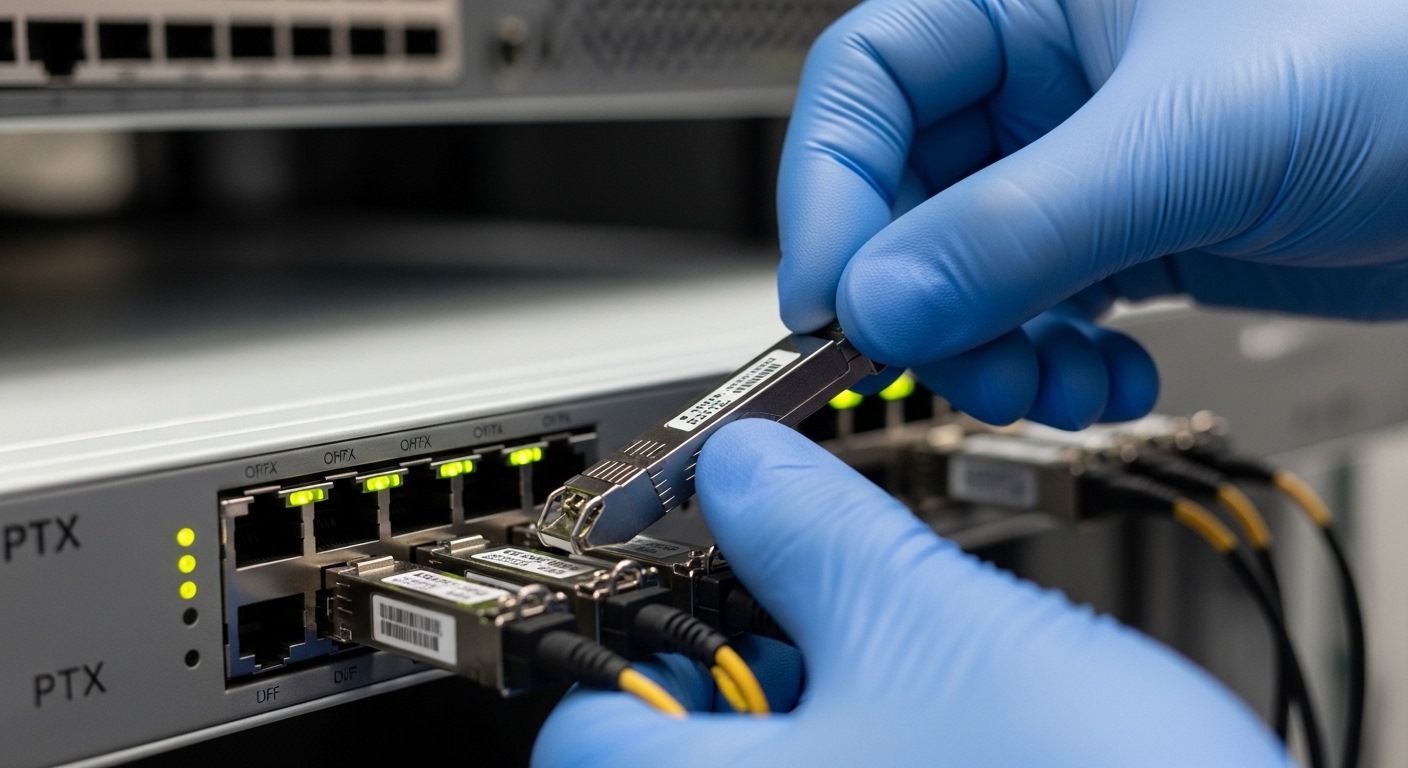
In one deployment, a municipal operator connected 36 roadside units across mixed urban blocks: intersections with adaptive signal control, pole-mounted CCTV, and environmental sensors. The challenge was not bandwidth alone; it was operational resilience. Field technicians reported periodic link renegotiations after cabinet door openings, plus elevated error counts during summer heat spikes.
The environment also imposed strict constraints. Cabinets were sealed but not climate-controlled, with ambient temperatures reaching about 55 C during peak sun. Power was sourced from local feeders with intermittent dips, and technicians needed optics that could tolerate temperature swings and remain compatible with existing switch firmware.
For reference, Ethernet optical links in these networks typically follow IEEE 802.3 standards for 10GBASE-SR and related short-reach profiles, using LC connectors and multimode fiber in many urban builds. The transceiver choice affects link budgets, receiver sensitivity, and how the switch treats DOM telemetry and alarms. [Source: IEEE 802.3]
Environment specs that drive transceiver selection for a smart city
Before buying optics, the crew measured real plant conditions and mapped them to link budgets. Distances between aggregation switches and roadside cabinets ranged from 120 m to 1.2 km, using OM3 and OM4 multimode fiber in different corridors. Where the city had duct runs with older splices, connectors and patch cords introduced additional loss, so “nameplate reach” was not enough.
On the equipment side, the aggregation layer used 10G Ethernet switches with SFP+ ports and required reliable optics identification. The team also needed DOM (Digital Optical Monitoring) so the NOC could correlate alarms with incidents. Vendor datasheets and module specifications were checked for wavelength, reach, launch power, receiver sensitivity, and DOM support.
Common module families included 10GBASE-SR optics like Cisco SFP-10G-SR and Finisar FTLX8571D3BCL, plus equivalent third-party parts sold by major optical resellers. Compatibility varied by switch model and firmware, even when the optical standard was the same. [Source: vendor datasheets for Cisco SFP-10G-SR and Finisar FTLX8571D3BCL; also industry compatibility notes in reputable tech media]
Key transceiver specs compared (10G short-reach multimode)
| Transceiver model (example) | Standard / data rate | Wavelength | Target fiber / typical reach | Connector | DOM | Operating temperature |
|---|---|---|---|---|---|---|
| Cisco SFP-10G-SR | 10GBASE-SR | 850 nm | OM3/OM4, up to ~300 m (OM3) and ~400 m (OM4 typical) | LC | Supported | Commonly specified for industrial/extended ranges depending on SKU |
| Finisar FTLX8571D3BCL | 10GBASE-SR | 850 nm | OM3/OM4, typical short reach | LC | Supported | Extended temperature variants available |
| FS.com SFP-10GSR-85 (example third-party class) | 10GBASE-SR | 850 nm | OM3/OM4, short reach | LC | Often supported (verify per product listing) | Check extended temp listing for cabinet use |
Note: Actual reach depends on fiber type, graded index quality, patch cord length, and splice/connecter loss. Always validate with an OTDR or at least a loss budget worksheet using measured attenuation.
Chosen solution: transceivers selected for uptime, telemetry, and cabinet heat
The crew standardized on 10GBASE-SR 850 nm SFP+ modules for multimode segments and reserved singlemode optics for longer runs or where multimode quality was poor. For roadside cabinets, they prioritized extended operating temperature variants and modules with stable receiver sensitivity under thermal stress.
Why this mattered: in a sealed cabinet, the optics can experience higher internal temperatures than ambient due to switch airflow patterns and power dissipation. Using modules with insufficient temperature headroom can increase bit errors and trigger link resets, especially when the switch monitors signal quality and reacts aggressively to thresholds.
They also required DOM so the NOC could track bias current, received power, and diagnostic flags. That allowed the team to distinguish fiber issues (low received power) from transceiver degradation (rising thresholds or unstable diagnostics). [Source: vendor transceiver application notes on DOM and diagnostics]
Pro Tip: In many smart city operations, “link up” is not the same as “link healthy.” Build alerts on DOM thresholds and error counters (for example, CRC/FCS or optical receive power) rather than relying only on interface state, because thermal drift can worsen before the switch finally flaps the port.
Implementation steps: how the rollout was executed in the field
Step one was inventory and compatibility mapping. The team recorded switch model numbers, SFP+ vendor compatibility lists, and firmware versions, then confirmed whether the optics were accepted without “unsupported module” warnings. They also checked whether DOM fields were exposed via SNMP or vendor telemetry.
Step two was optical validation. For each cabinet, they measured end-to-end loss using a light source and power meter, then confirmed that the budget left margin for connectors and patch cords. Where loss was uncertain, they used OTDR to locate high-loss events and corrected patching before swapping optics.
Step three was staged deployment. They installed optics in 3 waves: 10 cabinets first, then 13, then the remaining 13. Each wave included a 48-hour soak test with active traffic: CCTV streams, aggregated sensor polling, and traffic-signal control messages at typical daytime rates.
Step four was operational monitoring. The NOC dashboard collected DOM telemetry and interface error counters every minute. If received optical power dropped beyond configured thresholds, technicians inspected patch panels, cleaned LC ferrules, and checked for dust or microbends.
Measured results: what improved after the smart city transceiver standardization
After the full rollout, the operator observed fewer outages and faster incident isolation. Interface flaps dropped from an estimated 1.8 events per week during the prior summer to 0.4 events per week after standardization. Average time to detect optical degradation improved because DOM and receive-power metrics surfaced issues earlier than interface status alone.
Error rates also improved under heat conditions. During peak weeks, the median CRC/FCS error count per interface fell by about 35%, and the team reported fewer “re-seat optics” trips because diagnostics pointed to received power loss rather than random behavior. The crew also reduced repeat failures by cleaning connectors and tightening patch-cord management during the first wave.
Operationally, technicians reported that extended temperature modules reduced the frequency of symptoms that appeared after door openings and sun exposure. While this did not eliminate all failures (fiber damage still occurs), it changed the failure mode from unpredictable to diagnosable.
Common mistakes and troubleshooting tips for smart city optics
1) Mistake: Buying based on “maximum reach” rather than a measured loss budget.
Root cause: Patch cords, connectors, and aging splices add loss that nameplate reach ignores.
Solution: Measure loss per link and include a safety margin; verify fiber type (OM3 vs OM4) and connector cleanliness.
2) Mistake: Ignoring DOM and telemetry requirements.
Root cause: Some third-party optics may not expose the same diagnostics fields or may trigger switch compatibility quirks.
Solution: Test in a staging rack with the exact switch model and firmware; confirm SNMP/OID visibility and alarm behavior.
3) Mistake: Assuming all SFP+ modules are interchangeable across switch firmware revisions.
Root cause: Switches can enforce vendor-specific optical ID checks or have threshold defaults that differ.
Solution: Keep a validated parts list, update firmware carefully, and run a soak test before scaling.
4) Mistake: Skipping connector inspection during “marginal” performance.
Root cause: Dirty LC ferrules can cause intermittent attenuation that looks like a transceiver problem.
Solution: Use a fiber inspection scope, clean with lint-free methods, and replace worn patch cords.
Cost and ROI note: budgeting for transceivers in smart city networks
Typical street pricing for 10GBASE-SR SFP+ optics varies by vendor, temperature spec, and DOM/compatibility validation. In many procurement markets, OEM-branded modules can cost roughly $150 to $300 each, while validated third-party options may be in the $60 to $150 range. The lowest unit price can increase TCO if it raises failure rates or extends mean time to repair due to weaker diagnostics.
ROI comes from fewer truck rolls, faster detection, and reduced downtime penalties. If a single cabinet incident takes 2 to 4 hours of field time, even a modest drop in link flaps can justify a slightly higher optics cost. Also account for spares strategy: keep a small pool of validated spare optics for each switch type and fiber segment.
FAQ: smart city buyers ask about optical transceivers
Q1: For a smart city, should we standardize on multimode or singlemode optics?
If most links are short (hundreds of meters) and fiber plant quality is consistent, multimode 850 nm (10GBASE-SR) is often cost-effective. For longer runs, mixed legacy fiber, or future-proofing toward higher speeds, singlemode optics may reduce risk.
Q2: How do we confirm compatibility with our switches?
Verify with the exact switch model and firmware version, not just “SFP+ support.” Run a staging test that checks module acceptance, DOM telemetry visibility, and alarm thresholds under load.
Q3: Do extended temperature transceivers matter in roadside cabinets?
Yes when cabinets reach high ambient temperatures or airflow is limited. Select modules with an operating range that covers your measured worst-case conditions and validate with a soak test.
Q4: What fiber cleaning practices should be mandatory?
LC ferrules should be inspected before insertion, then cleaned using approved methods. Treat intermittent attenuation as a likely contamination issue until proven otherwise by inspection results.
Q5: Are DOM alerts enough for proactive maintenance?
They are a strong start. Combine DOM receive-power and diagnostic flags with interface error counters so you can detect degradation before the switch flaps the link.
Q6: What is the safest way to scale third-party optics procurement?
Use a validated parts list and test each third-party module batch in your environment. Track failure rates and telemetry behavior over time, and do not replace OEM optics in critical segments without staged validation.
References & Further Reading: IEEE 802.3 Ethernet Standard | Fiber Optic Association – Fiber Basics | SNIA Technical Standards
In this smart city deployment, the winning approach was disciplined: measure the plant, choose optics with temperature headroom and reliable DOM, and roll out in stages with monitoring. Next, review fiber link budget for smart city networks to turn your measured
