
Smart city networks fail in predictable ways: congestion at aggregation points, unexpected optics incompatibility, and power or thermal overruns in hardened cabinets. This article helps network and field engineers design and operate high-capacity backhaul using 400G transceivers, with selection criteria tied to real deployment constraints. You will also get troubleshooting patterns from common transceiver and fiber failure modes, plus a cost and ROI view for OEM versus third-party modules.
Coherent vs direct-detect: the smart city distance trade
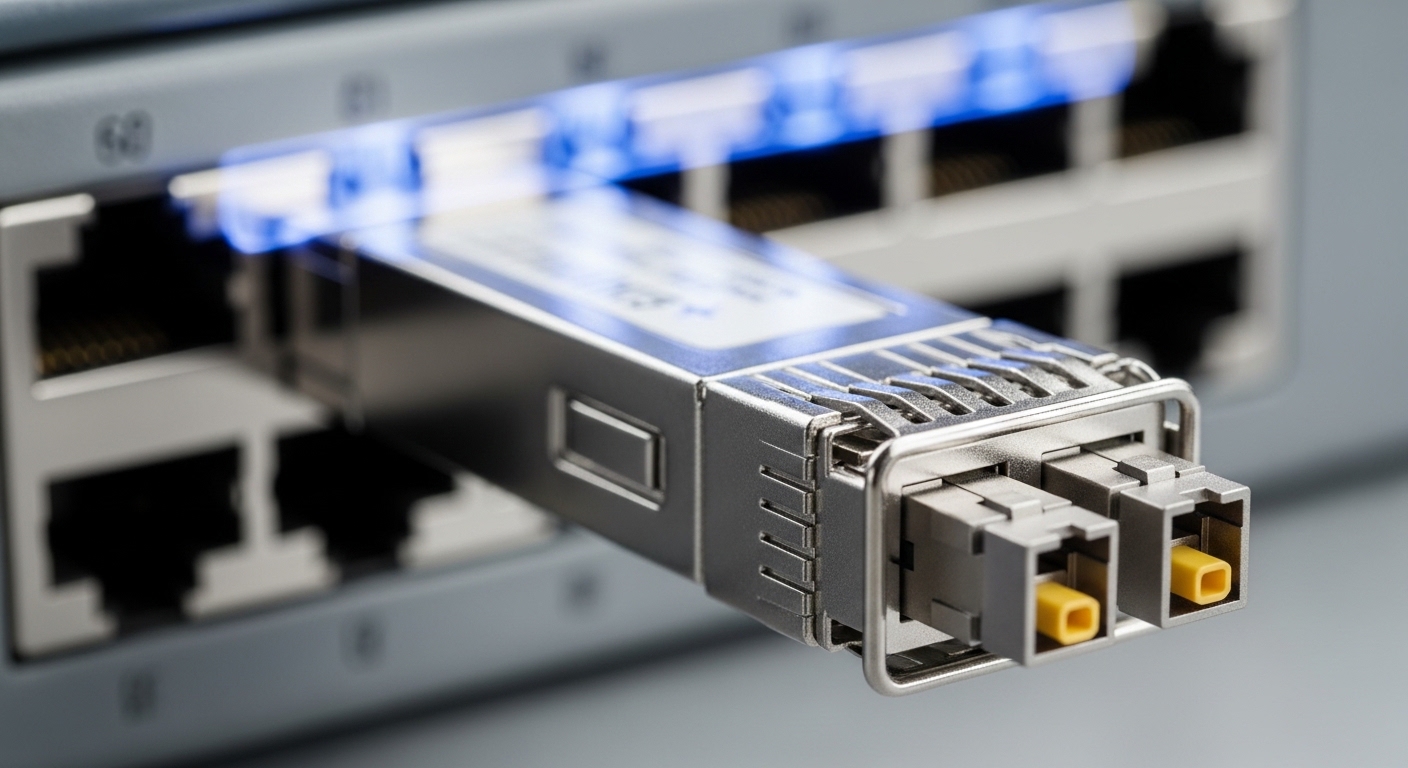
Most smart city architectures split into metro aggregation, ring or mesh backhaul, and edge distribution. The optics choice determines whether you can carry 400G over tens of kilometers without regeneration. In practice, direct-detect modules are common for short reach, while coherent optics dominate for longer reach because they use DSP to tolerate impairments such as chromatic dispersion and polarization effects.
Key specs that drive the decision
- Wavelength plan: direct-detect typically uses nominal 850 nm (OM4/OM5) or 1310/1550 nm variants; coherent uses C-band (often around 1550 nm).
- Reach: short-reach direct-detect targets up to a few hundred meters; coherent targets multi-kilometer spans.
- Power and thermal: coherent modules usually dissipate more power and require careful airflow in outdoor or mixed-thermal cabinets.
- Signal format: coherent uses advanced modulation and DSP; direct-detect uses intensity modulation and direct detection.
Best-fit scenario: If your city uses a fiber ring connecting district aggregation sites 10 km apart, coherent 400G transceivers are usually the safer operational path. If your ToR-to-aggregation hop is within 300 m on OM5, direct-detect can reduce cost and power.
Pros: coherent extends distance and improves margin under fiber impairments; direct-detect is simpler and often cheaper. Cons: coherent increases power, complexity, and sometimes licensing or vendor-specific DSP behavior; direct-detect reach is constrained by fiber type and budget.
Pro Tip: In field installs, the biggest coherent optics “gotcha” is not the optics itself but the optical budget discipline: verify end-to-end fiber loss, connector/patch panel losses, and dispersion assumptions before committing to a reach class. A marginal link that passes on a bench can fail after splicing changes during restoration work.
Reach and fiber type: OM4/OM5 versus single-mode spans
Smart city backhaul mixes campus-style fiber plants with metro single-mode infrastructure. Choosing the correct optics family prevents “it worked on the spool” issues that appear after the network is patched into the live plant. For short hops, OM4 and OM5 multimode fiber can support 400G transceivers with the right lane rates and optics; for longer runs, single-mode fiber is the standard.
Quick mapping of common reach classes
- Multimode: OM4/OM5 with 850 nm-class optics for short reach; performance depends on modal bandwidth and launch conditions.
- Single-mode: 1310 nm or 1550 nm-class optics for longer reach; coherent optics typically use C-band.
Best-fit scenario: For a street cabinet that aggregates sensors and feeds a nearby junction box within 200–500 m, OM5 can be cost-effective. For district rings crossing under arterial roads with 5–25 km fiber runs, single-mode (often coherent for margin) is usually required.
Pros: multimode can reduce fiber cost in local areas; single-mode scales to metro distances. Cons: multimode may fail after additional patching or if OM4 is swapped with legacy OM3; single-mode requires meticulous budget verification.
Specs that matter in practice: wavelength, reach, power, temperature
Engineers often compare only reach. In production, the deciding factors include transceiver power draw, operating temperature, DOM support, and connector type. Smart city deployments also face vibration, frequent maintenance openings, and dust ingress, so you need modules that remain stable across thermal cycles.
Technical specifications comparison table
Use this as a starting point to compare typical 400G transceivers families. Always confirm exact values in the specific vendor datasheet.
| Transceiver type | Typical wavelength | Target reach | Connector | Typical data rate / interface | Typical optical power / budget notes | Operating temperature |
|---|---|---|---|---|---|---|
| 400G QSFP-DD direct-detect (short reach) | 850 nm (MMF) | Up to ~100 m on OM4; up to ~150 m on OM5 (varies) | LC | 400G Ethernet (QSFP-DD) | Budget depends on fiber grade and number of links/patches | Commercial to industrial variants (verify) |
| 400G QSFP-DD direct-detect (single-mode) | 1310 nm | Up to a few km (varies) | LC | 400G Ethernet (QSFP-DD) | Loss budget must include connectors and splices | Industrial variants common for telecom cabinets |
| 400G coherent (CFP2-DCO or vendor equivalent) | C-band (around 1550 nm) | Commonly 80 km to 120+ km (varies by vendor) | LC | 400G coherent transport or 400G Ethernet | Uses DSP for dispersion and polarization effects | Industrial telecom temperature ranges common |
Best-fit scenario: For outdoor cabinets where the air temperature can swing widely, prioritize modules with an industrial temperature range rating and stable DOM telemetry. For indoor data halls, commercial temperature may work, but smart city deployments often outlast original assumptions.
Pros: correct spec matching reduces field truck rolls; coherent offers maximum distance margin. Cons: power and DSP complexity increase operational attention; not all switch platforms support every vendor’s DOM and alarm thresholds.
For standards and baseline behavior, consult IEEE Ethernet guidance and vendor DOM behavior notes. [Source: IEEE 802.3 Ethernet Working Group publications] and module interface behavior as defined in vendor datasheets and QSFP-DD / CFP2 documentation. anchor-text: IEEE 802.3 Ethernet standard portal
Switch compatibility and optics governance: avoid “it lights but fails”
Smart city networks are heterogeneous: different vendors for leaf switches, aggregation, and transport. That heterogeneity makes optics compatibility and governance essential. A 400G transceiver can appear operational at link-up, yet fail under error-rate thresholds due to lane mapping, FEC requirements, or vendor-specific signal conditioning.
Selection checklist: what engineers verify before ordering
- Distance and fiber type: confirm MMF grade (OM4 vs OM5) or SMF plan, plus connector and splice counts.
- Switch compatibility: verify the exact switch model and the supported optics list or validated optics matrix.
- FEC and link training: ensure the optics supports the switch’s expected FEC mode; confirm interoperability for 400G Ethernet or transport profiles.
- DOM support: require digital optical monitoring with the switch’s expected readings (temperature, laser bias, Tx power, Rx power, alarms).
- Operating temperature: match industrial range for cabinets that experience thermal cycling and sunlight heating.
- Connector standard and cleaning requirements: LC geometry, polish type, and whether you will use MPO/MTP fanouts (for certain form factors).
- Vendor lock-in risk: evaluate third-party module support policies, warranty alignment, and whether replacement triggers configuration changes.
Best-fit scenario: In a city where multiple districts use different switch families, standardize on a small set of validated 400G transceiver SKUs and enforce optics governance via configuration templates and inventory tags.
Pros: compatibility checks prevent intermittent BER issues; governance reduces procurement chaos. Cons: optics matrices can lag hardware refresh cycles; strict validation slows adoption of new module vendors.
anchor-text: Cisco optics compatibility guidance
Deployment playbook for smart city backhaul: measurable steps
Selection is only half the job. Smart city field work needs repeatable commissioning and acceptance criteria so that optics do not drift into failure after maintenance. A practical approach is to align transceiver choice with a standardized acceptance test that includes optical power verification, link error-rate checks, and thermal observation.
Real-world deployment scenario with numbers
In a 3-tier smart city network, a fiber ring connects 6 district aggregation nodes to a central traffic control hub. Each district uses a 400G uplink from aggregation to core, with 4 uplink ports per node. The ring spans 12 km between nodes and includes roughly 4 km of single-mode fiber segments plus patch panels totaling 3.5 dB insertion loss per hop. Engineers deploy C-band coherent 400G transceivers sized for an 80 km class budget, then validate end-to-end with measured Rx power and transceiver DOM telemetry during a 30-minute thermal stabilization window after cabinet door closure.
Pros: measured acceptance criteria catch marginal links early; DOM-based monitoring supports predictive maintenance. Cons: coherent optics commissioning requires more careful alignment of budget assumptions; thermal stabilization adds time to turn-up.
Common mistakes and troubleshooting for 400G transceivers
Field failures are rarely random. They come from a small set of repeatable causes: wrong fiber grade, dirty connectors, incompatible FEC expectations, or DOM alarm thresholds not aligned with the switch. Below are common pitfalls with root causes and fixes.
Pitfall 1: Link comes up but traffic drops under load
- Root cause: FEC mismatch or unsupported link training profile causing elevated post-FEC errors.
- Solution: verify switch configuration for FEC mode and ensure the transceiver supports the expected profile; review interface counters for pre-FEC and post-FEC errors.
Pitfall 2: “Flaky” link after maintenance window
- Root cause: connector contamination or micro-scratches introduced during re-patching; coherent systems may be less forgiving to certain impairment patterns.
- Solution: enforce connector inspection before every re-seat; clean using validated lint-free wipes and alcohol per vendor guidance; replace damaged patch cords.
Pitfall 3: Works at room temperature, fails in summer peaks
- Root cause: transceiver operating outside its rated temperature due to inadequate cabinet airflow or blocked vents.
- Solution: confirm module temperature telemetry via DOM; improve airflow (fan tray, baffles), and swap to an industrial temperature-rated module.
Pitfall 4: Wrong optics family ordered for the planned fiber
- Root cause: confusing OM4 versus OM5 expectations, or assuming SMF reach on an MMF plant.
- Solution: label fiber plants rigorously; verify fiber type using OTDR or verified records; standardize on a procurement checklist.
Pros: fast diagnosis reduces downtime and truck rolls. Cons: troubleshooting can be time-consuming if you do not capture DOM and interface counter baselines during acceptance.
Cost and ROI: OEM versus third-party at city scale
Pricing varies by form factor, reach, and whether the module is coherent. In smart city rollouts, the real cost is not just purchase price; it includes spares strategy, failure rates, and commissioning time. Typical market observations: short-reach direct-detect 400G transceivers can fall in a broad range depending on vendor and volume contracts, while coherent modules cost significantly more due to DSP and optics complexity.
TCO considerations engineers should model
- Purchase price: OEM modules often command a premium; third-party modules can reduce unit cost but may shift integration effort.
- Spare inventory: if you maintain fewer SKUs, you may increase spares on-hand for compatibility coverage.
- Commissioning labor: coherent optics can require more acceptance testing time; plan for additional field hours.
- Power and thermal: higher power draw increases cooling load; quantify using cabinet airflow specs.
- Failure and warranty: compare warranty duration and RMA turnaround; measure historical DOA and early-life failure rates.
Best-fit scenario: For a city with stable switch vendors and validated optics lists, OEM may minimize risk for critical rings. For non-critical edge aggregation where downtime is tolerable and compatibility is proven, third-party can improve ROI.
Pros: ROI modeling prevents surprise costs after expansion; spares planning reduces outage duration. Cons: aggressive third-party adoption without compatibility testing can raise total labor costs.
Ranking summary: which 400G transceiver choice fits smart city needs
Below is a practical ranking to help you pick starting points. Final selection must still match your switch validation and fiber plant constraints.
| Smart city requirement | Best 400G transceiver fit | Why it ranks | Key risk to manage |
|---|---|---|---|
| Short reach within a campus or indoor aggregation | 400G direct-detect MMF (850 nm) or short-reach SMF | Lower complexity, simpler commissioning | Fiber grade mismatch and connector contamination |
| Metro ring spans beyond typical direct-detect reach | 400G coherent C-band (long reach) | Distance margin under real impairments | Power/thermal and FEC/link training expectations |
| Hardened outdoor cabinets with thermal swings | Industrial temperature-rated modules with robust DOM | Operational stability across temperature cycles | Cabinet airflow shortfalls |
| Multi-vendor switch environment | Validated optics family with strict compatibility governance | Predictable link training and monitoring | Vendor lock-in and matrix lag |
| Budget-sensitive phased rollouts | Third-party validated modules where compatibility is proven | Lower unit cost and faster scaling | Integration effort and warranty differences |
To move from selection to deployment without surprises, align your optics plan with a validated optics list and a commissioning checklist, then standardize fiber labeling and connector hygiene. Next, review 400G Ethernet interface planning for traffic profiles, FEC strategy, and monitoring counters.
FAQ
What are 400G transceivers typically used for in smart cities?
They are used for aggregation uplinks, metro ring backhaul, and sometimes high-capacity edge feeds where multiple sensor and camera streams converge. In many designs, 400G reduces the number of parallel links and helps keep latency stable under peak events.
Are 400G transceivers always compatible with any switch?
No. Compatibility depends on the exact switch model, supported interface profiles, FEC mode expectations, and DOM telemetry interpretation. Always confirm against the switch vendor validated optics guidance and test in a staging environment.
How do I choose between direct-detect and coherent 400G transceivers?
Use direct-detect for short reach where your fiber budget and fiber type are well understood. Choose coherent when you need longer distance margin or when fiber impairments are likely to be significant across metro spans.
What should I monitor after installing 400G transceivers?
Monitor DOM values (laser bias, Tx power, Rx power, module temperature) and interface counters (pre-FEC and post-FEC error metrics). Capture a baseline during acceptance, then compare during seasonal temperature changes and after maintenance events.
What are the most common causes of 400G link instability?
Dirty connectors, incorrect fiber type or patching, and FEC or link training mismatches are the most common causes. Temperature-related failures also appear when cabinets lack adequate airflow for the transceiver’s rated operating range.
Do third-party 400G transceivers reduce total cost or increase risk?
They can reduce purchase cost, but total cost depends on compatibility testing effort, warranty terms, and how often you need RMAs. At city scale, the best outcomes come from third-party modules only after you validate them for each switch family and optics profile.
Author bio: Field-deployment engineer focused on optical transport and data center interconnects, with hands-on commissioning of 400G links in constrained cabinets. I write from operational experience, including DOM monitoring and acceptance test design.
