
Smart cities fail in the field when network design ignores optical reach, transceiver power budgets, and operational temperature limits. This article helps network engineers, integrators, and municipal IT teams plan deployable optical network use cases for surveillance, traffic systems, public Wi-Fi, and 5G backhaul. You will get a step-by-step implementation guide, a practical selection checklist, and troubleshooting rooted in real transceiver and switch behaviors.
Prerequisites for optical planning in smart cities
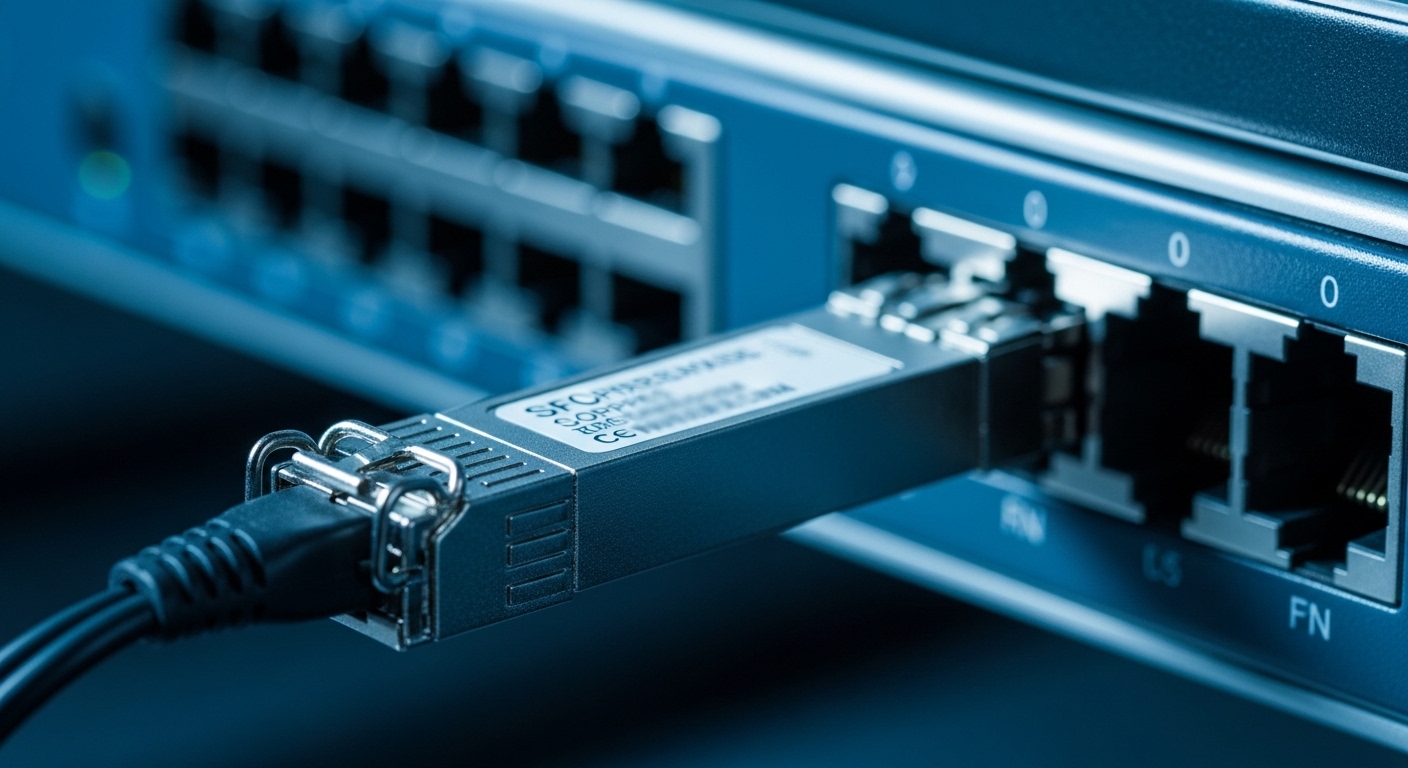
Before choosing transceivers or designing fiber routes, align your layer-1 assumptions with the realities of municipal deployments: splice loss, connector contamination, and environmental temperature swings in outdoor handholes. You also need to confirm switch transceiver compatibility, because many platforms enforce optics vendor and DOM behavior. Finally, define operational targets like MTBF expectations and maintenance windows for replacement cycles.
What you must verify
- Fiber plant measurements: OTDR trace for each link, with estimated budget in dB including connectors, splices, and patch cords.
- Switch optics support: verify the exact model supports the optics you plan to install (including wavelength and DOM requirements).
- Traffic patterns: CCTV burstiness, Wi-Fi aggregation, and 5G fronthaul/backhaul mix drive buffer and oversubscription planning.
- Environmental constraints: outdoor cabinets often see temperature cycles beyond typical indoor datacenter ranges.
Expected outcome: A confirmed link budget and compatibility matrix so optics selection does not become a late-stage procurement surprise.
Step-by-step deployment for multi-application smart city networks
Use optical transceivers as the common transport layer across multiple city applications, but deploy them with application-aware profiles. The key is mapping each use case to a distance class and redundancy level, then selecting optics that match the switch’s electrical interface and the fiber plant’s loss characteristics.
Map city applications to network distance classes
- Traffic intersections (camera + sensor aggregation): typically short to mid spans from pole-mounted cabinets to a nearby roadside cabinet or edge PoP.
- CCTV and analytics: higher sustained throughput; choose stable optics and plan for consistent latency.
- Public Wi-Fi hotspots: often clustered; backhaul aggregation may be medium reach.
- 5G small cell backhaul: prioritize deterministic performance windows and careful redundancy.
Expected outcome: A distance plan that groups links into short-reach and metro-reach categories with explicit targets for availability.
Choose optics aligned to IEEE Ethernet PHY expectations
For Ethernet over fiber, ensure your optics support the required data rate and lane mapping for the switch’s PHY. For 10G Ethernet, SR typically uses 850 nm multimode fiber; for longer reach, LR uses 1310 nm single-mode. If you are building 25G or higher fabrics, many deployments use SR or LR variants based on the fiber type and span length.
Validate link budgets using measured OTDR results
Do not rely on “rated reach” alone. If your OTDR shows higher-than-expected attenuation from connectors or microbends, you must reduce margin by lowering loss elements or upgrading fiber. Treat patch panels, couplers, and splices as first-class budget consumers.
Select transceivers with appropriate power, DOM, and temperature ratings
In the field, DOM behavior affects monitoring and sometimes triggers alarms that can mask real faults. Prefer optics with well-documented DOM support and operating temperature ranges that match outdoor cabinet conditions. When you deploy in harsh environments, consider extended-temperature optics and proper airflow or heat shielding.
Implement redundancy and operational monitoring
For smart cities, availability is often more important than minimal capex. Use dual-homing from edge PoPs, diverse fiber routing where possible, and consistent monitoring via switch telemetry. Confirm that your optics expose signal levels (for example, received power) so you can detect degradation before outages.
Optics selection comparison for smart cities (SR vs LR examples)
Below is a practical comparison for common Ethernet transceiver families. Exact specs vary by vendor and module generation, so always confirm against the vendor datasheet and your switch’s compatibility list.
| Parameter | 10G SR (850 nm MMF) | 10G LR (1310 nm SMF) | 25G LR (1310 nm SMF) |
|---|---|---|---|
| Typical data rate | 10GBASE-SR | 10GBASE-LR | 25GBASE-LR |
| Wavelength | 850 nm | 1310 nm | 1310 nm |
| Connector | LC (common) | LC (common) | LC (common) |
| Fiber type | Multimode (OM3/OM4 class) | Single-mode (OS2) | Single-mode (OS2) |
| Typical reach (practical) | Up to ~300 m on OM3, ~400 m on OM4 (depends on budget) | Up to ~10 km (depends on budget) | Up to ~10 km (depends on budget) |
| Operating temperature | Often standard module range (check datasheet) | Often standard module range (check datasheet) | Often standard module range (check datasheet) |
| Monitoring | DOM commonly supported (vendor-dependent) | DOM commonly supported (vendor-dependent) | DOM commonly supported (vendor-dependent) |
| Common example part numbers | Cisco SFP-10G-SR, Finisar FTLX8571D3BCL, FS.com SFP-10GSR-85 | Cisco SFP-10G-LR, Finisar FTLX1471D3BCL, FS.com SFP-10GLR-85 | 25G LR modules vary by switch platform (confirm compatibility) |
Pro Tip: In many smart city rollouts, the biggest “mystery outages” are not bad optics but connector contamination and patch cord swaps. Field teams that add standardized inspection and cleaning (end-face inspection plus lint-free procedures) often recover link stability faster than replacing transceivers.
Expected outcome: A defensible optics plan that matches span distance, fiber type, and monitoring needs.
Real-world smart cities deployment scenario
In a 3-tier data center leaf-spine topology with 48-port 10G ToR switches, an integrator replaced mixed vendor optics with a single optics family per reach class: 10G SR 850 nm between ToR and a nearby aggregation row (about 120 to 180 m measured), and 10G LR 1310 nm between aggregation and a regional edge POP (about 6 to 8 km measured). They enforced a policy: only modules with documented DOM behavior and consistent temperature ratings were allowed in outdoor cabinets. After rollout, monitoring showed stable receive power trends and reduced “link flaps” compared to the earlier heterogeneous inventory.
Selection criteria and decision checklist
Engineers typically weigh optics like a reliability component, not just a transport commodity. Use this ordered checklist to reduce integration risk.
- Distance and fiber type: confirm MMF vs SMF, and validate reach using OTDR-derived budgets.
- Switch compatibility: check the exact switch model’s optics compatibility list.
- Data rate and PHY mode: ensure the module supports the intended Ethernet mode (for example, 10GBASE-SR vs 10GBASE-LR).
- DOM support and alarm thresholds: confirm monitoring works with your telemetry stack.
- Operating temperature range: outdoor cabinets may require extended-temperature modules.
- Connector cleanliness and deployment process: plan inspection, cleaning, and labeling to prevent human error.
- Vendor lock-in risk: mixed-vendor optics can work, but operational validation and RMA workflows matter.
Expected outcome: A selection record you can defend during acceptance testing and warranty disputes.
Common mistakes and troubleshooting for smart city optics
Below are field-tested failure modes with root causes and fixes. Treat these as top suspects when a smart city rollout shows intermittent link loss.
Failure mode 1: Link comes up, then flaps under load
Root cause: marginal optical power caused by higher-than-expected insertion loss (dirty connectors, worn patch cords, or underestimated splice loss). Solution: inspect and clean both ends, replace patch cords, and compare received power telemetry to baseline. Re-run OTDR if the link budget is close to the limit.
Failure mode 2: Switch rejects optics or shows “unsupported module” alarms
Root cause: transceiver EEPROM/DOM compatibility mismatch with the switch’s expectations or missing vendor-specific qualification. Solution: use the switch vendor’s compatibility list for the exact platform and firmware version; update firmware only after validating optics behavior in a lab.
Failure mode 3: Outdoor cabinet failures after temperature cycles
Root cause: optics operating outside temperature range or thermal stress from poor airflow. Solution: deploy extended-temperature modules, improve cabinet ventilation, and verify thermal design margins with sensor logging during day/night cycles.
Cost and ROI note for municipal optics procurement
In practice, OEM optics often cost more per module than third-party equivalents, but they may reduce integration and RMA overhead. For many networks, a realistic capex pattern is that third-party optics can be 15% to 35% cheaper, while OEM can reduce downtime risk and acceptance friction. TCO should include labor time for cleaning/inspection, spare inventory strategy, and the cost of truck rolls when a fiber plant fault is misdiagnosed as a failed transceiver.
To justify cost, run a pilot across two neighborhoods with different fiber conditions and temperature profiles, then track link stability metrics and replacement rates for at least one seasonal cycle.
FAQ
What optical reach do smart cities typically need for traffic cameras?
Most traffic camera uplinks are short to mid spans from roadside cabinets to an edge PoP, often within 150 to 300 m for SR-class designs on multimode, depending on measured budgets. If you must traverse longer routes with single-mode fiber, LR-class optics can simplify cabling across municipal corridors.
Can I mix OEM and third-party transceivers in a single smart city network?
Sometimes yes, but you must validate compatibility on the exact switch model and firmware version. The biggest risk is not raw optical performance; it is DOM behavior and module qualification that can trigger alarms or link instability.
How do DOM telemetry fields help operations?
DOM allows you to monitor transmit bias, laser temperature, and received optical power. In smart cities, this supports early warning: gradual received power drift can indicate connector contamination or fiber damage before a full outage.
References & Further Reading: IEEE 802.3 Ethernet Standard | Fiber Optic Association – Fiber Basics | SNIA Technical Standards
Do I need to follow IEEE standards when selecting optics?
Yes. Ethernet over fiber is standardized, and selecting modules that match the intended PHY mode reduces integration risk. For baseline Ethernet PHY expectations, reference IEEE 802.3 for the relevant 10G/25G optical transceiver definitions: [[EXT:https://standards.ieee.org/standard/
