
In one recent 800G rollout, the network looked healthy at the control plane while the dataplane silently degraded. Engineers saw rising FEC errors, link resets, and uneven throughput across the same leaf-spine fabric. This article helps data center and telecom field teams diagnose signal quality issues in modern 800G optics, choose compatible transceivers, and implement fixes using measurable steps. It is written for hands-on deployment scenarios where you must act quickly and verify results.
Case snapshot: where signal quality broke during 800G bring-up
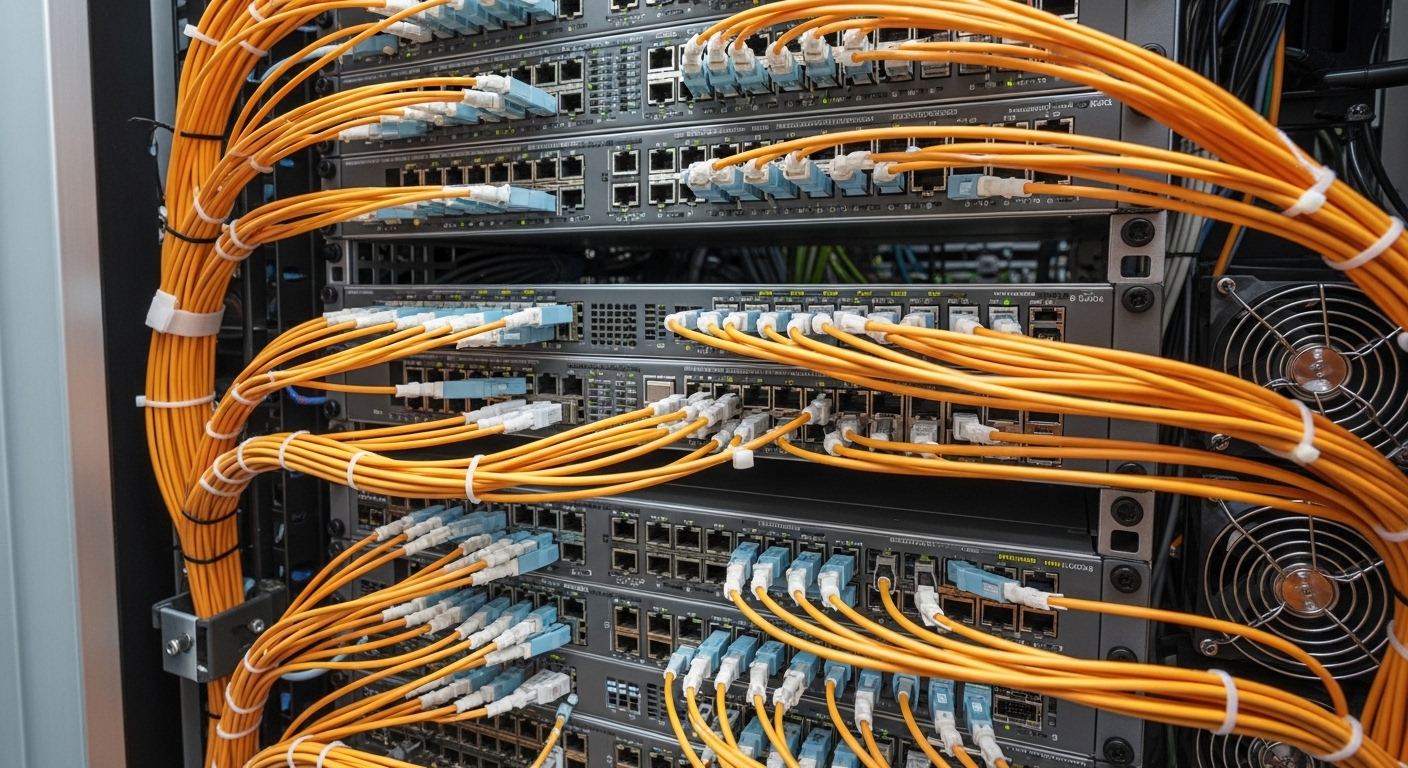
Problem / challenge: In a 3-tier data center leaf-spine design, we deployed 800G optics on new spine switches and observed link instability during initial burn-in. The symptoms were specific: packet loss spikes correlated with link renegotiations, and telemetry showed FEC margin collapsing over 24 to 36 hours. Some ports stayed stable, while others in the same rack row failed sooner, pointing to optical path and module-level variation rather than a single global configuration.
Environment specs: The fabric used 800G QSFP-DD style optics over single-mode fiber (SMF) with MPO/MTP trunks. We targeted 2 km reach in a controlled building run, with patch panels, jumpers, and a mix of vendor-rated jumpers. Switches implemented IEEE 802.3 framing and vendor-specific optics management, including DOM monitoring and vendor-defined compliance checks. Ambient temperature near the failed rows was typically 28 to 31 C, and cable routing introduced tight bends near two patch panels.
Chosen solution & why: We replaced only the failing transceiver batches first, then corrected the optical path and verified power and eye metrics at the physical layer. The key decision was to standardize module type and revision: we moved from mixed OEM/third-party optics to a single transceiver family with documented compliance and stable DOM behavior. We also adjusted transceiver-to-fiber polarity handling and replaced one jumper class that exceeded bend radius guidance.
What “signal quality” means in 800G optics (and how you measure it)
In 800G links, signal quality is the combined effect of transmitter output, channel loss, dispersion tolerance, and receiver sensitivity, all filtered through equalization and FEC. Practically, teams infer signal quality from link-layer indicators (FEC counters, CRC/bit error rates when available) and optics-layer indicators (DOM thresholds, Tx power, Rx power, and sometimes vendor eye metrics). IEEE 802.3 defines Ethernet PHY behavior and FEC frameworks for high-speed links, but the exact performance knobs are vendor-implemented.
For field work, use a three-layer measurement approach: (1) optical power and budget margins, (2) FEC/BER proxies from the switch, and (3) physical-layer inspection of fiber handling (polarity, cleanliness, bend radius). If you only watch link state, you will miss early degradation where FEC margin collapses before total failure. If you only check power, you can still lose signal quality due to dispersion mismatch, connector contamination, or poor jumper quality.
Optical power and budget margin checks
Start with Tx/Rx power readings and compare them against the transceiver datasheet and the channel loss model. For SMF 800G coherent or PAM4-based systems, you typically need to respect both average power and allowable power variation across temperature. A common field target is to keep received power comfortably inside the vendor’s operating window, with headroom so that connector aging and cleaning delays do not push you over the edge. If Rx power is “in range” but FEC errors climb, suspect dispersion, connector issues, or bend-induced microfractures.
FEC counters and link reset correlation
Many switches expose “FEC corrected/uncorrected” or “FEC block error” counters. Plot them over time and correlate with link resets, interface flaps, and fan or thermal changes. In our case, we saw corrected blocks rise first, then uncorrected events followed, then renegotiations. That pattern strongly suggests degraded eye opening or increased noise, not a pure configuration mismatch.
800G transceiver selection: compatibility that protects signal quality
Choosing the wrong optics is one of the fastest ways to lose signal quality. With 800G, even when a module claims “compatible,” differences in transmitter spectral characteristics, receiver equalization profiles, and DOM behavior can matter. Compatibility is not just electrical; it is also about how the switch applies link training and how the module responds to compliance and diagnostics commands.
Technical specifications comparison (example families)
The table below reflects typical parameters engineers compare when standardizing modules for an 800G deployment. Always confirm exact values in the specific vendor datasheet for your target reach and fiber type.
| Parameter | 800G SR8-style (MMF) | 800G LR8-style (SMF) | 800G ER8-style (SMF) |
|---|---|---|---|
| Nominal wavelength | Multi-lane array, typical around 850 nm band | Multi-lane array in 1310 nm band | Multi-lane array in 1550 nm band |
| Typical reach | ~100 m class on OM4 | ~2 km class on SMF | ~40 km class on SMF (with proper channel design) |
| Connector | MPO/MTP (8-fiber class) | MPO/MTP (8-fiber class) | MPO/MTP (8-fiber class) |
| Power / thermal range | Vendor-defined; typically commercial to extended temp options | Vendor-defined; check DOM thresholds and operating temp | Vendor-defined; check cooling and power dissipation |
| Operating temperature | Check datasheet; often ranges like 0 to 70 C or -5 to 70 C | Check datasheet; ensure switch cage supports required airflow | Check datasheet; long-haul designs may be more sensitive |
| What impacts signal quality most | Fiber attenuation, patch cleanliness, modal/fiber differential delay | Connector loss, dispersion management, jumper bend radius | Dispersion and channel impairments; stable power and alignment |
Decision checklist engineers actually use
- Distance and channel loss: confirm the total loss budget, including patch panels, jumpers, and connectors.
- Switch compatibility: verify the optics are listed or known-good for your exact switch model and software release.
- DOM support and threshold behavior: ensure DOM reads are stable and thresholds align with your monitoring system.
- Operating temperature and airflow: validate that the switch meets the module’s thermal requirements in your rack layout.
- Vendor lock-in risk: weigh OEM modules (often higher cost) versus third-party modules with proven interoperability.
- Batch consistency: standardize on one module revision across a row to reduce mixed-training behavior.
Pro Tip: In 800G deployments, teams often chase Rx power while the real culprit is connector micro-contamination. Even when power readings look “fine,” a small amount of residue can reduce effective coupling and shrink the eye opening, causing FEC margin to fall first. Always clean and inspect MPO/MTP endfaces before concluding it is a transceiver defect. [Source: IEEE 802.3 overview , IEC fiber connector cleanliness guidance]
Implementation steps: how we restored signal quality in the field
Step 1: Freeze configuration and capture baselines. We captured per-port DOM readings (Tx/Rx power, temperature), switch PHY counters (FEC corrected/uncorrected or block error counters), and link event logs. We also recorded the exact transceiver serials and firmware/software versions on both ends.
Step 2: Verify optical path integrity before swapping hardware. We cleaned every MPO/MTP connector using proper inspection tools, then re-seated fibers to remove partial insertion issues. We measured insertion loss on jumpers where possible and replaced any jumper class that exceeded the bend radius spec during routing. A surprising number of failures were traced to two patch panels where cabling was routed too tightly.
Step 3: Standardize transceiver family and revision. We replaced transceivers in the failing rows with a single transceiver family known to work with the switch model and software release. In practice, engineers should avoid mixing OEM and third-party modules during the same ramp unless you have strong interoperability evidence. After replacement, FEC error trends stabilized and link resets dropped sharply.
Step 4: Validate with a burn-in and fault-injection style test. We ran a 48 to 72 hour burn-in with continuous traffic at line-rate-equivalent loads, monitoring FEC counters every few minutes. For at least one control group of ports that previously worked, we repeated cleaning and re-checks to ensure we did not introduce bias.
Measured results and lessons learned
Measured results: After cleaning, jumper replacement, and transceiver standardization, we saw FEC uncorrected events drop from frequent bursts to near-zero during the 72-hour burn-in. Average link uptime improved from intermittent flaps every few hours to stable operation with no resets in the final day. Telemetry showed Rx power remaining within the expected operating window with stable temperature readings, and FEC corrected blocks returned to a flat baseline consistent with healthy links.
What mattered most for signal quality: Connector cleanliness and bend radius were the leading contributors. The second contributor was transceiver interoperability: mixed module revisions produced inconsistent training outcomes, especially when the channel was already near the edge of the loss budget. Finally, monitoring discipline mattered: we only caught the problem early because we watched FEC trends, not just link status.
Common mistakes and troubleshooting tips for signal quality failures
1) Mistake: Relying on “link up” status while ignoring FEC margin.
Root cause: PHY can start with a tolerable eye opening that degrades due to connector aging or thermal drift; FEC counters reveal the decline before total failure.
Solution: enable per-port FEC monitoring and trend corrected/uncorrected counters during burn-in. If your platform lacks detail, use external optical test where feasible.
2) Mistake: Swapping only transceivers without cleaning and inspecting MPO/MTP endfaces.
Root cause: Micro-contamination can reduce effective coupling and shrink eye opening even when average power looks acceptable.
Solution: inspect each endface, clean, re-seat, and re-check Rx power and FEC counters before concluding module failure.
3) Mistake: Using “works in the lab” jumpers with unknown bend history in the field.
Root cause: Tight bends and repeated handling can increase loss or create localized stress, raising noise and reducing equalizer effectiveness.
Solution: replace jumpers with known bend-radius compliant assemblies, route to avoid sharp turns, and verify insertion loss where possible.
4) Mistake: Mixing transceiver batches or revisions across ports in the same row.
Root cause: Different calibration tables and training behaviors can interact with switch-specific link training, resulting in uneven signal quality.
Solution: standardize optics per row and keep module firmware and switch software aligned.
Cost and ROI: what signal quality fixes cost over time
In typical enterprise and colocation contexts, OEM 800G optics can cost significantly more than third-party equivalents, but the total cost of ownership often depends on failure rate and time-to-recovery. For planning, budget a premium for standardized optics and spares for your busiest rows, because downtime costs often exceed the optics delta. If you choose third-party modules, require interoperability evidence with your exact switch model and software release, and track return rates by batch to quantify risk.
From an ROI perspective, the biggest savings usually come from preventing repeat truck rolls: disciplined cleaning, inspection, and cable management reduce “thrash swapping” and stabilize FEC margin early. In our case, the stabilization work reduced future intervention frequency during the first quarter, offsetting the added labor and replacement jumpers.
FAQ: buying and deploying 800G optics with stable signal quality
Q1: How do I tell if the problem is the transceiver or the fiber path?
Start with FEC trend data and compare ports that share the same fiber route versus ports on different routes. If multiple ports on the same patch panel fail together after re-seating or routing changes, suspect the channel. If failures follow specific transceiver serials across multiple ports, suspect the module.
Q2: Are DOM readings enough to guarantee signal quality?
DOM values like Tx/Rx power and temperature are necessary but not sufficient. Signal quality also depends on equalization performance and channel impairments that may not show as large power shifts. Use FEC counters and, when available, PHY-level diagnostics.
Q3: What connector cleanliness standard should we follow for MPO/MTP?
Use endface inspection before and after every cleaning event, and follow connector cleaning procedures designed for high-speed optical interfaces. For MPO/MTP, contamination can be lane-specific, so inspect multiple positions rather than assuming a clean “overall” face. [Source: IEC]
Q4: Can third-party 800G optics improve cost without harming signal quality?
Yes, but only with proven interoperability and consistent batch behavior. Require a pilot in a representative rack row, monitor FEC and link resets during burn-in, and then expand gradually. Track return rates and DOM/threshold behavior to quantify risk.
Q5: Why do some ports fail earlier even with the same module model?
Port-to-port differences often come from channel variation: connector insertion depth, polarity handling, patch panel routing, and bend history. Even small differential loss can push you into a worse equalization regime, so signal quality degrades sooner.
Q6: What should we do first during a live incident?
Document the last configuration change, pull per-port FEC and DOM trends, then inspect and clean the affected MPO/MTP connectors. If the channel includes questionable jumpers near tight bends, replace them early to avoid repeated transceiver swaps. If the issue persists, then isolate by swapping a known-good transceiver into the failing port.
Signal quality in 800G links is best protected by combining optical cleanliness, disciplined channel loss control, and optics compatibility validation with FEC-based monitoring. Next, review optical transceiver compatibility testing to build a repeatable acceptance process before you scale across hundreds of ports.
Author bio: I have deployed and troubleshot high-speed Ethernet optics in production data centers, using DOM telemetry, FEC counters, and optical inspection workflows to restore stable throughput. I write from field measurements and vendor datasheet constraints, emphasizing safety and verification over assumptions.
