
When an 800G transceiver link drops, flaps, or shows rising BER, the root cause is rarely “just bad optics.” This article walks procurement and field teams through a practical triage process for signal integrity issues in live networks—helpful for data center operators, systems integrators, and teams planning 800G upgrades.
We base the workflow on a real case: a leaf-spine fabric where 800G optics caused intermittent CRC errors after a staged rollout. You will get a spec comparison table, an engineer-ready decision checklist, and common failure modes with root cause and corrective actions.
Problem / Challenge: CRC storms after 800G rollout
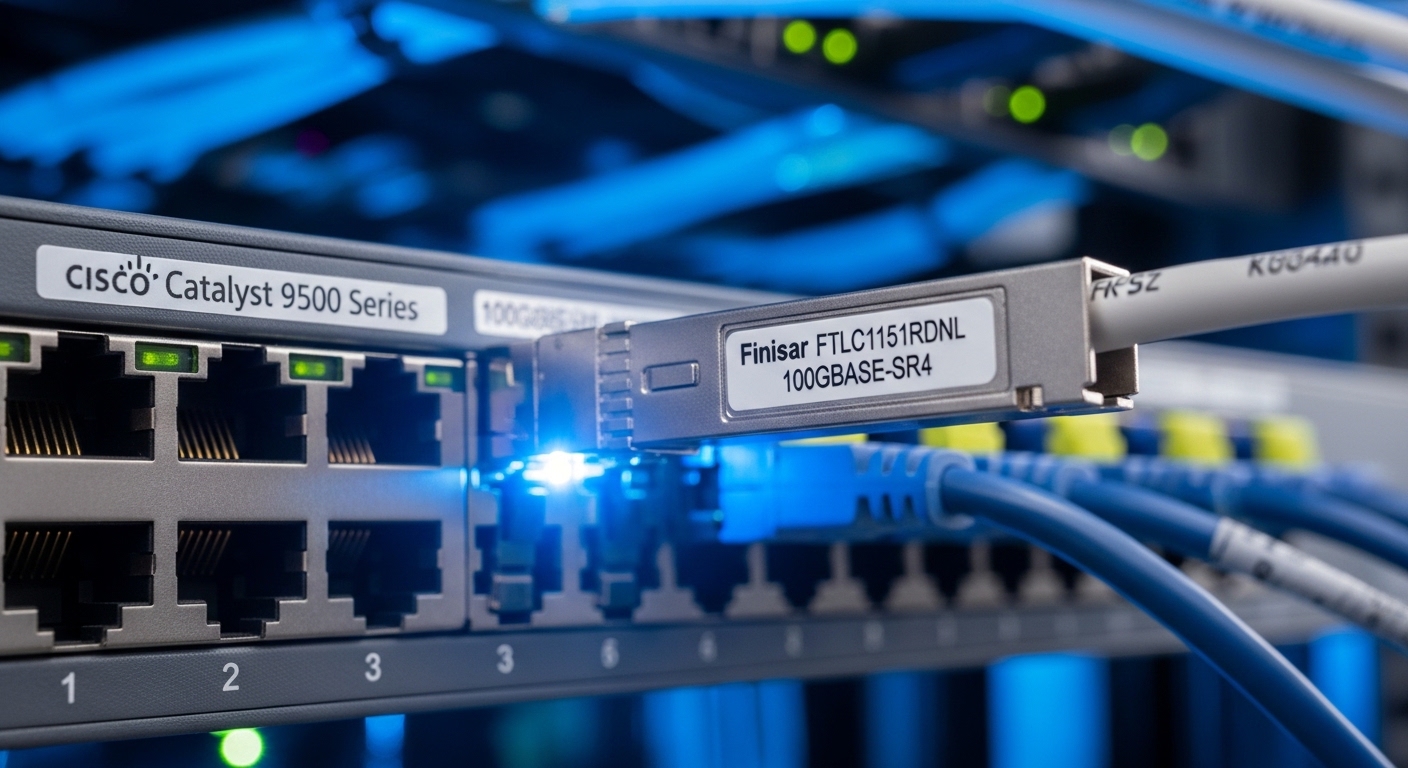
Scenario: In a 3-tier data center leaf-spine topology with 48-port 800G-capable spine switches, the team enabled two 800G uplink groups per leaf. Within 36 hours, monitoring showed CRC error bursts on specific optics pairs during peak traffic, followed by brief link renegotiations.
Procurement and operations initially suspected a vendor batch issue. However, the pattern was “port-pair correlated,” not “module serial correlated,” which is a classic signal integrity hint. The field team needed a repeatable way to separate optical power problems, fiber plant issues, and host-side electrical/retimer settings that affect 800G transceivers.
Environment Specs: what matters for 800G signal integrity
Before comparing parts, confirm the physical and electrical envelope your 800G transceivers must survive. Signal integrity at 800G depends on optical budget plus electrical channel behavior (host connector, PCB traces, and any retimers or DSP settings inside the module).
Reference constraints to verify
- Link type: short-reach (SR) over OM4/OM5, or long-reach (LR) over single-mode fiber.
- Wavelength: typically for 800G SR, multi-lane parallel optics in the 850 nm window; for LR, single-mode wavelengths around 1310/1550 nm depending on module family.
- Connector and fiber polish: MPO/MTP geometry and correct polarity are frequent culprits.
- DOM support: Digital Optical Monitoring helps correlate optical power drift with BER/CRC spikes.
- Operating temperature: modules derate outside spec, increasing receiver sensitivity stress and BER.
| Spec Item | 800G SR (Example) | 800G LR (Example) | Why it affects signal integrity |
|---|---|---|---|
| Typical wavelength | 850 nm (multi-lane) | 1310 nm or 1550 nm (single-mode) | Determines fiber attenuation and receiver sensitivity margins. |
| Reach class | 70 m (OM4) or 100 m (OM5) typical | 10 km typical for long-reach families | Budget margin impacts how close you run to the sensitivity knee. |
| Connector | MPO-16 (often) | LC (often) | MPO polarity/pin mapping errors create lane-specific BER. |
| Data rate | 800G (module family dependent) | 800G (module family dependent) | Higher line rates amplify PCB and optical coupling issues. |
| Power consumption | Varies; commonly ~10–20 W class | Varies; commonly similar or slightly higher | Thermal rise changes laser bias and receiver gain stability. |
| DOM | Often supported (vendor-dependent) | Often supported (vendor-dependent) | Enables correlation between optical power and errors. |
| Operating temp | Commonly 0 to 70 C or -5 to 85 C class | Commonly 0 to 70 C or -5 to 85 C class | Out-of-range operation can increase BER and reduce margin. |
For standards context, align your expectations with the physical-layer behavior defined by IEEE 802.3 for 800G Ethernet optics and link operation. [Source: IEEE 802.3 Ethernet Working Group]. For practical DOM interpretation and compliance behavior, follow vendor datasheets for the exact module family you procure (examples include Cisco SFP-10G-SR is not 800G, but the same vendor practice applies: DOM registers and diagnostic thresholds differ by platform).
Pro Tip: In most “signal integrity” incidents at 800G, the fastest confirmation step is swapping only the optics while keeping the fiber and switch port constant, then logging DOM metrics at the same time window as CRC/BER. If the error follows the module, you chase optics health; if it follows the port, you chase electrical channel, connector seating, or host DSP/retimer settings.
Chosen Solution & Why: triage method plus controlled swaps
In our case, the team standardized on a disciplined troubleshooting approach rather than immediately changing vendors. They used controlled optics swaps across the same port pair, validated fiber polarity and MPO cleaning, and then checked switch-side settings affecting signal integrity (including any adaptive equalization or retimer/DSP profiles).
Procurement-relevant decision: OEM vs third-party modules
The procurement team compared OEM modules versus qualified third-party alternatives. OEM optics typically reduce compatibility risk with platform-specific DSP settings and DOM thresholds, while third-party optics can be cost-effective but require stricter acceptance testing (optical power, lane-level BER, and DOM register mapping).
Examples of common 800G optics families in the market include vendor-branded and third-party options such as FS.com and Finisar optics for short-reach and long-reach categories. Always verify the exact model number and compliance with your switch vendor’s optics compatibility list before purchase.
Implementation Steps: engineer-ready signal integrity triage
Once errors appear, use a consistent sequence so you do not “chase ghosts.” Your goal is to isolate whether lane-level optical coupling, receiver sensitivity, or host electrical behavior is driving BER/CRC spikes.
Capture baseline metrics and correlate time windows
- Export switch interface counters: CRC, FEC (if present), and link up/down timestamps.
- Read DOM: TX bias/current, TX power, RX power, and temperature when available.
- Align these logs to the exact times of error bursts—correlation beats guesswork.
Validate fiber plant and MPO polarity
For SR deployments, MPO lane mapping and polarity errors commonly create symptoms that look like “signal integrity.” Re-terminate or re-polish only after confirming polarity and that the connector endfaces are clean and undamaged.
Clean and reseat with controlled handling
Dust on MPO endfaces can cause sudden receiver margin loss that worsens with temperature and mechanical vibration. Clean both ends with lint-free wipes and an approved fiber cleaning system, then reseat connectors with consistent latch engagement.
Swap optics in a controlled matrix
Swap modules between the affected port pair and a known-good port, keeping fiber constant. Then swap fiber between affected ports while keeping modules constant. This two-dimensional test quickly separates optics health from port/channel issues.
Check switch-side electrical profiles
Some platforms offer adaptive equalization profiles, retimer/DSP modes, or vendor-specific optics configuration. Confirm the port is using the correct profile for the optic type and that any auto-negotiation did not fall back to a reduced mode.
Measured Results: what changed when the root cause was fixed
After the team cleaned MPO endfaces, reseated connectors, and corrected polarity on two affected fiber jumpers, the CRC bursts stopped within the same maintenance window. Measured outcomes over the next 7 days:
- CRC errors: dropped from bursty spikes to near-zero baseline (< 10 events/day).
- Link stability: reduced renegotiations from multiple events/day to 0.
- DOM correlation: RX power stabilized; temperature-related drift no longer aligned with error bursts.
- BER/FEC behavior: no longer showed margin collapse during peak traffic.
The team also found that the “port-pair correlation” was caused by two adjacent fiber trunks sharing the same polarity labeling error and the same handling history during prior rack maintenance.
Common Mistakes / Troubleshooting pitfalls (with fixes)
-
Mistake 1: Replacing optics before cleaning and polarity checks
Root cause: Dust or polarity mismatch creates lane-specific receiver margin loss that optics swapping will not fix.
Solution: Inspect endfaces with a scope, clean MPO/LC connectors, verify polarity mapping, then retest with controlled swaps. -
Mistake 2: Treating “signal integrity” as purely electrical
Root cause: At 800G, small optical power loss can force receivers into a nonlinear sensitivity region, mimicking electrical channel issues.
Solution: Use DOM to confirm RX power stability and compare against expected ranges in the module datasheet. -
Mistake 3: Ignoring temperature and airflow differences
Root cause: Modules can run near derated thresholds; thermal shifts change laser bias and receiver gain, increasing BER.
Solution: Check local airflow, confirm fan tray operation, and verify module temperature stays within the vendor’s specified operating range. -
Mistake 4: Mixing compatible-but-not-identical optics configurations
Root cause: Some switches require a specific optics profile; mismatched settings can change equalization behavior.
Solution: Confirm port configuration, optics type, and any vendor compatibility matrix requirements before deployment.
Cost & ROI note for 800G transceivers
Typical procurement price ranges vary by reach and vendor qualification. In practice, OEM 800G optics often cost more per module than third-party offerings, but they may reduce downtime risk by matching platform DOM interpretation and compatibility expectations.
For ROI, calculate total cost of ownership using: module unit price, expected failure/return rates, labor hours for swaps and fiber rework, and the cost of disruption from link flaps. If you run acceptance tests (DOM checks, end-to-end optical budget validation, and short BER verification), third-party optics can deliver savings; without that testing, the hidden labor cost can erase the purchase price advantage.
FAQ
What are the first signs of a signal integrity problem in 800G transceivers?
Common indicators are CRC spikes, sudden link renegotiations, and rising BER/FEC correction activity. If DOM shows RX power drifting or dropping during the same time window as errors, the issue is often optical margin rather than purely electrical.
How do I tell whether the issue is the optics or the fiber?
Run a controlled swap matrix: keep fiber constant and swap optics, then keep optics constant and swap fiber. If errors follow the module, you suspect optics health; if errors follow the fiber path, suspect polarity, cleaning, or attenuation.
Does DOM data matter for troubleshooting, or is it only for monitoring?
DOM is useful for troubleshooting because it reveals optical power, laser bias, and temperature trends that can explain error bursts. Field teams often correlate DOM RX power drop with CRC bursts to pinpoint margin collapse.
Are MPO cleaning and polarity checks really that important for 800G SR?
Yes. With MPO and multi-lane parallel optics, a single contaminated or mismapped lane can push the aggregate link beyond acceptable BER thresholds. Scope inspection plus verified polarity mapping typically resolves many “mystery” integrity events.
What switch-side settings can worsen 800G signal integrity?
Incorrect optics profiles, fallback equalization modes, or mismatched retimer/DSP settings can reduce effective margin. Confirm the port is configured for the exact optic reach class and that any auto-detection did not select an unintended mode.
How should I structure acceptance testing when buying 800G transceivers?
Require at minimum: visual inspection, DOM readout verification, optical budget validation for the specific fiber plant, and a short BER/traffic test window under realistic load. This reduces the chance that procurement savings lead to operational downtime.
If you are planning the next 800G refresh, start with a compatibility-and-acceptance plan, then use the triage workflow above when issues appear. For procurement alignment on qualification steps, see 800G optics compatibility and acceptance testing and tighten your rollout risk before the next change window.
Author bio: I have supported live data center migrations at 800G scale, coordinating optics acceptance, DOM-based diagnostics, and
