
In 2026 deployments, teams often discover late that the “right” transceiver choice is constrained by optics reach, lane speed, and switch port wiring—not just bandwidth targets. This guide helps network engineers and field technicians compare SFP vs QSFP-DD with practical selection steps, a compatibility checklist, and troubleshooting patterns you can apply during commissioning. You will also get realistic cost and TCO considerations, plus pitfalls that commonly break links during cutover.
Why SFP vs QSFP-DD decisions break during 2026 upgrades
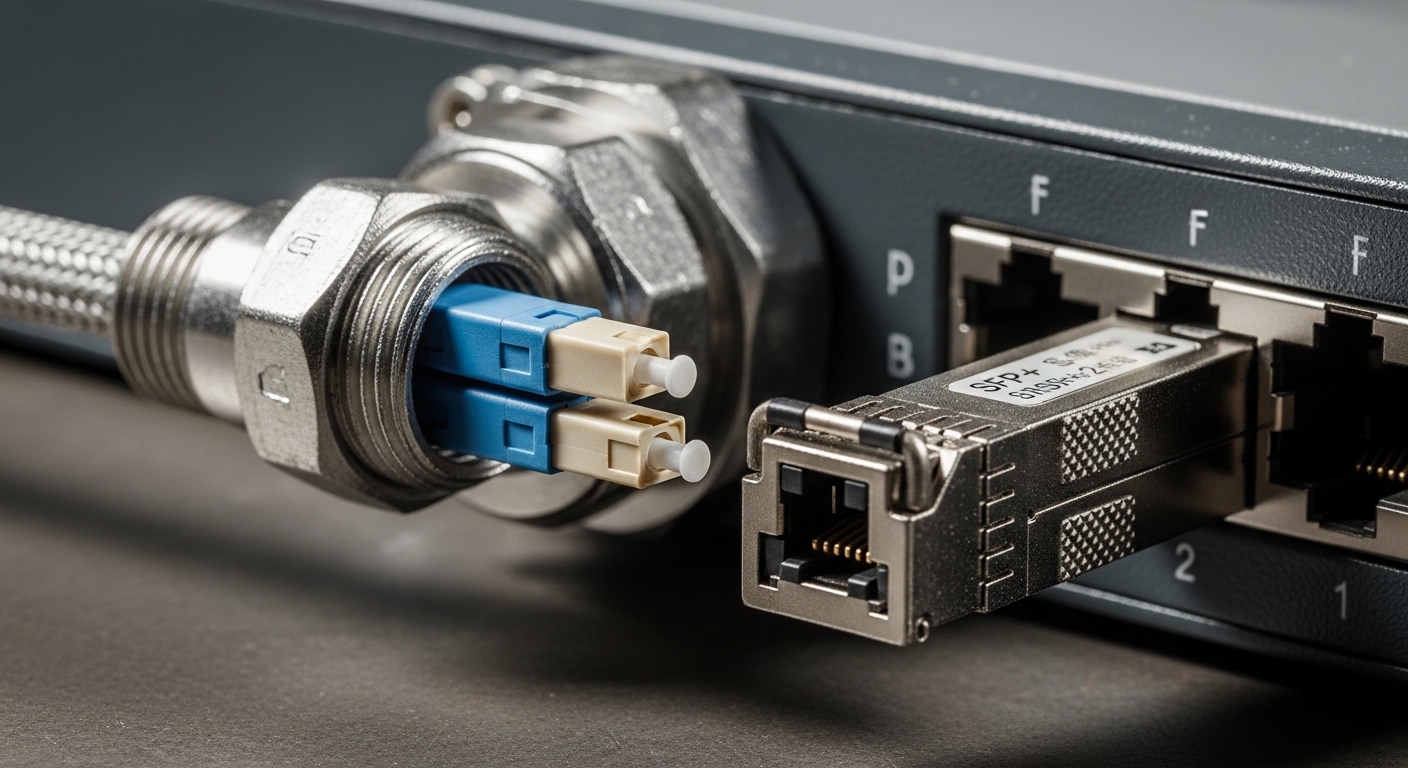
Most failures come from mismatched expectations between port type, optics lane format, and thermal headroom. SFP is typically used for lower-density, often 1G to 10G optics, while QSFP-DD targets much higher aggregate bandwidth per port (commonly 100G and above) with more lanes and different electrical interfaces. In practice, engineers run into port capability limits, incompatible module EEPROM/DOM expectations, or optics that meet budget distance on paper but fail after connector contamination or aging. The result is avoidable rework: pulling cables, re-terminating, and reprogramming transceiver settings.
5W1H snapshot (what to verify before you buy)
- What: The exact transceiver form factor and supported data rates on the target switch.
- Who: The switch vendor’s compatibility list owner (often the TAC team) and the fiber team responsible for loss budget.
- When: Before purchasing optics and before installing in a live frame.
- Where: In the transceiver cage/port where the module will seat and where airflow is measured.
- Why: Because lane mapping, DOM behavior, and power draw differ by platform.
- How: Confirm optics standard, reach class, connector type, and DOM features against the switch datasheet.
Core differences that matter: form factor, lanes, and optics
SFP and QSFP-DD are not interchangeable “bigger vs smaller” optics; they are different interface ecosystems. SFP modules typically use fewer electrical lanes and are common for 10G and lower, while QSFP-DD uses a higher lane count and supports much higher aggregate rates. That lane count affects power, heat dissipation, and signal integrity margins, which is why thermal and airflow constraints show up in field failures. Also, QSFP-DD optics are usually designed around higher-speed standards and may rely on switch-specific lane mapping.
Typical optics families you will see in the field
- SFP+ / SFP (10G class): SR (multimode), LR (singlemode long reach), ER/ZR variants depending on vendor.
- QSFP-DD (100G class): SR4 or similar lane-based short-reach variants; some deployments use active optics for longer spans.
- Compatibility: Both families depend on the switch’s supported transceiver list and the optics type (MMF vs SMF, connector standard, and DOM support).
Technical specifications comparison (representative examples)
Below is a practical comparison using common, representative transceiver classes. Always confirm exact part numbers against your switch compatibility list.
| Spec | SFP (common 1G-10G class) | QSFP-DD (common 100G class) |
|---|---|---|
| Typical aggregate data rate | Up to 10G per module (varies by generation) | Up to 100G per module (varies by generation) |
| Wavelength (typical) | 850 nm (SR MMF), 1310/1550 nm (LR/ER variants) | 850 nm (SR MMF) or 1310/1550 nm (SMF variants depending on model) |
| Reach (typical classes) | SR: tens to a few hundred meters on MMF (OM3/OM4 dependent) | SR: typically hundreds of meters on MMF; longer reach often uses SMF or active optics |
| Connector types | LC is common for fiber optics | LC is common; some models use MPO/MTP for dense lane routing |
| DOM / monitoring | Commonly supported (vendor-dependent) | Commonly supported (vendor-dependent), may include additional diagnostics |
| Operating temperature range | Commercial and extended options exist; verify exact SKU | Commercial and extended options exist; verify exact SKU |
| Power and thermal profile | Lower per module; easier to fit in marginal airflow designs | Higher per module; can stress airflow and platform thermal budgets |
For standards context, consult IEEE 802.3 for Ethernet PHY behavior and vendor datasheets for transceiver electrical/optical characteristics. For optical interfaces and module definitions, also review relevant industry specifications and vendor implementation notes. IEEE 802.3 overview [Source: IEEE].
Pro Tip: During commissioning, treat DOM readings as a first-class signal integrity tool. If you see rising receive power or frequent CRC/error bursts after a “successful” link-up, the root cause is often connector contamination or marginal MMF launch conditions, not a bad transceiver. Clean optics, then re-check lane-level counters on the switch.
Deployment scenario: leaf-spine fabric where the choice is forced
Consider a 3-tier data center leaf-spine topology in a mid-size enterprise: 48-port 10G ToR switches connect to 12-port spine using a mix of 10G and 25G uplinks, while server access uses 10G. In the next refresh cycle for 2026, the team plans to add 100G uplinks from the ToR to the spine to reduce oversubscription. The spine platform provides QSFP-DD cages for 100G, but the ToR ports are fixed to SFP/SFP+ for the access layer. In this case, you will deploy SFP optics for server-to-ToR and QSFP-DD optics for ToR-to-spine, because the port hardware physically enforces the interface. Engineers who attempt to “standardize” on one form factor usually discover the switch simply will not negotiate the PHY.
Selection checklist for SFP vs QSFP-DD (ordered by field impact)
Use this ordered decision guide during procurement and pre-install validation. The goal is to prevent the most expensive mistakes: buying the wrong form factor, wrong optics standard, or optics that cannot pass your loss budget after installation.
- Port capability and transceiver type: Confirm the switch model’s supported module form factor per cage (SFP vs QSFP-DD) and the supported Ethernet data rates.
- Distance and fiber type: Determine MMF vs SMF, then pick the optics reach class (SR vs LR vs ER). Verify with an actual link loss budget including patch cords and connectors.
- Connector standard and polarity plan: LC vs MPO/MTP. For MPO/MTP, confirm polarity method (and that your patching matches the transceiver expectations).
- DOM and telemetry compatibility: Ensure the switch reads DOM correctly and that telemetry fields you rely on (temperature, bias, received power) appear as expected.
- Operating temperature and airflow: Validate the module’s temperature rating and the platform’s thermal design margin at your target ambient and airflow rate.
- Vendor lock-in risk: Check whether the platform blocks non-OEM modules or requires specific vendor IDs. Review compatibility lists and prior field reports from your own environment.
- Power and optics budget: QSFP-DD modules may draw more power; verify you are not exceeding the platform’s power and thermal limits under full load.
- Change management: Plan whether you will swap optics in place, whether you must update transceiver profiles, and how you will validate link health post-change.
For optics reach and link engineering, follow cabling and test practices from ANSI/TIA standards and vendor cabling guidance. See [Source: ANSI/TIA]. [[EXT:https://standards.ansi.org/standard/]]
Common pitfalls and troubleshooting tips (real failure modes)
Below are common mistakes seen in SFP and QSFP-DD installs, with likely root cause and a field-ready fix. Treat these as a runbook for cutovers.
“Link up but errors climb fast”
Root cause: Connector contamination, damaged ferrules, or marginal MMF launch conditions causing high bit error rate. QSFP-DD lane aggregation can make issues appear as frequent CRC or bursty counters. Solution: Clean LC or MPO/MTP ends with approved procedures, inspect under magnification, re-seat modules, then run a counter baseline and re-test after cleaning.
“No link / module not recognized”
Root cause: Incompatible module type for the cage (for example, using QSFP-DD where the switch expects a specific class, or using an SFP variant with unsupported electrical interface). Some platforms also reject non-compliant EEPROM/DOM behavior. Solution: Verify the exact transceiver part number and that it appears on the switch compatibility list. If you must use third-party optics, confirm DOM compatibility and that the module supports the required Ethernet PHY.
“Intermittent drops under load”
Root cause: Thermal saturation from insufficient airflow, especially with higher-power QSFP-DD optics packed densely. This can cause receiver sensitivity degradation or module throttling. Solution: Check airflow direction, remove obstructing cables, confirm fan tray status, and compare module temperature readings from DOM against vendor recommended limits. If temperatures are near thresholds, mitigate by rearranging optics density or improving cooling.
“MPO polarity mismatch” (often missed in QSFP-DD SR builds)
Root cause: Incorrect polarity/patching method for MPO/MTP links causing lanes to be crossed. Links may fail outright or show severe errors. Solution: Reconcile your patching scheme with the transceiver MPO polarity requirements and re-terminate or re-patch according to the correct polarity standard for your build.
Cost and ROI note for 2026 planning
Pricing varies by vendor, reach class, and whether you choose OEM or third-party modules. As a rough field estimate, enterprise OEM optics often cost more per module but may reduce support friction and compatibility issues; third-party optics can be cheaper but may increase the time spent validating DOM behavior and vendor ID acceptance. For TCO, include downtime risk, rework labor (cleaning, re-termination, and re-cabling), and the cost of additional spares. QSFP-DD deployments can also improve ROI by reducing the number of ports and uplink oversubscription, but only if your switch platform has QSFP-DD capacity and your fiber plant supports the required reach and connector strategy.
When you budget, model spares as well: at minimum, keep a small pool of known-good optics per reach class and per vendor that passed your compatibility tests. This can cut restoration time from days to hours during a failed module swap.
FAQ: SFP vs QSFP-DD buying questions for engineers
Which is better for short reach: SFP or QSFP-DD?
For short reach, both can work, but the determining factor is your switch port type and required aggregate bandwidth. If you need 100G uplinks in a QSFP-DD cage, QSFP-DD is the practical choice; if you are targeting 10G access, SFP is usually the correct fit. Always validate MMF reach against OM3/OM4 and your measured link loss.
Can I mix vendors for SFP vs QSFP-DD modules?
You can often mix vendors, but compatibility is not guaranteed. Some platforms reject modules based on EEPROM fields or DOM behavior, and some optics families have subtle differences in diagnostics and lane mapping. Use the switch compatibility list and test one known-good module before scaling deployment.
What connector should I plan for with QSFP-DD?
Many high-density QSFP-DD SR builds use MPO/MTP for lane routing, while some variants use LC. Confirm the exact transceiver model and match it to your patch panel design and polarity method. If your fiber plant is LC-only, you may need to adjust your QSFP-DD selection or rework patching.
How do I validate the optics choice before cutover?
First, confirm the module part number is supported by the switch for the target data rate. Then run a link test and monitor DOM and interface counters for at least a short burn-in window. If you see elevated CRC or frequent link renegotiations, stop and clean/inspect connectors before assuming the optics are defective.
What temperature range matters in the real world?
Transceivers have specific operating temperature ratings, and the chassis thermal design sets your real margin. In field failures, QSFP-DD modules are more likely to run hot when densely packed or when airflow is obstructed. Use DOM temperature readings and confirm they remain comfortably within vendor guidance for your ambient conditions.
Does QSFP-DD always reduce cost per port?
It can reduce cost per delivered bandwidth when it replaces multiple lower-speed links, but it may increase optics cost and requires QSFP-DD-capable chassis hardware. ROI improves if your upgrade eliminates oversubscription and reduces the number of uplinks or leaf-spine port consumption. Otherwise, you may pay more without operational benefit.
Author bio: I have deployed and troubleshot Ethernet optics in mixed SFP and QSFP-DD environments, including cutovers that required DOM validation and fiber loss testing under tight maintenance windows. I write from field experience with measured counter baselines, airflow constraints, and vendor compatibility caveats.
Next step: If you are planning the fiber plant side of the same decision, read fiber loss budget and optics reach testing to align reach classes with measured attenuation and connector losses.
