
Scaling optical networks for 5G is where “it worked in the lab” stops being true. This enterprise guide helps network and field engineers plan transceiver optics, fiber reach, and operational safeguards so 5G backhaul, fronthaul, and midhaul stay stable under growth. You will get a practical top list of eight decisions, plus deployment metrics, troubleshooting patterns, and a final ranking table.
Top 8 enterprise choices when scaling optical networks for 5G
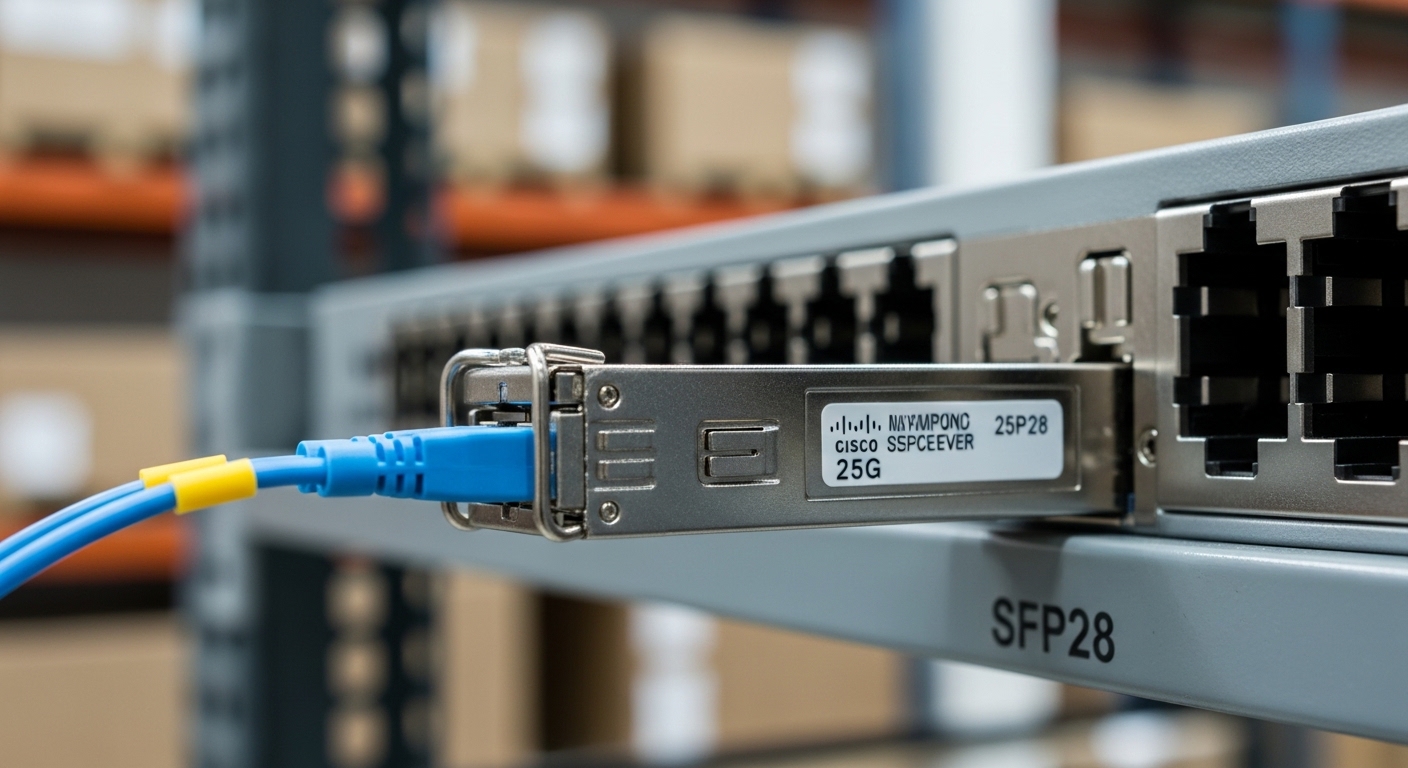
When 5G traffic ramps, optical links become the bottleneck if you misjudge reach, optical budget, or compatibility. The right approach is to decide optics and fiber strategy together, then enforce operational checks (DOM, temperature, polarity, and link errors) at commissioning and during audits. Below are eight field-tested choices, each with best-fit guidance and realistic pros and cons.
Choose the right optics family: SR, LR, ER, and DR by distance
For 5G backhaul and aggregation, the optics family determines reach, fiber type, and power draw. In practice, you match the transceiver wavelength to your fiber plant: 850 nm SR is common for short reaches on multimode, while 1310 nm LR/ER is common for longer distances on single-mode. For dense enterprise fabrics, SR can reduce cost per port, but only if your multimode links meet the required link budget and modal performance.
Key specs to verify against your optical budget
- Wavelength: 850 nm (MMF), 1310 nm (SMF)
- Data rate: 10G, 25G, 40G, 100G depending on platform
- Reach: vendor-dependent; confirm with datasheets
- Connector: LC is most common for pluggable optics
- Temperature range: typically commercial 0 to 70 C or industrial -40 to 85 C
Best-fit scenario
In a regional 5G backhaul hub, you might deploy 10G or 25G from radio sites to aggregation switches within 300 m to 500 m over OM4 multimode fiber. You would typically pick 850 nm SR optics such as Cisco-compatible SFP+ SR modules or vendor equivalents, ensuring the vendor states OM4 compliance and supports your switch vendor’s optical diagnostics.
Pros
- SR often lowers cost for short runs
- High availability of parts and simple install
Cons
- Multimode performance can degrade with poor patching practices
- Wrong fiber type can cause immediate link failures
Match transceiver form factor and lane rate to switch silicon
“Compatible” is not enough; 5G scaling fails when optics do not electrically match the switch’s SerDes and lane mapping. Pluggable optics must align with the port’s expected interface standard (for example, Ethernet over fiber variants) and the switch’s supported transceiver class. Field reality: you can have the correct wavelength and connector and still get link flaps if the transceiver is not supported or if the switch requires specific DOM behavior.
Common enterprise form factors
- SFP+ for 10G
- SFP28 for 25G
- QSFP28 for 100G at 25G lanes
- QSFP+ for 40G
Best-fit scenario
At a 5G site aggregation layer, you might upgrade from 10G to 25G to reduce oversubscription. If the access switch model supports 25G SFP28 but not all third-party transceivers, you should validate with the vendor’s compatibility list and test in a staging rack before rolling out to multiple radio sites.
Pros
- Prevents unstable link behavior
- Improves upgrade path without re-cabling
Cons
- Compatibility constraints can create vendor lock-in
- Upgrades may require transceiver swaps and inventory changes
Use a quantified comparison table for 10G vs 25G vs 100G tradeoffs
Engineers often compare optics by reach only, but 5G scaling is about throughput per rack unit, power per port, and optical margin under real fiber loss. The table below summarizes representative options you may see in enterprise optical networks. Always confirm exact reach and power in your vendor datasheet, and validate with your switch’s supported optics list.
| Optics type (example) | Wavelength | Typical reach | Data rate | Connector | Typical power | Temperature |
|---|---|---|---|---|---|---|
| Cisco SFP-10G-SR | 850 nm | ~300 m (OM3) / up to OM4 per spec | 10G | LC | ~1 W class (varies by vendor) | 0 to 70 C (typ.) |
| Finisar FTLX8571D3BCL (25G SR class) | 850 nm | ~70 m to ~100 m class (varies by OM) | 25G | LC | ~1.5 W class (varies) | -20 to 70 C (varies) |
| FS.com SFP-10GSR-85 (10G SR class) | 850 nm | ~300 m class (per OM) | 10G | LC | ~1 W class (varies) | 0 to 70 C (varies) |
| 100G QSFP28 SR (vendor-specific) | 850 nm | ~100 m class (varies by OM) | 100G | LC | ~4 to 6 W class | 0 to 70 C or wider (varies) |
Standards context helps reduce surprises: pluggable optics diagnostics are commonly aligned with Digital Optical Monitoring (DOM) concepts. For Ethernet over fiber behavior, engineers should align to IEEE 802.3 interface expectations and vendor-specific implementation details. [Source: IEEE 802.3 Working Group overview] [Source: vendor transceiver datasheets and DOM documentation]
Best-fit scenario
In a 5G aggregation row where you must fit more ports per rack, you may choose a higher data rate optics family (25G or 100G) to reduce the number of uplink interfaces. The decision hinges on whether your fiber plant supports the required reach at the selected wavelength and whether your optical budget retains margin for aging and connector rework.
Pros
- Turns “gut feel” into measurable margin planning
- Helps procurement compare like-for-like
Cons
- Real reach depends on patch cords and cleaning quality
- Power classes and DOM support vary by vendor
Design your fiber plant for polarity, cleaning, and connector loss
Scaling optical networks for 5G fails more often due to fiber handling than due to optics specs. Field engineers repeatedly see connector contamination, wrong polarity, or excessive patch cord loss causing intermittent link errors during temperature changes. For high-volume 5G rollouts, you should standardize connector types (typically LC), patch cord lengths, and cleaning workflows.
Operational requirements to set in your build plan
- Polarity plan: define A/B mapping and document it per panel
- Connector cleaning: use approved inspection and cleaning tools
- Patch cord loss control: standardize lengths and insertion loss targets
- Splice strategy: minimize unnecessary splices in critical paths
Best-fit scenario
In a rollout across 40 radio sites, you might standardize patch cords at 1 m or 2 m and enforce end-face inspection before every activation. If your acceptance tests show rising error rates after each site handoff, you can correlate spikes to panel rework and prioritize connector handling training.
Pros
- Reduces intermittent failures and truck-rolls
- Improves repeatability across sites
Cons
- Requires process discipline and inspection hardware
- May extend commissioning timelines initially
Plan DOM, monitoring, and alarms so 5G operations can scale
Digital Optical Monitoring helps operators detect aging, drift, and power anomalies before they become outages. However, not all third-party optics expose identical DOM fields or behave identically under your switch OS. For 5G scaling, you want consistent telemetry so your NMS or telemetry pipeline can alert on thresholds that match your environment.
Pro Tip: In field deployments, link stability often correlates better with DOM trendlines (bias current and received power) than with a single “pass/fail” link test at install time. If your monitoring shows a gradual received power decline across weeks, address connector cleanliness and patch cord wear before you hit hard alarms.
What to monitor
- Tx bias current and Tx output power
- Rx received power
- Temperature and supply voltage if available
- Vendor-specific DOM alarms and threshold behavior
Best-fit scenario
In a central office supporting multiple 5G carriers, you might ingest DOM telemetry into a time-series database and set alerts for received power dropping more than a configured delta over 30 days. This approach helps you target cleaning and re-termination before a full outage, improving SLA adherence.
Pros
- Earlier detection of degradation
- Better root-cause analysis during incidents
Cons
- Telemetry schema differences between vendors
- Thresholds must be tuned to your link budget
Account for operating temperature, airflow, and power density
Optics are rated for temperature ranges, but real racks can exceed assumptions due to airflow constraints and heat from adjacent modules. 5G scaling increases port density, so you should model airflow and verify that optics do not spend long periods near the upper temperature boundary. Power density matters too: higher-speed optics can add measurable thermal load to a constrained environment.
Field checks you can schedule during rollout
- Rack ambient measurements at inlet and outlet
- Verify fan tray configuration matches the planned thermal profile
- Check that cable management does not block airflow
Best-fit scenario
In a micro data center supporting 5G midhaul, you may run 100G QSFP28 uplinks in a compact row. If inlet temperatures frequently reach the high end of the optics operating range, you should validate with vendor guidance and consider spreading high-power optics across cooler zones rather than stacking them in one air pocket.
Pros
- Reduces thermal-induced link flaps
- Improves mean time between failure
Cons
- Thermal remediation can require downtime
- Requires measurement discipline
Vendor selection: balance OEM support, third-party optics, and lock-in risk
Procurement pressure often pushes teams toward third-party optics to reduce capex, but scaling optical networks for 5G requires predictable supportability. OEM optics can reduce compatibility surprises and streamline RMA processes, while third-party optics can work well if you validate DOM behavior and switch compatibility up front. The key is to treat transceivers as a governed component with a qualification and lifecycle plan.
Decision checklist for selection and governance
- Distance and fiber type: confirm OM class for SR or OS2 for LR/ER
- Switch compatibility: validate against the switch vendor’s optics list
- DOM support: confirm telemetry fields and alarm behavior
- Operating temperature: match your rack ambient and airflow profile
- Optical budget margin: include connector and patch cord losses
- Vendor lock-in risk: plan for multi-vendor qualification where possible
- Warranty and RMA process: test turnaround times and replacement logistics
- Lifecycle and supply continuity: confirm lead times for the next 12 to 24 months
Pros
- OEM reduces operational uncertainty
- Third-party can lower cost if qualified
Cons
- Unqualified optics can cause intermittent or no-link issues
- Different DOM behavior complicates monitoring
Cost and ROI: model TCO across optics, power, and truck-rolls
Optics cost is only one line item. In 5G scaling, total cost includes power draw, spares inventory, and the cost of failures (including truck-rolls and service windows). A realistic ROI model compares OEM vs qualified third-party optics using your historical incident rates and the expected lifetime under your thermal and handling conditions.
Practical cost ranges to expect
- 10G SFP+ SR: often in the low tens of dollars per module for third-party, higher for OEM; exact pricing varies by volume
- 25G SR and QSFP28: typically higher unit costs, with OEM often commanding a premium
- 100G optics: can be significantly more expensive; power and monitoring become more important
Even if third-party optics reduce unit price, you must account for qualification time and potential monitoring integration work. If your environment requires strict supportability for carrier SLAs, OEM-backed optics may reduce downtime risk even at higher capex. For power, higher-speed optics can increase thermal load, which indirectly affects cooling energy and availability.
Pros
- Better budget outcomes when TCO is modeled
- Fewer surprises during audits and carrier escalations
Cons
- ROI depends on qualification quality and operational discipline
- Spare strategy must match lead times
Common mistakes and troubleshooting tips in scaled optical networks
Below are failure modes that show up repeatedly when enterprises scale optical networks for 5G. Each includes a root cause and a practical fix you can apply during commissioning or incident response.
No-link after swapping optics
Root cause: wrong transceiver form factor or unsupported interface standard for the specific switch port. Sometimes the wavelength and connector match, but the switch requires a particular transceiver class or lane mode.
Solution: verify the switch model’s optics compatibility list for that exact port type, then stage-test the new optics in a spare port before rolling out. Also confirm correct transceiver polarity and that the correct fiber pair is connected.
Link flaps under temperature swings
Root cause: optics operating near upper temperature limit due to blocked airflow, high rack inlet temperatures, or misconfigured fan profiles. Pluggables can exhibit marginal behavior when thermal conditions drift.
Solution: measure inlet and module temperature, confirm airflow paths, and redistribute high-power optics if needed. If the issue persists, validate the transceiver’s rated temperature class against your measured environment.
Gradual degradation visible in errors and DOM trends
Root cause: connector contamination, worn patch cords, or increased insertion loss from re-termination. This often appears as reduced received power and rising error counters.
Solution: use an optical inspection scope, clean both ends with approved procedures, and re-test. If you see persistent loss, replace patch cords or affected jumpers, then compare DOM trends against your baseline.
Excessive optical errors from patch cord mismatch
Root cause: mixing patch cords with different OM grades or using long patch cords that were never validated for your target reach.
Solution: standardize patch cord lengths and OM grades, then update your runbook and acceptance criteria for each site. Rebuild the optical budget including the exact patch cord inventory.
For standards and interoperability context, teams often reference IEEE Ethernet interface behavior and vendor datasheets for optical parameters. [Source: IEEE 802.3] [Source: vendor transceiver datasheets]
FAQ
What distance should we plan for SR optics in optical networks?
Plan SR reach based on your exact fiber type (for example, OM3 vs OM4) and your connector and patch cord inventory. Use vendor-stated reach as a baseline, then add conservative margin for real deployment conditions and rework. If you cannot guarantee patch cord and cleaning quality, consider moving to a longer-reach option.
Do we need DOM support for 5G operations?
DOM is not strictly required for link establishment, but it is highly valuable for operational scaling because it enables proactive monitoring. Without consistent DOM telemetry, you may detect issues only after errors spike. If you use third-party optics, confirm DOM field availability and alarm behavior with your switch OS.
Are third-party transceivers safe for carrier-grade 5G backhaul?
They can be safe if you qualify them against your switch compatibility list and validate DOM and performance under your thermal and fiber conditions. The risk increases when optics are swapped without process controls or when monitoring integration is not tested. For carrier SLAs, consider OEM-backed optics for the most critical paths and keep third-party for less critical segments.
How do we prevent polarity and connector mistakes during scaling?
Use a documented polarity scheme per panel and enforce it with labeling and a commissioning checklist. Combine physical verification (label checks and mapping to expected channels) with optical inspection and test verification. In high-volume deployments, standardize patch cord lengths and reduce ad hoc changes.
What should we do if links work at install but fail weeks later?
Investigate connector cleanliness, patch cord wear, and any rework that occurred after commissioning. Compare DOM trends and error counters to your baseline to determine whether degradation is optical or thermal. Then apply targeted cleaning, replacement of suspect jumpers, and thermal airflow corrections.
How should we structure spares for optical networks?
Base spares on lead times, failure history, and the criticality of each layer (access, aggregation, core). Keep at least one known-good spare per optics family and per switch model/port type, and ensure spares are from the qualified list. Track spares with serialization and monitoring so you can quickly correlate failures to optics batches.
Scaling optical networks for 5G is achievable when you treat optics, fiber, and operations as one system: quantify margins, qualify compatibility, and instrument for early warning. Next, review optical budget planning for fiber links to align your optical budget process with real deployment losses and acceptance tests.
Author bio: I have deployed and troubleshot Ethernet-over-fiber links in live enterprise and telecom facilities, validating optical budgets, DOM telemetry, and connector handling workflows under production constraints. My work focuses on measurable commissioning gates and reliability improvements that field teams can repeat across sites.
