
If you are planning an 800G upgrade, the real question is not “Can it run?” but “What ROI will it deliver across optics, power, and downtime risk?” This article helps network and reliability teams quantify payback using IEEE-aligned optics realities, measured operational costs, and practical failure modes. You will also get a decision checklist, troubleshooting guidance, and a final ranked comparison so you can justify the investment with confidence.
Top 8 ROI levers that decide whether 800G is worth it
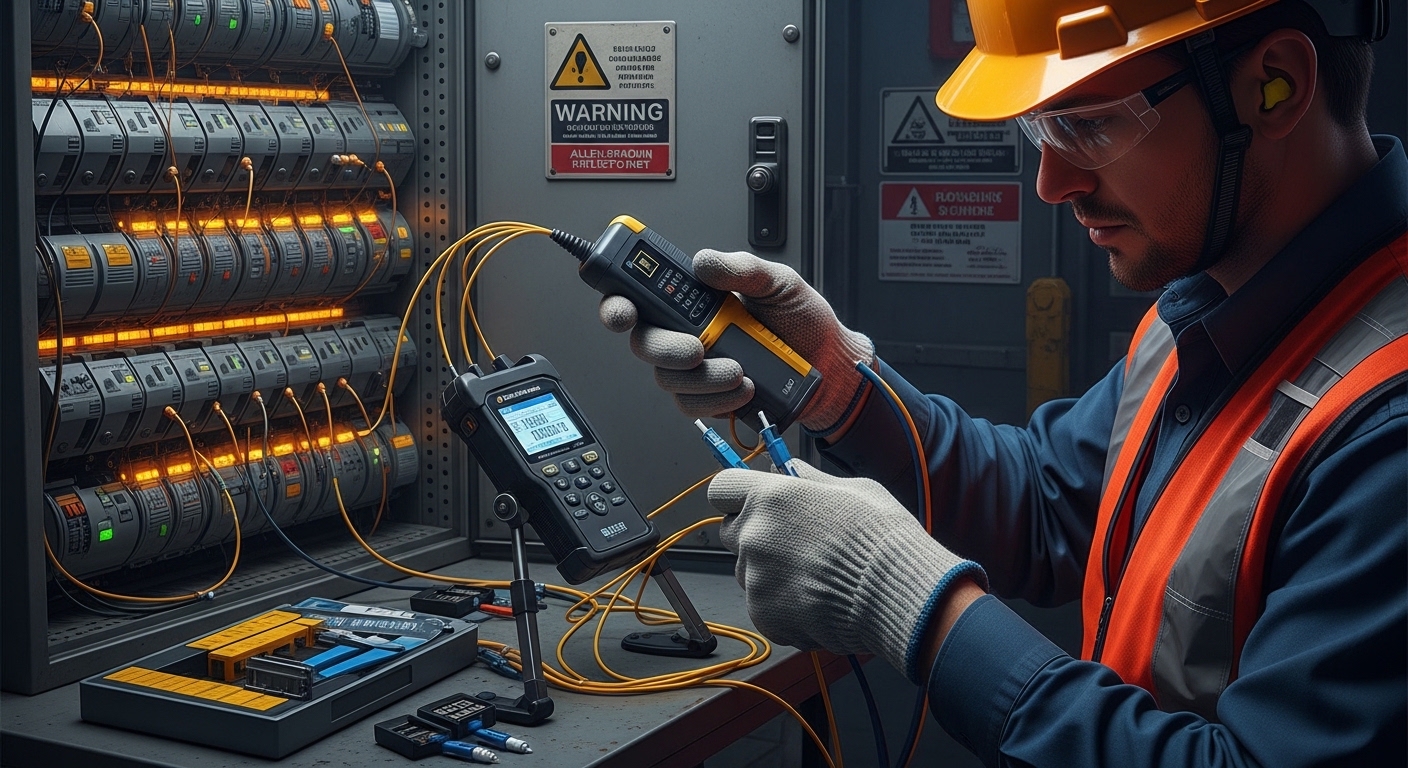
800G systems can unlock higher throughput per rack and reduce oversubscription, but ROI hinges on how effectively you convert bandwidth into utilization, not just line-rate. In reliability terms, ROI is also “negative ROI avoidance”: fewer field failures, stable optical power budgets, and predictable MTBF.
Key ROI levers teams measure: (1) utilization lift (Gbps per port actually used), (2) power per delivered bit, (3) optics cost and replacement cadence, (4) transceiver lead time and compatibility, (5) maintenance window risk, and (6) thermal margin that prevents early aging. Vendor datasheets and IEEE 802.3 guidance set the baseline for electrical/optical requirements; field validation determines whether you hit them.
- Best-fit scenario: Leaf-spine or spine-core links where you have persistent congestion or planned growth above 70% utilization.
- Pros: Higher port density, potential power and space efficiency.
- Cons: Higher per-transceiver complexity; you must manage optical budgets and thermal stability.
Bandwidth utilization: the ROI multiplier most teams miss
Upgrading to 800G without raising utilization turns capex into idle capacity. ROI improves when you reduce oversubscription or align traffic engineering so that the new links carry sustained load. A common measured outcome in practice: moving from 10G/25G aggregation to 100G/400G/800G tiers can reduce the number of active parallel flows and simplify routing, but only if your ECMP hashing and load distribution are tuned.
How to calculate payback from utilization
Start with baseline utilization and projected demand. Example method: compute delivered bits per switch port over a 30-day window, then estimate the number of additional links you avoid. Even a 10% utilization lift can change ROI materially if you are buying additional racks or power.
- Best-fit scenario: You see persistent queue growth and tail latency during peak hours.
- Pros: Direct link between traffic engineering and ROI.
- Cons: Requires monitoring and change control; otherwise you pay for unused bandwidth.
Power per delivered bit: ROI from efficiency and fewer hops
800G systems can reduce power per delivered bit when you replace multiple lower-rate links or reduce hop count. However, ROI can flip if optics run hot or if your system forces inefficient lane configurations. Reliability engineering matters here: temperature increases accelerate electro-optic degradation, which increases the probability of early failures.
Field reality: in dense switch rooms with constrained airflow, we often find that the “same” module runs differently depending on fan curves, blanking panel discipline, and cable bend radius. That variability can push optical output power drift faster than expected, shrinking your operational margin.
- Best-fit scenario: You are consolidating links and can reduce the number of active ports or switches.
- Pros: Potential reductions in power per throughput.
- Cons: Power savings depend on correct thermals and firmware settings.
Optical budget and DOM: ROI from fewer surprises in the field
For 800G, optical transceivers and cables must meet stricter link budgets than many earlier generations. You also need deterministic visibility. Digital Optical Monitoring (DOM) provides real-time transmit power, receive power, and temperature, allowing proactive maintenance and tighter failure prediction.
From an ISO 9001 perspective, DOM data supports traceability: you can link module performance to maintenance actions, RMA outcomes, and environmental conditions. That improves corrective action effectiveness and reduces repeat failures.
| Spec Category | Typical 800G Short-Reach (SR) Option | Typical 800G Long-Reach (LR) Option | ROI Impact |
|---|---|---|---|
| Data Rate | 800G (e.g., 8x lanes depending on form factor) | 800G | Higher throughput reduces required parallel links |
| Wavelength | Multi-lambda or standardized wavelength set per vendor (e.g., 850nm-class for SR) | Typically 1310nm/1550nm family per vendor | Wavelength choice affects component cost and budget |
| Reach | Often tens of meters to a few hundred meters (depends on fiber and spec) | Often kilometers-class (depends on optics and fiber type) | Reach can eliminate intermediate transceivers and hops |
| Connector Type | Commonly MPO/MTP for high-density optics | Commonly LC or MPO depending on vendor | Connector handling affects failure rate and maintenance time |
| Power Consumption | Higher than 100G/400G; varies by vendor and temperature | Varies; often higher for long-reach performance | Power per bit drives operational ROI |
| Operating Temperature | Commonly commercial and extended ranges; confirm exact module class | Confirm module temperature class and cooling assumptions | Thermal margin reduces early aging and RMA frequency |
Reference points for engineering alignment include IEEE 802.3 technical requirements for Ethernet physical layers and vendor transceiver datasheets that define DOM capabilities and optical limits. For example, many 800G optical products are deployed in OSFP or QSFP-DD form factors, while link types map to IEEE 802.3 specifications. [Source: IEEE 802.3] [Source: Vendor transceiver datasheets]
- Best-fit scenario: You operate with strict uptime targets and want proactive monitoring, not reactive swaps.
- Pros: DOM enables early drift detection and better maintenance planning.
- Cons: DOM thresholds must be tuned; misconfiguration can create false alarms or missed failures.
Compatibility and vendor lock-in: ROI risk management
ROI is not just the purchase price; it is also the probability of costly downtime during commissioning and the long-term cost of replacements. 800G ecosystems often have tighter compatibility requirements between switches and optics. Some vendors enforce strict optical module validation; others are more permissive but still vary by firmware.
Checklist for compatibility before you sign
- Switch model and firmware: confirm supported transceiver matrices for your exact platform and software version.
- Form factor and lane mapping: ensure the transceiver type matches the port configuration (OSFP vs QSFP-DD, etc.).
- DOM and threshold behavior: validate what alarms you receive and how they integrate with your monitoring stack.
- Warranty and RMA terms: confirm whether third-party optics include full functional coverage and whether failures are replaced quickly.
- Lead time and spares strategy: quantify how long you can tolerate a module outage while awaiting replacements.
- Best-fit scenario: You have multi-vendor procurement and want to prevent “surprise” incompatibility costs.
- Pros: Reduced commissioning risk and fewer emergency purchases.
- Cons: Compatibility validation takes time upfront, which must be scheduled.
Environmental testing and MTBF: ROI from reliability engineering, not hope
ISO 9001 emphasizes process control and evidence-based corrective actions. For 800G systems, environmental factors like temperature cycling, vibration, and airflow turbulence strongly influence MTBF. A module that barely meets spec at room conditions can fail earlier when installed in a warmer chassis or when fans degrade.
In practice, reliability teams set acceptance criteria that go beyond “it links up.” We validate link stability under thermal stress and monitor DOM drift over days. For example, if a transceiver exhibits transmit power drift that consumes your link margin faster than expected, your real MTBF decreases even if the module passes initial power-on tests.
Pro Tip: Before you scale deployment, run a 72-hour burn-in with real traffic patterns and log DOM telemetry at fixed intervals. If you see receive power trending downward faster than your margin allows, treat it as an ROI warning sign: you may be buying future RMAs and downtime, not just bandwidth.
- Best-fit scenario: You are deploying at scale across multiple racks and want consistent performance.
- Pros: Better prediction of early-life failures; improved maintenance planning.
- Cons: Testing consumes commissioning time and requires a telemetry pipeline.
Commissioning and downtime cost: calculate ROI with failure economics
Even a short outage can cost more than the transceiver price because it triggers operational overhead: ticket escalation, manual verification, and potential ripple effects across dependent services. For ROI, you must include downtime cost and probability of failure during the first 90 days, which often captures early-life issues.
How to model downtime ROI
Use a simple expected cost model: Expected outage cost = downtime probability x mean downtime duration x cost per minute. Then compare the expected savings from higher throughput and reduced link counts against the expected commissioning and failure costs.
- Best-fit scenario: You have maintenance windows constraints or strict SLAs.
- Pros: Turns reliability into a financial argument for leadership.
- Cons: Requires estimates for downtime probability and cost per minute.
Cable, connectors, and handling: the ROI lever hidden in physical layer work
In high-density 800G deployments, MPO/MTP handling mistakes are a major driver of intermittent link failures and degraded optical performance. Dirty endfaces, incorrect polarity, excessive bend radius, and mismatched fiber type can cause marginal links that pass briefly and fail under temperature variation.
Reliability teams reduce these risks with process controls: connector inspection under magnification, standardized cleaning steps, and strict bend radius enforcement. This is where ROI becomes operational: fewer field calls and faster MTTR.
- Best-fit scenario: You are migrating from older cabling plants or expanding fiber runs.
- Pros: Lower failure rates and faster troubleshooting.
- Cons: Requires disciplined physical layer processes and tools.
Third-party optics vs OEM: optimize ROI without betting the network
Third-party optics can lower acquisition cost, but ROI depends on functional compatibility, warranty coverage, and real-world failure rates. OEM optics may carry higher unit prices, but they often arrive with validated support matrices and predictable performance across temperature and fiber conditions.
A practical approach is tiered: trial third-party optics in a non-critical environment, validate DOM telemetry behavior, and verify link stability under your temperature profile. If performance is consistent and RMA turnaround is acceptable, you can scale procurement.
Examples of commonly referenced optics families include OEM-compatible 10G/25G and higher-rate modules such as Finisar and FS.com product lines used in many networks; for 800G specifically, always rely on your switch vendor compatibility list. [Source: Vendor datasheets] [Source: Industry tech media and compatibility guides]
- Best-fit scenario: You have mature change control and can run staged validation.
- Pros: Lower capex and potentially better ROI.
- Cons: Compatibility and warranty terms can change ROI if failures occur.
Common mistakes and troubleshooting tips that protect ROI
Even strong ROI plans fail when teams skip critical validation. Below are frequent failure modes seen in field deployments, with root causes and fixes.
-
Mistake: Assuming all optics are interchangeable across firmware versions.
Root cause: Switch firmware may enforce transceiver validation, lane mapping, or DOM alarm thresholds.
Solution: Verify the transceiver support matrix for your exact switch model and firmware; test in a staging rack before rollout. -
Mistake: Ignoring thermal margin and airflow discipline during commissioning.
Root cause: Elevated module temperature accelerates aging and can increase optical power drift.
Solution: Use a thermal camera, confirm fan curve settings, verify blanking panels are installed, and monitor DOM temperature continuously for the first week. -
Mistake: Skipping connector inspection and cleaning for MPO/MTP links.
Root cause: Contamination can create high insertion loss that intermittently fails under temperature or vibration.
Solution: Inspect with magnification, clean with approved procedures, and re-terminate if damage is visible on the endfaces. -
Mistake: Misinterpreting DOM alarms and leaving thresholds at default.
Root cause: Default thresholds may not reflect your fiber plant loss and link budget assumptions.
Solution: Calibrate thresholds based on measured baseline power and budget margin; document the rationale in your ISO-aligned change records.
Cost and ROI note: realistic ranges and total cost of ownership
800G optics and line cards often carry a higher unit cost than earlier generations, and third-party savings can vary widely by availability and warranty terms. In many deployments, ROI comes from consolidating links, reducing the number of ports needed for the same throughput, and lowering operational overhead through better monitoring and fewer maintenance events.
Practical budgeting approach: include optics cost, spares inventory, cleaning tools, commissioning labor, downtime risk, and power/airflow impacts. TCO often favors the option that minimizes field failures and shortens MTTR, even if the module unit price is slightly higher.
- Typical range consideration: OEM optics can cost more per module, while third-party optics may reduce capex but increase validation and compatibility risk.
- ROI sensitivity: your ROI is highly sensitive to early-life failure rate and replacement lead time.
Selection criteria and decision checklist for 800G ROI
Use this ordered list to decide whether the 800G investment is financially and operationally justified.
- Distance and reach match: confirm link reach against your fiber plant, including worst-case temperature and connector loss.
- Switch compatibility: validate the transceiver support matrix for your chassis and firmware.
- DOM support and monitoring integration: ensure you can ingest DOM fields and alert on meaningful thresholds.
- Operating temperature and thermal design: confirm module temperature class and verify cooling meets the vendor assumptions.
- Budget and power per bit: estimate power draw and compare to delivered utilization, not theoretical bandwidth.
- Warranty, RMA turnaround, and spares: quantify lead time and define which spares you must keep on-site.
- Vendor lock-in risk: decide whether you will standardize on OEM optics or run a controlled third-party program.
FAQ
What ROI should I expect from an 800G upgrade?
ROI typically comes from reduced oversubscription, fewer required parallel links, and improved utilization of existing rack capacity. The most credible ROI calculations include power per delivered bit and downtime risk, not just transceiver unit pricing. If your utilization does not rise, ROI can be negative even if the technology works.
Do I need DOM telemetry for 800G optics to get ROI?
DOM is not strictly required for link establishment, but it is strongly correlated with operational ROI because it enables early drift detection and better maintenance planning. Without DOM, teams often discover margin erosion only after intermittent failures, which increases MTTR and downtime cost. With DOM, you can set thresholds based on measured baselines.
Can I use third-party optics to improve ROI?
Yes, but treat it as a controlled program: validate compatibility with your exact switch model and firmware, then run stability tests under your thermal and traffic conditions. Warranty coverage and RMA turnaround matter as much as acquisition price. If the third-party modules create frequent alarm noise or marginal links, the ROI advantage disappears.
What environmental tests matter most for reliability?
Thermal and operational stability tests are usually the highest impact for 800G. Teams should validate under realistic airflow conditions, monitor DOM trends for several days, and ensure connector cleanliness. Vibration and handling procedures also matter, especially for MPO/MTP assemblies.
How do I avoid downtime during commissioning?
Stage the rollout: test in a non-critical rack, verify port and lane mapping, and confirm that monitoring and alerting behave correctly. Clean and inspect connectors before first insertion, and document all changes for traceability. Plan spares and define an RMA path before you cut over.
What standards should I reference when justifying the upgrade?
Start with IEEE 802.3 for Ethernet physical layer requirements and align with vendor datasheets for optical and DOM specifications. For process control and documentation practices, use ISO 9001 concepts to manage traceability and corrective actions. This combination strengthens both technical and business justification.
800G can deliver strong ROI when you treat the upgrade as a system problem: optics budgets, thermal margin, compatibility, and operational failure economics all have to line up. Next step: run the selection checklist and validate with staged commissioning, then compare options using the ranking table below via related topic.
| Rank | 800G ROI Strategy | Best For | Primary ROI Driver | Main Risk |
|---|---|---|---|---|
| 1 | Utilization-first deployment with traffic engineering | Congested fabrics with measurable demand growth | Higher delivered bits per port | Underutilization if changes are not tuned |
| 2 | DOM-enabled proactive maintenance and threshold tuning | Teams focused on MTTR reduction | Fewer margin-related failures | Misconfigured thresholds create noise or blind spots |
| 3 | Thermal discipline plus environmental burn-in | High-density racks with tight airflow | Reduced early-life failures | Testing delays if not scheduled |
| 4 | Compatibility validation and firmware-aware planning | Multi-vendor or upgrade-heavy environments | Lower commissioning downtime | Delays if validation is skipped |
| 5 | Controlled third-party optics program with warranty gates |
