
Renewable energy sites like wind farms and solar plants rarely fail in the same way as enterprise data centers. When your fiber links ride out lightning storms, wide temperature swings, and long outdoor runs, the wrong optics can cause intermittent packet loss or total link flaps. This article helps engineers, integrators, and plant IT teams choose renewable energy optics by mapping real transceiver specs to IEEE Ethernet behavior and field realities. You will leave with a practical decision checklist, common failure modes, and a deployment example you can reuse.
Why renewable energy optics fail differently in the field
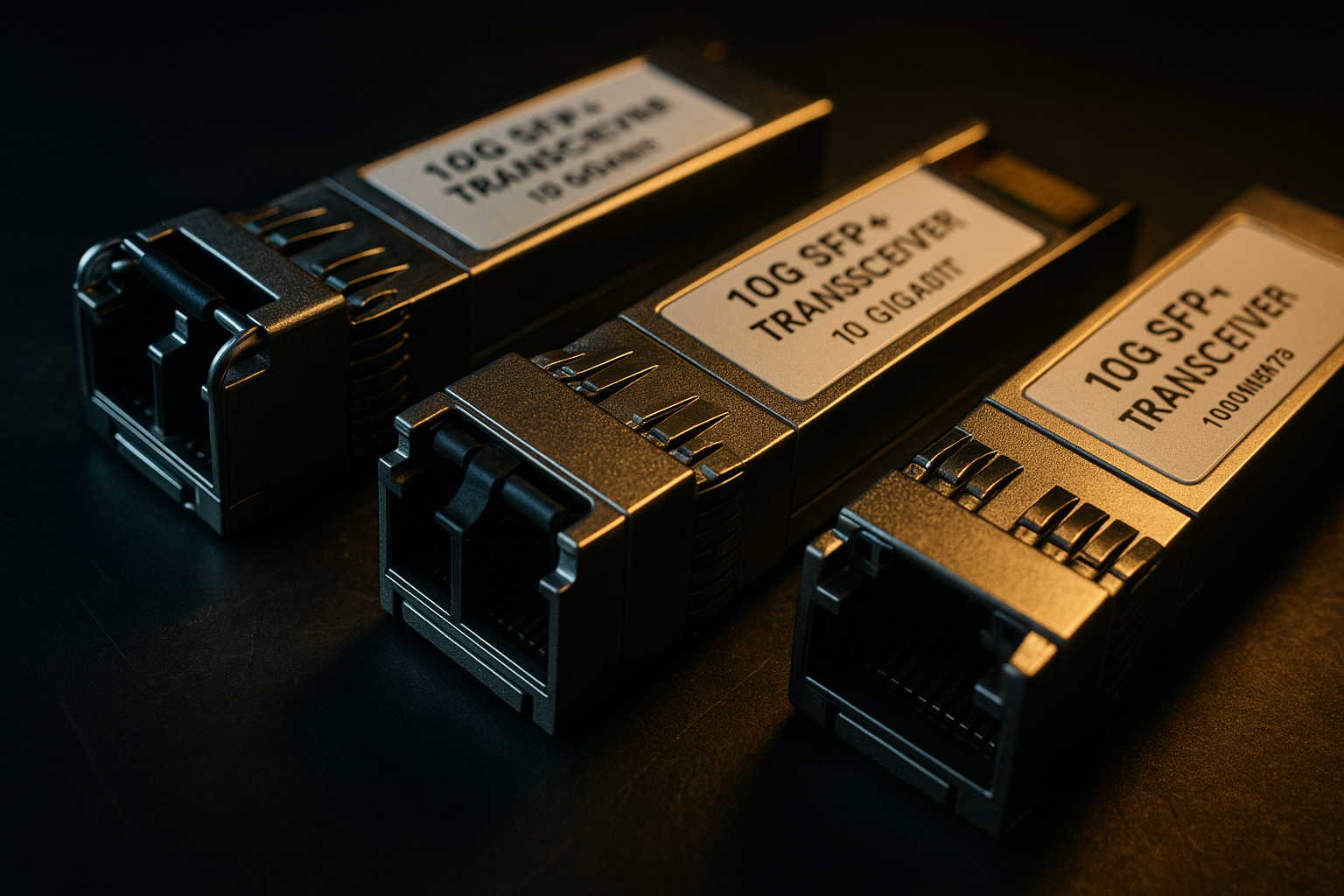
In a typical data center, you can assume stable temperature, controlled airflow, and short patch runs. In renewable energy networks, you often have outdoor fiber runs, cabinets with poor thermal design, and power quality issues from inverters and motor drives. Fiber transceivers used as SFP/SFP+ or SFP28 in switch uplinks must tolerate both optical budget limits and harsh operating conditions. The key is aligning three layers: the physical layer (wavelength, reach, fiber type), the electrical layer (host interface and compliance), and the operational layer (DOM, temperature, and monitoring).
Start with Ethernet requirements from IEEE 802.3 for the relevant physical standards, then validate the vendor module’s implementation details against your switch’s transceiver compatibility list. For example, 10GBASE-SR commonly expects 850 nm optics over multimode fiber, while 10GBASE-LR uses 1310 nm over single-mode. References like IEEE 802.3 standards and switch vendor documentation matter because some platforms are picky about DOM behavior and module vendor IDs.
Core transceiver specs that decide link stability
Engineers often buy optics by “data rate and distance,” but renewable energy optics selection needs more nuance. In practice, you must check wavelength, reach, fiber core size (MMF), connector type, transmit power, receiver sensitivity, and module power. Those specs determine your optical link margin, which then determines whether your link survives seasonal temperature drift and connector micro-bends.
Spec-to-network mapping you can actually use
Use the optical budget to confirm margin: transmitter launch power minus fiber attenuation minus connector/splice losses must still exceed receiver sensitivity with headroom. If you are using multimode, confirm whether your plant fiber is OM3 or OM4 and match it to the module’s supported reach. If you are using single-mode, confirm the fiber is truly OS1/OS2 compatible and whether the link expects 1310 nm or 1550 nm behavior.
| Key spec | Typical value to look for | What it affects in the field | Example module |
|---|---|---|---|
| Data rate | 10G, 25G, 40G, 100G | Host port compatibility and timing margin | Cisco SFP-10G-SR (10G) |
| Wavelength | 850 nm (SR), 1310 nm (LR) | Fiber type match and dispersion tolerance | Finisar FTLX8571D3BCL (850 nm class) |
| Reach | Up to 300 m (MMF) or 10 km (SMF) depending on standard | Optical budget and allowable splice counts | FS.com SFP-10GSR-85 (850 nm, short reach) |
| Connector | LC/SC; UPC vs APC (where applicable) | Return loss and reflection sensitivity | LC duplex in most SR modules |
| DOM support | Yes (Digital Optical Monitoring) | Real-time diagnostics and proactive maintenance | Common DOM for modern SFP/SFP+ |
| Operating temp | 0 to 70 C vs -40 to 85 C (extended) | Laser bias stability and receiver sensitivity drift | Industrial/extended-temp optics preferred outdoors |
| Power (module) | ~0.5 to 3 W depending on form factor | Cabinet heat load and PSU margin | 10G SR SFP typically lower than 25G/100G |
In my own deployments, the “reach” line item was rarely the real problem; the hidden issue was optical margin erosion from additional outdoor splices and connector rework after maintenance. If you cannot measure end-to-end loss with an OTDR or at least a certified loss tester, assume less margin than the datasheet maximum and design for conservative budgets.
Choosing wavelength and fiber type for solar and wind architectures
Renewable energy optics are usually deployed in two patterns: intra-substation links (often shorter, can use multimode) and between buildings or remote turbine control cabinets (often longer, usually single-mode). Solar sites may place combiner boxes and inverters across a large field, while wind farms add repeating nodes at each turbine. Your transceiver choice should follow the physical topology and the fiber plant you already have.
Multimode (MMF) when you want faster installation
For shorter runs inside controlled enclosures, 850 nm SR optics over OM3/OM4 multimode fiber are popular because they are cost-effective and easy to terminate with LC connectors. The tradeoff is that MMF links are more sensitive to launch conditions and connector cleanliness. In outdoor cabinets, dust and moisture ingress can worsen insertion loss, so you still need disciplined cleaning and protective caps.
Single-mode (SMF) when you want long-distance resilience
When you have long spans, use 1310 nm LR optics or higher-reach options that match your distance and dispersion constraints. Single-mode generally tolerates more variation in bending and splicing because the core is narrower and the modal behavior is simpler. For wind farms, where vibration and temperature cycling can slightly shift fiber positions, SMF is often the safer baseline.
Pro Tip: In outdoor cabinets, treat DOM readings as an early warning system. If you monitor optical power and observe a gradual drift of transmit power or receive signal over weeks, you can schedule connector cleaning or re-termination before the link drops. Many field teams only troubleshoot after alarms; proactive DOM trend checks catch the problem while the optical link still has margin.
Selection criteria and decision checklist (use this in design reviews)
When you are validating renewable energy optics for an actual bill of materials, the best results come from a repeatable checklist. Here is the order engineers typically weigh it, based on field issues I have seen and vendor documentation patterns.
- Distance and optical budget: confirm fiber type (OM3/OM4 or OS1/OS2), count splices, and estimate worst-case loss.
- Wavelength and Ethernet physical standard: match SR/LR expectations to your plan and to IEEE 802.3 behavior.
- Switch compatibility: verify the exact model and transceiver support list; some hosts reject non-matching DOM implementations.
- DOM and monitoring requirements: ensure digital optical monitoring is supported and readable by your management stack.
- Operating temperature: choose extended or industrial grade for outdoor enclosures; validate against the transceiver datasheet, not just the switch rating.
- Connector and cleaning plan: LC duplex is common, but confirm whether you have UPC vs APC practices and whether you can maintain cleanliness.
- Vendor lock-in risk: consider third-party modules, but require proven compatibility and define replacement testing procedures.
- Power and heat budget: estimate cabinet thermal load so the switch and optics do not exceed safe operating conditions.
Real-world deployment scenario you can benchmark
In a 3-tier renewable energy network at a wind farm with 48 turbines, each turbine had a local industrial switch feeding a fiber uplink to a central aggregation cabinet. We used 10GBASE-LR over single-mode for uplinks averaging 6.5 km between turbine control and the aggregation point, with roughly 12 total splices across the route. The cabinets were rated for outdoor use but experienced seasonal swings from -20 C to +55 C, so we selected extended-temperature optics and enabled DOM polling every 5 minutes. After commissioning, we tracked receive power and flagged one degrading link within two weeks; the root cause was a connector that had been re-terminated during a storm cleanup.
Common mistakes and troubleshooting tips from the field
Renewable energy optics issues are rarely “mysterious.” They usually trace back to a measurable mismatch or an operational process gap. Below are frequent failure modes with root causes and practical fixes.
Link flaps after temperature changes
Root cause: optics are rated only for standard temperature ranges, or the cabinet airflow causes uneven thermal gradients that affect laser bias currents. Solution: replace with extended-temperature modules and add a thermal check (IR scan or sensor logging) to confirm the optics cage stays within datasheet limits.
Works on day one, fails after maintenance or storms
Root cause: connector contamination or micro-scratches introduced during re-termination, leading to rising insertion loss. Solution: enforce a cleaning workflow (lint-free wipes, approved alcohol, inspection microscope) and verify with a loss tester or OTDR trace before declaring the problem solved.
Host switch rejects third-party modules or shows “unsupported transceiver”
Root cause: DOM implementation differences, missing compliance signals, or incompatibility with the switch’s transceiver acceptance logic. Solution: validate against the switch vendor’s supported optics list for that exact platform, and require a burn-in test that includes DOM polling and link stability under load.
Multimode link underperforms despite “within reach” specs
Root cause: wrong fiber type (OM2 vs OM3), legacy launch conditions, or excessive patch cord length and patch panels. Solution: verify fiber grade and measure end-to-end loss; if uncertain, shift to single-mode for uncertain segments.
Cost and ROI note: what to budget beyond the unit price
In the market, 10G SR SFP modules often land in the low tens of dollars for third-party options, while OEM-branded modules can cost more, sometimes 2x to 3x depending on the switch ecosystem. Extended-temperature optics generally cost a bit more, but the ROI usually comes from reduced truck rolls and fewer outages during seasonal extremes. Total cost of ownership includes monitoring setup (DOM polling), spares strategy, and the labor cost of connector rework.
From a risk perspective, if your site has limited access windows (weather-driven), it is often cheaper to stock validated spares than to gamble on lowest-cost optics. I recommend defining an acceptance test: insert module, verify link up time, confirm DOM values stay stable over at least 8 to 24 hours, and run traffic to ensure no CRC errors under sustained load.
FAQ: renewable energy optics for real procurement and commissioning
What wavelength should I choose for solar plant internal links?
If your runs are short and you have known OM3 or OM4 multimode fiber, 850 nm SR is a common fit. If you are unsure about fiber grade or need longer reach across buildings, prefer 1310 nm LR on single-mode.
Do I need DOM for renewable energy networks?
DOM is strongly recommended because it enables trend-based maintenance. In practice, DOM lets you detect optical power drift or receive sensitivity changes before link failure, which is valuable when access is weather-dependent.
Can I use third-party transceivers?
Yes, but compatibility varies by switch model and software version. Validate with the exact host platform, confirm DOM readability, and run a stability test before rolling into production.
How do I confirm distance claims beyond datasheet reach?
Measure end-to-end loss with a certified tester or OTDR and account for splices, connectors, and patch cords. Then apply conservative margin; do not assume you can operate at the datasheet maximum.
What operating temperature should I plan for outdoors?
Use the transceiver datasheet operating range and choose extended or industrial grade for outdoor cabinets. Also check the switch and the optics cage thermal behavior under real airflow and enclosure conditions.
What is the fastest way to troubleshoot a down link?
First check link counters and DOM values, then verify fiber direction, connector cleanliness, and whether the module type matches the port standard. If you have a spare, perform a controlled swap to isolate whether the issue is optics vs fiber plant.
Renewable energy optics selection is about aligning optical budgets, host compatibility, and field operating conditions so your links stay stable through seasonal extremes. If you want a related next step, review fiber optic transceiver compatibility testing to standardize your acceptance tests and reduce commissioning surprises.
Author bio: I build and deploy fiber-based networks for industrial and renewable sites, focusing on fast validation and measurable reliability. I partner with field teams to turn optics and switch specs into practical acceptance tests that reduce downtime.
