
When a major concert or sports event turns your network into a high-speed soap opera, latency spikes and throughput collapses faster than a bad drum fill. This article shows how optical infrastructure can drive performance enhancement for 5G event operations—helping network teams keep low-latency sessions stable for fans, staff, and live streaming. It is aimed at architects, field engineers, and operations leads who need decisions that survive real deployments, not just lab graphs.
Why 5G event networks need performance enhancement from fiber
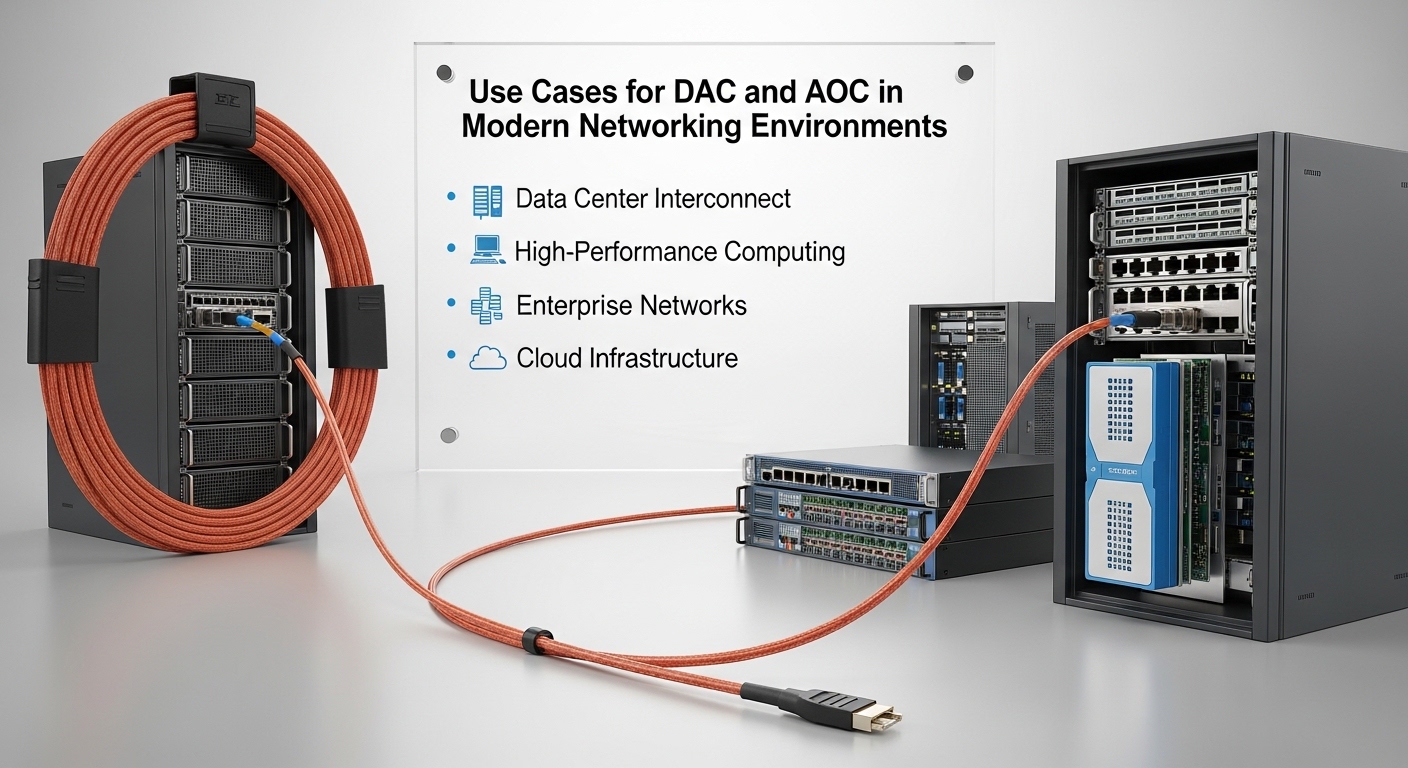
At event scale, 5G traffic is bursty: ticketing apps, live video uploads, and crowd analytics all arrive in waves. That means your backhaul and transport layer must handle sudden increases in data rate while preserving timing—especially for mobile user plane traffic and edge application flows. Optical links help because they reduce attenuation and electromagnetic interference compared with copper, and they scale in bandwidth per port without requiring a forklift upgrade.
In practice, the bottleneck is often the aggregation layer: leaf switches feeding mobile edge compute, video ingest, and Wi-Fi offload. If you run out of optics reach, oversubscribe too aggressively, or choose modules with weak thermal behavior, you get errors, retransmissions, and jitter. The result is a “feels slow” user experience even when your average throughput looks okay.
What “event performance” really means (measurable targets)
Teams typically track: latency (p50 and p95), packet loss, jitter, and throughput during peak bursts. For transport, engineers also watch optical layer counters like CRC errors, FEC corrected events, and link flaps. A well-designed optical segment reduces bit errors and keeps the transceiver within its specified operating envelope.
For reference, Ethernet transport behavior is defined under IEEE 802.3 for physical layers, while optical performance details come from vendor datasheets and module specifications. [Source: IEEE 802.3 Standard Overview]
Use case: Optical infrastructure to stabilize a 5G event backhaul
Imagine a 3-tier event setup: temporary cell sites feed a small edge cluster, which then connects to an upstream transport core. During a stadium show, you deploy two 5G radio units per sector and aggregate traffic at two ToR switches. Each ToR uplinks to an aggregation switch, and the aggregation switch connects to a transport router that also handles live streaming.
In a real-world style deployment, you might run 48-port 10G ToR switches with 4 uplinks at 10G each, plus additional 25G or 40G uplinks for video ingest. The optics choice matters because reach and thermal stability affect whether links stay up through generator noise, temperature swings, and frequent power cycles for temporary gear.
For example: you select short-reach optics for distances under 100 meters, and switch to medium-reach for trench runs to the edge rack. You also enable link monitoring with DOM telemetry to catch optical power drift before it becomes packet loss. This is where performance enhancement becomes practical: fewer retransmissions, steadier throughput, and faster convergence after transient congestion.
Technical specifications comparison (what engineers actually check)
Below is a compact comparison of common 10G short-reach and 10G medium-reach optics used for event backhaul. Values vary by vendor and exact part number, so verify against the datasheet for your switch compatibility list.
| Module type | Wavelength | Typical reach | Data rate | Connector | DOM / telemetry | Operating temp range | Representative part examples |
|---|---|---|---|---|---|---|---|
| SFP+ SR (multimode) | ~850 nm | Up to 300 m (with OM3), often less in real builds | 10G | LC | Usually supported (check switch support) | Commercial often 0 to 70 C; industrial options lower/higher | Cisco SFP-10G-SR, Finisar FTLX8571D3BCL, FS.com SFP-10GSR-85 |
| SFP+ LR (singlemode) | ~1310 nm | Up to 10 km | 10G | LC | Usually supported (check switch support) | Commercial or extended depending on vendor | Common vendor LR variants; verify exact wavelength and DOM behavior |
| SFP+ 10G ZR (singlemode) | ~1550 nm | Up to 80 km (typical) | 10G | LC | Usually supported | Vendor dependent; often extended | ZR modules used for long backhaul segments |
Design choices that drive performance enhancement during peak demand
Optical performance enhancement is not just “buy faster optics.” It is a bundle of decisions: reach class, fiber type (OM3 vs OM4 vs singlemode), connector cleanliness, transceiver temperature tolerance, and how the switch handles optics negotiation. During an event, you also need operational resilience: quick swapping, consistent module behavior, and monitoring that alerts before failure.
Fiber and reach planning: match distance to the right optical class
For short runs between racks, multimode SR optics (850 nm) often win on cost and availability. For longer trench runs or when you need more margin, singlemode LR/ZR optics reduce attenuation and maintain signal quality. Do not assume “the label says 300 m” means your event build will behave that way—connector loss, patch cord quality, and splices can eat your margin quickly.
Budgeting for oversubscription and error control
Even perfect optics cannot fix oversubscription where your uplinks are consistently saturated. Engineers should model expected peak utilization: for example, if uplink capacity is 4 x 10G and you plan for 2.5:1 oversubscription, confirm that peak user traffic plus streaming ingest does not exceed practical throughput. Then, ensure your Ethernet physical layer uses appropriate FEC behavior where supported, and confirm the switch platform’s optics compatibility.
Pro Tip: During event tests, watch not just link up/down events but the optical receive power and error counters via DOM. A link can remain “up” while the transceiver is quietly trending toward higher corrected errors, and that trend often correlates with later packet loss during thermal peaks.
Selection criteria checklist for optical links in 5G event deployments
Here is the ordered checklist field teams use when selecting optics for performance enhancement under time pressure. It is practical, because the wrong module can work in one rack and misbehave in another due to temperature, connector cleanliness, or switch firmware requirements.
- Distance and fiber type: Measure end to end, include patch cords, jumpers, and expected splice loss. Confirm OM3/OM4 or singlemode type.
- Data rate and interface form factor: SFP+, SFP28, QSFP+, QSFP28, QSFP-DD; ensure the switch port supports the exact speed and breakout mode.
- Switch compatibility and optics vendor behavior: Validate against the switch’s optics list; some platforms enforce vendor or revision checks.
- DOM support and telemetry mapping: Confirm the switch reads DOM fields (Tx power, Rx power, temperature) and that monitoring tools can ingest them.
- Operating temperature range: Temporary outdoor enclosures can swing dramatically; choose modules with appropriate temperature specs and test in the expected ambient range.
- Budget and TCO: Compare OEM vs third-party modules, but include replacement logistics and downtime costs.
- Vendor lock-in risk: If the event uses gear from multiple vendors, prefer interoperability and verify with staged tests.
Common pitfalls and troubleshooting tips (because reality loves plot twists)
Even seasoned teams run into failure modes during events. Below are concrete mistakes, root causes, and what to do next. If you fix these early, your performance enhancement plan stops being theoretical and starts being measurable.
Pitfall 1: “It links up, so the optics must be fine.”
Root cause: The optical link is up but receiving power is marginal, leading to elevated corrected errors or intermittent packet loss. This can happen when connector endfaces are contaminated or when fiber loss is higher than expected due to patch cord quality.
Solution: Clean connectors with approved fiber cleaning tools, verify with an optical power meter, and re-check DOM Rx power. If you see rising FEC corrected counts during warm-up, replace the suspect jumper or module.
Pitfall 2: Using a short-reach multimode module for a longer-than-planned run
Root cause: The run exceeds the real-world loss budget because of bends, splices, and patch cords. Multimode performance can degrade quickly with poor cabling practices.
Solution: Re-measure distance and loss, confirm fiber grade (OM3 vs OM4), and switch to a singlemode LR module for the longer segment. In event builds, it is cheaper to upgrade the optics class than to chase intermittent errors during peak crowd moments.
Pitfall 3: Temperature surprises inside temporary enclosures
Root cause: Modules are rated for a specific operating temperature range, but event racks can exceed it when enclosed and powered from generators with poor airflow. Elevated temperature can increase laser output drift and error rates.
Solution: Add airflow planning (fans or rated cooling), verify module temperature via DOM, and test under “worst case” conditions before doors open. If you see module temperature climbing near the upper spec, redesign the enclosure airflow.
Pitfall 4: Switch firmware optics behavior and DOM mismatches
Root cause: Some switches interpret DOM differently by vendor, and certain firmware versions enforce stricter optics validation. That can cause link flaps or monitoring gaps.
Solution: Stage-test optics in the exact switch model and firmware version you will use. If telemetry is required for proactive monitoring, validate that your monitoring platform reads the DOM fields you care about.
Cost and ROI: what performance enhancement costs, and what it saves
Optics pricing varies widely by speed, reach, and vendor. Typical street ranges for 10G optics can be roughly: OEM modules often cost more (commonly multiple tens to over a hundred dollars each depending on reach and brand), while third-party modules may be lower but carry higher compatibility and failure variance. For event budgets, the bigger ROI lever is not unit price—it is reducing downtime and reducing the labor hours spent debugging intermittent transport issues.
Consider TCO: if a marginal link causes a 30-minute service degradation during peak, that can mean lost revenue, SLA penalties, and reputational damage. By contrast, spending extra on the correct reach class, cleaner fiber runs, and temperature-appropriate optics can prevent a failure cascade across the backhaul.
Also factor power and cooling. Optical transceivers generally have lower power per bit than older copper designs, which helps when you are running on constrained generator capacity. The “ROI spreadsheet” usually gets won by reliability and fewer truck rolls, not by the optics line item alone.
FAQ
What optical type gives the best performance enhancement for short event rack distances?
For distances under typical multimode reach budgets, SFP+ or SFP28 SR optics at 850 nm on OM3/OM4 fiber are often the best cost-performance option. The key is to verify your real link loss with measurements and to keep connectors clean to avoid hidden margin loss. If you cannot guarantee cabling quality, prefer singlemode LR for extra optical margin.
Will third-party optics always work in enterprise switches?
No. Many switches support third-party optics, but some enforce compatibility checks or behave differently with DOM telemetry. The safe approach is staged testing with the exact switch model and firmware version you will deploy. If the event requires reliable monitoring, test that telemetry fields populate correctly in your NMS.
How do I confirm performance enhancement is real during the event?
Measure p50 and p95 latency, packet loss, and throughput during peak windows, then correlate with optical counters like CRC errors and FEC corrected events. Also log DOM telemetry for Rx power and temperature and compare behavior across time. If you see reduced retransmissions and steadier jitter, you have evidence, not vibes.
What is the most common cause of optics-related link flaps?
Connector contamination and marginal optical power are top culprits. Another frequent cause is temperature stress in temporary enclosures, where module temperature climbs above what the environment supports. Clean, measure, and validate thermal conditions before you assume the optics are defective.
Should I prioritize reach or speed when upgrading an event network?
Both matter, but reach usually prevents the “it works until it does not” failure mode. Speed upgrades help throughput, yet if the link budget is thin, higher speeds can expose problems faster. A balanced approach is to match speed to the switch port capabilities and choose optics reach that provides comfortable margin.
Where can I find authoritative optical and Ethernet physical layer guidance?
Start with IEEE Ethernet physical layer references for baseline behavior and Ethernet standards. Then rely on vendor datasheets for exact wavelength, reach, DOM support, and temperature ranges. For operational expectations, consult reputable tech media and vendor documentation tied to your specific module and switch model. [Source: IEEE 802 Working Group]
Expert author bio: I have deployed optical backhaul for live events and enterprise edge networks, running link budget checks, DOM telemetry validation, and staged optics testing under real temperature and congestion swings. I write from the perspective of what survives production: measurable performance enhancement, compatibility reality, and ROI that does not require wishful thinking.
