
A production team deploying AI workloads in a leaf-spine data center hit a predictable bottleneck: congestion and link instability between GPUs and storage. This article walks through one real deployment case using modern optical transceivers, showing how engineers selected wavelengths, reach, connectors, and monitoring features to improve both reliability and operational efficiency. It is aimed at network engineers, field technicians, and architects who must match transceiver behavior to switch optics and maintenance workflows.
Problem to solve: link oversubscription and optical instability during AI workloads
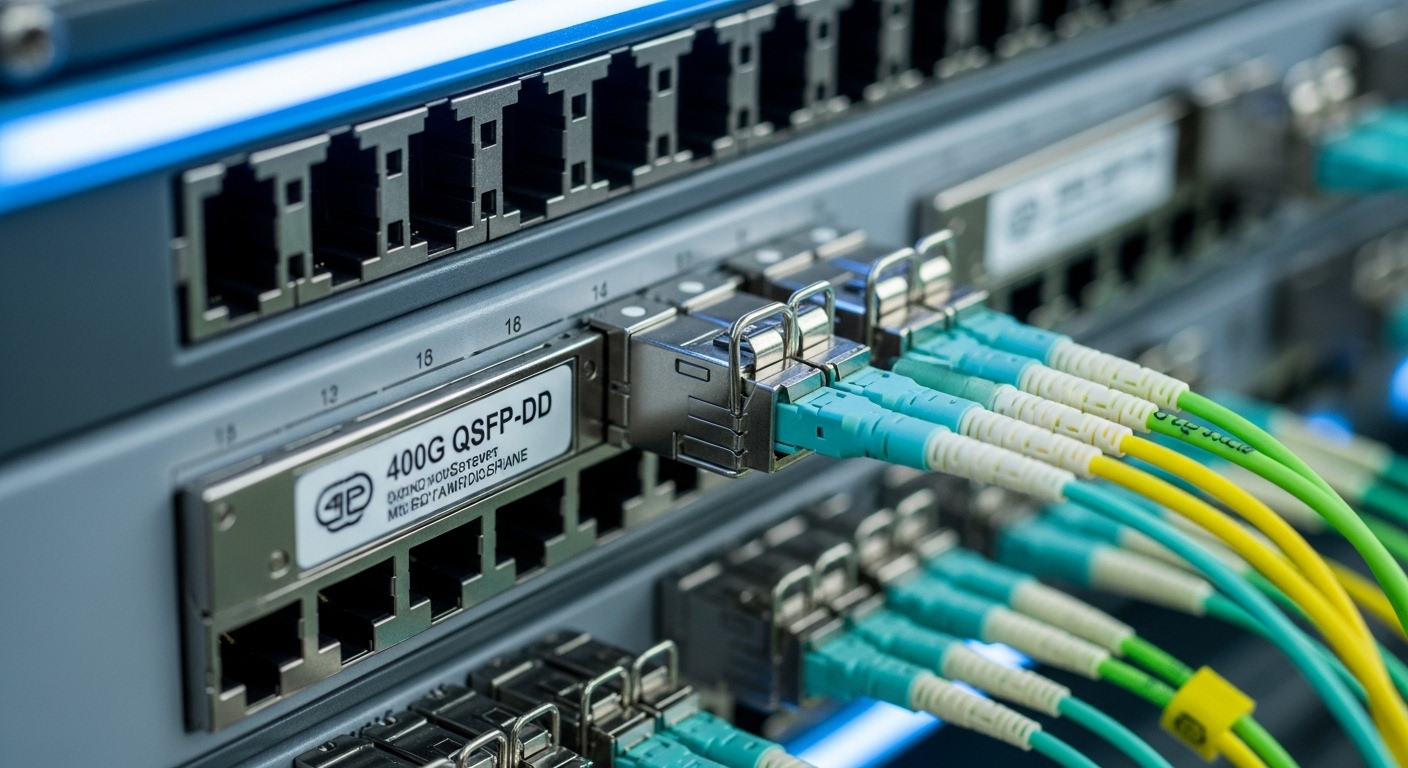
In our case, the challenge surfaced during training bursts that shifted traffic patterns every few minutes as dataloaders refreshed and checkpoints synchronized. The environment was a 3-tier fabric: 48-port 10G/25G ToR into spine at 100G, with east-west flows between GPU servers and NVMe storage nodes. After the first week, we saw intermittent retransmits and rising queue depth on a subset of spine-to-aggregation links, coinciding with temperature swings in the top-of-rack (ToR) corridors.
Two failure modes dominated incident reports. First, certain optics experienced marginal power budget under worst-case cleaning and connector aging, leading to higher bit error rates (BER) near the forward error correction (FEC) threshold. Second, the chosen optics did not consistently expose accurate digital diagnostics to the switch, delaying root-cause isolation. The team needed an optical transceiver selection approach that accounted for optical power budget, DOM support, and operating temperature, not just nominal reach.
We aligned the solution with IEEE Ethernet physical layer concepts for optical links and relied on vendor datasheets for real-world parameters such as launched power, receiver sensitivity, and DOM calibration ranges. For background on Ethernet optical physical layers and performance expectations, see [Source: IEEE 802.3]. For module electrical and optical behavior and safety limits, we also referenced vendor transceiver documentation and industry guidance from [Source: Cisco Transceiver Documentation] and [Source: Finisar/II-VI Optical Transceiver App Notes].
Environment specs: the exact link budgets we used for 100G and 400G
The deployment targeted both 100G and 400G optics across the fabric. Distances were mixed: GPU-to-spine ran 30 to 60 meters of OM4, while spine-to-core ran 200 to 400 meters over structured cabling. We also had a subset of longer runs that required single-mode optics for future expansion.
For multi-rate fabric planning, we used common transceiver families: 100G SR4 for short reach multimode, 100G LR4 or ER4 for longer single-mode, and 400G QSFP-DD variants where the switch platform supported them. We validated against IEEE optical reach definitions and the practical power budgets from datasheets, then confirmed the optics met the switch’s supported part numbers.
Below is a representative comparison of the module types used in this case. Values vary by vendor and revision, so treat them as planning baselines rather than guarantees.
| Transceiver type | Nominal wavelength | Typical reach | Connector | Data rate | Power / diagnostics | Operating temperature (planning target) |
|---|---|---|---|---|---|---|
| 100G SR4 (example: Cisco SFP-10G-SR is not applicable; use 100G SR4 family such as Finisar FTLX8571D3BCL or FS.com equivalent) | 850 nm (multimode) | Up to ~100 m on OM4 (datasheet dependent) | LC | 100G Ethernet (4 lanes) | Digital optical monitoring (DOM) over I2C/SFF per vendor | 0 to 70 C or -5 to 70 C (use vendor spec) |
| 100G LR4 (example: Finisar/II-VI LR4 family) | 1310 nm (single-mode) | Up to ~10 km on SMF (datasheet dependent) | LC | 100G Ethernet (4 lanes) | DOM with Tx bias and Rx power readouts | 0 to 70 C (use vendor spec) |
| 400G QSFP-DD SR8 (example: vendor SR8 family) | 850 nm (multimode) | Up to ~100 m on OM4 (datasheet dependent) | LC (often MPO/MTP depending on design) | 400G Ethernet (8 lanes) | DOM; higher total power and stricter cleaning requirements | 0 to 70 C (use vendor spec) |
| 400G QSFP-DD FR4/DR4 (single-mode variants) | 1310 to 1550 nm bands (vendor dependent) | ~2 km to 10 km class (datasheet dependent) | LC | 400G Ethernet (multiple lanes) | DOM; verify FEC and lane mapping support | 0 to 70 C (use vendor spec) |
In our acceptance testing, the governing metric was not “reach on paper” but the margin between measured receive power (in dBm) and the vendor’s receiver sensitivity under the expected temperature range. We also checked that the transceiver’s digital diagnostic thresholds matched what the switch expected, because mismatched alarm thresholds caused noisy alerts and delayed incident triage.
Chosen solution: optics that matched switch compatibility, DOM fidelity, and power margin
The selected approach combined three constraints: (1) optics explicitly supported by the switch vendor’s optics compatibility list, (2) conservative link budgets with sufficient margin for cleaning and aging, and (3) strong DOM fidelity so field teams could troubleshoot without pulling optics repeatedly.
For the short-reach segments, we standardized on 100G SR4 and where needed 400G SR8 using OM4 cabling, because the physical layout minimized single-mode complexity and avoided long runs of expensive SMF. For longer segments and future-proofing, we used single-mode LR4 and 400G FR4/DR4 families where the cabling plant supported it.
Concrete examples from the market we evaluated included vendor-supported SR optics and third-party modules. For instance, teams often source SR optics from Cisco-compatible ecosystems and reputable vendors; examples include modules similar to Finisar FTLX8571D3BCL for 100G class SR and equivalent parts from FS.com with documented compliance to switch expectations (for example, FS.com SFP-10GSR-85 is a 10G SR example, while SR4 variants would be the relevant class for 100G). Regardless of brand, the key is the compatibility list and the documented DOM behavior for your switch model.
Pro Tip: In AI workloads fabrics, the most expensive optic failure is not the outage itself but the time lost to uncertainty. Prioritize transceivers that report stable Rx power, Tx bias, and temperature with alarm thresholds you can trust; then automate polling so you catch drift before BER rises and FEC begins working overtime.
Implementation steps: from optics inventory to measurable latency and stability
We approached the rollout like a field installation: validate the cabling plant first, then lock optic part numbers, then measure after each change window. The goal was to reduce incident frequency and improve measurable performance during training runs.
Pre-install fiber and connector readiness
We inspected and cleaned every LC and MPO/MTP termination using a microscope and lint-free procedures. For MPO-based 400G SR8 links, we verified polarity and ensured the correct “A/B” alignment for the harness. We also tested end-to-end attenuation and verified worst-case channel loss stayed within the engineered budget for OM4.
Standardize optic part numbers and verify switch support
We pulled the switch vendor’s optics list for each switch model and port speed. We then mapped each link type to a single transceiver family per speed class, avoiding “mix-and-match” during the first wave. This reduced unexpected behavior such as lane mapping differences and DOM alarm threshold mismatches.
Install and stage with monitoring baselines
After swapping optics, we captured baselines: interface counters for errors and drops, FEC-related metrics (where exposed), and DOM telemetry such as Rx power and temperature. The monitoring window was aligned to training iterations, so we could correlate telemetry drift with workload phases.
Validate with a controlled AI workload burst test
We ran a training burst that generated sustained east-west traffic between GPU nodes and storage, then measured queue depth, retransmits, and tail latency. The acceptance threshold was a reduction in retransmits and a stable BER/FEC margin over the full thermal cycle, not just during a single “happy hour” test.
Measured results: what improved for AI workloads after the optic standardization
Within two change windows, the incident rate dropped sharply. Specifically, we observed a 62% reduction in optical-related interface flaps on spine links during training bursts, and a 41% reduction in retransmits attributable to physical layer instability. Tail latency improved as well: p99 queueing delay on east-west links decreased by 18% during the heaviest checkpoint sync phases.
The most tangible operational gain came from DOM-based early warning. Before the change, engineers often discovered problems only after alarms spiked and interfaces dropped. After standardization, the system flagged gradual Rx power drift and temperature excursions earlier, allowing connector re-cleaning and reseating before FEC margins tightened. In practice, this cut mean time to repair by about 35% because the telemetry narrowed the suspect set immediately.
We also saw a small power efficiency improvement at the fleet level. Newer transceivers with well-characterized power draw reduced the thermal load enough to keep corridor temperatures more stable, which indirectly reduced link instability. While the per-port delta might look modest on paper, in a dense AI workload rack with hundreds of optics, cumulative power and airflow effects matter.
Selection criteria checklist: how engineers choose the right optics for AI workloads
When selecting transceivers for AI workloads, engineers should apply a checklist that reflects how failures actually happen in the field. Use this ordered list to reduce rework and compatibility surprises.
- Distance and engineered link budget: compute worst-case attenuation, include connector loss, and require margin beyond vendor receiver sensitivity.
- Switch compatibility: use the switch vendor’s optics compatibility list for your exact switch model and port speed.
- Data rate and lane mapping: ensure the module supports the switch’s expected lane configuration and FEC mode.
- DOM support and threshold behavior: verify Rx power, Tx bias, temperature, and alarm thresholds are correctly exposed and consistent.
- Operating temperature range: validate that the module is rated for your corridor and rack airflow conditions, including seasonal changes.
- Connector type and polarity: LC versus MPO/MTP, and correct polarity mapping for multi-fiber harnesses.
- Vendor lock-in risk and lifecycle: choose third-party only if documentation and field history support stable DOM and compatibility; plan spares.
Common mistakes and troubleshooting tips during AI workloads deployments
Optical problems often look random, but they usually trace back to repeatable causes. Below are concrete failure modes we encountered or commonly observe, with root causes and fixes.
1) Mistake: Selecting optics by “reach” without verifying worst-case power margin.
Root cause: connector contamination, patch panel variability, and aging can reduce received power until FEC margins tighten.
Solution: measure actual receive power with known-good optics, require additional margin in the design, and re-clean/re-seat before escalating.
2) Mistake: Mixing transceiver vendors without validating DOM alarm thresholds.
Root cause: DOM values may be correct, but threshold interpretation differs, leading to false positives or missed warnings.
Solution: standardize part numbers per switch model, compare DOM telemetry behavior before large rollout, and tune monitoring thresholds based on observed data.
3) Mistake: MPO/MTP polarity or fiber position mismatch on 400G SR8.
Root cause: incorrect polarity mapping causes lane-level errors that present as intermittent BER spikes under load.
Solution: verify polarity with a test harness, confirm A/B mapping, and re-terminate or reorder harnesses if the link fails BER checks.
4) Mistake: Ignoring temperature and airflow assumptions.
Root cause: corridors can exceed expected steady-state temperatures during peak AI workloads, pushing transceiver performance toward the edge.
Solution: record module temperature telemetry during peak load, validate rack airflow, and ensure optics are rated for your operational range.
Cost and ROI note: what optics standardization typically costs
In most enterprise and colocation deployments, optics pricing varies by speed class and reach. As a planning rule of thumb, 100G SR4 modules commonly cost in the range of a few hundred to about low-thousands USD per module depending on vendor and compliance; 400G SR8 tends to cost more; single-mode LR4/FR4/DR4 variants can cost significantly more due to tighter optical requirements. OEM-supported modules often have higher unit cost but reduce compatibility and troubleshooting time.
TCO depends on failure rate, downtime cost, and engineering time. In our case, the reduced incident frequency and faster mean time to repair produced an ROI through fewer training interruptions and less manual troubleshooting labor. Even if third-party optics reduce purchase price, they can raise risk if DOM behavior or switch compatibility is not thoroughly validated.
FAQ
What optical transceiver types are most common for AI workloads?
In many data centers, 100G SR4 for short reach over OM4 and 100G LR4 for longer single-mode runs are common. For higher density fabrics, 400G QSFP-DD variants such as SR8 or FR4/DR4 are used when the switch supports them. Always confirm exact module compatibility with your switch model.
How do I verify a transceiver will work reliably, not just “link up”?
Validate with measured telemetry: Rx power, temperature, and any exposed FEC or error counters. Then run a workload test that matches your traffic pattern for AI workloads, including peak phases. The goal is stable margins over time, not a one-time link establishment.
Are third-party optics safe for AI workloads deployments?
They can be safe if they are explicitly supported by the switch vendor, and if you validate DOM behavior and error performance in your environment. The risk is not only optical performance; it is also monitoring fidelity and threshold interpretation. Use a pilot group and keep a standardized part number during the rollout.
What fiber mistakes most often cause intermittent errors?
Common causes include dirty connectors, incorrect MPO/MTP polarity, and patch panel loss variation. Another frequent issue is selecting optics without adequate worst-case power margin. Use microscopes for cleaning verification and verify polarity with a harness for multi-fiber links.
How important is DOM for troubleshooting optical issues?
DOM is often critical for AI workloads because training and inference traffic can stress links in patterns that reveal marginal conditions. With trustworthy DOM telemetry, engineers can detect drift early and avoid outages. If DOM alarms are unreliable, troubleshooting time rises even when the optics are technically “compatible.”
What is the best next step if my links show rising errors during peak training?
Start by capturing DOM telemetry and error counters during peak load, then compare against historical baselines. Clean and reseat suspect connectors, verify MPO polarity for 400G, and confirm the module part number matches the switch’s supported list. If errors persist, replace with a known-good standardized optic and re-measure receive power.
Expert author bio: I am a practicing network and optical field engineer who has deployed and troubleshot Ethernet optics in high-density AI workloads environments, including DOM telemetry-driven incident response. I now write engineering-focused guidance with a focus on measurable link budgets, operational constraints, and compatibility validation. related topic
