
IoT deployments fail in predictable ways: sensors go quiet, gateways reset, and fiber links negotiate “up” but never pass traffic. This article helps engineers and integrators choose the right optical transceivers for field-ready IoT architectures, from cabinet-mounted gateways to short-reach micro data centers. You will get a head-to-head comparison across common SFP and 10G module classes, plus practical troubleshooting based on link budgets, DOM telemetry, and switch compatibility. Updated: 2026-05-03.
IoT link design: SFP short reach vs 10G for gateway backhaul
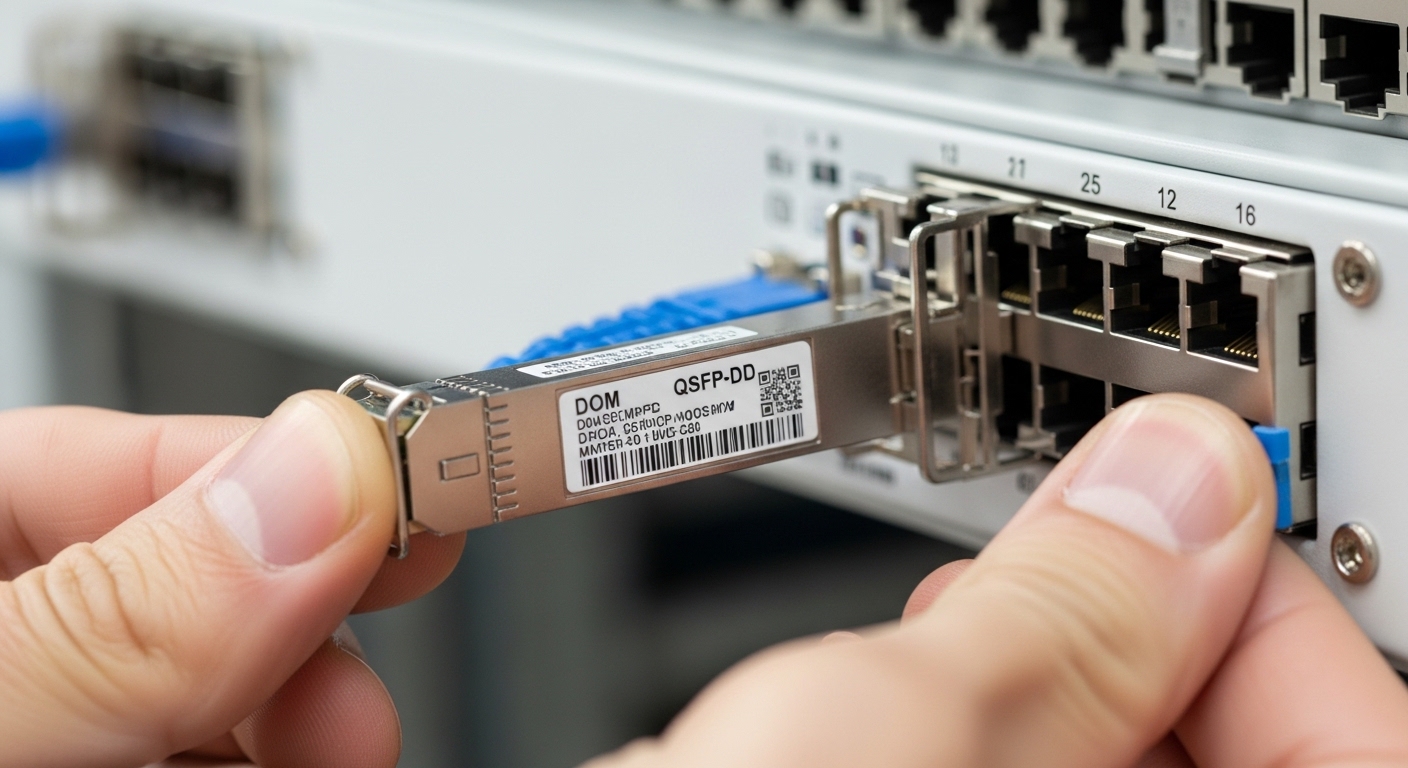
In IoT environments, the “last mile” can be copper from sensors, but the moment you aggregate at a gateway site, you often switch to fiber for noise immunity and longer reach. For many small sites, SFP/SFP28 (often 1G/10G) matches the port density and power budget of industrial switches and media converters. When you scale to multiple sensor clusters per cabinet or add video analytics, 10G Ethernet backhaul becomes the more reliable throughput baseline, and 10G-capable transceivers reduce the need for future forklift upgrades.
The key is mapping your physical topology to an optical reach that survives real-world loss. Use the standard Ethernet physical layer specs as your starting point, then apply your own link budget: connector insertion loss, patch cord attenuation, and any splitters or splices. For example, a typical LC patch path can be around 0.2 dB per connector pair plus 0.3 to 0.5 dB per splice depending on workmanship and fiber type. If you are using MMF with OM3/OM4, the installed reach can shrink quickly if patch cords are mismatched or bent beyond vendor bend radius guidance.
IEEE Ethernet PHY requirements depend on the transceiver class. For 10GBASE-SR, the relevant behavior is defined under IEEE 802.3 for 10GBASE-SR optical links, and the transceiver must meet the electrical and optical launch requirements to achieve the stated reach. For general reference on Ethernet optical PHY families, see IEEE 802.3 clause sets via vendor documentation and the IEEE standard itself. [Source: IEEE 802.3 (10GBASE-SR physical layer requirements)] anchor-text: IEEE 802.3 standards portal
What changes in IoT: power cycling, temperature swings, and vibration
IoT sites experience harsh conditions: a pump station may cycle power during brownouts, and a rail yard gateway may see sustained vibration. That directly affects optical transceivers because transmitter bias currents and receiver sensitivity can shift with temperature. Many field failures trace back to marginal optics that were “good enough” in a lab but do not maintain link margin across the full operating temperature range.
In practice, I target transceivers with wide operating temperature variants (often “industrial” or “extended” ranges), and I verify that the switch or media converter supports the transceiver’s digital diagnostics interface (commonly DOM). If you run in a sealed enclosure, you also need airflow assumptions; a cabinet with no cooling can raise internal temperature well beyond ambient, which tightens the safety margin for optical power.
Head-to-head specs: common optical transceivers for IoT cabinets
This comparison focuses on the modules engineers actually deploy in IoT gateway backhaul: SFP/SFP28 for shorter runs and 10G SFP+ for aggregation. Exact part numbers vary by vendor, but the electrical and optical categories are broadly consistent. Always validate against your specific switch or media converter compatibility list and confirm the fiber type (SMF vs MMF) and connector standard (LC is most common for 10G optics).
| Category (typical use) | Data rate | Wavelength | Reach (typical) | Fiber type | Connector | DOM / Diagnostics | Operating temperature (target) | Common IoT fit |
|---|---|---|---|---|---|---|---|---|
| SFP SR (10G short reach) | 10 GbE | 850 nm | ~300 m (OM3) / ~400 m (OM4) | MMF | LC | Often yes (depends on model) | -10 to +70 C (standard); industrial variants lower/higher | Cabinet-to-building runs, short patching |
| SFP28 (25G short reach) | 25 GbE | 850 nm | ~70 m (OM3) / ~100 m (OM4) class | MMF | LC | Commonly yes | Industrial variants preferred | Higher throughput sensors, compact aggregation |
| 10GBASE-LR (SMF long reach) | 10 GbE | 1310 nm | ~10 km | SMF | LC | Often yes | Industrial variants preferred | Cabinet-to-campuses, rural backhaul |
| 10GBASE-ER (SMF extra reach) | 10 GbE | 1550 nm | ~40 km class | SMF | LC | Often yes | Industrial variants preferred | Extended fiber routes where splicing is costly |
Field reality: many IoT “site-to-site” runs are built with mixed patch lengths and uneven splice quality. That is why I treat vendor reach as a maximum, not a target. If your link budget says you have 3 dB of margin, you should plan for repairs or a conservative reach choice. For SR, OM4 typically gives you more headroom than OM3, but only if patch cords and jumpers are also OM4 and meet bend radius requirements.
Example module classes you will see in the field
Common SR optics include vendor SFP-10G-SR style modules such as Cisco-branded equivalents and third-party models like FS.com SFP-10GSR-85 (exact naming varies by vendor catalog). LR optics frequently appear as 10GBASE-LR SFP (1310 nm) with LC connectors. For engineers documenting parts, I recommend recording the transceiver wavelength (850/1310/1550 nm), fiber type (MMF/SMF), and whether the switch accepts the vendor’s DOM implementation.
Compatibility and DOM: the hidden failure mode in IoT optical transceivers
Switch compatibility is where IoT projects get delayed. Some platforms support only specific transceiver vendors or require particular firmware behaviors for digital diagnostics. If DOM is unsupported or partially supported, you might still get link up, but you lose critical telemetry for diagnosing marginal optics. For long-lived IoT fleets, losing DOM is risky because you cannot remotely predict a failing transceiver before it drops the link.
Most modern optics implement the SFP Multi-Source Agreement (MSA) management interface and expose temperature, laser bias/current, received power, and transmit power via I2C registers. The exact register map and alarm thresholds follow the SFP/SFP+ standards ecosystem. Even so, not every switch interprets the readings identically, and some platforms enforce strict compliance checking (for example, vendor OUI fields). [Source: SFP MSA management interface behaviors as described across SFP/SFP+ vendor documentation]
Decision checklist for IoT compatibility
- Switch and media converter exact model: confirm the transceiver is listed or verified for that SKU.
- DOM support: validate that alarms (high Tx power, low Rx power) propagate to the switch UI or SNMP.
- Connector and optics class: LC vs SC, SR vs LR, and SFP vs SFP+ form factor.
- Operating temperature range: choose industrial temperature optics for enclosures without reliable cooling.
- Fiber type consistency: MMF SR optics must not be used on SMF runs, and vice versa.
- Vendor lock-in risk: test third-party optics in a pilot site before scaling fleet-wide.
Pro Tip: In IoT cabinets, I prioritize transceivers that expose both transmit power and receive power via DOM. Even if the link initially comes up, tracking the Rx power trend lets you schedule maintenance before the link crosses the receiver sensitivity threshold.
Cost and ROI: OEM optics vs third-party for long-lived IoT fleets
Budget pressure is real, especially when you are deploying hundreds of sites. OEM optical transceivers can cost roughly 1.5x to 3x the price of comparable third-party modules, depending on data rate and reach. However, OEM optics sometimes come with better compatibility guarantees, fewer field surprises, and predictable DOM behavior for your specific switch model. The ROI question is not only purchase price; it is also downtime cost, truck rolls, and the time you spend validating optics across hardware revisions.
In my experience, the total cost of ownership (TCO) is dominated by spares strategy and failure handling. If you deploy third-party optics, plan a verification phase: test in a non-critical site, monitor link stability for at least 2 to 4 weeks, and confirm DOM values remain meaningful. If DOM is unreliable, you may end up treating optics failures as “black box” events, which increases mean time to repair.
Power consumption also matters in dense gateways. While optics power is usually modest compared to switching silicon, saving a few watts per port can add up in a cabinet with limited cooling. Still, do not chase micro-watt savings at the expense of operating temperature margin. For field reliability, optics that run within their specified temperature and power budgets outperform “cheaper” modules that operate closer to the edge.
Practical price bands (typical market ranges)
- 10G SR SFP: often low tens of dollars for third-party; OEM commonly higher.
- 10G LR SFP: typically higher due to SMF optics and tighter optical requirements.
- Industrial temperature variants: usually add a premium but reduce failure risk in outdoor cabinets.
These ranges fluctuate by region and volume, so treat them as planning guidance rather than quotes. For exact pricing, verify with your integrator or procurement channel and compare warranty terms.
Common mistakes and troubleshooting tips for IoT optical transceivers
Below are issues I have personally seen in field rollouts, with root cause and how to resolve them. Many of these look like “bad optics” but are actually link budget, fiber handling, or compatibility problems.
Link comes up intermittently, then drops under temperature changes
Root cause: The transceiver is operating near its temperature limits, or the enclosure heats soak beyond ambient. Some third-party optics also have less conservative safety margins.
Solution: Verify the enclosure internal temperature, not just outdoor ambient. Replace with an industrial temperature optic and confirm DOM temperature readings correlate with the failure timing.
“Receive power too low” alarms with otherwise correct cabling
Root cause: Dirty connectors, damaged patch cords, or excessive insertion loss from poor splicing. In SR links, mismatched OM3/OM4 patch cords can also reduce received power.
Solution: Clean LC connectors with approved fiber cleaning tools and re-test. Inspect patch cords, confirm fiber type, and check the measured power at both ends if you have an optical power meter.
Switch reports “unsupported transceiver” or DOM values look wrong
Root cause: Compatibility checks block non-OEM optics or the switch firmware reads DOM registers differently. Sometimes the optic is electrically compatible but not management-compatible.
Solution: Validate against the platform’s transceiver compatibility guidance. If allowed, load a firmware version recommended by the switch vendor and retest. Otherwise, standardize on optics that your platform reliably accepts.
Correct wavelength mismatch in a busy staging area
Root cause: A 1310 nm LR optic is accidentally installed on a run intended for 850 nm SR (or the reverse), often because staging labels were incomplete.
Solution: Implement a staging checklist: wavelength label verification, connector type check, and a quick optical power sanity check before installation.
Decision matrix: which optical transceiver option fits your IoT network
Use this matrix to narrow choices quickly. In IoT, you usually choose based on reach, enclosure conditions, and the ability to operate reliably with remote monitoring.
| Your constraint | Best-fit optical transceiver class | Why it matches |
|---|---|---|
| Short cabinet-to-building runs, limited fiber distance | 10G SR SFP (850 nm, MMF) | Low cost and widespread support; works well with OM3/OM4 when link margin is validated. |
| Higher sensor throughput needs more headroom | SFP28 (25G, 850 nm, MMF) | Better throughput per port in compact aggregation designs. |
| Long outdoor routes between sites over SMF | 10G LR SFP (1310 nm, SMF) | Balanced reach and cost; robust for typical long backhaul. |
| Very long distances where splicing is expensive | 10G ER SFP (1550 nm, SMF) | Extra reach class; requires careful link budget and consistent fiber quality. |
| Need remote diagnostics to prevent downtime | DOM-capable optics in any class | Telemetry enables predictive maintenance and faster root-cause analysis. |
Which Option Should You Choose?
If you are building IoT gateway cabinets with short fiber runs inside industrial complexes, start with 10G SR SFP on OM3/OM4 and prioritize industrial temperature variants with reliable DOM. If your sensor aggregation is growing and you expect higher backhaul throughput soon, consider SFP28 25G where your switches support it, but only after confirming fiber type and reach with a conservative margin. For site-to-site IoT backhaul over SMF, choose 10G LR SFP as the default unless your link budget clearly demands extra reach.
For a fleet strategy, I recommend a two-phase rollout: pilot with the optics you plan to standardize, validate DOM alarms and stability for several weeks, then scale with a documented acceptance test procedure. If you want a related topic, follow fiber-link-budget-for-enterprise-and-iot for a practical link budget workflow.
FAQ
How do I calculate whether an optical transceiver will work in an IoT cabinet?
Start with the vendor’s stated reach for the exact fiber type (MMF OM3/OM4 or SMF). Then subtract measured losses: connector insertion, patch cord attenuation, and splice loss, plus any safety margin you require. If you can, measure received power with an optical power meter to confirm you are not near the receiver sensitivity limit. [Source: Vendor transceiver datasheets and optical link budget practices]
Can I mix OEM and third-party optical transceivers in the same IoT switch?
Often you can, but do not assume DOM and compatibility behavior will be identical. Some switches enforce vendor checks or interpret DOM registers differently across optics. In a pilot, confirm link stability and that the switch reports meaningful DOM alarms via SNMP or the management interface.
What fiber cleaning mistakes most commonly break optical transceivers?
The biggest issues are touching connector ends, using the wrong cleaning method, or skipping cleaning after repeated patching. Even a small amount of contamination can reduce received power enough to cause intermittent link drops. Always clean with approved fiber cleaning tools and re-test immediately after cleaning.
Why does my link come up but IoT devices still cannot communicate?
That pattern can indicate VLAN or routing issues above the physical layer, but it can also be marginal optics causing CRC errors and packet loss. Check interface counters for errors and verify optical DOM values like Rx power and temperature. If the optical link is stable, then move up the stack to VLAN tagging, MTU, and gateway firewall rules.
Are industrial temperature optical transceivers worth the extra cost?
In outdoor or poorly ventilated IoT cabinets, yes. The cost premium is often less than the operational downtime from a failed transceiver and the labor of a truck roll. If your enclosure stays within standard temperature, standard optics may be acceptable, but measure internal temperatures rather than relying on outdoor weather.
What should I standardize for a large IoT rollout?
Standardize on a small number of transceiver classes that match your site distance patterns: SR for short MMF runs and LR for SMF backhaul. Standardize on DOM-capable models and document acceptance tests. This reduces spares complexity and lowers the chance of mixing incompatible optics across switch revisions.
As a field-focused network admin, I lean on link budgets, DOM telemetry, and switch compatibility testing to keep IoT fiber backhaul stable. If you plan the next step, start with fiber-link-budget-for-enterprise-and-iot to turn reach claims into measured, deployable margins.
Author bio: I have deployed and troubleshot fiber and Ethernet uplinks in industrial IoT networks for over a decade, including cabinet hardening and transceiver fleet standardization. My work blends routing and switching operational details with optical power and DOM-based maintenance practices.
