
In 5G networks, fronthaul and midhaul performance often hinges on optics availability, reach planning, and compatibility with switch transceivers. This article helps network engineers and data center operators translate real deployment outcomes into practical selection and troubleshooting steps. You will see three case studies across different topologies, plus a field-ready decision checklist and a spec comparison table.
Why optics decide reliability in 5G networks
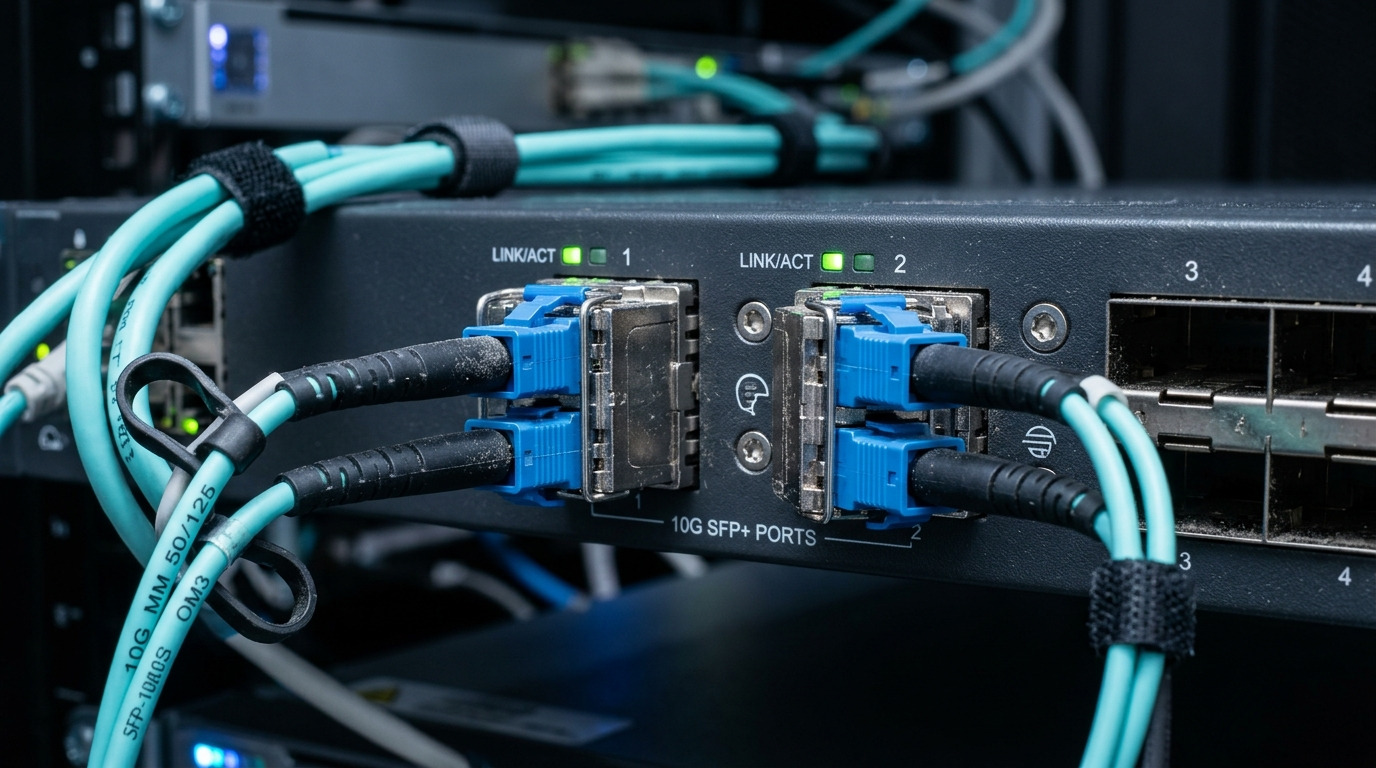
In practice, optical transceivers are not just “connectors with light.” They govern link budget margins, receiver sensitivity, dispersion tolerance, and optics diagnostics behavior (DOM). In IEEE 802.3 deployments, engineers typically validate that the transceiver supports the intended electrical lane mapping and that the vendor’s digital diagnostics align with the host switch software expectations. For 5G networks, the failure pattern is often operational: a mismatched wavelength, a dirty connector, or a DOM/firmware incompatibility that triggers link flaps.
Pro Tip: Before swapping hardware in a live 5G networks site, capture DOM readings (RX power, laser bias/current, temperature) and correlate them with the exact time of flaps. Many “bad transceiver” events are actually connector contamination or marginal fiber cleaning that only becomes visible after seasonal temperature swings.
Case study 1: 10G fronthaul ring with deterministic latency
Scenario: In a regional 5G networks aggregation footprint, a provider built a fiber ring linking four baseband sites to a central transport node. Each site used 10G SFP+ SR optics over OM4 multimode fiber with a patch-panel to patch-panel path of 220 to 380 meters. The operational target was stable latency for packet scheduling, with maintenance windows limited to nights.
What worked: Field teams deployed Cisco-compatible Cisco SFP-10G-SR equivalents where optics were standardized per vendor family, and they enforced connector cleaning at every demarcation. They also monitored DOM thresholds in the switch UI and set an alert when RX power drifted by more than 3 dB over a rolling window. Result: link flap incidents dropped after enforcing cleaning verification and limiting transceiver swaps to known-good batches.
Key specs engineers checked
For SR multimode links, engineers focused on wavelength (typically 850 nm), reach class, and receiver sensitivity margins. They also verified that the module was designed for the host’s SFP+ electrical spec and that the transceiver’s DOM implementation was supported by the switch OS.
Case study 2: 25G midhaul with reach extension and tighter budgets
Scenario: A metro 5G networks operator upgraded midhaul from 10G to 25G on new line cards. They used SR to LR selection based on measured fiber spans, with patch-to-patch distances ranging from 120 m to 8.5 km. The team aimed to reduce capex by using fewer spares while avoiding risky “mixed vendor” optic behavior.
What worked: They standardized on a single optics family across racks for each reach type, then varied only the fiber type and reach grade. For long spans, they selected 25G LR optics such as Finisar FTLX8571D3BCL class modules (10 km-class behavior depending on host and exact model) and validated link budget using the vendor’s optical power and receiver sensitivity figures. Result: fewer degraded-link events after introducing a “measured loss first” rule using OTDR or certified loss records.
Spec comparison: SR vs LR optics for 5G networks
| Parameter | 10G SR (Multimode) | 25G LR (Single-mode) | Example module models |
|---|---|---|---|
| Typical wavelength | 850 nm | 1310 nm | Vendor-dependent |
| Reach class | ~300 m on OM4 (varies by spec) | ~10 km (varies by exact LR) | Check datasheets for exact targets |
| Data rate | 10G | 25G | Matches port capability |
| Connector | LC (common for SFP+/25G SR) | LC | MTP/MPO possible in higher density |
| DOM | Usually supported (check host) | Usually supported (check host) | DOM implementation varies |
| Operating temperature | Commercial: typically 0 to 70 C | Commercial or industrial options exist | Select by site thermals |
| Host compatibility | Validated per switch OS | Validated per switch OS | Use vendor compatibility lists |
Case study 3: 100G spine uplinks with interoperability constraints
Scenario: In a leaf-spine fabric supporting 5G networks aggregation, teams needed 100G uplinks between top-of-rack and spine switches. They used both short-reach and extended-reach variants depending on patching and planned expansions. The risk was not only optical performance; it was interoperability across different switch generations.
What worked: The operator adopted a strict “transceiver qualification matrix” approach: only modules listed on the switch vendor compatibility page were permitted for production. For example, they evaluated FS.com SFP-10GSR-85 style modules for 10G SR use cases and separately validated 100G optics families before rollout. Result: fewer unexpected “unsupported module” events during maintenance, and faster root-cause during outages because optics behavior stayed consistent across the fleet.
Selection criteria checklist for optics in 5G networks
Use this ordered checklist during procurement and commissioning. It prevents the most common real-world failures.
- Distance and fiber type: confirm measured loss (dB) and fiber grade (OM3/OM4 or OS2), not just nominal reach.
- Data rate and form factor: ensure SFP+, SFP28, QSFP28, or QSFP-DD matches the port electrical standard.
- Wavelength and reach grade: pick SR vs LR vs ER based on loss, not marketing reach.
- Switch compatibility: verify the exact model appears in the switch vendor’s supported transceiver list.
- DOM and monitoring: confirm DOM is read correctly (alarms, warnings, thresholds) and that monitoring scripts do not misinterpret values.
- Operating temperature: choose industrial-grade optics for outdoor huts or poorly ventilated aggregation rooms.
- Vendor lock-in risk: if you use third-party optics, maintain a qualification batch and a rollback plan.
- Spare strategy: pre-stage spares by reach class and wavelength; do not mix in the same “kit” without clear labeling.
Common mistakes and troubleshooting tips
1) Link flaps after a maintenance window
Root cause: connector contamination or insufficient cleaning during patch changes, often revealed when ambient temperature shifts.
Solution: clean both ends, verify with an inspection scope, then re-seat the transceiver; re-check DOM RX power after 5 to 15 minutes.
2) “Unsupported transceiver” or unstable negotiated speed
Root cause: transceiver electrical/firmware compatibility mismatch with host switch OS; some optics advertise features differently or fail threshold checks.
Solution: use the switch vendor compatibility list; if you must use third-party, validate in a staging rack with the same OS version.
3) Persistent high error counts despite correct light level
Root cause: lane mapping or incorrect port breakout configuration (especially with higher-density optics), or marginal signal integrity due to patch cord quality.
Solution: verify correct breakout mode and cable plant grading; swap patch cords first; then compare BER counters before and after optic replacement.
4) Overlooking fiber loss drift from aging
Root cause: connector wear, micro-bends, or degraded patch cords increase attenuation over time, shrinking the power budget.
Solution: run OTDR or certified loss checks on suspect spans; enforce replacement schedules for heavily touched patch cords.
Cost and ROI note for 5G networks optics
Typical price ranges vary by reach and brand, but field budgets often see 10G SR optics in the lower hundreds of dollars per module, while 25G and 100G optics can rise substantially depending on reach and form factor. Third-party optics can reduce upfront cost, but TCO depends on qualification effort, compatibility risk, and spare strategy. A practical ROI model includes not only module price but also reduced truck rolls, faster MTTR from standardized optics families, and fewer production incidents caused by unsupported DOM behavior.
FAQ
Q: Which optical type is most common for 5G fronthaul?
A: Many deployments start with SR over multimode for short in-building spans, then move to LR over single-mode for longer midhaul segments. The right choice depends on measured distance, fiber grade, and switch port form factor.
Q: Can I mix transceiver vendors in the same 5G networks site?
A: You can, but only after switch OS compatibility validation. In production, mixed vendors can still work electrically while failing DOM interpretation, alarm thresholds, or vendor-specific qualification checks.
Q: What DOM metrics matter most during commissioning?
A: RX optical power, laser bias/current (if exposed), temperature, and alarm thresholds are key. If RX power approaches the vendor’s warning band, you should plan cleaning or patch cord replacement before errors appear.
Q: What is the fastest way to diagnose a degraded 5G optics link?
A: Start with DOM RX power and error counters, then verify connector cleanliness and patch cord quality. Next check OTDR or certified loss records; only then replace optics to avoid masking the real root cause.
Q: Are third-party optics safe for carrier-grade 5G networks?
A: They can be, but only with a qualification matrix, consistent host OS versions, and controlled spares. Treat them like “components with lifecycle risk,” not commodity parts.
Q: How do I plan spares for seasonal outages?
A: Keep spares by reach class and wavelength, and ensure you can reproduce the same transceiver type used in the affected rack. During seasonal shifts, monitor DOM trends so you can act before
