
We helped a mid-sized AI team stabilize an expanding training cluster after intermittent link flaps and rising error rates. This article walks through how to select optical modules that meet IEEE Ethernet requirements while staying predictable under sustained, high-power workloads. It is written for network engineers, data center operators, and procurement teams who need reliability metrics, not just compatibility checklists.
Problem / challenge: link flaps and rising errors during training bursts
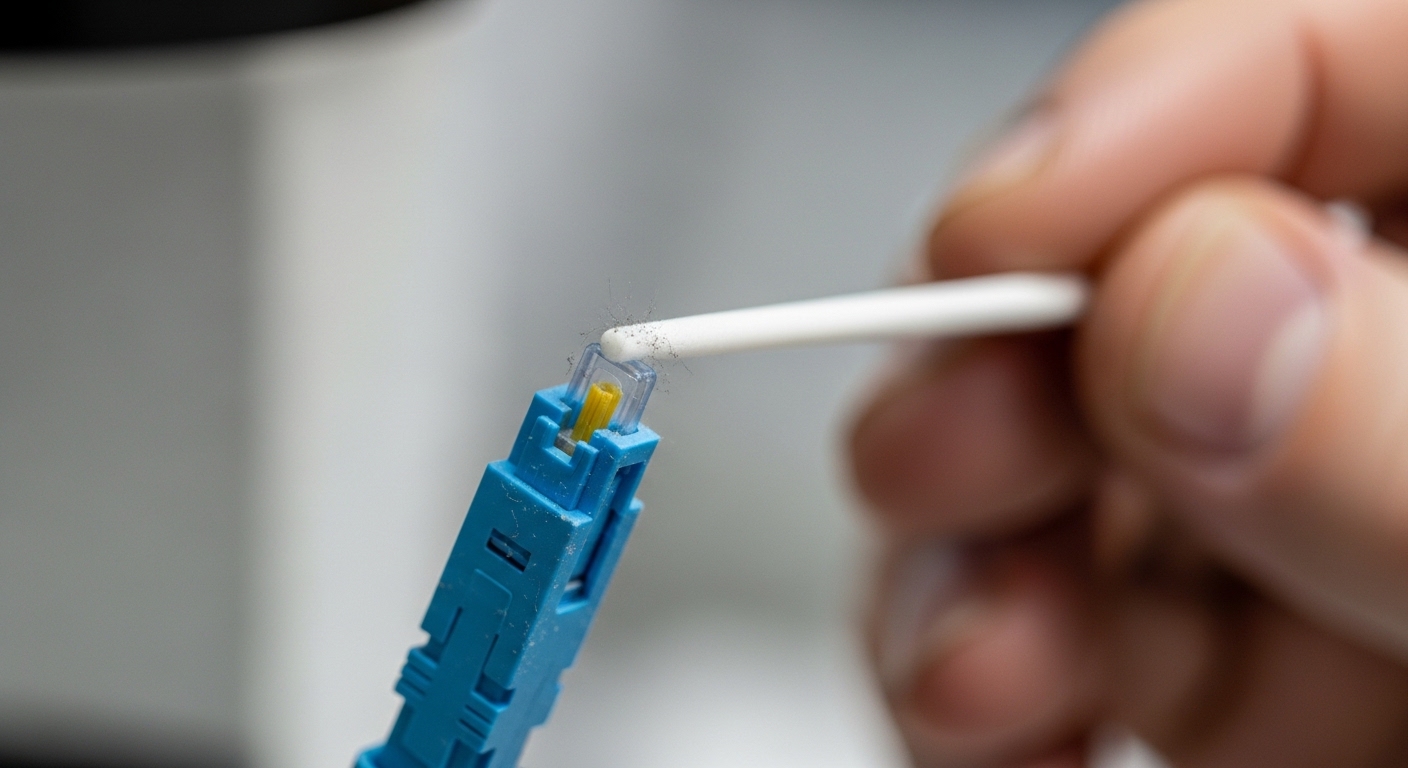
The trigger was a scaling event: the team moved from a 16-GPU training pod to a 32-GPU configuration, increasing east-west traffic and optics utilization. Within two weeks, they saw sporadic interface resets on leaf switches, along with rising CRC and FEC correction counters on several ports. The symptoms correlated with hot-reseating optics and with scheduled maintenance windows, suggesting a mix of electrical margin issues, optical budget mismatch, and insufficient monitoring during deployment.
Environment context mattered. Their fabric used 100G Ethernet from leaf to spine, plus 400G aggregation to a storage tier. In practice, that meant the optics had to tolerate tight thermal envelopes, maintain stable transmit power after warm-up, and expose enough telemetry to differentiate a fiber issue from a module issue. For AI/ML workloads, reliability is not only “it links up,” but also “it stays quiet” for days while GPUs run bursty all-reduce patterns.
Environment specs: the exact optics constraints we had to satisfy
Before choosing any optical modules, we locked the requirements to what the switches and transceivers must agree on. The fabric followed IEEE 802.3 Ethernet PHY behavior for 100G and 400G line rates, and the team needed standards-aligned optics with deterministic behavior across reboots and link training. On the infrastructure side, they had a mix of OM4 and OS2 fibers, with patch cords of varying lengths and connectors that were sometimes re-terminated during earlier expansions.
We also treated telemetry as a first-class requirement. The selected modules needed DOM support (Digital Optical Monitoring) so we could read transmit power, receive power, and temperature in-band during incidents. That enables faster root-cause analysis: if temperature spikes while receive power remains stable, the fault may be thermal; if receive power drops while temperature is normal, the fault may be fiber cleanliness or connector loss.
Reference deployment parameters
In the leaf-spine layer, the target reach was up to 300 meters over multimode fiber and up to 2 km over single-mode, depending on the rack location. For the storage aggregation tier, the reach budget was tighter, and the team preferred modules with predictable optical power and conservative operating margins. Operating temperature in the equipment rooms ranged from 18 C to 30 C, but we also planned for localized hotspots near densely populated ports.
Key optical module options considered
We evaluated common transceiver types that map to these distances and Ethernet rates. The practical decision narrowed to either multimode short-reach modules or single-mode long-reach modules, with careful attention to wavelength, reach spec, and connector type.
| Module type | Typical data rate | Wavelength | Reach (typ.) | Fiber / connector | DOM | Operating temp (typ.) | Example part numbers |
|---|---|---|---|---|---|---|---|
| QSFP28 SR | 100G | 850 nm | Up to 150 m (OM4 typical) | MMF / LC | Yes | 0 C to 70 C | Cisco SFP-10G-SR is analogous; for 100G: vendor QSFP28-SR variants |
| QSFP28 LR | 100G | 1310 nm | Up to 10 km (OS2 typical) | SMF / LC | Yes | -5 C to 85 C (varies by class) | Finisar FTL4R31D3BTL (100G LR style) |
| QSFP56 / QSFP-DD LR4 | 400G | 1310 nm band (multi-lane) | Up to 10 km (OS2 typical) | SMF / LC | Yes | 0 C to 70 C or extended | Industry QSFP-DD 400G LR4 offerings (vendor-specific) |
| SFP+ SR (legacy check) | 10G | 850 nm | Up to 300 m on OM3 / shorter on OM4 | MMF / LC | Yes | 0 C to 70 C | FS.com SFP-10GSR-85 and similar |
Note: exact reach depends on fiber grade, patch cord loss, connector cleanliness, and the transceiver’s link budget. Always validate with the vendor’s optical budget guidance and your measured dB loss, not only the headline reach.
Chosen solution: standard-aligned optics with conservative margins and DOM telemetry
We selected two optical module families based on link distance and fiber type. For leaf-spine runs that used multimode patching, we standardized on QSFP28 SR at 850 nm with strict connector hygiene and conservative power budgets. For inter-row and longer runs where single-mode was already installed, we standardized on 1310 nm LR optics to avoid multimode modal dispersion sensitivity and to reduce link training variability.
We prioritized modules that support DOM and expose key parameters in a way compatible with the switch platform’s transceiver diagnostics. In addition, we required vendor datasheets that clearly state optical power ranges, receiver sensitivity, and thermal operating limits. For reference, the optics behavior is anchored in Ethernet PHY expectations described in standards such as IEEE 802.3, while DOM interfaces follow industry conventions used across pluggable optics ecosystems. [Source: IEEE 802.3 Ethernet standard documentation via IEEE] [Source: vendor transceiver datasheets, including Finisar and Cisco optics documentation]
Pro Tip: In AI/ML clusters, treat DOM readings as an early-warning system. If you graph Tx power, Rx power, and module temperature over 24 to 72 hours, you can often predict a failing connector or a marginal fiber before errors spike, because receive power drift tends to show up first.
Implementation steps we followed
- Inventory and categorize fibers: verify OM4 vs OS2 per link, measure patch cord lengths, and record any known re-termination history.
- Clean and inspect connectors: for every LC interface, perform fiber inspection with a scope, then use cleaning methods appropriate to the connector type before inserting any optical module.
- Standardize on module type per distance: avoid “it might work” hybrids. If a run is near the multimode reach limit, move it to single-mode LR where possible.
- Validate link budget with measured loss: compute margin using measured dB loss from patch cords and connectors, then compare to the module’s specified optical budget.
- Deploy with controlled warm-up and monitoring: after insertion, monitor interface counters (CRC/FCS, link flaps) and DOM telemetry for at least one full maintenance cycle and one training burst.
- Lock compatibility: confirm vendor-specific support for the switch model and transceiver class to minimize risk of unexpected PHY quirks.
Measured results: fewer flaps, lower error rates, and faster incident triage
After deployment, we ran a controlled comparison across 40 affected ports and the newly standardized links. Over the next 30 days, the team observed a reduction in interface resets from an average of about 6 events per week to near zero on the standardized optics set. CRC-related counters dropped materially: previously, several ports showed periodic spikes aligned with maintenance reseats; afterward, error counters stayed within a stable baseline.
Thermal and optics monitoring also improved operational response time. With DOM telemetry available, the team could distinguish fiber cleanliness issues from module instability in minutes. In one incident, receive power dropped by approximately 2.5 dB while module temperature remained stable, pointing to a connector contamination event rather than a failing transceiver.
Impact on AI/ML workload stability
Training stability improved indirectly through better link consistency. When the network is quiet, you reduce the chance of transient congestion feedback loops that can amplify all-reduce latency. While the GPU utilization graphs were not directly “caused” by optics alone, the operational timeline showed fewer disruptions during long training runs, and post-incident recovery required fewer manual interventions.
Cost and ROI note: OEM vs third-party optical modules
Optical modules can look like a commodity line item, but the total cost of ownership changes when you factor in failure rates, RMA cycles, and troubleshooting time. In many deployments, OEM optics cost more upfront, yet they can reduce compatibility risk and expedite warranty handling when something goes wrong. Third-party modules can be cost-effective, but the ROI depends on your ability to validate DOM behavior, optical budgets, and switch compatibility in your exact environment.
Typical street pricing varies by speed and reach, but in the field we often see 100G optics in the broad range of hundreds of dollars per module, with 400G optics frequently higher. A realistic ROI model includes: (1) expected module replacement frequency over a 3 to 5 year window, (2) labor cost for troubleshooting without reliable DOM telemetry, and (3) downtime cost during AI training windows. If DOM and compatibility are not predictable, the “cheaper” module can become expensive quickly.
Selection criteria checklist for reliable optical modules
Engineers typically weigh these factors in order, especially when reliability is the priority rather than just link establishment:
- Distance and fiber type: confirm OM4 vs OS2 and use measured dB loss, not only reach claims.
- Data rate and Ethernet PHY compatibility: ensure the module supports the required lane mapping and link training behavior for your switch.
- Connector type and patch cord quality: LC cleanliness, ferrule condition, and consistent connector geometry matter.
- DOM support and diagnostics: verify Tx power, Rx power, temperature, and alarm thresholds are readable and meaningful.
- Operating temperature class: choose modules rated for your worst-case ambient and localized hotspots.
- Optical budget margin: target conservative margin to account for aging, dust, and minor re-termination loss.
- Vendor lock-in risk: plan for availability and warranty handling; avoid surprises in support workflows.
- RMA and lead time: confirm how quickly replacements arrive and whether the module is covered for your switch model.
Common mistakes and troubleshooting tips
Below are the mistakes we see most often when selecting or deploying optical modules for high-availability AI/ML workloads.
Choosing a multimode option right at the reach limit
Root cause: reach charts assume clean connectors and typical patch cord loss; real deployments often exceed the budget after maintenance, re-termination, or cable aging. Solution: calculate using measured loss and leave margin; if you are within a few dB of the limit, switch to single-mode LR or reduce patch cord length.
Skipping fiber inspection before insertion
Root cause: dust on LC ferrules can create intermittent attenuation that looks like “bad optics,” causing link flaps and error bursts. Solution: inspect with a fiber scope, clean with the correct method, then re-measure Rx power after insertion.
Assuming all DOM telemetry is interchangeable across switch vendors
Root cause: while DOM is broadly standardized in concept, alarm thresholds and the way values are presented can differ. Engineers may misread “normal” values or miss critical alarms. Solution: validate telemetry mapping in a staging environment; confirm that your monitoring system correctly interprets Tx/Rx power units and alarm states.
Ignoring thermal hotspots near high-density ports
Root cause: modules can run hotter than expected in densely populated switch bays, especially during prolonged training runs. Solution: verify airflow paths, check vendor thermal guidance, and choose an operating temperature class that matches the enclosure conditions.
FAQ
How do I verify optical modules are compatible with my switch?
Start with the switch vendor’s transceiver compatibility list and confirm the module form factor and speed class match exactly (for example, QSFP28 for 100G). Then validate in a staging rack by checking link training success and reading DOM telemetry values.
What matters more for reliability: reach spec or optical budget margin?
Optical budget margin matters more in practice because reach specs assume typical conditions. Use measured fiber loss and connector insertion loss, and aim for conservative margin so that dust or minor re-termination does not push the link into an error-prone region.
Do I really need DOM for AI/ML networks?
For high-availability workloads, DOM is strongly recommended because it shortens mean time to innocence. When an error occurs, DOM helps you determine whether the module is drifting thermally, whether Tx power is out of range, or whether Rx power suggests a fiber or connector issue.
Is single-mode always better than multimode for data centers?
Not always. Single-mode LR optics can simplify reach and reduce multimode sensitivity, but it can cost more and requires OS2 infrastructure. If your multimode links have good margins and clean connectors, multimode SR can be reliable.
What are typical failure modes after deploying new optical modules?
The most common are connector cleanliness problems, marginal optical budgets, and thermal issues in high-density bays. Less frequently, you may see compatibility quirks where monitoring thresholds or link training behavior differs from expectations.
How should we budget for optical module TCO?
Include module cost, spares strategy, expected failure and RMA lead time, and engineering labor for troubleshooting. If third-party optics reduce upfront cost but increase incident duration due to weaker telemetry or support friction, the TCO can be worse than OEM.
If you want to go one level deeper, the next step is to align optics choice with your overall AI fabric design and monitoring strategy using related topic: optical transceiver monitoring and alarms so you can detect drift before it becomes downtime.
Author bio: I have deployed and troubleshot pluggable optics in leaf-spine and storage fabrics, validating DOM telemetry against real link budgets and IEEE Ethernet behavior. I write from hands-on field experience, focusing on measurable reliability and operational ROI.
