
In multi-vendor radio access networks, the promise of Open RAN ROI can evaporate if you measure the wrong costs or ignore operational friction. This guide helps network and radio engineers, finance owners, and systems integrators build a defensible ROI model using deployment metrics they can actually collect: transport load, OPEX per cell site, automation coverage, and failure/repair patterns. You will also get a practical decision checklist, common failure modes, and a short FAQ tailored to buyer concerns.
Where ROI breaks in Open RAN: the cost model that matches reality
Most ROI mistakes start before you touch a spreadsheet: teams estimate savings from hardware pricing while undercounting integration labor, software maturity gaps, and day-2 operations. A field-ready model separates costs into three buckets: CapEx (radio units, distributed units, transport, testing), migration labor (site onboarding, RF validation, cutover), and OPEX (site visits, spare parts, monitoring, software upgrades). For Open RAN, you also need a fourth bucket: compliance and integration risk, because interoperability testing and performance tuning can dominate timelines.
Start from measurable operational drivers. For each cell site, track time-in-service, mean time to repair (MTTR), mean time between failures (MTBF), and software rollback frequency during upgrade windows. Then connect those to OPEX categories: technician hours per incident, truck rolls per quarter, and vendor support fees. If you run centralized software management, include the cost of CI/CD pipelines, automated testing coverage, and lab time for new software drops. These inputs make the Open RAN ROI claim auditable rather than aspirational.
ROI math that engineers can defend: build a metric chain from radio to budget
To defend ROI, build a metric chain that links radio performance and operations to dollars. Use a time horizon that matches your depreciation and upgrade cadence, typically 5 years for RAN hardware and 3 years for software release cycles. Compute Net Present Value (NPV) or Internal Rate of Return (IRR), but ensure your inputs are grounded in telemetry and work orders.
quantify the baseline (pre-Open RAN)
Collect at least one year of baseline data: alarm counts by severity, number of site visits, average repair duration, and upgrade downtime. For transport, record link utilization distribution (95th percentile) and any recurring incidents tied to optics or switches. Include RF KPIs that affect churn and service quality such as blocked call rate, handover success rate, and throughput stability under load. The goal is to establish what you are preserving while modernizing.
quantify the Open RAN delta (per site and per cluster)
Open RAN can reduce vendor lock-in and increase procurement flexibility, but only if interoperability is proven. Quantify expected benefits with constraints: for example, savings from using standardized servers versus proprietary appliances, or reduced labor due to automation in monitoring and provisioning. Also quantify added work: integration testing, performance tuning, and any temporary parallel operations during migration.
In one deployment pattern, a major cost lever was software operationalization. When automated configuration management reduced manual configuration drift, incident volume dropped and MTTR improved. The measurable outcome was fewer truck rolls per quarter and reduced downtime during upgrades, which moved OPEX more than hardware pricing ever did.
include transport and power as first-class ROI drivers
Do not treat transport as a background dependency. Open RAN clusters often shift load patterns: fronthaul and midhaul choices influence switch and optics utilization, which influences power draw and heat management. Include power per rack (watts), cooling overhead factor, and expected optics operating temperature. A small optics mismatch can increase error rates, cause link flaps, and drive OPEX spikes that destroy ROI.
| ROI Input (what to measure) | Where to collect it | Why it changes in Open RAN | Example target metric |
|---|---|---|---|
| Truck rolls per quarter | Ticketing system, field logs | Automation and standardized monitoring reduce manual diagnosis | Reduce from 6 to 3 site visits/quarter per cluster |
| MTTR and MTBF | NOC dashboards, incident reports | Software maturity and interoperability affect failure modes | MTTR from 5 hours to 3 hours |
| 95th percentile link utilization | Switch telemetry, transport analytics | Fronthaul/midhaul design drives throughput headroom needs | Keep below 70% sustained utilization |
| Upgrade lead time and rollback rate | Change management, release records | Multi-vendor software stacks require careful staging | Rollback under 1% of upgrades |
| Power per rack and optics power | PDU readings, SFP/optics datasheets | Standardized optics can reduce power, but only if compatible | Reduce rack draw by 5% where feasible |
Technology choices that swing Open RAN ROI: transport, optics, and automation
Even when the RAN software stack is correct, ROI can swing due to transport and operational tooling. Many real deployments treat optics and switch compatibility as a procurement detail, but field failures often originate there. Use vendor datasheets and interoperability lists, and verify DOM support and optical power budgets during acceptance testing.
Optics and transport compatibility checks that protect ROI
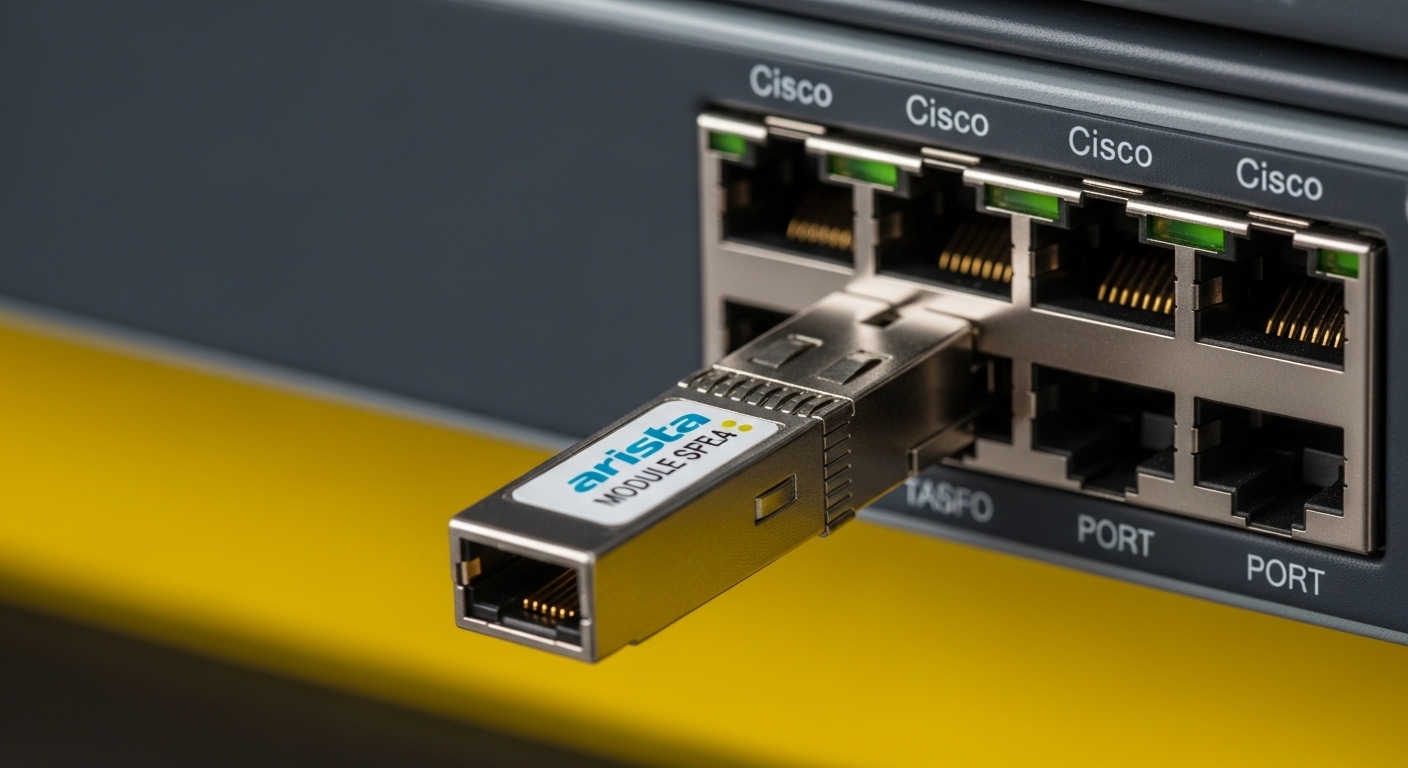
Open RAN deployments commonly use 10G/25G/100G links to move aggregated baseband traffic. For example, a common enterprise and data center pattern uses 10G SR optics such as Cisco SFP-10G-SR and Finisar FTLX8571D3BCL-class modules in compatible switches. If you migrate to higher density or longer reach, you may need different wavelengths (850 nm multimode versus 1310 nm single-mode) and different connector types (LC is typical). The ROI impact is straightforward: stable links reduce incident volume and avoid expensive truck rolls.
| Transceiver class (example) | Typical wavelength | Reach | Connector | Data rate | Operating temp (typical) | ROI relevance |
|---|---|---|---|---|---|---|
| SFP-10G-SR class (Cisco) | 850 nm | ~300 m over OM3 (varies by fiber) | LC | 10G | 0 to 70 C (consult module spec) | Lower cost optics and simpler cabling if fiber plant supports OM |
| 10G SR 85C aftermarket (FS.com style) | 850 nm | Same class as SR (fiber dependent) | LC | 10G | -40 to 85 C (often) | Higher margin in hot cabinets can reduce thermal-related faults |
| 100G SR4 class (example) | 850 nm | ~100 m typical (varies) | LC (often) | 100G | 0 to 70 C typical (varies) | Enables higher bandwidth density, but increases optics cost and validation needs |
For standards context, Open RAN interfaces and network behaviors are discussed across relevant telecom specifications and vendor implementation guides, but the ROI lesson is universal: verify the entire chain, from optical budget and link error rates to automation coverage. If you are aligning to IEEE Ethernet behavior for transport domains, remember that link flaps and CRC/BER spikes can be “invisible” until you correlate them with alarms and service impacts. For optical and Ethernet fundamentals, consult [Source: IEEE 802.3] and vendor optics datasheets.
Pro Tip: In pilot sites, schedule an acceptance test that runs sustained traffic while you log optics DOM readings (Tx/Rx power, temperature, bias current) and switch counters. Teams often validate only link up/down; ROI hinges on error-rate stability over days, because intermittent BER increases incident tickets and MTTR even when throughput looks “fine.”
Selection criteria checklist: how to decide what to buy and what to measure
Use this ordered checklist during procurement and architecture reviews. It is designed to reduce “surprise costs” that typically appear after cutover.
- Distance and fiber plant fit: confirm OM type, patch loss, and connector cleanliness; map reach to your actual cabinet and rack distances.
- Switch and server compatibility: verify transceiver compatibility lists, firmware versions, and chipset support for your target switches.
- Data rate and oversubscription: compute headroom based on measured 95th percentile utilization; avoid designing to average throughput.
- DOM support and alarm integration: ensure optics expose telemetry to your monitoring stack so you can correlate optical drift with incidents.
- Operating temperature and thermal margin: pick modules rated for cabinet conditions; many field failures are thermal, not “bad hardware.”
- Software and automation coverage: quantify what is automated (provisioning, config drift detection, upgrade orchestration) and what still requires manual steps.
- Vendor lock-in risk: even in Open RAN, confirm which components are truly swappable; document integration dependencies and test interoperability early.
- Upgrade strategy: define maintenance windows, rollback procedures, and staging environments; measure upgrade lead time as an ROI input.
- Support model and spares: estimate spares holding costs and expected failure rates from historical data; include lead times.
Common mistakes and troubleshooting patterns that destroy Open RAN ROI
When ROI assumptions fail, the root cause is rarely “bad math.” It is usually one of these operational failure modes.
Mistake: validating only interoperability at link bring-up
Root cause: Modules and firmware may successfully negotiate link during short tests, but intermittent optical power degradation or thermal drift later increases BER and triggers flaps. Solution: run 48 to 72 hours of sustained traffic with error counters and DOM telemetry; require acceptance gates for stability, not just link status.
Mistake: ignoring upgrade operational burden in OPEX
Root cause: Multi-vendor stacks can require manual coordination between radio software, DU configuration, and transport firmware. If rollback is slow, incident recovery time increases and MTTR grows. Solution: measure upgrade lead time and rollback frequency during pilot; build a staging pipeline and automate prechecks.
Mistake: underestimating migration labor and parallel run complexity
Root cause: Cutovers often require temporary dual operations, extra RF validation, and additional transport tuning. Teams who count only hardware installation miss the “coordination tax.” Solution: include a migration labor model per site: hours for RF checks, transport verification, and change management approvals; track actuals for the next wave.
Mistake: designing transport headroom to average utilization
Root cause: Open RAN traffic can show bursty behavior tied to scheduling and traffic patterns; average utilization stays low while peaks saturate queues. Solution: size for 95th percentile and verify QoS behavior; monitor buffer drops and latency under peak hours.
Real-world deployment scenario: ROI impact in a leaf-spine data center cluster
Consider a 3-tier data center leaf-spine topology supporting a regional Open RAN aggregation cluster. You have 48 top-of-rack switches feeding 8 spine switches, each leaf using 25G uplinks and the aggregation layer using 100G optics for east-west baseband transport. In the first migration wave, the integrator assumed savings from standardized servers and reduced vendor support fees, but OPEX spiked due to optics thermal drift in hot cabinets and manual upgrade coordination. After a second pilot, the team standardized optics selection with higher temperature ratings, enforced DOM telemetry in monitoring, and automated pre-upgrade validation; the measurable result was a drop in incident tickets tied to link instability and a reduction in truck rolls per quarter.
This scenario highlights why Open RAN ROI should be modeled per cluster, not per site. Transport stability and upgrade automation were the dominant drivers of MTTR and change failure rates, which outweighed the initial hardware price deltas. The finance team could then align NPV assumptions with observed operational metrics.
Cost and ROI note: realistic price ranges and total cost of ownership
Price varies by geography, volume, and vendor ecosystem, but you can plan with typical ranges. Third-party optics often cost less than OEM equivalents, but the TCO depends on compatibility validation effort, failure rates, and warranty terms. In many deployments, optics and transport failures lead to disproportionate OPEX due to field labor and downtime; therefore, ROI should include acceptance testing labor and spares logistics.
For budgeting, include: (1) integration labor for interoperability testing, (2) monitoring and automation engineering, and (3) staged upgrade operations. If you run a pilot across 20 to 50 sites, treat it as a data collection program: every incident and every rollback becomes an input to the next wave’s ROI forecast. This is how Open RAN ROI moves from a proposal slide to a measurable operational outcome.
FAQ
How do I quantify Open RAN ROI when service quality must stay constant?
Use a baseline of RF and transport KPIs from the pre-migration year, then model ROI as the difference in OPEX and integration labor while maintaining or improving key service metrics. Tie changes to measurable thresholds such as blocked call rate, handover success rate, and link error stability. If quality degrades, treat it as a cost via churn risk or SLA penalties.
Should Open RAN ROI include optics and switch costs?
Yes. Transport stability affects incident rates, and optics power/temperature ratings can influence uptime. Include optics, switch firmware validation, and monitoring integration because they drive MTTR and the frequency of disruptive events.
What data do we need before we trust the ROI model?
At minimum: incident history, truck roll counts, MTTR/MTBF, upgrade timelines and rollback frequency, and transport utilization distributions (95th percentile). If you lack these, run a short pilot to collect them; otherwise, ROI will be sensitive to assumptions that you cannot verify.
Do third-party components improve ROI or increase risk?
Third-party components can lower BOM cost, but ROI depends on acceptance testing, compatibility, and warranty. The risk is not just failure; it is the operational time spent proving compatibility during integration and upgrades. Model both the hardware savings and the integration effort.
How long should the ROI horizon be for Open RAN?
A common planning horizon is 5 years for hardware depreciation paired with a 3-year software release cadence. Use NPV to compare options, but validate that your upgrade strategy is feasible within your operational windows.
What is the fastest way to improve Open RAN ROI in the field?
Reduce day-2 operational friction: automate pre-upgrade checks, enforce DOM telemetry-driven alerting, and standardize optics and firmware compatibility. These changes typically improve MTTR and lower incident tickets, which moves OPEX quickly.
If you want the next step, build your pilot data plan and map each KPI to an ROI line item using Open RAN KPI framework.
Author bio: Field-focused network researcher who has deployed multi-vendor radio and transport stacks and validated performance with telemetry-driven acceptance tests. I write ROI and reliability methods that teams can reproduce in pilots and scale with measurable operational outcomes.
