
Open RAN rollouts in 2026 will stress your optics choices: fronthaul links must meet tight timing and power limits, while midhaul and backhaul need cost-effective reach. This article helps telecom engineers, field deployment leads, and procurement teams select Open RAN optics that work across vendors with predictable monitoring. You will get practical selection criteria, a spec comparison table, and troubleshooting steps drawn from real commissioning patterns.
Why Open RAN optics decisions fail in the field
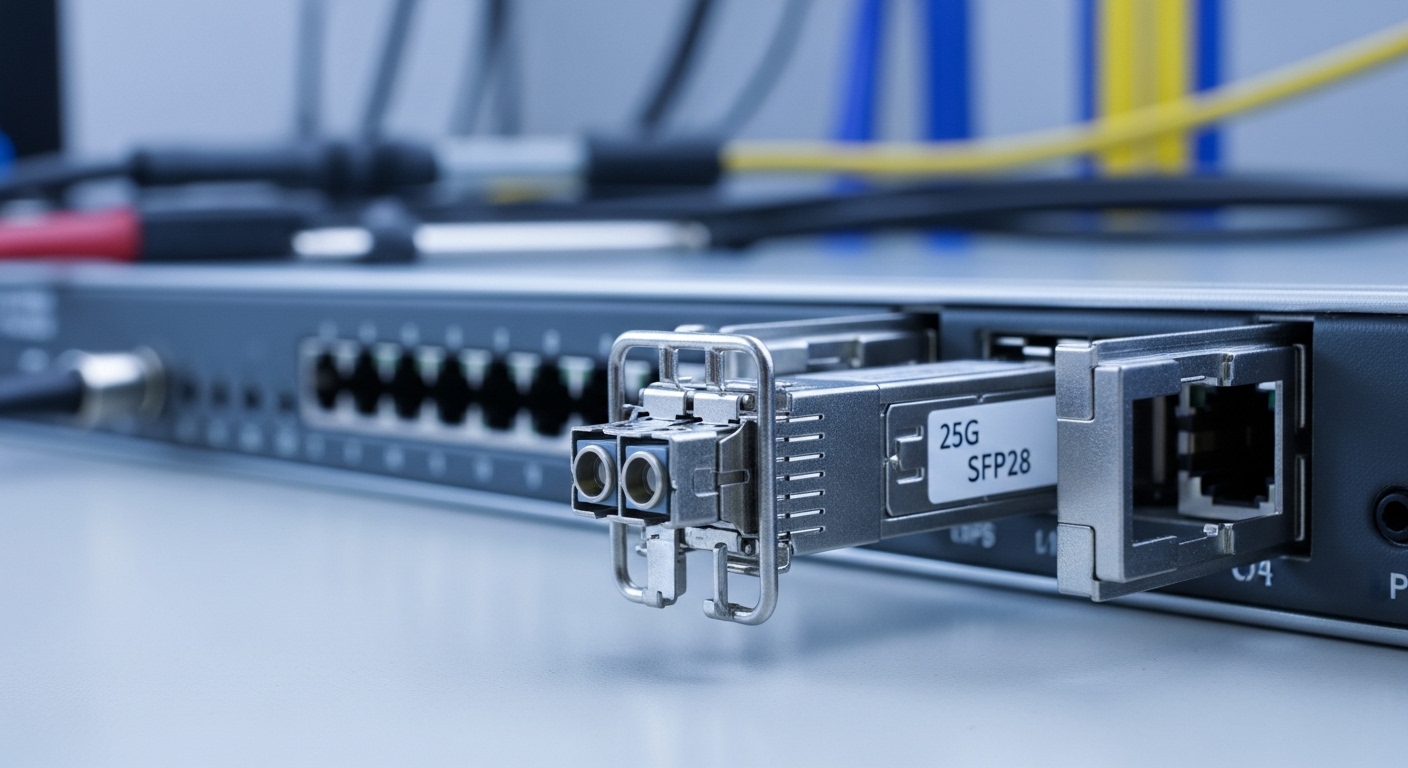
In Open RAN deployments, transceivers are not just “fiber plug-ins.” They interact with switch or O-RU/O-DU electrical interfaces, DOM telemetry expectations, and environmental constraints inside cabinets and outdoor enclosures. The most common outage pattern is not a dead module; it is a module that passes link training but produces marginal optical power or telemetry behavior that triggers alarms. IEEE alignment matters too: many systems rely on Ethernet physical layer behavior defined in IEEE 802.3 (for example, 10GBASE-LR/ER style optics behavior and management conventions) even when the higher-layer architecture is Open RAN.
Where optics sit in a typical Open RAN data path
Fronthaul commonly uses higher sensitivity links and strict latency targets between O-RU and O-DU; midhaul/backhaul may tolerate different margin budgets but still needs stable BER under temperature swings. Field teams often discover that the “same” SFP/SFP+ optics family behaves differently when DOM EEPROM fields, vendor-specific thresholds, or vendor-specific laser safety profiles differ. That is why Open RAN optics selection must include both optical compliance and operational telemetry behavior.
Key transceiver specs that map to Open RAN link budgets
To select Open RAN optics for 2026, start with the actual link budget and interface requirements, not only the stated “reach.” You need wavelength, fiber type, nominal output power, receiver sensitivity, and connector/patch panel loss. Then validate the electrical interface data rate (for example, 10G, 25G, or 100G) and whether the module supports the transceiver management interface you expect.
Specifications table: common optics families engineers compare
The table below compares typical module classes used in telecom and Open RAN-like topologies. Always confirm the exact part number datasheet for your vendor and transceiver generation.
| Optics type (examples) | Wavelength | Typical fiber reach | Connector | Data rate | DOM / monitoring | Operating temperature | Power class (typ.) |
|---|---|---|---|---|---|---|---|
| SFP-10G-SR class (e.g., Cisco SFP-10G-SR, Finisar FTLX8571D3BCL) | 850 nm | ~300 m to ~400 m on OM3/OM4 | LC (MMF) | 10G | Yes, standard digital diagnostics | 0 to 70 C (enterprise) or wider variants | ~1 W to ~2 W |
| SFP-10G-LR class (e.g., 1310 nm SMF) | 1310 nm | ~10 km | LC (SMF) | 10G | Yes, standard digital diagnostics | -5 to 70 C (typ.) | ~1.5 W to ~2.5 W |
| SFP28-25G-SR class (e.g., 25G SR on MMF) | 850 nm | ~70 m to ~300 m (MMF, varies by spec) | LC (MMF) | 25G | Yes, DOM supported | 0 to 70 C (common) | ~1.5 W to ~3 W |
| QSFP28/CFP2-100G class (SMF variants) | 1310/1550 nm (depends) | ~10 km to 80 km (varies widely) | LC (SMF) | 100G | Yes, DOM where supported | Commercial or industrial variants | ~3 W to ~6 W |
Notice how “reach” depends on fiber grade, patch cords, and connector quality. In a fronthaul cabinet, a patch panel with higher-than-expected insertion loss can push you into an optical margin failure even when the link “lights” successfully at commissioning.
Pro Tip: During site acceptance testing, validate not only link up time but also DOM stability over temperature. I have seen modules that pass at 25 C yet trip thresholds after 40 C cabinet soak because optical output power and receiver bias shift with aging and thermal equilibrium.
Selection checklist for Open RAN optics in 2026
Procurement and field teams often work faster when the selection checklist is ordered the same way every time. Use the following factors in sequence to reduce rework and interoperability issues.
- Distance and fiber type: Confirm MMF grade (OM3 vs OM4) or SMF attenuation assumptions, and include patch cord and connector losses.
- Target data rate and interface mode: Choose the transceiver generation that matches the DU and switch port speed (10G, 25G, 100G) and modulation expectations.
- Wavelength plan: Align to 850 nm MMF for short reaches or 1310/1550 nm SMF for longer spans; avoid mixing assumptions across vendors.
- Switch compatibility behavior: Check whether the host requires specific transceiver IDs, supported vendor lists, or specific DOM alarm behavior.
- DOM support and alarm thresholds: Verify that digital diagnostics (temperature, laser bias, transmit power, received power) are readable and do not trigger nuisance alarms.
- Operating temperature and power budget: Match module temperature range to cabinet airflow and outdoor enclosure ratings; confirm total chassis power headroom.
- Vendor lock-in risk: Consider third-party optics like FS.com SFP-10GSR-85, but validate first on the exact host model and firmware revision.
- Regulatory and safety constraints: Confirm laser safety classification and required compliance for your region and deployment environment.
Real-world deployment scenario: fronthaul in a leaf-spine + DU aggregation model
In a 3-tier data center-like telecom topology with 48-port 10G ToR switches, a DU aggregation layer, and O-RU sites using short MMF runs, the field team planned 10G SR for ~250 m spans on OM4. Each link included two patch panels and multiple patch cords, adding an estimated 1.8 dB extra loss beyond the baseline. During commissioning, a batch of third-party optics showed link up but high received power alarm counts after a 6-hour thermal soak at 45 C. The fix was not changing fiber length; it was replacing modules with tighter optical power tolerance and confirming DOM thresholds matched the host’s expected alarm format.
Compatibility and DOM behavior: the hidden interoperability layer
Open RAN optics selection must include how the host interprets DOM data. Many network controllers and switching ASICs rely on standardized digital diagnostics, but they still apply vendor-specific thresholds and event handling. This is where “works in the lab” modules can fail in production: the optics may support the right interface, but DOM fields can be formatted differently or alarm thresholds may be too strict.
What to verify in practice
- DOM readout cadence: Confirm your monitoring system polls DOM at a safe interval; overly aggressive polling can create telemetry gaps.
- Alarm mapping: Validate that host alarms (for example, low received power) align with your NMS expectations and do not cause false maintenance tickets.
- Firmware interaction: Track host firmware versions; a firmware update can change transceiver acceptance logic.
Common mistakes and troubleshooting tips
Below are frequent failure modes that show up during Open RAN optics commissioning. Each includes a root cause and a practical solution.
Link comes up, but throughput is unstable
Root cause: Marginal optical budget (too much patch cord loss, dirty connectors, or slightly out-of-spec transmit power). The physical layer may still train, but BER worsens under load. Solution: Clean and inspect LC connectors, then measure optical power and received power using a calibrated optical power meter. Re-terminate patch cords if insertion loss exceeds your acceptance criteria (often around 0.3 dB per high-quality connector, but validate with your process).
NMS shows constant “optics alarm” despite link stability
Root cause: DOM threshold mismatch or alarm mapping differences between module vendor and host logic. Some hosts interpret DOM values with fixed thresholds that assume a specific module class. Solution: Compare DOM telemetry from a known-good module (for example, an OEM optics reference) to the failing batch. If the values are within spec but alarms persist, adjust host alarm thresholds or standardize on modules with matching DOM behavior.
Works at room temperature, fails after cabinet heat soak
Root cause: Temperature range mismatch, insufficient airflow, or laser output drift beyond the module’s tolerance. Solution: Perform a thermal soak test (for example, 6 to 12 hours at expected worst-case cabinet temperature) before scaling deployment. If failures correlate with temperature, switch to an industrial-temperature rated optics variant and confirm the host supports it.
“Incompatible transceiver” message during insertion
Root cause: Host requires specific transceiver identification fields or enforces a compatibility list. Solution: Validate against the exact host model and firmware revision. If you use third-party optics, request vendor documentation for compatibility and run a port-level acceptance test before mass installation.
Cost and ROI note: balancing OEM reliability with third-party pricing
In many telecom programs, OEM optics (for example, Cisco-branded modules) cost more upfront than third-party equivalents, but they reduce integration risk. Typical street pricing varies by speed and reach: 10G SR modules often fall in a range that can be several dollars higher for OEM than compatible third-party options, while 25G and 100G variants can widen the gap. From a TCO view, the ROI comes from fewer truck rolls, fewer failed acceptance tests, and lower downtime cost; if a module batch triggers alarm-driven maintenance or repeated swap cycles, the savings can disappear quickly.
Also include power and cooling effects. Higher power 100G optics can add measurable thermal load in dense shelves, increasing fan power and sometimes causing earlier thermal throttling. That is why Open RAN optics selection should include not only module price but also cabinet airflow and chassis power headroom.
FAQ
What exactly counts as Open RAN optics?
It generally refers to fiber transceivers used in Open RAN architectures between O-RU, O-DU, and aggregation layers. The optics must match the electrical interface and meet optical budget requirements, plus DOM behavior expectations of the host equipment.
