
When an Open RAN rollout fails, it is rarely because one vendor is “wrong.” More often, the fronthaul transport, optical transceivers, timing, and switch firmware drift out of spec just enough to break synchronization or link training. This article helps network and radio engineers build a practical compatibility checklist, with real deployment details and troubleshooting patterns.
Why Open RAN compatibility breaks in the field
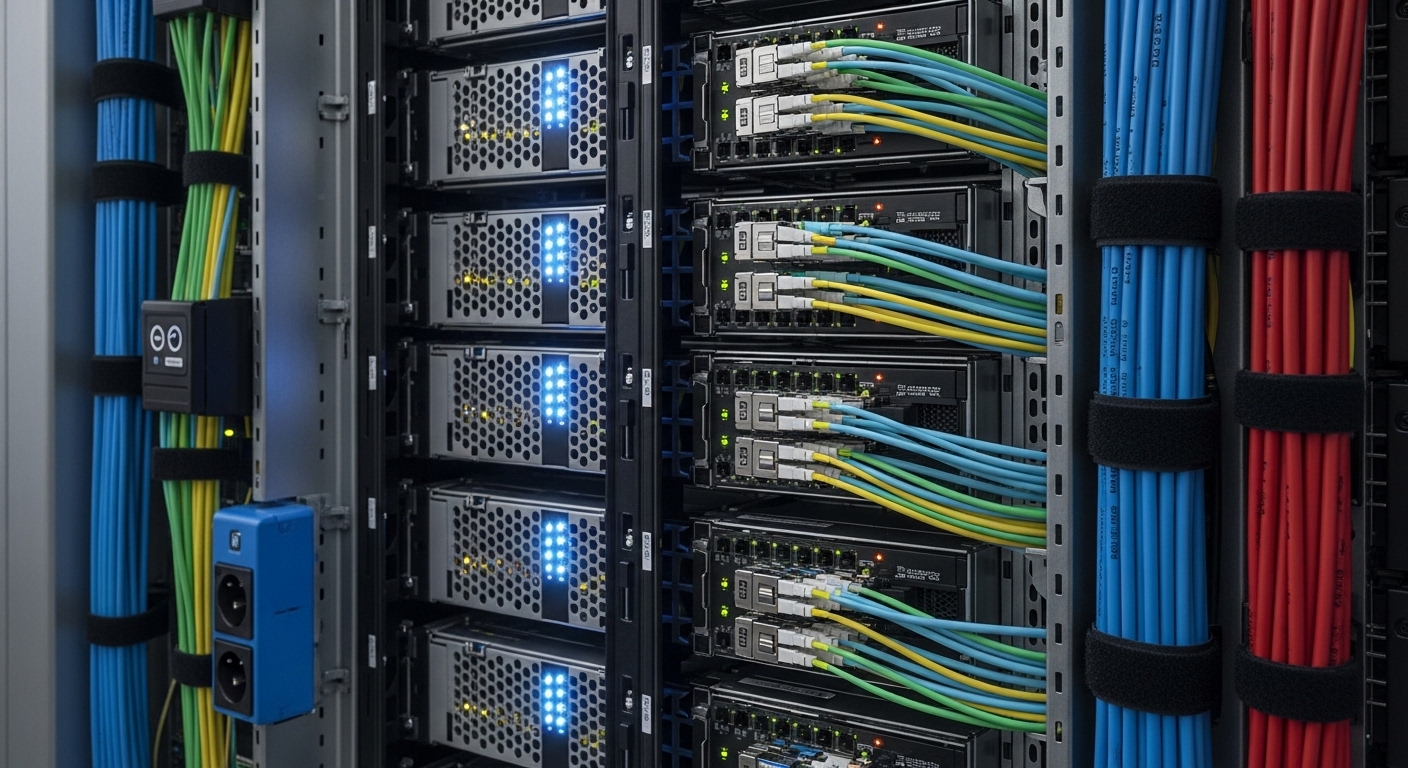
Open RAN is a system of systems: distributed unit, radio unit, transport network, and control software must agree on interfaces, timing, and physical-layer behavior. In real deployments, the “glue” is usually Ethernet fronthaul with strict latency and clocking requirements, plus optics that must match wavelength and reach budgets. Even when you meet IEEE 802.3 electrical requirements, vendor-specific transceiver diagnostics, DOM behavior, or switch optics policies can still block link stability. The result is intermittent link up/down cycles, degraded packet error rates, or PRACH/beamforming issues that look like RF problems.
Fronthaul alignment: physical layer meets timing
Many Open RAN deployments rely on CPRI-like functional splits transported over Ethernet with tightly controlled delay variation. Field teams often target deterministic behavior by controlling switch cut-through mode, QoS, and PTP profile selection. If your optical modules and fiber plant are marginal, the PHY may retrain often, increasing latency variation. This is why “it links up” is not the same as “it is compatible for the entire shift.”
Pro Tip: During acceptance testing, monitor both link stability and optical diagnostics for at least 24 hours. We have seen modules that pass a 10-minute cable test but later drift in bias current, causing temperature-dependent receiver margin loss and intermittent CRC bursts.
Compatibility checklist for Open RAN optics and transport
Engineers usually start with “distance and data rate,” but Open RAN compatibility depends on a wider set of constraints. Use the ordered checklist below to reduce surprises when integrating RU, DU, and transport gear across vendors.
- Distance budget: confirm fiber type (OM3/OM4/OS2), connector loss, and patch-cord counts; then map to the module reach spec.
- Transceiver form factor and data rate: ensure the switch ports support the exact module class (for example 10G SFP+, 25G SFP28, 100G QSFP28/QSFP56) and the correct lane mapping.
- Wavelength and optics class: match 850 nm SR for multimode or 1310/1550 nm for long-haul; verify the vendor’s minimum launch power and receiver sensitivity.
- Switch compatibility and DOM policy: verify the switch accepts third-party optics or enforces vendor whitelists; confirm DOM reads (temperature, voltage, bias, power) are not blocked by firmware.
- Timing and PTP support: confirm switch and NIC support the required PTP profile and transparent clock behavior; confirm cut-through or store-and-forward settings do not violate latency budgets.
- Operating temperature: check module and switch airflow assumptions; fronthaul optics in outdoor cabinets can exceed indoor-rated thermal envelopes.
- Vendor lock-in risk: plan a second-source strategy and validate “same spec, different vendor” behavior early using BER and DOM trend data.
Key specs to compare before you buy
For Open RAN fronthaul, the optics must match the physical layer expectations of your switch and the fiber plant. Compare wavelength, reach, power class, and temperature range, then validate with vendor datasheets and your switch transceiver compatibility list.
| Module example | Data rate / Form | Wavelength | Typical reach | Connector | Temperature range | Common use in Open RAN |
|---|---|---|---|---|---|---|
| Cisco SFP-10G-SR | 10G / SFP+ | 850 nm | Up to 300 m (OM3 typical) | LC | Commercial (varies by exact suffix) | Short multimode fronthaul segments |
| Finisar FTLX8571D3BCL | 10G / SFP+ | 850 nm | Up to 300 m (OM3) | LC | 0 to 70 C typical | Interoperable SR optics where whitelisting is not strict |
| FS.com SFP-10GSR-85 | 10G / SFP+ | 850 nm | Up to 300 m (OM3) | LC | -5 to 70 C typical (confirm exact SKU) | Cost-effective SR rollouts with prior validation |
Note: exact reach depends on patch cords, insertion loss, and link margin targets. Always confirm BER testing results with your switch and fiber plant.
Real-world deployment scenario: leaf-spine plus fronthaul optics
In a 3-tier data center leaf-spine topology with 48-port 10G ToR switches and 100G spine uplinks, a carrier lab integrates an Open RAN DU-to-RU testbed using short-reach SR optics. Each RU rack has 12 Ethernet links at 10G to the DU, using LC 850 nm SR modules over OM4 with an average installed span of 120 m, plus two patch cords per link. Engineers set switch ports to the expected optics profile and monitor DOM every 5 minutes. During initial integration, they discovered that one third-party SFP+ SKU reported DOM values out of the switch’s acceptable threshold, triggering port flaps; replacing it with a validated model stabilized the links and improved packet error rate under continuous load.
Common mistakes and troubleshooting in Open RAN compatibility
Even careful teams hit predictable failure modes. Here are field-tested pitfalls, their likely root causes, and practical fixes.
Port flaps or link up/down loops after optics insertion
Root cause: switch firmware blocks or misinterprets DOM readings, or optics do not meet required electrical characteristics for that port. Sometimes transceiver vendor-specific calibration tables differ.
Solution: check the switch transceiver compatibility list; update switch software if allowed; test with a known-good OEM module; then compare DOM temperature and RX power trend during a 24-hour soak test.
“It links” but fronthaul performance degrades under load
Root cause: insufficient optical margin from fiber loss, dirty connectors, or a mismatched reach assumption (for example OM3 vs OM4 confusion). Retries raise latency variation and harm deterministic transport.
Solution: clean and inspect connectors, remeasure loss with an OTDR or certified light meter, and validate BER with traffic patterns that match RU load.
Timing symptoms that look like RF issues
Root cause: PTP profile mismatch, transparent clock misconfiguration, or switch features that alter latency asymmetrically. Intermittent PHY retraining from marginal optics can also disrupt clock recovery.
Solution: confirm PTP settings end-to-end, lock the network to the intended master, and correlate PHY retrain events with PTP offset and delay variation metrics.
Cost and ROI: OEM vs third-party optics for Open RAN
Budget decisions should include not just module price, but integration cost and downtime risk. OEM SFP+ optics often cost more per unit than third-party options, but they typically reduce acceptance-test time because switch vendors validate DOM behavior and compatibility. Third-party modules can be cost-effective, with typical 10G SR pricing often several tens of percent lower, yet the TCO can rise if you must run longer validation cycles or keep extra spares due to variability. For Open RAN, ROI is strongest when you standardize on a small set of validated SKUs and document acceptance tests so future sites reuse the same proven configuration.
FAQ
How does Open RAN affect transceiver compatibility requirements?
Open RAN adds strict end-to-end behavior requirements, so optics that merely “link” may still cause retraining or elevated error rates. Compatibility also depends on switch DOM policies and timing behavior, not only wavelength and reach.
What fiber and wavelength choices are most common for Open RAN fronthaul?
Short-reach deployments frequently use 850 nm multimode SR optics over OM3 or OM4 with LC connectors. Longer segments may require 1310 nm or 1550 nm optics over OS2, depending on distance and loss budgets.
Are third-party transceivers safe for Open RAN?
They can be, but you must validate with your specific switch model and firmware because DOM interpretation and optics certification differ
