
Telecom teams rarely get pushback on bandwidth goals; they get pushback on the optical bill. This article helps network planners and field engineers compare upgrade paths for next-gen solutions—from coherent optics to simpler pluggable transceivers—using a cost and ROI lens. You will see how choices impact capex, power, outage risk, and operational complexity, with concrete parameters pulled from common IEEE-aligned Ethernet transport practices.
Coherent optics vs pluggable upgrades: where the money actually goes
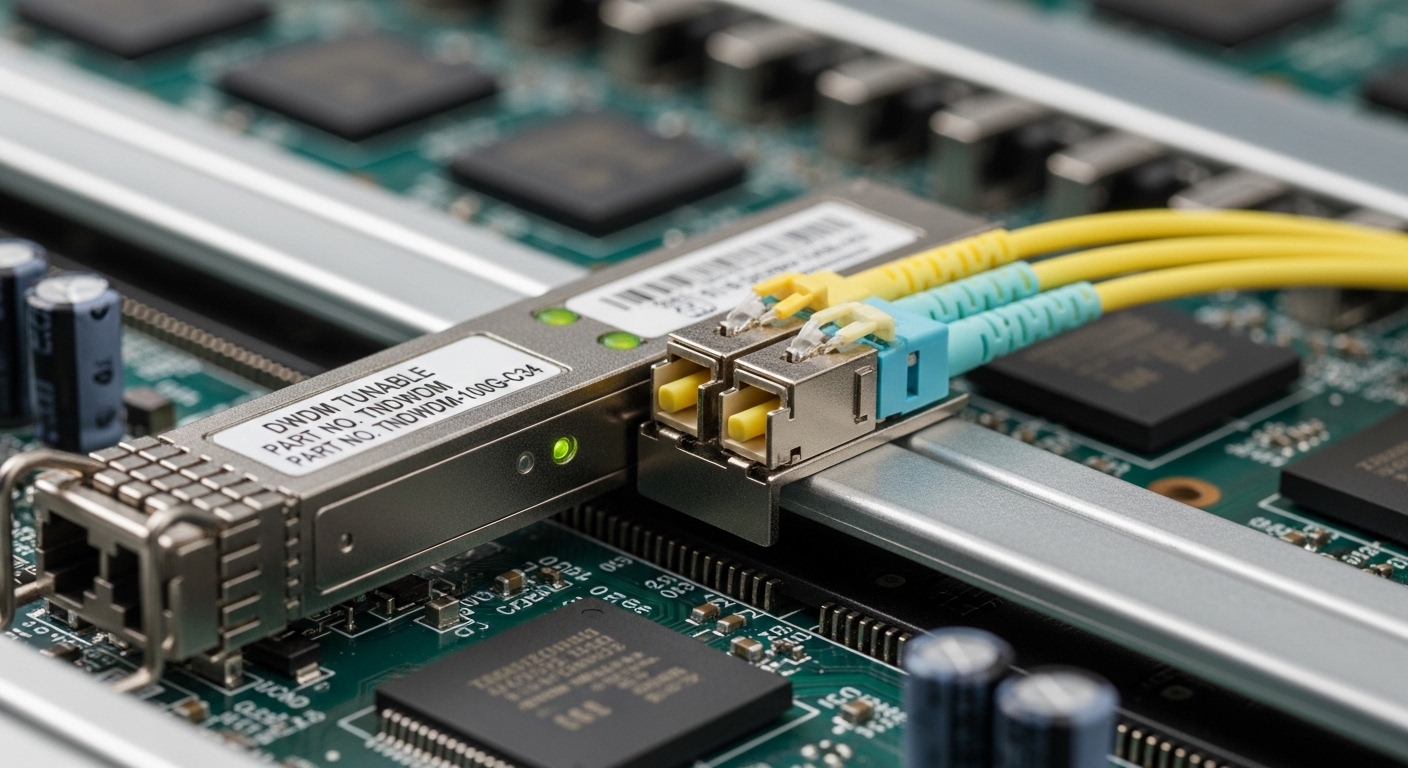
In a cost analysis, the temptation is to compare only transceiver unit prices. In reality, the largest deltas often come from optics type, optics inventory strategy, and the knock-on work needed in fiber terminations, patching, and link bring-up. Coherent optics can unlock long reach and higher spectral efficiency, but they typically demand tighter engineering control: dispersion budgets, OSNR targets, and cleaner commissioning windows.
Pluggable upgrades (SFP/SFP+/QSFP variants) are usually the fastest route when you are moving from legacy 10G/40G to 25G/100G over existing structured cabling or short-reach fiber. Their capex can be lower per link, and the operational model is simpler because many switches support standardized optics and DOM telemetry. The tradeoff is distance: most direct-attach and short-reach optics are constrained by fiber type, link budget, and connector losses.
Cost drivers that matter in telecom procurement
- Reach class: short-reach optics avoid expensive regeneration, but coherent can reduce the number of sites.
- Installation labor: new fiber splicing, MPO polarity management, and re-labeling often dominate the first-year budget.
- Power and cooling: coherent DSP and higher-speed optics can raise steady-state power draw.
- Spare strategy: coherent optics may require fewer units but higher replacement cost and longer lead times.
Performance and optics specs: comparing real-world upgrade options
Performance comparisons should be anchored to the physical layer you are actually deploying. For Ethernet transport, vendors typically align implementations with IEEE 802.3 link layer behavior, while the optics themselves follow vendor-specific electrical and optical interfaces. The table below compares representative module families used in telecom and metro upgrades, highlighting the practical constraints that drive link feasibility.
| Option | Example module | Data rate | Wavelength | Typical reach | Connector | Power (typ.) | Operating temp | Where it fits |
|---|---|---|---|---|---|---|---|---|
| Short-reach 10G SR | Cisco SFP-10G-SR (10GBASE-SR) | 10G | 850 nm | Up to ~300 m (OM3, varies by budget) | LC | ~0.6–1.0 W | 0 to 70 C (typ.) | Data center interconnect and metro edge with existing MMF |
| Short-reach 10G SR (third-party) | FS.com SFP-10GSR-85 | 10G | 850 nm | Up to ~300 m (OM3, varies) | LC | ~0.7–1.0 W | 0 to 70 C (typ.) | Cost-optimized replacements with switch compatibility checks |
| 40G SR4 | Finisar FTLX8571D3BCL (example SR4 class) | 40G | 850 nm | Up to ~150 m (OM3, varies) | MPO/MTP (4 lanes) | ~3–4 W | 0 to 70 C (typ.) | Higher-density upgrades in structured cabling environments |
| Coherent long-haul/metro (conceptual) | Vendor coherent transceiver (varies by OSNR targets) | 100G–400G+ | C-band (typ.) | 10s to 100s of km (design-dependent) | LC/optical interface (varies) | ~10–30 W (design-dependent) | -5 to 70 C (typ.) | When fiber reach or regeneration count drives ROI |
Note: Reach and power vary by exact SKU, fiber plant (OM3 vs OM4), connector cleanliness, and link budget assumptions. Always validate with vendor datasheets and your installed fiber measurements, not marketing reach.
Pro Tip: In metro upgrades, the hidden ROI lever is often not the transceiver reach; it is your ability to preserve existing patching and polarity. If you are already organized around consistent MPO polarity conventions and labeling discipline, pluggable upgrades can reduce both outage windows and rework labor more than the raw module price suggests.
Decision checklist: choosing next-gen solutions that survive cost scrutiny
Engineers tend to decide quickly on optics when the distance is obvious. The harder decisions happen when budgets tighten and timelines compress, forcing tradeoffs between capex, risk, and operational friction. Use the ordered checklist below to make the choice defensible to both technical leadership and finance.
- Distance and fiber type: confirm MMF grade (OM3/OM4) or SMF attenuation and dispersion; measure with an OTDR where possible.
- Switch and line card compatibility: verify transceiver support lists, speed modes, and any required firmware baselines.
- DOM and telemetry requirements: ensure Digital Optical Monitoring is supported and that your NMS can ingest thresholds and alarms.
- Power and thermal envelope: compare module power and airflow constraints in the rack; check temperature range for the site.
- Vendor lock-in risk: evaluate third-party optics policies and any authentication mechanisms your platform enforces.
- Commissioning time: estimate per-link bring-up effort including polarity checks, cleaning, and verification tests.
- Spare parts strategy: consider lead times and expected failure rates; plan spares proportional to criticality.
For authority on Ethernet optical interfaces and operating modes, anchor your transport assumptions to IEEE Ethernet behavior. For practical module capabilities, rely on vendor datasheets and switch compatibility matrices. [Source: IEEE 802.3] IEEE 802.3 standard
Cost and ROI note: realistic price ranges and TCO levers
In telecom optical upgrades, ROI is usually won or lost in the first 12 to 24 months. A coherent optics deployment can reduce the number of regeneration sites, but it can also increase power draw and commissioning complexity. Pluggable approaches often look cheaper per link, yet their ROI depends on whether your fiber plant can support the reach and whether you can avoid rework costs.
Typical procurement ranges vary by market and volume, but a practical planning model is to budget beyond module cost: include installation labor, spares, cleaning consumables, test gear time, and potential downtime. OEM optics may carry a premium, while third-party optics can cut unit cost; however, compatibility and warranty terms can shift TCO through higher troubleshooting time or replacement cycles. For field reality, treat “price per port” as only one line item, and treat “time-to-stable-link” as the cost multiplier.
Common mistakes and troubleshooting tips during upgrade execution
Even when the optics are correct on paper, field failures tend to cluster around a few predictable issues. Below are concrete failure modes with root causes and fixes, drawn from how links actually fail during bring-up and maintenance.
Distance mismatch caused by optimistic reach assumptions
Root cause: using datasheet reach without accounting for actual fiber loss, patch cord aging, connector end-face contamination, or budget margins for temperature and aging. Solution: re-run link budget with measured attenuation; verify fiber grade (OM3 vs OM4) and connector count; add margin for worst-case temperature and aging.
MPO polarity and lane mapping errors
Root cause: MPO polarity not aligned to the transceiver lane mapping, especially after cabinet moves or patch panel rework. Solution: enforce a polarity convention (A-to-A/B-to-B style) for every cassette; validate with a polarity tester; label both ends before closing trays.
DOM alarms ignored until the outage window opens
Root cause: thresholds not configured in the NMS, or alerts routed to a different ops queue. Solution: set DOM threshold profiles per module type; test alert routing during acceptance; keep a runbook mapping DOM warnings to likely causes (dirty connector, aging laser, thermal issues).
Third-party optics “works” but fails under temperature or firmware changes
Root cause: borderline electrical compatibility, unvalidated firmware combinations, or platform policies that enforce specific behaviors. Solution: validate against your exact switch and firmware version; stage a pilot batch; confirm DOM behavior and link training stability across temperature ramps.
Which Option Should You Choose?
Choose coherent-based next-gen solutions when your ROI story depends on longer reach, fewer sites, or reduced regeneration complexity, and you can fund the engineering rigor and power envelope. Choose pluggable short-reach next-gen solutions when your fiber plant already supports the distance class and you need speed of deployment with lower commissioning risk.
Below is a decision matrix that aligns buyer intent with practical outcomes.
| Reader type | Top priority | Best-fit option | Why it wins |
|---|---|---|---|
| Finance-led buyer | Lower near-term capex | Pluggable upgrades | More predictable pricing and faster installation cycles |
| Reliability-led operator | Stability and supportability | OEM pluggables or validated third-party | Lower risk of firmware and compatibility surprises |
| Network architect | Reach and fewer regeneration sites | Coherent optics | Longer reach can reduce site count and transport complexity |
| Field engineer | Minimize outages during cutover | Validated pluggables with strong DOM | Telemetry and simpler bring-up reduce mean time to restore |
FAQ
What are next-gen solutions in optical telecom upgrades?
They are upgrade paths that increase throughput and reach while improving operational visibility. In practice, the term often maps to coherent optics for long-reach metro and to higher-rate pluggables for short-reach structured cabling.
Are third-party optics a safe cost-saving move?
They can be, but safety depends on switch compatibility, firmware behavior, and DOM telemetry support. Run a pilot batch, confirm stable link training, and verify DOM alarms in your NMS before scaling.
How do I estimate total cost of ownership for optics?
Include capex for modules, installation labor, cleaning and test time, spares inventory, and expected downtime risk. Then add power and cooling impact over the equipment lifecycle, especially for higher-power coherent modules.
What tests should we run during acceptance?
At minimum: verify optical levels, confirm DOM telemetry thresholds, validate link stability across temperature conditions if feasible, and perform polarity checks for MPO-based links. Keep a before-and-after record so failures can be attributed quickly.
When should we choose coherent optics instead of pluggables?
Choose coherent when reach or regeneration count drives network cost, or when you need higher spectral efficiency across longer fiber spans. If your distances fit short-reach classes, pluggables usually deliver a faster ROI.
related topic If you want a deeper look at how fiber plant constraints shape upgrade feasibility, review our guide on fiber budget planning for modern links.
Author bio
