
Your optics budget can quietly balloon when transceivers age out, ports flap, and spares multiply. This reference helps network owners and field engineers justify next-gen optical transceivers with a practical ROI model tied to power, uptime, and compatibility risk. You will get selection criteria, spec comparison, troubleshooting pitfalls, and a decision checklist you can run on the next procurement cycle.
Why next-gen transceivers change ROI math (not just bandwidth)
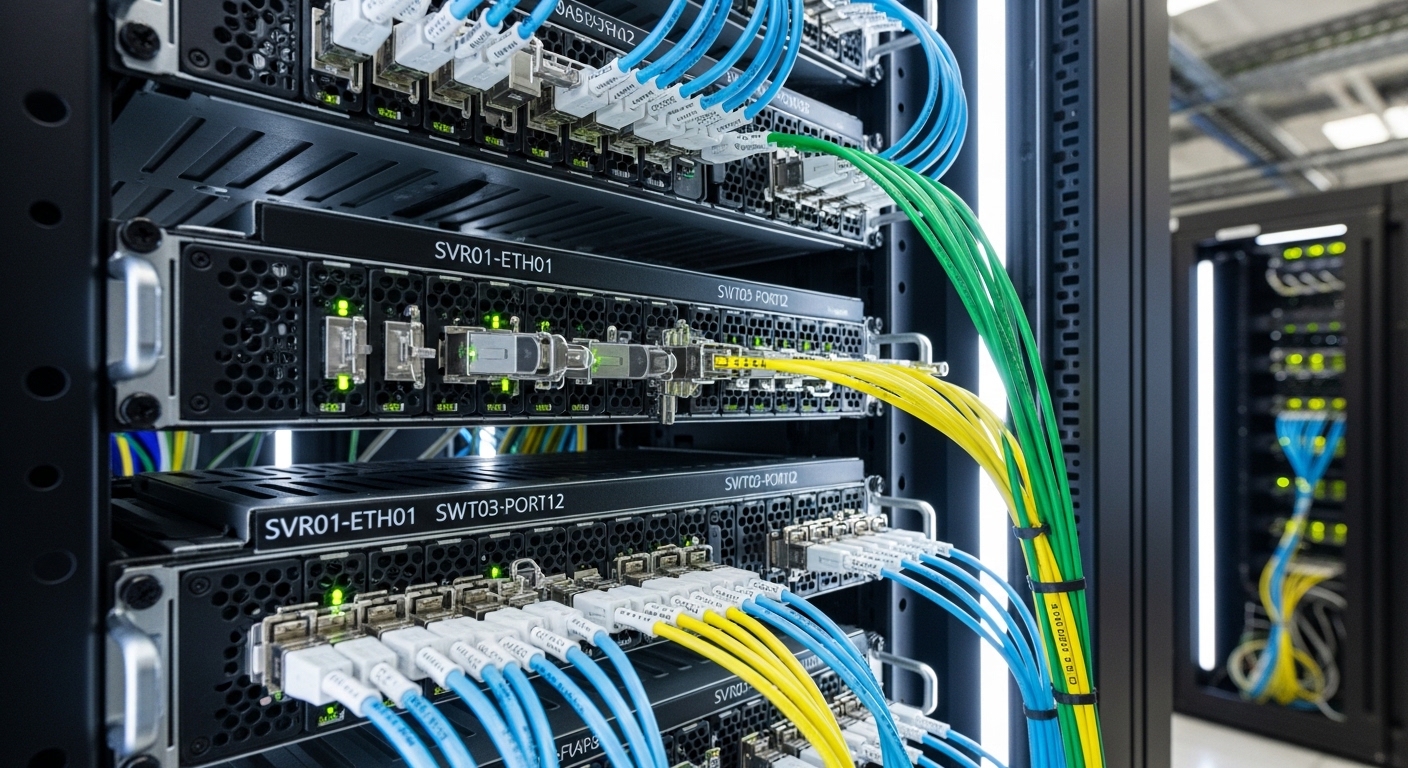
Investing in next-gen optical transceivers usually targets more than speed. The ROI lever that matters most in live networks is often operational stability and energy per bit, because optics failures and port instability create truck rolls, downtime, and emergency spares. In my deployments, the biggest surprise is that power and cooling effects stack across hundreds of ports, while compatibility and optics margin issues show up as recurring incidents rather than one-time buys.
From a standards standpoint, modern transceivers increasingly align with IEEE Ethernet interfaces and vendor-specific optics management. For example, Ethernet PHY expectations follow IEEE 802.3 link behavior, while pluggables expose diagnostics via management interfaces commonly aligned to SFF multi-source agreements (MSA) and digital diagnostics standards. For engineering teams, this means you can reduce mean time to repair (MTTR) by using DOM alarms and trending, not just swapping optics blindly. IEEE 802.3 standard SFF Committee MSA and diagnostics references
Spec comparison that impacts cost per deployed port
ROI improves when you avoid “wrong optics” purchases that cause transceiver incompatibility, reach mismatch, or thermal throttling. The table below compares typical pluggable options engineers evaluate for 10G and 25G campus and data center uplinks, focusing on parameters that directly impact installation success and power draw.
| Transceiver class | Typical data rate | Wavelength / type | Reach (typical) | Connector | DOM / diagnostics | Operating temp range | Power (typical) |
|---|---|---|---|---|---|---|---|
| SFP+ SR | 10G | 850 nm MMF | Up to 300 m | LC | Commonly supported | 0 to 70 C (varies by grade) | ~0.8 to 1.5 W |
| SFP28 SR | 25G | 850 nm MMF | Up to 100 m (OM3/OM4 varies) | LC | Commonly supported | -5 to 70 C (varies by grade) | ~1.0 to 2.0 W |
| QSFP28 SR | 100G | 850 nm MMF | Up to 100 m | MT/MPO-12 or MPO-16 | Commonly supported | 0 to 70 C (varies) | ~3 to 6 W |
| OSFP DR4 / FR4 class | 400G | 1310 nm SMF (varies) | Up to 500 m+ (varies) | LC (varies by design) | Commonly supported | -5 to 70 C (varies) | ~8 to 15 W |
Field note: reach specs depend on fiber grade (OM3 vs OM4), link length, and patch panel losses. I have seen “spec says it should work” links fail because of dirty MPO endfaces, excessive patching, or mismatched patch cords. When you model ROI, include an allowance for re-termination or cleaning time, especially for dense MPO deployments.
What to verify in vendor datasheets before you buy
- Compatibility notes for your exact switch model and software version (some platforms are strict about optics firmware behavior).
- DOM support and alarm thresholds (temperature, laser bias current, received power).
- Optical budget assumptions and recommended fiber types for SR modules.
- Thermal grade: confirm whether you need extended temperature parts for hot aisle exhaust zones.
- Management interface behavior: verify how your NMS reads and correlates DOM events.
Build a simple ROI model for next-gen optics in production
To justify next-gen optics, you need a model that captures both direct savings and hidden costs. The most useful ROI worksheet includes (1) acquisition cost, (2) power and cooling delta, (3) downtime and truck-roll cost avoidance, and (4) spares and returns reduction. You can run it per rack, per site, or per migration phase.
Step-by-step ROI inputs you can measure
- Port count and utilization: e.g., 48 ToR ports per switch, 20% spare, 10 switches per row.
- Transceiver power delta: use datasheet typical power; for more accuracy, measure with a rack power monitor during stable traffic.
- Cooling factor: apply an effective multiplier (commonly 1.2 to 1.8 depending on facility efficiency and PUE). If you already use a standard internal multiplier, reuse it.
- Failure rate and MTTR: estimate from incident logs. Track time-to-replace and time-to-restore link.
- Compatibility incident rate: count optics-related link errors, flaps, and RMA events per quarter.
- Spare strategy: count how many spare modules you keep “just in case,” and the capital tied up in them.
Example ROI calculation you can adapt
Scenario: In a 3-tier data center leaf-spine topology with 48-port 10G ToR switches, you plan to upgrade selected uplinks to 25G optics over 60 active links. Baseline optics are older SFP+ SR; next-gen replacements are SFP28 SR (850 nm MMF). If your measured typical power drops by ~0.4 W per link (example: 1.6 W down to 1.2 W), the savings are:
- Power saved: 60 links × 0.4 W = 24 W
- Annual energy: 24 W × 8760 h = 210 kWh
- Cooling-adjusted energy: if multiplier 1.6, 336 kWh
- At $0.12/kWh: $40/year direct energy (small), but the real ROI comes from uptime and reduced incident handling.
Now add operational impact: if optics-related incidents cost $600 per event (engineer time, change window, and customer impact) and next-gen optics with better DOM and compatibility reduce events from 12 per year to 6, that is $3,600/year avoided. Multiply across sites and the ROI becomes compelling even when energy deltas look modest.
Pro Tip: In practice, DOM alarms can reduce MTTR more than power savings. If your monitoring already captures DOM thresholds (temperature and RX power) and correlates them with link flaps, you can replace a degrading module during a maintenance window instead of after link failures trigger escalations.
Selection criteria checklist for next-gen optical transceivers
The fastest way to protect ROI is to choose optics that match your distance, fiber type, switch compatibility, and operational environment. Use this checklist during RFQ review; it prevents the most expensive failures: rework, returns, and link instability.
- Distance and fiber type: SR modules require MMF grade validation (OM3 vs OM4) and patch loss review.
- Budget and total installed cost: include cleaning tools, MPO/MTP polarity handling, and potential re-termination.
- Switch compatibility: confirm your exact model supports the transceiver class and speed (and whether it needs vendor-qualified optics).
- DOM support and telemetry: ensure your NMS can read and alert on DOM values you care about.
- Operating temperature and airflow: hot aisle zones can push modules beyond spec; choose extended temperature grades where needed.
- Vendor lock-in risk: assess whether third-party optics are accepted and supported by your platform, and whether firmware updates change behavior.
- Supply chain and lead time: for migrations, prefer vendors with stable stock and clear RMA terms.
Compatibility caveats that affect ROI
- Some enterprise switch platforms are sensitive to optics vendor implementation details, even when the form factor matches.
- Pluggable firmware quirks can cause link negotiation differences; test in a lab port or a controlled pilot.
- Using the wrong fiber polarity handling (especially MPO) can yield intermittent link behavior that looks like “bad optics.”
Common mistakes and troubleshooting tips that protect uptime ROI
Even when specs look perfect, real deployments fail for predictable reasons. Below are common pitfalls with root causes and practical fixes you can apply during turn-up or post-change monitoring.
“It should work” reach mismatch
Root cause: SR reach assumptions ignore patch panel loss, aging fiber, or excessive connectors. A link near the edge of the budget can flap under temperature variation.
Solution: Validate with an optical budget worksheet using measured insertion loss. Then clean and re-check fiber endfaces; if still marginal, move to a longer-reach option or reduce patch count.
MPO/MTP polarity and connector contamination
Root cause: In dense cabling, polarity swaps or endface contamination cause intermittent RX power drops that mimic transceiver defects.
Solution: Use proper polarity guides for MPO jumpers, verify mapping at both ends, and clean endfaces with lint-free swabs and approved cleaning kits before blaming optics. Re-test with a known-good reference link.
Thermal overshoot in hot aisle or constrained airflow
Root cause: Modules rated for 0 to 70 C (or extended grades) may still overheat if airflow is blocked or fan curves are misconfigured.
Solution: Confirm airflow path integrity, compare module temperature readings via DOM, and adjust fan settings or rack placement. If you operate near thresholds, select extended temperature grades.
DOM alarms ignored during early degradation
Root cause: Teams monitor link up/down but do not act on early DOM trends, so failures occur in peak hours.
Solution: Set alert thresholds for RX power and temperature drift, and create a “maintenance window replacement” policy when thresholds trend toward failure.
Switch software mismatch during rollout
Root cause: Firmware updates can change how the switch interprets optics diagnostics or link parameters, causing unexpected behavior after cutover.
Solution: Pilot with the target software version, capture baseline telemetry, and roll back if optics-related events spike. Keep a change log that ties optics model and switch version together.
Cost and ROI reality check: OEM vs third-party optics
Price varies by speed, reach, and certification. Typical street pricing ranges (ballpark, varies by market and quantity) for enterprise pluggables:
- SFP+ SR (10G, 850 nm): often $30 to $120 per module
- SFP28 SR (25G, 850 nm): often $70 to $200 per module
- QSFP28 SR (100G): often $250 to $900 per module
OEM modules may cost more, but they can reduce compatibility risk and shorten RMA cycles when support is strict. Third-party modules can deliver strong ROI when validated, but you must budget for testing and a conservative pilot. Total cost of ownership (TCO) should include failure handling time, truck-rolls, and the opportunity cost of blocked change windows.
For concrete examples, common market parts include Cisco SFP-10G-SR class optics, Finisar FTLX8571D3BCL family optics, and FS.com SFP-10GSR-85 style optics (verify exact specs for your required DOM and wavelength). Always confirm with your switch vendor compatibility list or run a pilot test.
FAQ about next-gen optical transceivers and ROI
How do I quantify uptime ROI for next-gen optics?
Start with your incident logs: count optics-related link flaps, RMA events, and time-to-repair. Convert engineer hours and change-window disruption into dollars, then estimate how DOM telemetry and better compatibility reduce event frequency and MTTR.
Will power savings alone justify next-gen optics?
Often, power deltas are modest per module, especially for short-reach links. In most real cases, ROI is driven more by reduced failures, faster troubleshooting with DOM, and fewer emergency swaps than by energy savings alone.
What DOM metrics should I alert on for ROI protection?
Track module temperature, laser bias current trends, and received optical power (RX) where available. The key is to alert on drift patterns early, not only on hard thresholds that trigger after degradation becomes visible.
How do I reduce vendor lock-in risk while still protecting compatibility?
Run a controlled pilot using your target switch software, capture telemetry and link stability metrics, and document success criteria. Then standardize on a small set of validated module part numbers with clear RMA terms.
What is the most common reason “new optics” cause link flaps?
In dense fiber environments, contamination or polarity mistakes are the top causes, not the transceiver itself. Verify cleaning, polarity mapping for MPO/MTP, and patch loss before escalating to returns.
What should I test in a pilot before scaling next-gen deployment?
Validate link establishment time, sustained error counters under expected traffic load, and DOM telemetry stability across temperature swings. Also test after a controlled fiber move or patch change to ensure operational procedures remain reliable.
If you want ROI you can defend, treat next-gen optics as an operational reliability program, not just a bandwidth upgrade. Next step: map your current incident drivers and compare them to the telemetry and compatibility checklist in how to choose fiber optic transceivers for data center ROI.
Author bio: I design and validate pluggable optics rollouts in leaf-spine and campus networks, using DOM telemetry to cut MTTR and reduce RMA churn. I focus on measurable outcomes: link stability, compatibility testing, and realistic TCO for mixed OEM and third-party optics.
