
If you are rolling out telecom gear in a central office or edge site, the transceivers are often the hidden bottleneck. This article explains what NEBS Level 3 fiber compliance means in practice, why carriers care, and how to verify documents, test reports, and operating limits before you buy. It is aimed at network reliability engineers, field tech leads, and procurement teams who need fewer surprises during acceptance testing.
What carriers mean by NEBS Level 3 fiber in transceiver terms
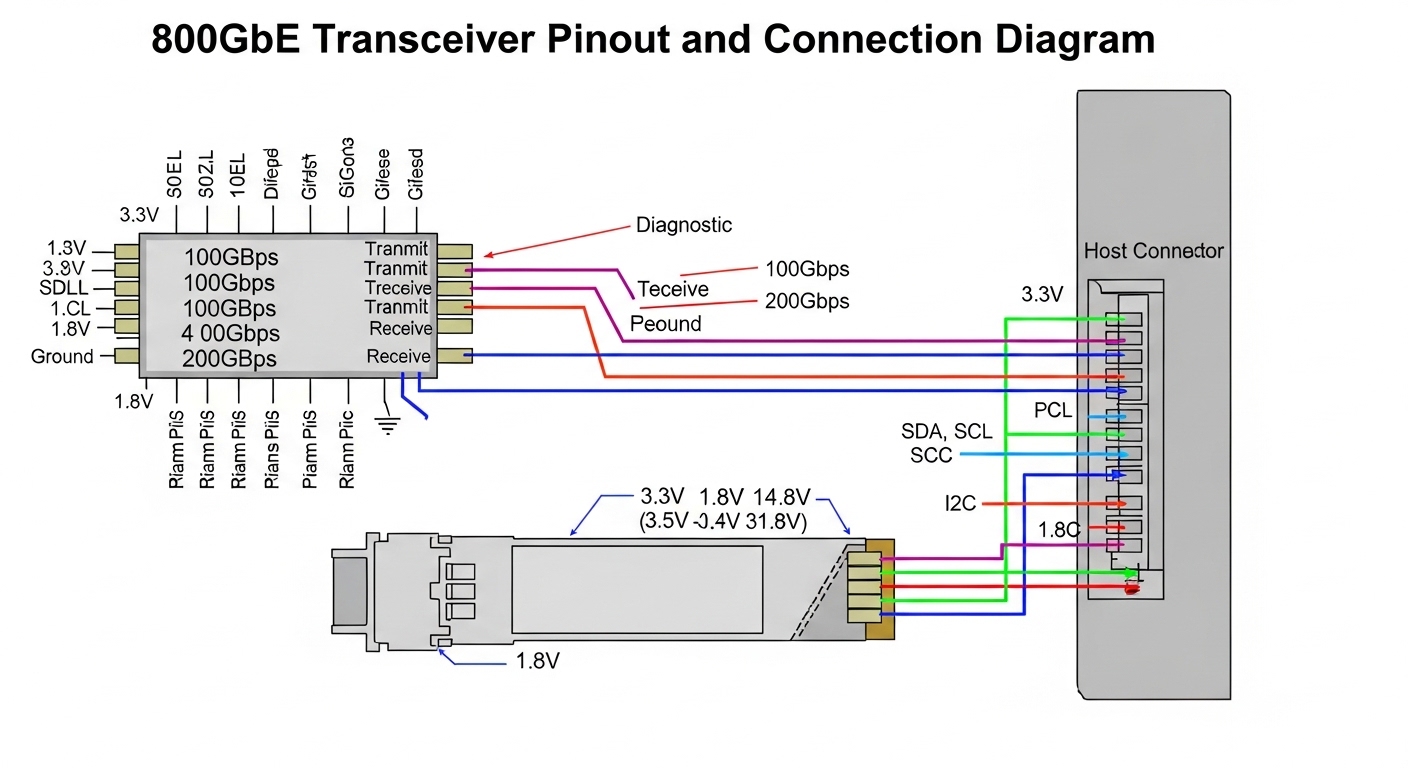
When a carrier says “NEBS Level 3 fiber,” they usually mean the transceiver design and its materials must meet the NEBS requirements expected for telecom equipment deployed in harsh environments. In the real world, that expectation covers more than optical performance; it includes environmental stress, safety, electromagnetic compatibility, and mechanical robustness. Carriers also expect traceability: you cannot just provide a marketing PDF and hope the acceptance team signs off.
NEBS is commonly referenced alongside UL and GR requirements, with test methods that align to the general telecom reliability mindset. For fiber optic transceivers, the optical link budget still matters, but the module must survive vibration, temperature cycling, power transients, and EMI exposure while staying within spec. For standards context, IEEE Ethernet physical layer specifications define optical modulation and receiver sensitivity, while NEBS defines how the product behaves under telecom deployment stresses. [Source: IEEE 802.3] [[EXT:https://standards.ieee.org/standard/]]
Practically, carriers care about three buckets: (1) optical stability after stress (power, wavelength drift, eye quality where applicable), (2) survivability of the module under telecom field conditions (thermal cycling, shock, connector mating), and (3) safety and interference behavior (ESD, radiated emissions, susceptibility). If a module passes optical link tests but fails safety or EMI, it will not ship into many carrier networks.
Carriers acceptance checklist: documents, test evidence, and traceability
In my field experience reviewing acceptance packages, the fastest path to approval is submitting a complete evidence bundle up front. Carriers typically ask for NEBS-related compliance statements and test reports, plus optical and electrical specs that match the target Ethernet standard and cabling plant. You want a consistent story across the entire supply chain: module model, vendor part number, and whether the design is truly the same revision that was tested.
Here is the evidence list that tends to show up in carrier RFQs and acceptance portals. If any item is missing, you often end up in an iterative loop where the vendor has to reissue paperwork.
- NEBS Level 3 compliance statement tied to the exact module part number (including revision/lot if provided).
- Test reports covering the relevant NEBS environmental and safety categories, not just a generic “compliance summary.”
- GR-1089 style environmental and reliability testing evidence, where applicable to the equipment class and deployment environment.
- EMI/EMC evidence for radiated and conducted emissions, plus susceptibility/ESD handling, depending on the carrier’s equipment interface.
- Optical specifications for the exact transceiver class: wavelength, reach, transmit power, receiver sensitivity, and optical budget assumptions.
- DOM support details (Digital Optical Monitoring): what parameters are exposed, thresholds, and whether it supports the switch vendor’s DOM implementation.
- Compatibility confirmation with the target line card or transceiver cage, including vendor and switch model numbers.
If you are aligning to IEEE Ethernet physical requirements, ensure the module supports the correct optical interface and signaling expectations (for example, 10GBASE-SR, 10GBASE-LR, 25GBASE-SR, 100GBASE-SR4, depending on your design). For optical and electrical behavior, IEEE physical layer specs are the baseline for link functionality. [Source: IEEE 802.3] [[EXT:https://standards.ieee.org/standard/]]
Key technical specs carriers still verify for NEBS Level 3 fiber links
NEBS compliance does not replace the engineering requirements for the link. Carriers still verify that the optical link stays within the required budget after environmental stress. That means you should plan around wavelength, launch power range, receiver sensitivity, and how much margin you have for aging, connector loss, and patch panel variability.
Below is a practical comparison of common short-reach multimode and longer-reach single-mode optics that often appear in carrier builds. The goal is not to claim every module is NEBS-compliant, but to highlight the specs you should align to your standard and your acceptance tests. Always validate with the module’s datasheet and the carrier’s approved transceiver list.
| Transceiver type | Wavelength | Typical data rate | Reach (typical) | Connector | Operating temperature | DOM | Notes for NEBS acceptance |
|---|---|---|---|---|---|---|---|
| 10GBASE-SR (SFP+) | 850 nm | 10 Gb/s | ~300 m over OM3, ~400 m over OM4 | LC | -5 to 70 C (varies by vendor) | Yes (common) | Confirm environmental test evidence for the exact part number |
| 25GBASE-SR (SFP28) | 850 nm | 25 Gb/s | ~70 m over OM3, ~100 m over OM4 (varies) | LC | -5 to 70 C (varies) | Yes (common) | Carrier often checks thermal stability and power ranges after cycling |
| 100GBASE-SR4 (QSFP28) | ~840 to 860 nm (multi-lane) | 100 Gb/s | ~100 m over OM4 (varies) | LC | -5 to 70 C (varies) | Yes | Verify lane skew tolerance and DOM behavior with the target switch |
| 10GBASE-LR (SFP+) | 1310 nm | 10 Gb/s | ~10 km (single-mode) | LC | -5 to 70 C (varies) | Yes (common) | Confirm safety and EMI evidence; single-mode plant losses can vary |
For telecom acceptance, the most painful failures tend to be “works on the bench, fails after stress.” That is why carriers care about environmental stress tests and why you should request the actual test conditions: cycle profiles, dwell times, and pass criteria. If the vendor only gives you a single “compliant” line item, you may not be able to defend the module under audit.
Pro Tip: Ask for the test report revision date and compare it to the module revision you plan to deploy. Even small vendor changes (laser drive tuning, thermal sensor calibration, connector vendor) can invalidate a “same as tested” claim, and carriers will often re-check if the part number or revision differs.
Real-world deployment scenario: NEBS Level 3 fiber in an edge build
Picture a carrier edge site with a leaf-spine topology where each leaf has 48 ports of 10G and uplinks using 100G optics. The build uses 2 line cards per chassis for redundancy, with total transceiver count often exceeding 200 modules per site. The equipment is installed in a cabinet where ambient temperature swings between 15 C and 40 C across seasons, and field technicians must swap modules quickly during maintenance windows.
During acceptance, the carrier runs link bring-up checks, verifies DOM readings (temperature, bias current, received power), and then subjects the installed system to environmental and EMI acceptance steps. If your transceivers have marginal thermal performance or weak EMI robustness, you can see intermittent receiver loss or DOM alarms that do not show up in a short bench test. In this scenario, having NEBS Level 3 fiber documentation plus evidence that the module remains stable under stress reduces late-stage rework and shortens the path to go-live.
Selection guide: how to choose NEBS Level 3 fiber transceivers that pass acceptance
Engineers typically make the decision based on more than reach. Below is the ordered checklist I use when I need to reduce risk for carrier acceptance and long-term reliability. If you follow it, you will catch most problems before purchase orders go out.
- Distance and fiber type: confirm OM3/OM4 grade for multimode, and measure actual single-mode losses including connectors and splices.
- Data rate and optical standard: match the transceiver to the exact IEEE Ethernet physical standard required by the switch and line card.
- Switch compatibility: validate with the switch vendor’s transceiver support list and confirm the transceiver cage tolerances and power budget.
- DOM behavior: ensure the vendor supports DOM fields needed by the platform and that alarms map correctly (thresholds, presence detection, fault flags).
- Operating temperature and derating: compare the module temperature range to the cabinet ambient profile; ask whether performance is guaranteed at the upper end.
- NEBS Level 3 test evidence: request test reports tied to the exact part number and revision, including environmental stress and safety/EMI categories.
- Vendor lock-in risk: for OEM-only ecosystems, negotiate pricing and spares policies; for third-party, demand traceability and warranty terms that match your MTBF expectations.
Concrete module examples to sanity-check your spec alignment
During procurement, you will often see specific part families from major vendors. For example, Cisco transceiver SKUs like Cisco SFP-10G-SR and Cisco 100G QSFP28 options are commonly referenced in enterprise and carrier designs, while optical vendors produce compatible optics such as Finisar FTLX8571D3BCL or FS.com SFP-10GSR-85 variants for certain deployments. Even if the optical class matches, carriers can still require NEBS-specific documentation for the exact transceiver part number and revision used in the field.
So treat “looks compatible” as the starting point, not the finish line. Your acceptance outcome hinges on both optical correctness and the compliance evidence package.
Common mistakes and troubleshooting tips during NEBS Level 3 fiber rollouts
Most acceptance failures fall into a few repeatable patterns. Here are the ones I have seen most often, with practical root causes and fixes.
-
Mistake 1: Assuming the optical datasheet equals compliance
Root cause: the vendor provides optical specs but not NEBS Level 3 test evidence tied to the exact part number and revision.
Fix: require the compliance statement and test reports for the exact SKU, then store them in your change control system. -
Mistake 2: DOM alarms after thermal cycling
Root cause: DOM threshold mapping differs between transceiver vendors and the switch platform, or the module’s thermal behavior is marginal at the cabinet’s upper ambient.
Fix: validate DOM readings during a temperature soak or in a controlled burn-in; confirm alarm thresholds and monitor for bias current drift. -
Mistake 3: Link instability caused by fiber plant variability
Root cause: connector inspection issues, dirty LC ferrules, or patch panel loss push the receiver too close to sensitivity limits.
Fix: clean and inspect with a scope, replace suspect patch cords, and re-measure optical power at the transceiver ends. -
Mistake 4: EMI susceptibility surprises
Root cause: the module passes bench link tests but fails in the full cabinet environment with nearby high-current equipment, leading to intermittent errors or CRC spikes.
Fix: rely on vendor EMI/susceptibility evidence, and if issues appear, correlate error bursts to power events and run a controlled re-test with the same cabling and grounding.
If you see repeated “link up/down” events, start with the physical layer: cleaning, seating, and verifying that the correct wavelength type matches the fiber plant. Then move to DOM and error counters. Only after that should you consider compliance rework, because swapping modules without narrowing the root cause wastes time and increases downtime.
Cost and ROI: what NEBS Level 3 fiber adds to total ownership
Price varies widely by data rate and by whether the vendor is OEM, an approved third party, or a generic compatible optic. In many carrier procurement cycles, OEM optics can cost roughly 1.5x to 3x more than third-party equivalents, especially for high-density 100G QSFP28 and hardened variants. However, the ROI is not just unit price; it is spares stocking, acceptance delays, and the operational cost of troubleshooting field failures.
From a reliability lens, NEBS-aligned modules typically come with better confidence in survivability under telecom stress profiles, which can reduce mean time to repair and lower the probability of early-life failures. Even if the MTBF claim is not a guarantee, a vendor that can produce real test evidence and consistent DOM behavior usually reduces your acceptance risk. For TCO, include power usage (small but non-zero), failure handling labor, shipping/returns, and the downtime cost during maintenance windows.
FAQ
What does NEBS Level 3 fiber change compared to standard pluggable optics?
It changes the expected environmental, safety, and EMI robustness of the transceiver design as required for telecom deployments. Optical performance still must meet the relevant IEEE physical layer requirements, but NEBS-focused testing is what reduces field surprises. [Source: IEEE 802.3]
Do I need NEBS Level 3 fiber for every transceiver in the rack?
Often the carrier requires it for the equipment class being deployed, which can include all pluggable optics used in that chassis. If your carrier only certifies specific parts on an approved list, you should follow that list exactly for acceptance. Ask for the carrier’s material or transceiver approval policy in writing.
How can I confirm DOM support will match my switch?
Request the DOM parameter list from the vendor and compare it to what the switch platform expects. Then validate during lab bring-up by reading temperature, bias current, and received power, and confirm alarm thresholds behave as expected. If you see persistent DOM faults, treat it as a compatibility issue before assuming fiber problems.
Can a third-party transceiver be NEBS Level 3 fiber compliant?
Yes, but you must verify the compliance evidence is tied to the exact part number and revision you plan to deploy. Many third-party optics are optically compatible, but without the right test reports and traceability they may fail carrier acceptance. Make the compliance package part of your purchase requirements.
What is the most common root cause of intermittent link errors after installation?
In my experience, the most common causes are dirty connectors, marginal optical budget due to plant variability, or thermal/DOM threshold mismatches. Start with physical inspection and optical measurements, then check switch error counters and DOM logs. Only after narrowing the root cause should you revisit compliance documentation.
Where should I store NEBS compliance evidence for audit readiness?
Store it in your change control and document management system with the exact SKU, revision, and test report identifiers. During audits, you want to show traceability from the deployed asset to the compliance evidence bundle, not just a general statement. If you can export a compliance matrix quickly, acceptance becomes much smoother.
NEBS Level 3 fiber acceptance is about proving that your transceivers will keep working safely under telecom stress, not just that the optical link works on day one. If you want the next step, review your transceiver plan against your target standards and switch compatibility using related topic:Transceiver compatibility and DOM mapping.
Author bio: I am a reliability-focused field engineer who has validated telecom optics in cabinet deployments and acceptance test workflows. I write from hands-on failure analysis experience, with an ISO-minded approach to traceability, testing, and operational risk reduction.
