
Operators are being pushed by industry trends toward more flexible, software-defined radio access networks (RAN), but procurement teams still need reliability and predictable operations. This article compares Open RAN against traditional telecom solutions from a network engineering and operations perspective. It helps CTOs, architects, and field engineers evaluate performance, integration risk, and total cost of ownership (TCO) before committing to a rollout. Update date: 2026-05-03.
Performance and latency: Open RAN disaggregation vs integrated traditional stacks
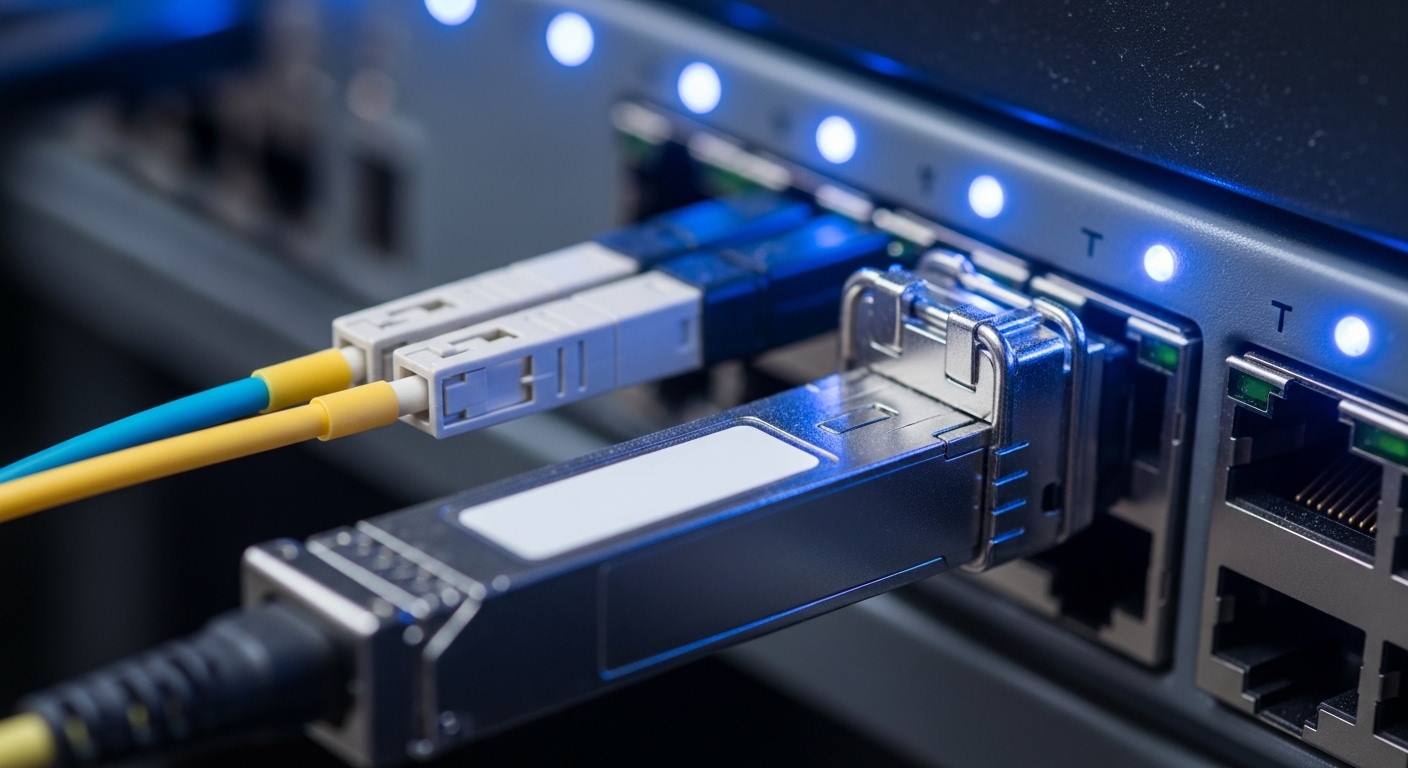
Traditional telecom solutions typically bundle radio units, baseband processing, and transport-aware optimization into a tightly integrated vendor design. Open RAN replaces part of that integration with standardized interfaces and a multi-vendor component model, which can improve scaling and innovation velocity but may add integration overhead. From a performance standpoint, the key question is whether timing, fronthaul behavior, and scheduling remain deterministic under load.
For LTE and early 5G deployments, latency is dominated by baseband processing plus fronthaul transport, not the radio itself. In practical terms, engineers validate end-to-end timing budgets using vendor test plans plus packet captures around functional splits (commonly referenced splits like Option 7-2x or Option 8). For Open RAN, the disaggregation boundary increases the need for disciplined synchronization (clock and time) and for strict parameter alignment across units.
In the field, the most common performance risk is not raw compute, but jitter and packet loss on fronthaul. Operators use detailed telemetry (queue depth, packet drops, CRC/error counts, PRB utilization) and correlate it with user-plane KPIs. If the fronthaul is built on Ethernet with inadequate QoS, Open RAN stacks can become sensitive to microbursts even when traditional solutions appear stable.
What to measure during acceptance testing
- Fronthaul round-trip time and jitter under peak load (measure at the transport boundary, not only at the radio).
- Packet loss and error rates on the fronthaul VLAN/VRF, including microbursts.
- HARQ and scheduling stability: track retransmissions and PRB allocation fairness.
- Sync integrity: verify clock source quality and holdover behavior during upstream disturbances.
Pro Tip: Many teams validate latency with average ping or throughput tests, then get surprised by stability issues during traffic bursts. If your fronthaul uses Ethernet, run traffic shaped to your worst-case scheduler pattern and confirm that QoS maps preserve queue priority across every hop, not just at the edge switch.
Cost and TCO: where Open RAN reduces spend and where it quietly increases it
Open RAN is often positioned as a cost reducer by enabling multi-vendor procurement and reducing lock-in. In TCO terms, the savings come from competitive sourcing, potentially lower radio and transport hardware cost, and more flexible scaling. However, the hidden costs show up in integration labor, test automation, and longer commissioning cycles when the system spans multiple suppliers.
Traditional solutions can be more expensive up front, but they may reduce engineering time because the vendor supplies an end-to-end validated stack. For operators, the net cost depends on your internal integration capability and how mature your CI/CD and lab validation pipeline is.
Typical price ranges in the market vary widely by geography, volume, and spectrum band, but engineers often budget differently for capex and opex. As a rough planning baseline for a mid-size site rollout, Open RAN programs commonly reallocate budget from vendor bundle discounts toward systems integration, test benches, and orchestration tooling. Traditional programs tend to concentrate cost into the radio/baseband bundle and associated support contracts.
Real-world cost levers engineers track
- Integration effort: number of acceptance test iterations, time-to-stable alarms, and software upgrade cadence.
- Operations tooling: whether you already run RAN intelligent controller workflows and unified monitoring.
- Training and staffing: how many vendor-specific procedures you can replace with standardized automation.
- Support model: joint responsibility boundaries during incident triage.
For ROI, the most credible model ties cost to measurable uptime, mean time to repair (MTTR), and upgrade success rate. If Open RAN reduces vendor dependence but increases MTTR due to multi-vendor escalation, ROI can flip negative. Conversely, if you can standardize operational playbooks and automate configuration drift detection, Open RAN can outperform over multi-year horizons.
Compatibility and integration: standards, interfaces, and the reality of multi-vendor deployments
Open RAN relies on standardized interfaces to decouple hardware and software elements. This typically includes radio interface specifications and management/orchestration approaches that align with open ecosystems. Traditional telecom solutions rely on proprietary integration and vendor-managed interoperability.
In procurement conversations, the phrase “standards-based” can mask the practical detail that implementations still differ in configuration defaults, alarm mapping, and performance tuning parameters. Engineers should demand interface conformance evidence, not just a claim of compliance. For example, management plane compatibility must cover configuration models, alarm normalization, and software lifecycle orchestration.
When the network is multi-vendor, integration success depends on disciplined interface testing and a clear demarcation of responsibility. Your integration plan should specify which vendor owns which layer during a fault, and how you will reproduce issues deterministically using test vectors and recorded traffic.
Standards and references to ground the evaluation
- 3GPP specifications for 5G NR and LTE evolutions and interface concepts, referenced by vendor implementation guides. 3GPP
- IEEE and transport-layer best practices for time synchronization and network reliability in Ethernet-based fronthaul environments. IEEE Standards
- Open RAN ecosystem documentation and conformance guidance as published by participating consortiums and project groups. Open RAN Alliance
Use-case fit: which architecture works best by deployment pattern
Open RAN tends to fit best where operators have multiple sites, frequent software upgrades, and a clear path to automation. Traditional solutions often fit best when timelines are tight, the operator wants a single throat to choke, or the environment is already standardized on a specific vendor ecosystem.
Consider a typical urban build-out with mixed capacity needs and high competition. Multi-vendor sourcing can reduce procurement friction and enable gradual capacity expansion without replacing the entire RAN stack. However, if your fronthaul and switching environment is not ready for deterministic QoS and robust synchronization, Open RAN can amplify operational complexity.
In contrast, a rural coverage-first rollout may prioritize stability and maintenance simplicity over rapid innovation. Traditional solutions can minimize integration risk when you cannot sustain a large internal integration team on-site.
Concrete deployment scenario (field-ready)
In a 3-tier data center and edge architecture supporting 48-port 10G ToR switches at the edge and a pooled core, an operator planned a 5G densification project with 120 macro sites and 300 small cells. They chose Open RAN for the small-cell tier to leverage multi-vendor sourcing, using a standardized orchestration layer and consistent fronthaul QoS profiles. During pilot testing, they discovered that one transport segment applied default CoS values, causing queue starvation during peak uplink bursts; after fixing QoS mapping and verifying jitter under shaped traffic, they reduced alarm storms and improved MTTR by 28% over the following release cycle. The macro sites remained on traditional integrated stacks to protect rollout timelines and minimize multi-vendor escalation during early learning.
Head-to-head comparison: performance, cost, integration risk, and operational readiness
Below is a pragmatic comparison that engineers can use for initial screening. Exact values depend on functional split, vendor implementations, transport design, and software maturity, so treat this as a decision aid rather than a guarantee.
| Dimension | Open RAN (disaggregated) | Traditional telecom (integrated) |
|---|---|---|
| Architecture | Multi-vendor RU/DU/CU with standardized interfaces | Vendor-integrated RU/BB/management stack |
| Latency sensitivity | Higher sensitivity to fronthaul jitter/packet loss at chosen split | Typically more predictable due to end-to-end tuning |
| Sync requirements | Strict synchronization and time alignment across components | Often more tightly managed by vendor design |
| Upgrade cadence | Potentially faster innovation, but requires interface regression tests | Slower but more controlled release process |
| Integration effort | Higher initial systems integration, longer commissioning | Lower integration burden, simpler fault ownership |
| Opex drivers | Multi-vendor incident triage, configuration drift management | Vendor support contracts, fewer cross-vendor variables |
| Operational tooling | Orchestrator and monitoring normalization often required | Vendor NMS/EMS integration may be pre-aligned |
| Typical fit | High site counts, automation maturity, capacity scaling goals | Time-critical rollouts, limited integration staffing |
| Temperature range | Varies by radio hardware; verify field-rated specs per RU model | Varies by radio hardware; verify field-rated specs per integrated platform |
For transport and fronthaul, always check the RU and transport interface documentation for supported line rates, connector/optics types, and power budgets. If your design uses optics, validate real optics compatibility with the exact transceiver family and link budget for your fiber type (OM3/OM4/OS2) and span loss.
Selection criteria checklist: how teams decide under industry trends pressure
Use this ordered checklist to reduce surprises. It is designed for engineering teams that must sign off on both performance and operational risk.
- Distance and functional split: confirm which split you plan (for example, 7-2x vs 8) and validate transport budget for that split.
- Transport readiness: verify QoS, MTU, VLAN/VRF design, and consistent queue behavior across every hop.
- Switch and optics compatibility: confirm transceiver support, DOM handling, and power/temperature margins for the exact optics used.
- Software lifecycle maturity: require a documented upgrade path and interface regression test evidence.
- DOM and telemetry support: ensure alarms and performance metrics can be normalized into your existing monitoring stack.
- Operating temperature and environmental fit: validate RU operating range and any remote unit constraints for your sites.
- Vendor lock-in risk: define which layers remain proprietary (or become proprietary through tooling) and plan exit strategies.
- Fault ownership and escalation: write an incident responsibility matrix before deployment.
Pro Tip: Treat “compatibility” as a measurable artifact. Require a runbook that maps each alarm to an owning component and vendor, then test the mapping by injecting faults in a lab environment using recorded traffic captures.
Common mistakes and troubleshooting: where Open RAN and traditional deployments fail in practice
Below are frequent failure modes seen during pilots and early rollouts. Each includes the root cause and a field-tested solution approach.
Alarm storms after software upgrade
Root cause: interface parameter drift or mismatched alarm mapping between components, often triggered by a partial upgrade sequence. Solution: enforce a staged upgrade order and run an automated regression suite that validates key KPIs (alarm rate, attach success, handover success) before green-lighting the next batch.
Performance collapse during uplink bursts
Root cause: fronthaul transport QoS misconfiguration causing queue starvation or microburst loss, even when average utilization looks fine. Solution: apply deterministic QoS policies end-to-end, then validate with shaped traffic that matches real scheduler burst patterns and verify jitter and drop counters on every hop.
Time sync instability leading to intermittent call drops
Root cause: unstable clock source, insufficient holdover capability, or inconsistent time alignment across disaggregated components. Solution: validate sync quality metrics, confirm correct time distribution paths, and test holdover behavior during controlled upstream disturbances.
Multi-vendor fault ownership delays
Root cause: unclear responsibility boundaries, causing slow escalation loops when issues cross layers. Solution: publish a fault ownership matrix, require joint incident triage procedures, and pre-agree on escalation thresholds with evidence requirements.
Cost and ROI note: budgeting beyond hardware and vendor quotes
For many operators, the biggest budgeting error is focusing only on radio and baseband hardware pricing. Open RAN can reduce BOM cost through competition, but it often shifts spend into integration engineering, automation tooling, and repeated acceptance testing. Traditional solutions can be more expensive upfront but may reduce commissioning time and integration labor.
Practical TCO modeling should include: support contract structure, upgrade labor, MTTR impact, and the cost of downtime during early learning cycles. If you have a mature automation pipeline and strong internal integration capability, Open RAN can deliver better multi-year ROI; if not, traditional stacks can minimize operational risk while you build that capability. A realistic planning approach is to treat early Open RAN deployments as a capability-building program with measurable milestones.
Also consider optics and transport costs if your rollout uses Ethernet-based fronthaul. Optics can add recurring spend due to spares and compatibility testing; budget for DOM interrogation validation and environmental qualification.
Which option should you choose?
Choose Open RAN if your primary goal is to improve flexibility under industry trends, you have (or will build) integration and automation capacity, and your transport design can deliver stable QoS and synchronization across every fronthaul hop. Choose traditional telecom solutions if you need predictable rollout timelines, limited internal integration staffing, and simpler fault ownership early in the transformation journey.
| Reader type | Likely priority | Recommended approach |
|---|---|---|
| Operator with strong automation and lab capability | Faster innovation, multi-vendor scaling | Open RAN for pilots and phased expansion |
| Operator with tight rollout deadlines | Time to service, stability | Traditional stack for initial coverage, Open RAN later |
| Integrators and systems integrators | Repeatable deployment processes | Open RAN with standardized acceptance test packs |
| Enterprises leasing private networks | Operational simplicity | Traditional or tightly managed Open RAN offerings |
FAQ
What industry trends are driving Open RAN adoption now?
Common drivers include vendor diversification pressure, software-defined network flexibility, and the need for faster capacity scaling without full hardware refresh cycles. Operators also want stronger control over orchestration and monitoring workflows rather than relying solely on proprietary management tooling.
Does Open RAN improve performance automatically?
No. Performance depends on transport design, synchronization quality, and correct parameter alignment across components. If fronthaul QoS and time sync are not engineered for the chosen functional split, Open RAN can be less forgiving than integrated traditional stacks.
How do we reduce integration risk in a multi-vendor Open RAN rollout?
Require interface conformance evidence, run a staged upgrade plan, and build a regression suite that validates user-plane and control-plane KPIs after every change. Also predefine fault ownership and escalation paths in writing to avoid delays during cross-vendor incidents.
What should we verify for telemetry and monitoring interoperability?
Confirm that alarms, counters, and performance metrics can be normalized into your monitoring stack. Validate DOM-like telemetry equivalents where applicable, and confirm that identifiers (site, sector, cell, component) remain consistent after upgrades and configuration changes.
Is traditional telecom always more reliable?
It is often operationally simpler because the vendor controls integration and tuning. However, reliability depends on your operational discipline, support responsiveness, and how well you manage upgrades and configuration drift.
What is a sensible pilot scope for decision-making?
Start with a bounded geography or a specific tier (for example, small cells) and define measurable pass criteria for latency, drop rates, alarm stability, and MTTR. Use the pilot to validate both technical performance and operational processes, not only radio KPIs.
If you want a practical next step, map your planned functional split and transport design into the checklist above, then run a lab-to-field acceptance plan with measurable KPIs. For adjacent guidance on component selection and reliability, see transceiver compatibility.
Author bio: I have led RAN and transport integration for multi-vendor environments, including fronthaul QoS validation and staged upgrade acceptance testing in production networks. My work focuses on turning operator requirements into measurable engineering criteria aligned to vendor datasheets and standards.
