
Smart factories increasingly depend on deterministic latency, high availability, and clean power budgets across machine cells, aggregation, and plant backbones. This article helps network engineers and field teams map industry applications to practical optical architectures—ranging from 5G fronthaul-style optics and DWDM transport to PON for edge access. You will get an implementation-ready, step-by-step selection workflow, with real-world deployment constraints, typical module examples, and troubleshooting patterns that show up in commissioning.
Prerequisites: what you must measure before choosing optical gear
Before buying transceivers, optical splitters, or transport optics, confirm the physical and operational constraints that will govern link margin and maintenance windows. In plant environments, engineers often discover that the “same fiber type” claim hides different core sizes, connector cleanliness issues, or patch-panel losses that do not match the original build record.
Prerequisite checklist
- Fiber plant audit: OTDR traces, end-to-end loss budget, splice counts, connector type, and expected temperature swing at the cabinet location.
- Traffic profile: whether your application is motion control, machine vision, industrial Ethernet, or uplink aggregation for edge compute.
- Availability target: define whether you need hitless protection (dual homing, ring, or redundant transport) and what outage window is acceptable.
- Power and thermal limits: rack airflow, DC bus voltage stability, and whether modules must operate in high-heat enclosures.
- Vendor and standards compatibility: confirm IEEE 802.3 link requirements, switch optics support lists, and whether your transceiver must be vendor-validated.
Expected outcome: you can produce an engineering-grade loss budget and link plan that matches the actual plant fiber, not the design spreadsheet.
Step-by-step implementation: optical architecture for smart manufacturing
Smart manufacturing optical designs usually fall into three layers: machine-cell edge, aggregation, and plant backbone. The key decision is whether you need short-reach Ethernet optics, longer-reach transport, or wavelength-division multiplexing for capacity scaling.
Classify your industry applications by reach and latency needs
Start with the application-to-reach mapping. Motion control and machine vision often demand low jitter and predictable latency, which pushes you toward direct, short-reach links within a cell or a tightly controlled aggregation tier. For wider plant spans, you typically move to longer-reach optics or DWDM to consolidate capacity.
Expected outcome: a table that lists each application group, required bandwidth, typical distance, and redundancy expectation.
Choose the fiber strategy (dedicated, shared, or PON-based edge)
Within a plant, dedicated fibers reduce troubleshooting ambiguity and simplify deterministic performance. Where you must serve many endpoints from a limited fiber count, PON can be attractive, but you need careful DBA tuning and realistic expectations for upstream scheduling latency. In practice, I have seen industrial PON deployments succeed when the provider-side OLT supports the required DBA mode and the plant uses consistent split ratios with clean connectorization.
Expected outcome: a fiber plan that matches endpoint density and operational maintainability.
Pick transceiver families based on IEEE 802.3 and switch support
For Ethernet transport, validate that your switch ports accept the intended optics and that the transceiver meets the electrical and optical characteristics required by the port. Common field-verified examples include Cisco-style compatible optics such as Cisco SFP-10G-SR equivalents for short reach, and third-party optics like Finisar FTLX8571D3BCL or FS.com SFP-10GSR-85 for comparable 10G SR use cases.
Expected outcome: a port-by-port optics bill of materials aligned with the switch’s documented compatibility list.
Add capacity scaling with DWDM where fiber is scarce
When you must move large aggregated traffic across long spans without laying new fiber, DWDM becomes a practical capacity multiplier. In plant backbones, DWDM is often deployed as a transport overlay, keeping Ethernet interfaces at the edge while wavelengths are multiplexed in the core. Ensure the selected optics and transceivers match your DWDM grid plan, channel spacing, and power levels to avoid OSNR degradation.
Expected outcome: a backbone design that increases capacity without changing every endpoint.
Validate link budgets and optical power margins before cutover
Use the vendor datasheet values for transmitter power and receiver sensitivity, then subtract real measured losses from OTDR and patch panels. Also account for aging and connector contamination risk; in commissioning, I have repeatedly found that “it should work” links fail because the patch cords were not cleaned to the required standard.
Expected outcome: an engineering signoff that shows margin for worst-case temperature and connector loss.
Key optical specs comparison for industry applications
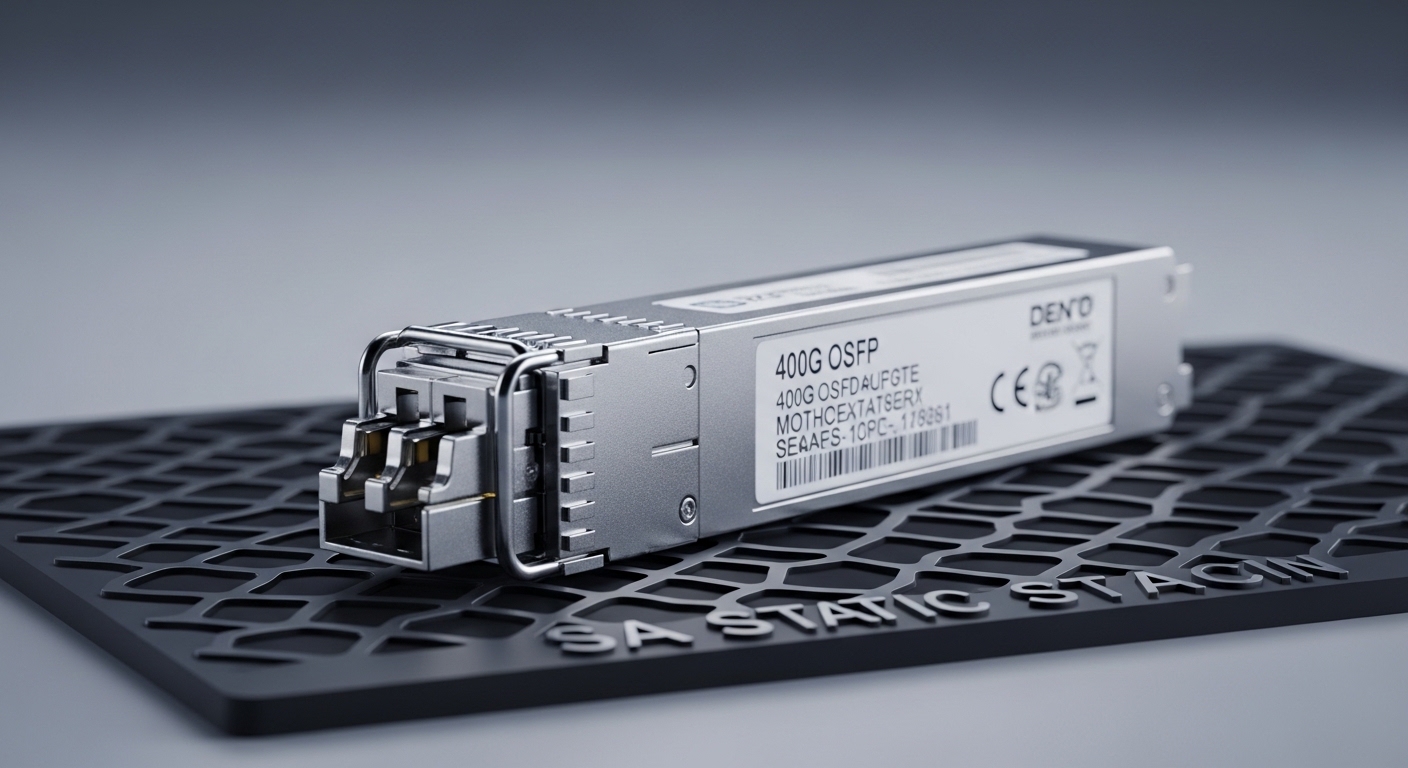
Optical transceivers are not interchangeable by name alone. Reach, wavelength, connector type, and operating temperature determine whether your link will pass at the plant edge and remain stable across thermal cycles.
| Use case | Example module | Wavelength | Data rate | Reach | Connector | Typical transmit/receive notes | Operating temperature |
|---|---|---|---|---|---|---|---|
| Short-reach Ethernet for machine-cell aggregation | Cisco-compatible SFP-10G-SR class (e.g., SFP-10G-SR) | 850 nm | 10G | ~300 m over OM3, ~400 m over OM4 (distance depends on loss) | LC | Use datasheet sensitivity and measured patch-panel loss | Commonly 0 to 70 C for standard; industrial variants may support wider ranges |
| Higher density short-reach on compact switches | FS-style SFP+ 10G SR (e.g., SFP-10GSR-85 class) | 850 nm | 10G | ~300 m to 400 m class depending on fiber grade | LC | Check DOM support and switch compatibility | Varies by vendor; confirm extended temperature if cabinets run hot |
| Longer-reach aggregation or metro plant links | 10G LR class (SFP+ LR) | 1310 nm | 10G | ~10 km class on single-mode (distance depends on budget) | LC | Single-mode budget must include splices and connectors | Confirm industrial grade requirements |
| DWDM transport overlay | DWDM transponder plus mux/demux system | ITU grid channels (commonly 1550 nm band) | Varies by transponder | Span dependent; often tens to hundreds of km in metro/backbone | Depends on system (often LC to patch panels) | Validate OSNR, channel power, and grid plan | Confirm system temperature specs |
For standards grounding, Ethernet optics typically map to IEEE 802.3 requirements for link behavior and optical interface characteristics, while optical transport choices must align with your DWDM vendor system constraints. For further background on Ethernet physical layer expectations, see IEEE 802.3 and vendor datasheets for each optics family.
Pro Tip: In plant commissioning, DOM readings often reveal the real issue before the link drops. I routinely log vendor transceiver DOM metrics (laser bias current, received power, and temperature) during acceptance tests; a “marginal but passing” link that later flaps almost always shows a slow drift in received power correlated with connector cleaning or micro-bending after cable routing changes.
Selection criteria: decision checklist engineers actually use
When teams choose optics for industry applications, they balance performance, maintainability, and interoperability. The list below is the same one I used during a multi-building smart manufacturing upgrade where some ports accepted third-party optics while others enforced strict vendor validation.
- Distance and fiber grade: confirm OM3/OM4 for 850 nm and single-mode type for 1310/1550 nm links; use measured loss, not nominal.
- Switch port compatibility: verify the exact transceiver part number is supported by the switch model and software release.
- DOM support and monitoring: ensure the platform can read alarms and thresholds; DOM helps maintenance teams isolate degradation early.
- Operating temperature range: industrial cabinets can exceed 50 C; choose modules with extended ratings if needed.
- Optical budget margin: include worst-case connector loss, splice loss, and aging; keep a conservative margin.
- DWDM grid and power plan: if using DWDM, align transponder type, channel spacing, and power levels with the mux/demux vendor.
- Vendor lock-in risk: assess whether third-party optics are acceptable and whether future replacements will be available at competitive cost.
Expected outcome: a defensible procurement package that reduces commissioning delays and reduces the probability of field flapping.
Common pitfalls and troubleshooting tips in optical plant deployments
Most optical failures in smart manufacturing are not “mysterious.” They are usually repeatable problems caused by connector contamination, wrong fiber type assumptions, or transceiver compatibility quirks after software upgrades.
Pitfall 1: Link fails after patching due to connector contamination
Root cause: dust or film on LC connectors increases insertion loss; the link may initially train but later fails under marginal power conditions.
Solution: clean with approved methods (lint-free wipes and isopropyl alcohol where permitted, then verify with an optical inspection microscope); replace patch cords if scratches are found. Re-measure received power after cleaning.
Pitfall 2: “Works on one switch, fails on another” due to compatibility and DOM behavior
Root cause: some switch platforms enforce transceiver vendor checks or have stricter optics thresholds than others; DOM interpretation can also differ by platform.
Solution: validate optics using the switch’s official compatibility list; if deploying third-party optics, test on the exact switch model and software version before rolling out.
Pitfall 3: DWDM channels degrade over time because of OSNR and power misalignment
Root cause: incorrect channel power levels, OSNR drift, or improper grid/channel assignment can cause intermittent errors that appear “random.”
Solution: verify transponder wavelength targeting, confirm channel plan on the mux/demux, and monitor OSNR or error counters during acceptance. Adjust channel power per the vendor guidance and re-check fiber routing and patch-panel cleanliness.
Expected outcome: you can isolate failures quickly, often within one maintenance window, instead of performing blind swaps across multiple cabinets.
Cost and ROI note for industry applications
Optical costs are not just the module price. In smart manufacturing, total cost of ownership depends on spares strategy, commissioning labor, failure rate, and the frequency of maintenance visits during production hours.
Typical price ranges (market-dependent):
- 10G SR SFP/SFP+ class: often tens to low hundreds of dollars per unit, depending on brand and temperature grade.
- 10G LR class: higher cost than SR due to optics and single-mode considerations.
- DWDM transport components (transponders plus mux/demux): typically thousands to tens of thousands per endpoint depending on capacity and system scale.
ROI reality: third-party optics can reduce upfront capex, but the risk is compatibility-induced downtime and longer commissioning cycles. I have seen projects where OEM optics reduced field returns and improved mean time to repair because monitoring and alarms were consistent; the ROI came from fewer truck rolls, not only from the module unit cost.
FAQ
How do I map industry applications to optical reach requirements?
Start by grouping applications by latency/jitter sensitivity and bandwidth, then map each group to the physical distance between endpoints and aggregation switches. Use measured OTDR loss and connector counts to compute a conservative optical budget. If you need deterministic behavior, prefer direct short-reach links inside the cell and controlled aggregation paths.
Can I use third-party transceivers for smart manufacturing networks?
Often yes, but you must test on the exact switch model and software version. Verify DOM support behavior and ensure the module meets the required optical characteristics for your port. For critical paths, keep a small OEM spare set to reduce outage risk during early deployment.
When should I consider PON for an industrial edge?
Choose PON when endpoint density is high and fiber availability is constrained, and when your upstream scheduling and protection model meets operational expectations. Validate DBA mode, split ratios, and the ability to monitor optical levels per ONU for maintenance. For motion-critical traffic, confirm that your end-to-end design meets jitter requirements.
What is the most common reason optical links flap in production?
Connector cleanliness and marginal optical power are the top causes. A link can pass during initial tests but fail after cable rework or micro-bending changes the effective loss. Implement connector inspection as a standard procedure and log DOM received power to catch degradation early.
How do I plan DWDM for a plant backbone?
Define capacity growth, then select transponders and wavelengths aligned to the DWDM grid plan. Validate OSNR and power levels with vendor guidance, and monitor error counters during acceptance. Also ensure your patch-panel and fiber routing practices preserve the assumed loss and attenuation stability.
Industry applications in smart manufacturing succeed when optical choices are grounded in measured fiber reality, standards-aligned Ethernet behavior, and maintainable monitoring. If you want the next step, review DWDM transport planning for industrial backbones to align capacity growth with transport constraints.
Author bio: I am a telecom engineer who has deployed 5G fronthaul-style optics, DWDM transport overlays, and industrial PON edge solutions in production environments. I focus on commissioning evidence, DOM-based monitoring, and failure-mode driven design for high-availability networks.
