
Industrial automation networks live in places where switches and optics face vibration, temperature swings, and long cable runs. This buying guide helps field engineers and plant IT teams pick the right SFP modules for deterministic Ethernet, uptime targets, and predictable commissioning. You will learn how wavelength, reach, connector type, DOM behavior, and compatibility impact real deployments, plus how to troubleshoot common failures quickly.
Where SFP modules fit in industrial automation plant networks
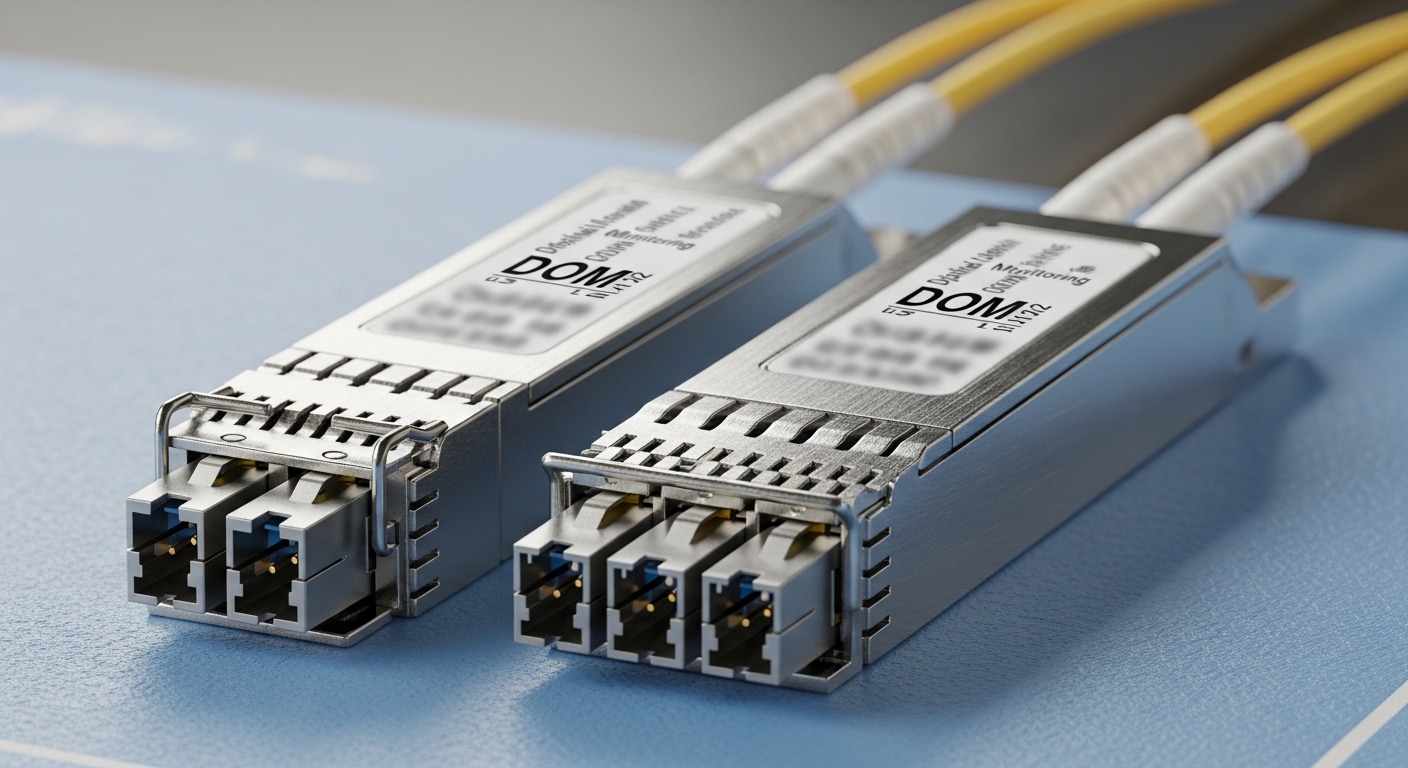
In industrial automation, SFP modules typically connect industrial Ethernet switches to fiber backbones, line controllers, or isolated uplinks to OT/IT gateways. The most common use cases include ring topologies for fast recovery, star uplinks from cell-level switches, and point-to-point links to media converters. For deterministic behavior, you also care about link stability: correct optics, clean fiber termination, and matching speed/duplex settings on the switch.
From an optics standpoint, SFP is defined by electrical form factor and a serial optical interface; the key variables are data rate, wavelength, reach, and fiber type (multimode OM3/OM4 versus single-mode OS2). In practice, you also need to validate DOM (Digital Optical Monitoring) support, because some switches enforce DOM thresholds or treat “unsupported” optics differently.
Key SFP specs that determine reach and compatibility
Before you buy, map your physical plant distances and fiber plant standards. Then align them to the SFP optics class: 1G SFP (often SX/LX), 10G SFP+ (SR/LR/ER), and 25G/other variants if your vendor supports them. For industrial automation, harsh-environment temperature range matters as much as reach because OT enclosures can exceed ambient ratings during heat cycles.
The table below compares typical SFP+ optical options used in automation backhauls. Always confirm exact compliance with your switch vendor’s transceiver compatibility list.
| Module type | Wavelength | Typical reach | Fiber type | Connector | DOM | Operating temperature |
|---|---|---|---|---|---|---|
| SFP+ 10G-SR | 850 nm | ~300 m on OM3, ~400 m on OM4 | Multimode (OM3/OM4) | LC | Common (vendor-dependent) | Often -40 to +85 C (industrial variants exist) |
| SFP+ 10G-LR | 1310 nm | ~10 km | Single-mode (OS2) | LC | Common (vendor-dependent) | Often -40 to +85 C (industrial variants exist) |
| SFP+ 10G-ER | 1550 nm | ~40 km (typical) | Single-mode (OS2) | LC | Common (vendor-dependent) | Often -40 to +85 C (industrial variants exist) |
For standards grounding, optical interfaces and electrical characteristics are aligned to Ethernet PHY expectations; transceiver behavior is governed by SFP/SFP+ multi-source agreements and vendor implementation. Reference points include IEEE 802.3 for Ethernet signaling requirements and transceiver interoperability guidance from major OEM ecosystems. anchor-text: IEEE 802.3 overview anchor-text: SNIA fiber and monitoring resources
DOM, speed, and vendor compatibility checks that prevent field rework
Digital Optical Monitoring (DOM) is where many industrial automation deployments succeed or fail during commissioning. DOM provides transceiver telemetry such as Tx power, Rx power, temperature, and laser bias current. Some switch platforms read DOM and apply alarms or thresholds; others may log “unsupported” optics but still pass traffic. Your job is to confirm whether the switch enforces strict optics validation.
Compatibility is not only about “SFP vs SFP+.” You must validate data rate (1G versus 10G), optical class (SR versus LR), and connector (LC versus other). If you plan to mix OEM and third-party optics, test in a staging rack first and confirm that link comes up cleanly and stays up under temperature cycling.
Decision checklist for industrial automation SFP module selection
- Distance and fiber type: measure end-to-end loss budget (fiber attenuation plus patch cords/splices), then match SR/LR/ER class.
- Data rate and optics mode: confirm switch port supports the exact SFP generation and speed (for example, 10G SFP+).
- Connector and cabling standard: LC for most SFP+ optics; verify polarity and proper MPO-to-LC adapters if applicable.
- DOM support and telemetry behavior: check switch documentation and transceiver compatibility list; verify alarms do not disable ports.
- Operating temperature: choose industrial-grade optics rated for the enclosure environment, not just room spec.
- Budget and spares strategy: price OEM optics higher, but plan spares to reduce downtime cost.
- Vendor lock-in risk: third-party optics can work, but validate DOM handling and firmware expectations.
Pro Tip: In plant commissioning, treat DOM as a “health interface,” not a nice-to-have. If your switch alarms on low Rx power or high Tx bias, you can catch a dirty connector or marginal splice before the link drops during a production heat cycle.
Deployment scenario: 10G fiber uplinks for a cell-level automation ring
Consider a mid-size manufacturing site using a 3-tier design: cell-level access switches connect to PLC/IO networks, and each cell uplinks to a distribution pair via redundant fiber rings. In one deployment, 48-port ToR switches uplink over 10G SFP+ SR across OM4 fiber with an average span of 220 m between buildings and consolidation cabinets. Engineers provisioned ring links at 10G to maintain deterministic latency while keeping copper runs limited to short patch segments inside machine enclosures.
During acceptance testing, the team monitored DOM telemetry and verified that Rx power stayed within vendor-recommended ranges. They also validated that the switch did not mark optics as “unsupported,” which would have broken monitoring automation scripts. The result was stable link uptime through seasonal temperature swings, with no recurring CRC spikes after they implemented a strict connector cleaning SOP and verified fiber loss with an OTDR.
Troubleshooting SFP module failures in harsh OT environments
When links fail in industrial automation, the root cause is often physical or compatibility-related rather than “bad optics” on day one. Below are common pitfalls with practical recovery steps that field teams use.
Link flaps only after temperature changes
Root cause: optics operating outside effective temperature range, or marginal power/laser bias due to aging or dirty connectors. Solution: confirm the module’s rated temperature (industrial grade), inspect LC ends with magnification, and re-terminate if necessary. Re-check DOM telemetry for drift in Tx bias and Rx power over time.
Port stays down with third-party optics
Root cause: switch firmware enforces strict transceiver identification or DOM schema mismatch. Solution: test the exact SFP part number in a staging rack; use vendor compatibility lists. If needed, standardize on OEM optics for the affected platform models to avoid inconsistent acceptance.
Excessive CRC errors and intermittent packet loss
Root cause: fiber attenuation higher than budget, incorrect fiber type (OM3 vs OM4), or polarity/connector contamination. Solution: measure link receive power, validate fiber loss with OTDR, and clean connectors using lint-free wipes and approved cleaning tools. Confirm correct polarity on duplex LC and check patch cord length contributing to the loss budget.
Speeds mismatch or wrong optics class
Root cause: SR installed where LR was intended, or data rate mismatch (1G SFP in 10G-only context). Solution: verify switch port capability and transceiver class before deployment; label spares clearly by wavelength and reach.
Cost and ROI: OEM versus third-party optics in industrial automation
Typical pricing varies by region and volume, but in many markets OEM SFP+ modules can cost roughly $80 to $250 per unit, while comparable third-party modules may land around $40 to $150. The ROI question is not only purchase price: uptime risk can dominate TCO. If a failed link halts a production line, the cost of truck rolls, spare management, and downtime can exceed the optics delta quickly.
For spares, I recommend you stock optics by “optical class” and wavelength (for example, 10G-SR 850 nm OM4 LC, and 10G-LR 1310 nm OS2 LC). Choose industrial-grade temperature optics when switches are in sealed cabinets, because a single seasonal failure can erase savings from cheaper modules. For authoritative transceiver behavior expectations, review vendor datasheets and the SFP/SFP+ multi-source agreement documentation referenced by major OEMs. anchor-text: Cisco transceiver documentation hub
FAQ
Which SFP module is most common for industrial automation uplinks?
For short-to-medium distances on OM3/OM4, 10G-SR (850 nm, LC) is common. For longer runs on OS2, 10G-LR (1310 nm, LC) is typical. Always match the fiber plant standard and confirm reach with a loss budget.
Do I need DOM for industrial automation?
DOM is strongly recommended because it enables proactive maintenance: you can correlate Tx/Rx power drift with connector contamination or fiber degradation. Some switch platforms also use DOM for port health alarms, which helps reduce mean time to repair.
Can I mix OEM and third-party SFP modules?
Often yes, but compatibility is platform-specific. The safe path is to validate the exact part number on the exact switch model and firmware version, and confirm link stability plus DOM telemetry behavior.
How do I calculate whether SR will work on my OM4 links?
Use your fiber attenuation plus patch cords and splice losses to build a loss budget, then compare against the module’s specified receiver sensitivity and typical budget. Also check for connector quality and cleaning practices, because real-world loss usually exceeds “nameplate” assumptions.
What is the fastest way to troubleshoot a down industrial automation fiber link?
Start with physical inspection: clean and reseat LC connectors, verify polarity, and confirm the correct SR/LR optics class. Then verify link comes up, check DOM Rx power, and finally run OTDR or loss testing if errors persist.
Should I buy industrial temperature-rated optics?
If your switch and SFP cages operate inside sealed cabinets or near heat sources, yes. Industrial-grade optics typically cover wider ranges (commonly -40 to +85 C), which reduces temperature-induced link instability.
If you want to standardize optics across your plant and minimize commissioning surprises, start by building an optics inventory by wavelength, reach, and DOM behavior, then verify against your switch compatibility list. Next, align your fiber loss budgets and cleaning SOPs to the same acceptance criteria using fiber loss budget and OTDR testing for OT networks.
Author bio: I have deployed and troubleshot routed and switched industrial networks using SFP/SFP+ optics, VLAN segmentation, and fiber OTDR validation across heat-cycling factory environments. I focus on deterministic Ethernet stability, DOM-based monitoring, and hands-on repair procedures that reduce downtime.
