
When you wire a dam control system, you are not just linking switches; you are protecting turbines, gates, and safety interlocks. This article helps operations techs and field engineers choose the right hydroelectric fiber SFP for control and monitoring networks, then troubleshoot the failures that show up after commissioning or during seasonal temperature swings. You will get practical compatibility checks, distance math, and real connector and optical details tied to common IEEE Ethernet deployments.
How dam control networks stress hydroelectric fiber SFP links
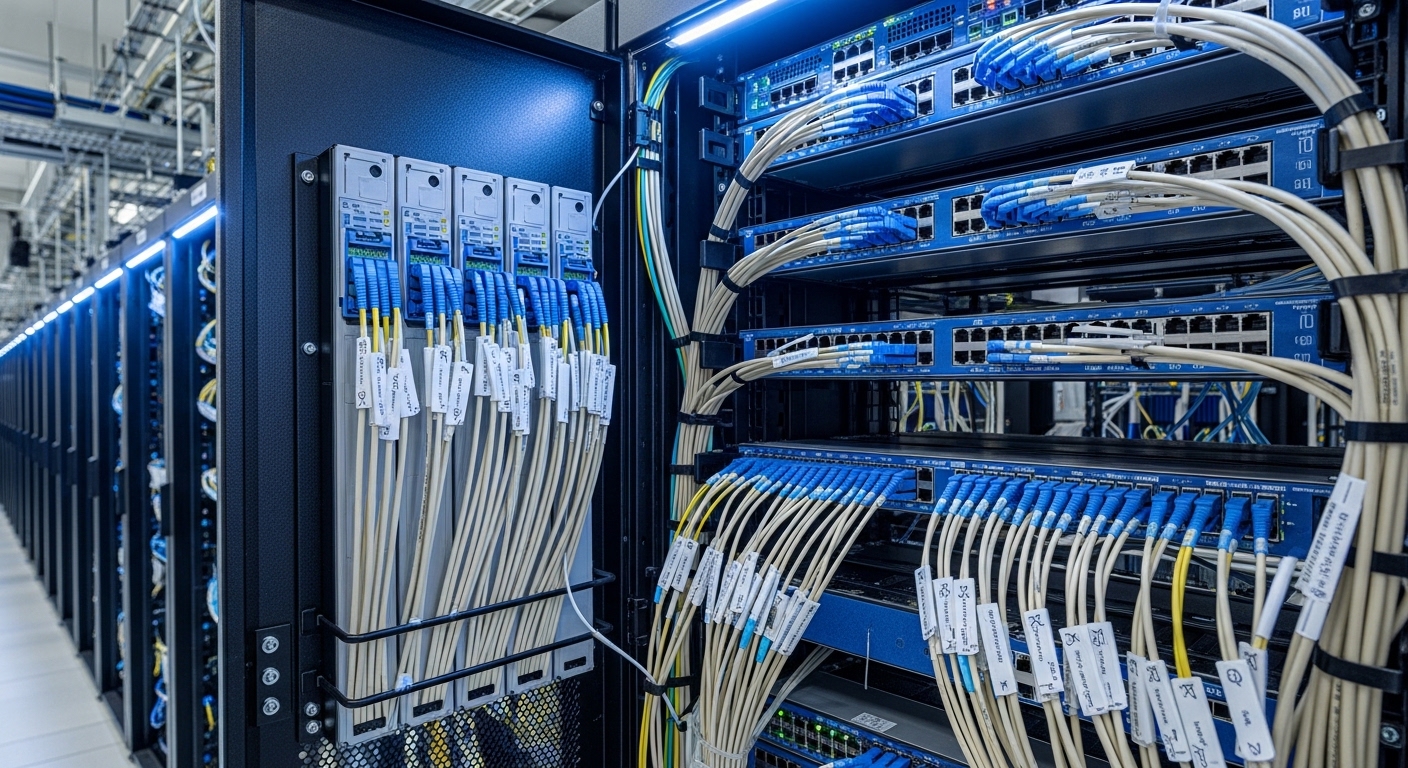
In hydroelectric plants, fiber runs often cross outdoor cable trays, penstocks, and cable conduits that experience vibration, condensation, and wide ambient swings. Control traffic is usually a mix of industrial Ethernet for PLC/RTU coordination, SCADA telemetry, and maintenance access, often at 1G or 10G depending on site architecture. The key difference versus office networks is that link stability matters during transient events: gate actuation, generator load changes, and upstream power quality disturbances can coincide with temperature drift and power cycling of remote cabinets.
From an optics standpoint, most dam deployments use SFP transceivers that conform to IEEE 802.3 physical layer standards (for example 1000BASE-SX for 1G multimode, or 10GBASE-SR for 10G multimode). You will also see vendor variations in digital diagnostics implementation (DOM), transmitter bias control, and receiver sensitivity margins. Field experience shows that the “it worked on the bench” problem often appears when the fiber plant is longer than expected, angled connectors are used without proper polishing, or when humidity exposure shifts insertion loss over time.
SFP optical types that fit typical dam control distances
For dam sites, the “right” SFP is usually defined by fiber type (multimode versus single-mode), required reach, and connector standard (LC is most common). Multimode options are typically cost-effective for short-to-medium spans inside buildings or between nearby cabinets, while single-mode is favored for long outdoor routes where splice and attenuation budgets are tighter.
1G and 10G examples you will actually see
At 1G, common choices include 1000BASE-SX (multimode, 850 nm) and 1000BASE-LX/LH (single-mode, 1310 nm). At 10G, the workhorse for multimode is 10GBASE-SR (850 nm) over OM3/OM4 fiber, while single-mode often uses 10GBASE-LR (1310 nm) depending on the plant’s distance budget and dispersion limits.
When I help commission hydroelectric fiber SFP links, I start by mapping the fiber plant: cabinet-to-cabinet distance, number of splices, expected aging, and worst-case temperature. Then I choose the transceiver family that matches the wavelength and fiber core spec, and I validate that the switch supports the transceiver’s DOM behavior and vendor-specific EEPROM expectations.
Key specification table (what to compare before you buy)
| Parameter | Example module class | Typical values you compare |
|---|---|---|
| Data rate | 1G or 10G SFP | 1.25 Gbps (1G) or 10.3125 Gbps (10G) |
| Wavelength | Multimode SX / SR or Single-mode LX / LR | 850 nm (MM) or 1310 nm (SM) |
| Reach | OM3/OM4 vs SMF | MM SR often 300 m to 400 m (OM3/OM4) class; SM SR/LR varies, often 10 km+ for LR-class |
| Connector | Common fiber interface | Usually LC |
| DOM | Digital optical monitoring | Check support for TX bias, TX power, RX power, temperature |
| Transceiver supply | SFP electrical | Typically 3.3 V module interface |
| Operating temperature | Industrial vs commercial | Often 0 to 70 C (commercial) or up to -40 to 85 C (industrial grade) |
| Compliance | Ethernet physical layer | Aligned with IEEE 802.3 for the speed and link type |
Concrete product families you can use as reference points include Cisco SFP-10G-SR, Finisar FTLX8571D3BCL, and FS.com SFP-10GSR-85. Always verify the exact spec sheet for your target temperature grade and fiber type, because “SR” labels can still differ in launch power and receiver sensitivity.
Compatibility checklist for dam control cabinets
Even when the optics match, the SFP can still fail to come up due to switch interface expectations, DOM parsing, or power budget issues. For hydroelectric fiber SFP deployments, I recommend treating selection like an integration task: confirm switch compatibility, then confirm optical budget, then confirm operational behavior under temperature.
- Distance and fiber type: verify whether you have OM3, OM4, or single-mode OS2; count splices and connectors to estimate worst-case insertion loss. Use the module’s specified reach as a starting point, not a guarantee.
- Switch compatibility: check the switch vendor’s transceiver compatibility list and firmware notes for the exact model. Some platforms are picky about EEPROM vendor IDs or DOM thresholds.
- DOM support: confirm that the switch reads DOM correctly (TX power, RX power, temperature) and that alarms can be integrated into your monitoring workflow.
- Operating temperature: choose industrial-grade optics if the cabinet can exceed commercial limits, especially for outdoor enclosures near turbine halls or winter freeze conditions.
- Connector and polarity handling: confirm LC type, polarity (A/B) conventions, and whether you need to use polarity-flip jumpers or re-terminate.
- Budget and vendor lock-in risk: compare OEM pricing versus third-party; consider whether you can standardize on a transceiver family that your entire fleet supports.
- Power and EMI environment: ensure the cabinet power supplies and grounding are stable; optics can be fine while link flaps are caused by switch restarts or noisy power.
Pro Tip: In dam cabinets, the most common “wrong SFP” symptom is actually polarity mismatch after maintenance. If you see RX power near the lower limit while TX power looks normal, swap the fiber jumpers or use a polarity-flip method before you replace the transceiver. This saves days during outage windows.
Deployment scenario: leaf-spine style control with 10G aggregation
Consider a real-ish commissioning pattern I have seen in hydro plants: a 3-tier design where each unit bay has a top-of-rack switch for PLC/SCADA endpoints, and an aggregation layer uplinks to the control room. In one site, there were 48-port 10G switches at the unit bays, each connecting to an aggregation pair using 10GBASE-SR over OM4 fiber for runs of about 120 m with 4 splices per path. The control room used a redundant pair of switches, and technicians required link monitoring with DOM so they could trend RX power and detect patch panel contamination early.
In this scenario, the hydroelectric fiber SFP selection hinged on three numbers: the estimated worst-case insertion loss, the transceiver’s minimum receiver sensitivity, and the expected temperature at the outdoor rack. We also planned for “maintenance swap” behavior: third-party modules were acceptable only if they behaved predictably with the switch’s DOM alarms. After commissioning, the team set a threshold alarm for RX power drift and documented the exact LC polarity mapping on every patch panel.
Common pitfalls and troubleshooting that actually show up
Field failures tend to cluster into a few repeatable causes. Below are practical pitfalls I have seen during hydroelectric fiber SFP rollouts, along with root causes and fixes.
Link doesn’t come up after installation (no light, no alarms)
Root cause: Fiber polarity reversed or wrong Tx/Rx pairing. LC connectors can look identical but the patch cord orientation flips the optical path. Solution: verify which side is connected to transceiver Tx versus Rx, then correct polarity using proper jumper orientation or a polarity-flip approach. If available, compare reported DOM RX power on both ends; you should see a consistent “reasonable” RX power once polarity is corrected.
Link flaps under cold mornings or hot afternoons
Root cause: Transceiver rated for commercial temperature while cabinet environment exceeds limits, causing laser bias or receiver sensitivity drift. Solution: swap to industrial-grade SFPs with temperature range matched to site conditions (often up to -40 to 85 C depending on module family). Also check airflow and whether the cabinet heater is functioning during freeze events.
High error counters despite “connected” status
Root cause: Excess insertion loss from dirty connectors, damaged fiber ends, or too many splices. Multimode links are especially sensitive to launch conditions and fiber core/grade mismatch (OM3 versus OM4 confusion). Solution: inspect and clean connectors with approved cleaning tools, then measure end-to-end loss with a test method your vendor accepts. Re-terminate or replace damaged jumpers, then re-check link counters after stabilization time.
DOM alarms show unrealistic values or the switch rejects the module
Root cause: DOM compatibility issues or EEPROM vendor ID mismatch on some switch models/firmware. Solution: confirm the transceiver model against the switch compatibility list, update switch firmware if the vendor recommends it, and standardize on a tested vendor family. When in doubt, use OEM or a carefully validated third-party that your specific switch recognizes reliably.
For standards context, the underlying Ethernet physical layer behavior is described under IEEE 802.3 for the relevant speed and link type. For practical optical and DOM behavior, always follow the module datasheet and the switch vendor’s transceiver guidance. [Source: IEEE 802.3] [Source: Cisco SFP transceiver documentation] [Source: Finisar and FS.com transceiver datasheets]
Cost and ROI: balancing uptime, spares, and optical performance
In hydroelectric fiber SFP projects, cost is not just the purchase price. OEM modules typically cost more per unit, while third-party optics can reduce upfront spend, but you must account for integration risk, compatibility testing time, and the possibility of higher failure rates under harsh temperature cycling. As a ballpark, many 1G SFPs and 10G SFPs in the field range from roughly tens of dollars to a few hundred dollars each depending on reach, grade, and vendor. The real ROI comes from reducing downtime during maintenance windows and preventing repeated truck rolls.
A practical TCO approach: estimate annual link replacements, include labor and truck cost, and add the cost of monitoring gaps if DOM is unreliable. If DOM is stable, you can forecast failures by trending RX power drift, which helps you schedule spares before a critical gate or turbine control path is impacted. When you standardize on a small number of transceiver families across the plant, you also simplify training and spare inventory.
FAQ on hydroelectric fiber SFP for dam control systems
What does “hydroelectric fiber SFP” selection really depend on?
It depends on the fiber plant (OM3/OM4 versus single-mode), required reach, and your switch’s compatibility expectations. For dam control networks, also consider operating temperature and whether DOM telemetry is needed for alarms and trending. Start with distance and worst-case insertion loss, then validate the exact switch model supports the transceiver.
Can I use multimode SFPs in outdoor dam runs?
Yes, for shorter spans where the fiber is properly protected and the link budget supports it. However, outdoor conditions can accelerate connector contamination and increase loss over time, so cleaning discipline and connector protection matter. If spans are long or uncertain, single-mode is often more forgiving.
How do I confirm DOM data is working correctly?
After link bring-up, read TX power, RX power, temperature, and any alarm flags from the switch or monitoring system. Compare behavior against expected ranges in the module datasheet, and watch for sudden “unplugged” states that could indicate compatibility issues. If DOM is unreliable, plan a transceiver swap during the next maintenance window.
What are the fastest troubleshooting steps when a link won’t pass traffic?
First verify polarity and correct Tx/Rx pairing, then check connector cleanliness and seating. Next, confirm that the transceiver type matches the fiber type and that the switch ports are configured for the expected speed. Finally, inspect counters and DOM readings to decide whether optics or fiber loss is the dominant problem.
Is third-party hydroelectric fiber SFP always a bad idea?
No, third-party modules can work well if they are validated for your exact switch model and firmware. The risk is that some platforms handle EEPROM and DOM differently, causing intermittent issues or lack of monitoring. Reduce risk by testing one module in a non-critical port, then scaling only after stability is proven.
Which standard should I reference for Ethernet compatibility?
Reference IEEE 802.3 for the physical layer requirements of the speed and media type you are using. Then follow the specific module datasheet and your switch vendor’s transceiver compatibility documentation. This combination prevents “it matches the label but not the platform” surprises.
If you want the next step, map your dam fiber routes and build a quick optical budget worksheet, then compare it to module datasheets and your switch’s transceiver compatibility list. For related planning, see How to calculate fiber link budgets for SFP and tighten your reach assumptions before procurement.
Author bio: I am a field-focused network and fiber technician who documents real commissioning notes for industrial Ethernet and optics. I build repeatable checklists for transceiver selection, DOM monitoring, and failure analysis so teams can cut downtime during plant outages.
