
In many data centers, future trends are no longer theoretical: leaf-spine fabrics are pushing ports toward 800G, and transceiver choices can make or break uptime. This article helps network engineers and field teams plan optics and module selection for 800G rollouts without costly surprises. You will get a head-to-head comparison of common option paths, plus a selection checklist, troubleshooting pitfalls, and a realistic cost & ROI view.
800G as the new baseline: performance and reach realities
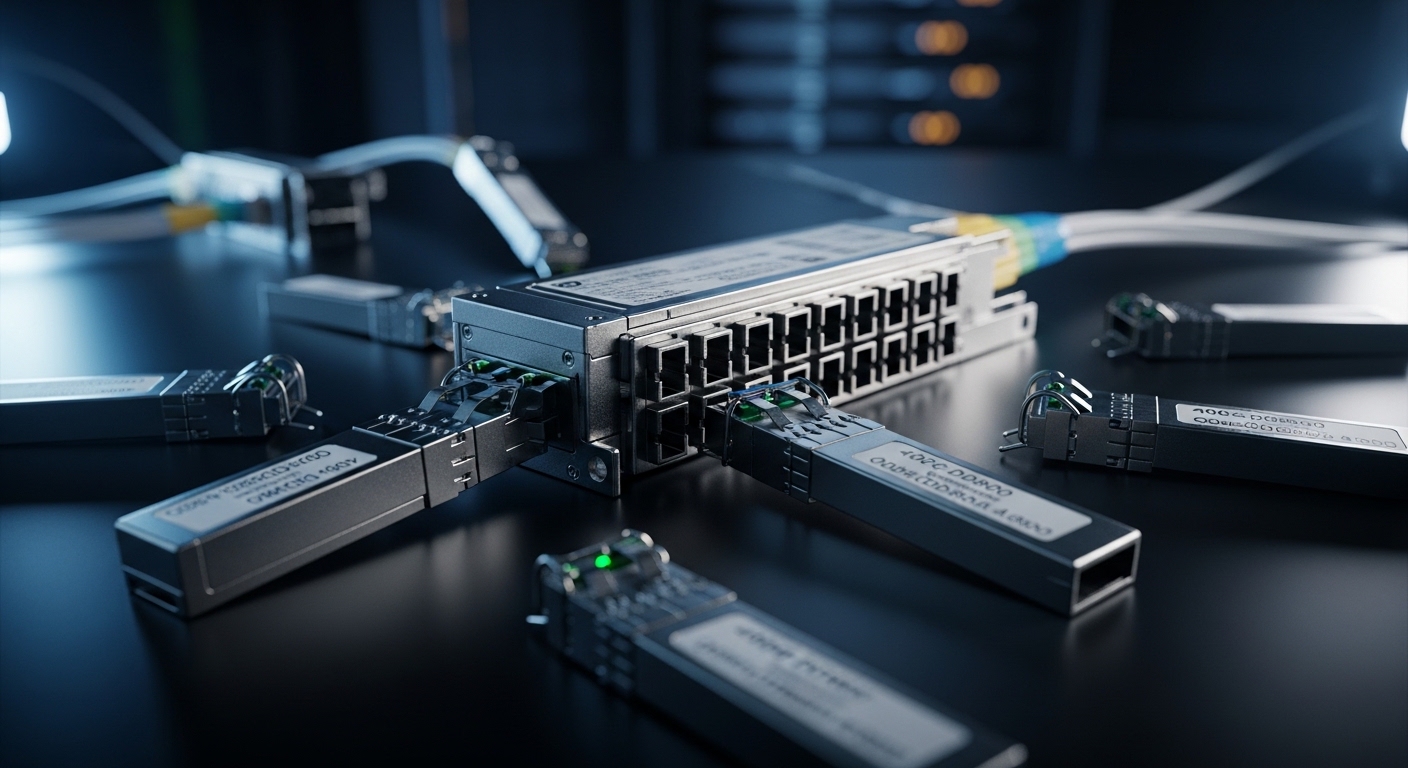
When 800G becomes your standard, the biggest shift is not just port speed; it is the optical budget, module form factor, and how your switch ASIC expects signal quality. In Ethernet terms, 800G typically maps to high-density signaling lanes inside QSFP-DD or OSFP-style optics, using PAM4-style modulation in many implementations. For field teams, the key is aligning optics to the switch vendor’s supported transceiver list and ensuring the optics can meet the required reach targets for your installed fiber plant.
Practically, you will see two common reach planning modes: short-reach for intra-rack or end-of-row links, and longer reach for leaf-to-spine or spine-to-core spans. If you are migrating from 400G, watch for “silent incompatibilities” where a module trains but still fails BER targets under certain temperature or after fiber moves. The IEEE Ethernet roadmap is broad, but your immediate reference is the vendor’s transceiver compatibility and the optics’ datasheet operating conditions.
Core specs you must verify before ordering
For 800G, you should confirm wavelength (for example, around 850 nm for SR-class multimode), nominal reach, and environmental limits such as operating temperature. Also check power consumption and connector type, because a higher-power module can stress chassis thermal design and airflow requirements during peak loads.
| Option type | Common wavelength | Typical reach target | Connector / fiber | Data rate | Operating temperature | Key field check |
|---|---|---|---|---|---|---|
| 800G SR over OM4/OM5 (multimode) | 850 nm | Up to ~100 m class (depends on module and fiber) | MPO-16, multimode | 800G Ethernet | Often 0 to 70 C (verify per SKU) | Fiber grade, MPO polarity, and cleaning quality |
| 800G LR over single-mode | ~1310 nm or C-band variants (depends on SKU) | Up to ~2 km class (depends on module) | LC, single-mode | 800G Ethernet | Often 0 to 70 C (verify per SKU) | Laser safety labeling, SMF attenuation, and budget |
| 800G DR / longer-reach variants | ~1310 nm or other bands | Beyond LR (varies widely) | LC or hardened variants | 800G Ethernet | Often 0 to 70 C (verify per SKU) | Vendor reach tables and transceiver diagnostics |
References for the underlying Ethernet and optical compliance context include IEEE Ethernet standards and vendor datasheets that define reach classes and electrical/optical performance targets. [Source: IEEE 802.3 Standards][Source: Cisco Transceiver Support Resources]
Optics choice: SR vs LR vs longer-reach, side-by-side for 800G
In a migration plan, the optics path is usually decided by fiber plant reality first: multimode availability, single-mode presence, and the cost to re-patch or re-run cabling. SR typically wins for intra-facility density because multimode patching is faster and often cheaper, but it is sensitive to MPO cleanliness and fiber grade. LR and longer-reach options reduce patching complexity across rows, yet they can cost more per module and require careful budget verification for aging fiber.
From a field engineer’s standpoint, the “best” optics is the one that meets BER targets across temperature cycles and survives frequent moves. If your plant includes mixed patch cords, verify that your loss and connector inspection results stay within the module’s specified optical budget. Also confirm whether the transceiver supports the diagnostics your switch expects (DOM readings, alarms, and thresholds).
Decision matrix: which reach class fits which link role?
| Link role in the fabric | Best-fit reach class | Why it fits | Main risk |
|---|---|---|---|
| ToR-to-leaf (within a row) | 800G SR | High density, lower per-link cabling cost | MPO polarity and connector contamination leading to intermittent errors |
| Leaf-to-spine across a short aisle | 800G SR or LR (depends on measured loss) | Balances density with patching distance | Budget mismatch after rerouting or patch cord swaps |
| Spine-to-core or longer cross-room paths | 800G LR / longer-reach | Uses existing single-mode backbone effectively | Laser safety documentation and budget verification for aging SMF |
Pro Tip: Many “it works on day one” 800G failures are connector hygiene issues, not optics failure. Before blaming the module, inspect and clean MPO endfaces using a calibrated fiber inspection scope, then re-seat under consistent torque and confirm polarity with a labeled polarity tester. This prevents chasing ghosts in BER counters that only spike after thermal cycling or vibration.
Compatibility and deployment: switch support, DOM, and thermal behavior
Compatibility is where future trends turn into operational outcomes. Your switch vendor typically maintains a transceiver interoperability list; using an unsupported module can lead to disabled ports, degraded optical power reporting, or inconsistent link training. Verify that the module provides DOM support compatible with the switch’s management plane, including temperature, bias current, received power, and alarm thresholds.
Thermals matter at 800G densities. A chassis designed for 400G may rely on specific airflow patterns; higher-power optics can increase local hot spots. During deployment, monitor module temperature readings over at least one full traffic window and check for fan-speed responses. If your site uses front-to-back airflow, ensure optics are fully seated and that no cable management blocks intake air.
Real-world deployment scenario (what field teams actually do)
Consider a 3-tier data center leaf-spine topology with 48-port 800G ToR switches at the top of rack and 12 uplinks per leaf to a spine pair, totaling 96 active 800G links per rack group. The team upgrades from 400G by keeping the existing structured cabling where possible: SR for within-row links (~60 to 80 m measured) using OM4, and LR for cross-aisle spans (~900 to 1200 m measured budgeted at the cabling plant level). They run a staged rollout: validate transceiver training in a pre-production patch panel, then deploy in waves of 8 optics per switch while capturing DOM telemetry for 24 hours. This approach catches polarity and budget issues before a full fabric cutover.
Cost and ROI: what you pay now versus what you avoid later
Pricing for 800G optics varies widely by reach class, vendor, and form factor. In many markets, third-party compatible optics can be cheaper upfront, but the ROI depends on your risk tolerance, the switch’s acceptance behavior, and your return logistics. OEM optics often cost more per module, yet they can reduce downtime risk when you rely on strict interoperability lists and predictable DOM behavior.
For TCO, include: module unit cost, spares inventory, installation labor, and the cost of troubleshooting windows. If your deployment plan requires rapid scaling, predict failure rates and plan spares accordingly. A practical target is to keep at least 2 to 5% of 800G optics as hot spares per site or per switch model when your fabric is actively evolving.
For example, OEM 800G optics can range from several hundred to over a thousand currency units depending on SKU and reach, while third-party options may be lower but can carry higher operational friction. Check the exact part numbers in your vendor documentation, and compare warranties, supported temperatures, and DOM compatibility claims.
Selection criteria checklist for future trends in 800G rollouts
- Distance and measured loss: Use OTDR and link loss tests on the exact fiber pairs/cords you will patch.
- Switch compatibility: Confirm the transceiver is on the switch vendor’s supported list for that exact model and software version.
- DOM and diagnostics support: Validate that alarms and received power thresholds match what the switch expects.
- Operating temperature and airflow: Ensure the module’s rated temperature and thermal assumptions align with your rack airflow plan.
- Connector type and polarity: For MPO, confirm polarity method and label your patching to prevent cross-talk and swapped pairs.
- Budget and aging margin: Add safety margin for connector wear and fiber aging; do not plan at the edge of the datasheet.
- Vendor lock-in risk: Consider how much effort you will spend swapping optics across switch generations and whether you can standardize on a few reach types.
Common mistakes and troubleshooting tips during 800G adoption
Mistake 1: Ordering SR modules for OM4 links but using mixed patch cords with unknown loss. Root cause: connector and cord variations exceed the optics’ link budget under temperature. Solution: re-test with a certified loss tester for each patch cord and replace anything that fails spec before deployment.
Mistake 2: Ignoring MPO polarity during rerack or cable management. Root cause: polarity mismatch can cause intermittent link training failures and sporadic BER spikes. Solution: use a polarity tester, document polarity method, and label both ends of each MPO trunk and patch cord.
Mistake 3: Assuming module compatibility without verifying switch software version. Root cause: firmware updates can change transceiver acceptance behavior and DOM interpretation. Solution: follow the vendor’s transceiver matrix for your exact software release, and test with a small set of ports before scaling.
Mistake 4: Relying on “it links up” and skipping thermal and diagnostics validation. Root cause: thermal margins can be violated during peak traffic, causing CRC errors or optical power degradation. Solution: collect DOM readings (temperature, bias, received power) for at least one full traffic cycle and verify alarms remain clear.
Which option should you choose?
If you are building a dense leaf-spine fabric and your measured distances stay within multimode reach, choose 800G SR first for highest density and simpler patching. If your links cross longer distances or you already have a single-mode backbone with acceptable budgets, choose 800G LR to reduce cabling churn and shorten deployment time. If you operate in environments with strict change windows, prioritize switch-supported optics with verified DOM behavior even if unit cost is higher, because downtime costs typically dwarf the per-module savings.
To make it concrete: for rack-level uplinks under about 100 m measured, SR is usually the cost-effective path. For cross-room or longer cross-aisle spans where you can leverage existing single-mode, LR is often the reliability-forward choice. Your next step is to align your fiber test results with the module reach class and then confirm compatibility in your switch vendor’s documentation.
FAQ
What does “future trends” mean in the context of 800G?
It means the network performance target is shifting toward 800G ports as a default in modern data centers. That change affects optics selection, power and thermal design, and interoperability requirements with switch software. Plan optics early to avoid fabric instability during migration.
Is multimode still viable for 800G?
Yes, multimode remains viable for many short-reach roles, especially when your distances and fiber grades fit the SR class. The real constraint is measured link loss plus connector hygiene and polarity correctness for MPO. Always test the exact links you will patch.
How do I reduce risk when switching optics vendors?
Use a staged rollout: test a small number of ports, verify DOM alarms, and monitor BER and CRC counters under peak traffic. Confirm the transceiver is supported by your switch model and software version. Keep OEM spares during the first wave if you need maximum confidence.
What should I monitor after installing 800G optics?
Monitor module temperature, bias current, received optical power, and any DOM-reported alarms. Also watch for CRC/BER-related counters and link flap events after thermal cycles. Collect data for at least one full business-day traffic profile.
Are there strict standards I should reference?
Ethernet behavior is defined in IEEE 802.3, but optics reach classes and operational limits come from vendor datasheets and switch interoperability guidance. For cabling and installation practices, ANSI/TIA fiber testing standards and field inspection methods matter. Use both: standards for the protocol layer and datasheets for the physical layer.
What is the most common cause of 800G link instability?
The most common root causes are usually connector contamination, MPO polarity mistakes, and link budget mismatch due to patch cord differences. Less often, it is a compatibility or firmware behavior issue.
