
When telecom teams plan an upgrade to 400G, the risk is not just buying the right optics. It is avoiding silent interoperability failures, meeting reach targets across mixed fiber plants, and keeping power and thermal budgets stable in crowded racks. This article shares hands-on lessons from real deployment patterns, helping network engineers and field technicians evaluate optics, validate switch compatibility, and troubleshoot fast. You will also get a practical decision checklist and a failure-mode guide tied to common vendor and standards realities.
Why 400G in telecom feels different than prior upgrades
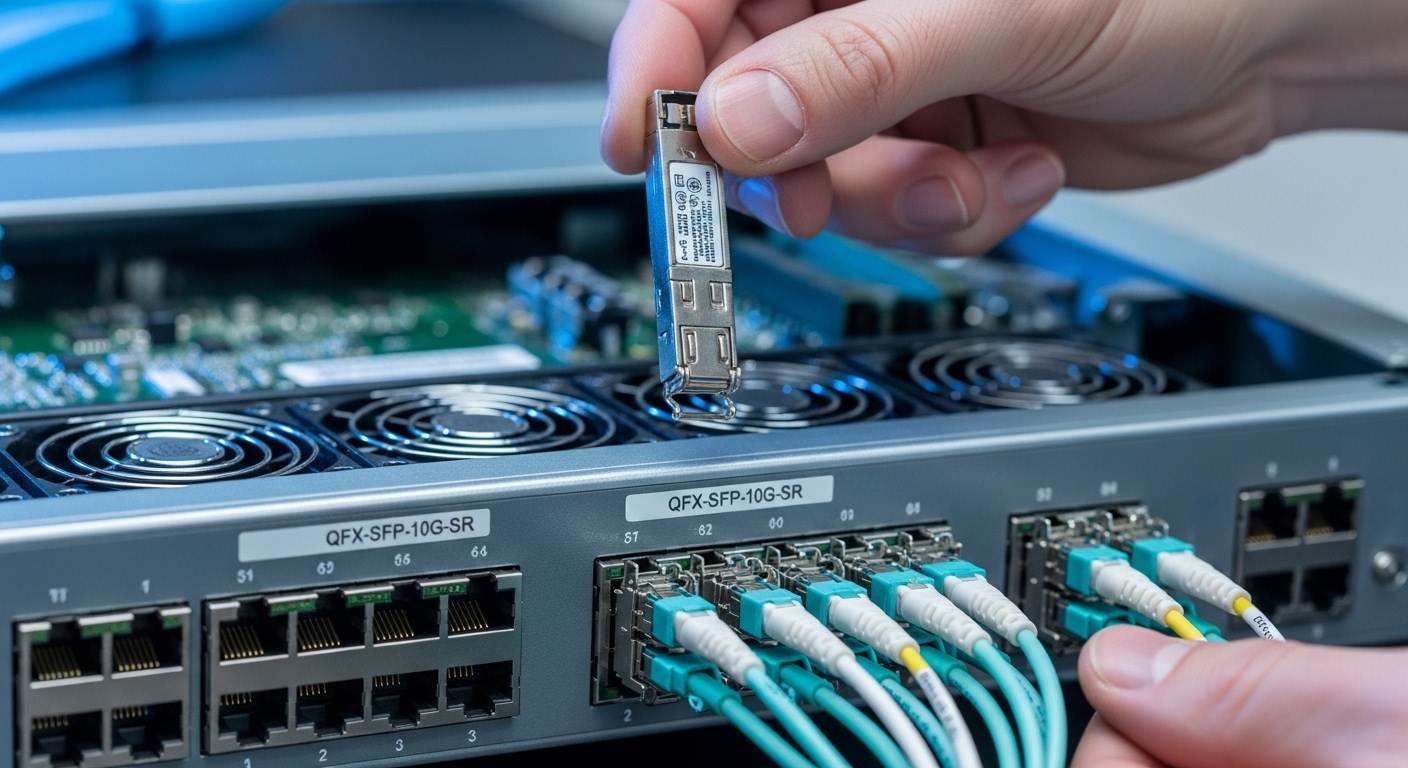
Moving from 100G or 200G to 400G changes the operational profile: higher aggregate bandwidth, more optics per link, and tighter timing margins inside pluggable transceiver modules. In telecom environments, the fiber plant is rarely uniform; you may see a mix of single-mode spans, splices with varying loss, and patch panels that age differently across sites. IEEE 802.3 specifies key electrical and optical behaviors, but vendor implementations still vary in DOM handling, alarm thresholds, and supported optics lists. For authoritative baseline behavior, start with IEEE 802.3 and then verify against your exact switch and router optics support matrix.
Standards and the “gotchas” that show up in the field
In many 400G deployments, the optical layer is deployed as a coherent or high-speed short-reach scheme depending on span length and cost constraints. For short to mid reach over single-mode fiber, vendors commonly offer QSFP-DD or OSFP form factors with specific wavelengths and power budgets, while longer reach often uses coherent optics with different link budgets and dispersion tolerance. Even when two modules both claim “400G,” the reach, transmitter power, receiver sensitivity, and connector cleanliness requirements can differ materially. That is why telecom rollouts typically treat optics selection as an end-to-end link engineering exercise, not a shopping list.
Case patterns from successful 400G telecom rollouts
Across multiple telecom topologies, three deployment patterns repeat: leaf-spine-like aggregation inside data halls, metro transport between sites, and mixed-use access-to-core backhaul. Teams succeed when they align optics reach to measured fiber loss and when they pre-qualify modules against the exact line cards. Below are the most common “winning” patterns and the practical constraints that shaped each decision.
Pattern A: Data hall aggregation with short-reach optics
In a common scenario, a carrier upgrades aggregation switches in a data hall where patching is controlled and spans are short. The team targets 400G over single-mode fiber using a short-reach 400G transceiver family and keeps patch lengths under a defined budget. Typical operational outcome: stable link bring-up, predictable alarms, and faster spares rotation because optics are standardized across many racks.
Pattern B: Metro handoff where fiber plants vary
Metro handoff upgrades often fail when engineering assumes “typical” fiber loss. Successful teams instead measure end-to-end attenuation with OTDR or at least certified loss testing, then select optics with margin for connector insertion loss and aging. In practice, this can mean preferring modules with slightly higher transmit power or better receiver sensitivity, even if list price is higher.
Pattern C: Mixed vendor ecosystems and strict optics compatibility
Some networks run multi-vendor switching and optics procurement. Success comes from strict adherence to the switch vendor’s optics compatibility list and from validating DOM behavior under your monitoring stack. If your NMS expects specific alarm names or thresholds, a module that is “electrically compatible” may still be operationally mismatched. Teams that test with the exact module part numbers avoid late surprises during cutover windows.
400G optics specs that actually drive link engineering
For telecom engineers, the key specs are not marketing reach claims; they are the link budget inputs and the physical layer constraints that determine whether the receiver stays within sensitivity under worst-case loss. Below is a comparison table illustrating typical parameters you will see in 400G short-reach transceivers. Always confirm the exact numbers in the vendor datasheet for the specific part number you plan to deploy.
| Example 400G Optic (Model) | Form Factor / Interface | Nominal Wavelength | Reach Class | Typical Avg Tx Power | Typical Rx Sensitivity | Connector | Operating Temperature |
|---|---|---|---|---|---|---|---|
| FS.com 400G QSFP-DD SR8 (example family) | QSFP-DD, electrical interface per vendor | 850 nm (typical for SR) | Short reach (data hall) | Vendor-specific; often a few dBm | Vendor-specific; often around -9 to -12 dBm | LC | 0 to 70 C or -5 to 70 C (varies) |
| Cisco compatible 400G SR8 family (varies by SKU) | QSFP-DD | 850 nm | Short reach | Vendor-specific | Vendor-specific | LC | Depends on SKU |
| Finisar / Finisar-like 400G long-reach coherent (varies) | Coherent optics (form factor varies) | 1.3 to 1.5 um bands (typical coherent) | Metro/long haul | Higher link budget capability | Coherent receiver sensitivity depends on modulation | Varies | Depends on SKU |
Note: the table uses representative families because exact values vary by revision and exact SKU. For credible part-by-part verification, consult the manufacturer datasheet and your switch vendor’s optics list. For example, Finisar optics documentation is commonly published via vendor datasheets and distributors; see FS.com for example datasheet access patterns, and use your switch vendor’s compatibility guide as the final authority. For standards-level behavior, keep IEEE 802.3 and the relevant coherent/serial interface guidance in view via IEEE 802.3.
Pro Tip: In telecom cutovers, teams often focus on optical power but underestimate how connector end-face contamination changes the effective link margin. A single dirty LC on one polarization can flip an otherwise passing link into intermittent flaps. Make cleaning verification part of the acceptance checklist, not a “nice to have.”
Selection criteria checklist for telecom 400G
Use this ordered checklist during planning and procurement. It is designed to match how field teams actually make decisions when time windows are tight.
- Distance and measured fiber loss: Use certified measurements; do not rely on “planned” splice loss.
- Optics reach class and link budget margin: Confirm Tx power, Rx sensitivity, and worst-case attenuation including connectors.
- Switch and line card compatibility: Validate exact SKU against the optics support matrix for your chassis and software release.
- DOM support and monitoring mapping: Verify what alarms and thresholds your NMS ingests, including temperature and laser bias warnings.
- Operating temperature and airflow: Ensure the transceiver’s thermal spec matches your rack airflow and any hot-spot zones.
- Connector type and cleaning workflow: Confirm LC vs other connector types and enforce a consistent cleaning protocol.
- Vendor lock-in risk and spares strategy: Compare OEM vs third-party warranties, replacement lead times, and RMA friction.
Common pitfalls and troubleshooting in 400G rollouts
Even well-prepared teams hit predictable failure modes. The key is to identify root cause quickly and avoid repeating the same diagnostic loop across sites.
Pitfall 1: “Link up” but frequent error counters rising
Root cause: Marginal link budget due to higher-than-expected insertion loss, aging patch cords, or unaccounted connector loss. Solution: Re-run loss testing end-to-end, replace suspect patch cords, and compare measured optical levels to the transceiver’s expected operating range from the datasheet. If the platform supports it, check per-lane metrics and DOM-reported optical power trends.
Pitfall 2: Works on one switch but fails on another
Root cause: Compatibility differences between line cards, optics EEPROM expectations, or software-level feature flags for the specific interface. Solution: Confirm the optics SKU and revision number match the destination switch support list. Perform A/B testing with the exact module part number and the same software release deployed in production.
Pitfall 3: Intermittent flaps after maintenance
Root cause: Connector contamination introduced during patching, or a partially seated transceiver creating intermittent contact. Solution: Clean connectors and re-seat optics with controlled handling. Validate with a fiber microscope check if available, and log whether flaps correlate with specific patch panels or recent changes.
Pitfall 4: Thermal alarms during high-density operation
Root cause: Insufficient airflow, blocked vents, or hot-spot recirculation in dense racks. Solution: Map airflow paths, verify transceiver operating temperature range, and adjust fan profiles or cable management to reduce obstruction. Use DOM temperature readings to correlate alarm onset with rack load.
Cost and ROI reality for 400G optics
Pricing varies widely by reach, form factor, and whether you buy OEM or third-party. In many telecom procurement cycles, 400G optics often land in the mid to high hundreds to low thousands per module depending on whether you select short-reach (data hall) or coherent (metro/long haul) solutions. TCO should include not only purchase price but also spares holding cost, expected failure rate, and the labor cost of troubleshooting incompatibilities.
OEM optics may cost more but often reduce integration risk during the first cutover wave, especially when software validation and RMA pathways are streamlined. Third-party modules can lower upfront spend, yet the ROI depends on your ability to test compatibility and on the warranty terms covering optics failures at your operating temperature. A practical approach: buy a small pilot batch for each chassis/line card combination, validate DOM alarm behavior in your monitoring system, and only then scale procurement.
FAQ
What does “400G reach” mean for real telecom planning?
It is the maximum span length under a specified link budget, including transmitter power, receiver sensitivity, and assumed connector and splice losses. In practice, teams use measured fiber loss to ensure margin under worst-case conditions and to avoid intermittent errors after aging.
Can I mix OEM and third-party 400G optics in the same chassis?
Often yes, but only if the exact module SKU is listed as compatible and your platform supports the module’s DOM and alarm behavior. Mixing without validation can lead to monitoring mismatches or unexpected bring-up failures during software updates.
How important is DOM data for 400G operations?
DOM is crucial for predictive maintenance: temperature trends, laser bias warnings, optical power drift, and alarm thresholds. If your NMS expects certain alarm names or scaling, validate the mapping during the pilot wave so operations teams do not lose visibility.
What is the fastest troubleshooting path when a 400G link flaps?
Start with DOM alarms and optical power readings, then verify connector cleaning and seating, then validate fiber loss end-to-end. If the issue correlates with maintenance events, treat contamination and patching workflow as the primary suspect.
Do coherent 400G deployments follow the same checklist?
The checklist is similar, but the technical details differ: modulation format, dispersion tolerance, and coherent receiver configuration matter more than simple SR link budgets. Always follow the coherent optics planning guidance from your platform vendor and vendor datasheets.
Where should engineers reference the baseline standards?
Use IEEE 802.3 for fundamental Ethernet optical/electrical behavior and then follow your switch/router vendor’s optics guidance for implementation specifics. For standards access, see IEEE 802.3.
If you want the smoothest path to 400G success, treat optics selection as measured link engineering plus strict compatibility validation, then lock in cleaning and thermal workflows. Next, review 400G transceiver selection by form factor to align QSFP-DD, OSFP, and coherent options with your rack and span realities.
Author bio: I have supported telecom cutovers in live central offices and data halls, using DOM telemetry, fiber OTDR results, and vendor compatibility matrices to prevent downtime. I now write field-focused guides that translate datasheet specs into safe, repeatable deployment checklists for engineers.
