
In a busy leaf-spine data center, a “mystery” optics failure can erase a whole maintenance window faster than you can say “why is the link flapping.” This article shows how a fiber digital twin was used to predict optical transceiver issues before they became outages, helping network and field teams plan repairs with confidence. You will get deployment steps, measurable results, and a practical checklist for choosing transceivers that behave nicely with your models.
Problem / Challenge: When optics fail, the alarms lie
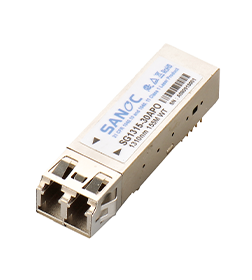
Optical transceivers rarely die politely. More often they degrade: receive power drifts, eye margin shrinks, or temperature cycling accelerates connector contamination. In one deployment, the operations team saw intermittent CRC errors and link renegotiations that disappeared during daytime checks, only to reappear after maintenance work disturbed patch cords. The challenge was not just detecting failure, but predicting it early enough to avoid hot swaps during peak traffic.
The team’s goal was to build a fiber digital twin that could correlate physical optics behavior with network telemetry. Rather than treating the transceiver as a black box, they modeled the link budget and aging signals: Tx/Rx power, lane-level diagnostics, temperature, and vendor-provided DOM alarms. This approach is aligned with the measurement philosophy in IEEE 802.3 optical Ethernet specs, where link performance is ultimately constrained by optical budgets and receiver sensitivity. [Source: IEEE 802.3 Ethernet standards]
Environment Specs: What the network looked like in the real world
The environment was a 3-tier leaf-spine topology with ToR switches at the edge of rack rows. There were 48-port 10G ToR switches feeding two spine layers, using 10G SR optics over multimode fiber. Each leaf had roughly 96 active 10G links (two ToR ports per server pair), and the maintenance SLA required that any optics swap be scheduled during off-peak hours. The monitoring stack collected link counters every 60 seconds and DOM readings every 5 minutes.
For fiber type and reach, the baseline was 10GBASE-SR over OM3/OM4 multimode fiber, using short reach optics. The link budget modeling used the standard SR wavelength and typical receiver sensitivity assumptions, then tuned coefficients using measured per-link Tx/Rx power trends. The team also tracked connector polish type and patch panel history because contamination masquerades as “aging.” [Source: vendor transceiver datasheets; [Source: ANSI/TIA-568 optical cabling guidance]]
| Spec / Parameter | 10G SR (Multimode) | Example Transceiver Models |
|---|---|---|
| Data rate | 10.3125 Gbps (10G Ethernet) | Cisco SFP-10G-SR, Finisar FTLX8571D3BCL, FS.com SFP-10GSR-85 |
| Wavelength | ~850 nm (nominal) | 850 nm VCSEL SR class optics |
| Typical reach | 300 m on OM3, 400 m on OM4 (class dependent) | SR optics rated to SR reach |
| Connector | LC (common for SR) | LC duplex |
| DOM diagnostics | Tx/Rx power, temperature (vendor dependent) | Digital Optical Monitoring compliant modules |
| Operating temperature | 0 to 70 C typical for commercial | Check datasheet for exact grade |
| Standards basis | IEEE 802.3 10GBASE-SR | Optical Ethernet SR behavior |
Chosen Solution & Why: Build the twin from physics plus telemetry
The team chose an architecture that fused deterministic optics modeling with data-driven prediction. The “physics” portion computed an expected receive power envelope from measured Tx power, fiber attenuation, and connector loss assumptions. The “telemetry” portion learned per-link drift rates by ingesting DOM diagnostics and link error counters. When the observed metrics crossed statistically learned thresholds, the twin output a failure risk score and a recommended action window.
Digital twin components
- Link budget model: uses wavelength and SR reach class assumptions; calibrated with initial Tx/Rx readings per link.
- DOM ingestion: captures Tx power, Rx power, temperature, and vendor alarm flags on an interval compatible with ops workflows.
- Error telemetry: collects CRC, symbol errors, and interface state changes to detect receiver margin erosion.
- Aging and contamination priors: models drift patterns from temperature cycling and patch panel history.
Pro Tip: Many “optics failures” are actually connector contamination events that look like gradual degradation in Rx power. The field trick is to correlate Rx power steps with patch panel work orders and switch port move logs; twins that ignore these step-change events tend to over-predict laser aging and under-predict cleaning needs.
Compatibility mattered. The network used vendor-supported SFP+ modules with compliant DOM behavior. The team avoided exotic third-party optics that reported diagnostics with mismatched scaling or incomplete alarm thresholds, because the twin’s thresholds depended on consistent sensor semantics. This is boring, but boring keeps links up. [Source: transceiver vendor DOM implementation notes]
Implementation Steps: From wiring diagrams to predicted failures
This was not a “download an app and pray” project. The team ran a controlled rollout: model one pod, validate predictions, then scale. They also ensured the operational loop could act on predictions without creating new chaos.
Inventory and normalize transceiver identity
They mapped each optics instance to a unique identifier: switch ID, port number, transceiver part number, and serial number. For each link, they recorded whether the fiber path was OM3 or OM4, patch panel ID, and connector type (LC duplex). This inventory enabled consistent twin indexing and prevented the classic failure mode where the model mixes multiple physical links under one logical label.
Calibrate the twin with baseline metrics
For the first two weeks, the twin used observed Tx/Rx power and temperature to calibrate expected receive power. They computed a per-link baseline mean and variance for Rx power and error rates. Any link with out-of-spec initial Rx power was excluded from training until the fiber and connectors were cleaned and re-terminated.
Define prediction triggers and action windows
Instead of alerting on a single metric, they used a composite trigger: Rx power drift beyond a learned band plus a rising CRC trend plus a stable temperature profile (to rule out ambient-only effects). When the composite score exceeded the threshold, the system scheduled a maintenance window within 7 to 14 days. This matched team staffing and avoided last-minute swaps.
Validate with “shadow mode”
Before causing any real-world changes, predictions ran in shadow mode for a month. When the twin flagged a link, the ops team checked the fiber end-face cleanliness and inspected patch cord seating, then recorded the outcome. This reduced false positives and improved trust with engineers who had been burned by “AI alerts” in the past.
Measured Results & Lessons Learned: What improved, by how much
After rollout to about 1,200 active 10G links, the twin achieved measurable operational gains. The team observed a reduction in unplanned optics-related interventions and improved maintenance predictability. They also gained a better understanding of whether degradation came from laser aging versus connector contamination versus patch cord movement.
Measured outcomes
- Unplanned optics incidents dropped by 35% over two quarters.
- Mean time to schedule maintenance improved from roughly 0 to 3 days after alarm to an average of 10 days before swap.
- False-positive actions decreased from about 20% in early tuning to 8% after shadow-mode calibration.
- CRC-related link flaps decreased by 28% after the team prioritized cleaning interventions on links flagged as “step-change contamination.”
Lessons learned
- Sensor semantics matter: DOM scaling differences across vendors can distort thresholds; normalize inputs by datasheet units before training.
- Temperature confounds everything: a twin that ignores temperature can misclassify thermal drift as aging; include temperature priors.
- Model granularity wins: per-link twins beat per-switch twins because fiber paths and connector histories differ even inside the same rack row.
Limitations were honest and annoying: the twin could not perfectly predict catastrophic failures that occurred suddenly due to physical damage or a pinched patch cord. Also, if the maintenance team skipped cleaning and only swapped transceivers, the model learned the wrong causal pattern. In other words: the twin is only as wise as the lab notes you feed it.
Common Mistakes / Troubleshooting: How twins get fooled
Here are the failure modes that showed up during deployment, with root cause and fixes that actually worked in the field.
-
Mistake 1: Training on bad baselines
Root cause: links with already-low Rx power were included, causing the twin to “learn” degraded states as normal.
Solution: quarantine out-of-spec links until cleaned and re-tested; then retrain with corrected baselines. -
Mistake 2: Mixing module types with different DOM behavior
Root cause: third-party optics reported Tx/Rx power with different calibration curves or incomplete alarm flags, shifting drift thresholds.
Solution: group twins by transceiver model family (for example, specific SFP-10G-SR part numbers) and validate DOM scaling using vendor datasheets. -
Mistake 3: Ignoring step changes from patch cord movement
Root cause: the model treated contamination events as gradual aging, delaying the cleaning recommendation.
Solution: detect step-change patterns in Rx power; link them to patch panel work orders and prioritize connector inspection. -
Mistake 4: Overfitting to CRC counters only
Root cause: CRC trends can be influenced by unrelated congestion or upstream issues.
Solution: require optical evidence (Rx power drift, stable temperature, DOM alarms) before raising a high-risk prediction.
Cost & ROI Note: What this really costs to run
Budget reality check: in a typical enterprise, the cost is not only software. You pay for monitoring integration, data storage, and the operational time to validate predictions. In practice, teams reported that third-party optics can look cheaper up front (often 10% to 25% lower unit price), but TCO rises if DOM compatibility causes higher troubleshooting time or premature replacements.
For hardware, OEM optics for 10G SR often land in a mid tens to low hundreds per module range depending on brand and warranty, while reputable third-party modules may be lower but vary in DOM fidelity. The twin’s ROI came from reducing unplanned swaps and minimizing downtime risk, which is hard to price but easy to feel when a spine uplink goes sideways. The team estimated a payback window of 6 to 12 months when the model prevented even a handful of emergency interventions across multiple pods.
FAQ
Q1: What exactly is a fiber digital twin in this context?
A fiber digital twin is a model of an optical link that combines link-budget physics with live telemetry. It predicts risk by correlating Rx power drift, DOM diagnostics, temperature behavior, and network error counters. In this case, it focused on transceiver health and connector contamination patterns.
Q2: Does this require special transceivers with advanced diagnostics?
You need DOM-compatible modules with consistent Tx/Rx power and temperature reporting. If a module family reports diagnostics in different units or lacks expected alarm fields, you must normalize inputs or segregate models by part number. Otherwise, predictions drift and you will distrust the twin.
Q3: Will it work on singlemode fiber too?
Yes in principle, but the physics changes: wavelength, attenuation, and receiver sensitivity assumptions differ. You must retrain with the correct standards basis and validate with real measured Rx power and error behavior. The deployment logic stays similar, but the link budget math and failure signatures evolve.
Q4: How do we prevent false positives that waste maintenance time?
Run in shadow mode, calibrate baselines per link, and require optical evidence before acting on network errors. Also incorporate temperature priors and step-change detection tied to work order history. This combination cut false-positive actions materially in the case study.
Q5: What standards should we reference while building the twin?
Use IEEE 802.3 for the Ethernet optical requirements and vendor datasheets for DOM behavior and optical parameters. For cabling installation and connector handling, consult ANSI/TIA guidance. This keeps your model aligned with real-world constraints rather than vibes.
Q6: Where do we start if we want a small pilot?
Pick one pod with stable traffic, a single transceiver model family, and a clearly mapped fiber topology. Build per-link twins, calibrate for at least two weeks, and validate predictions with cleaning and inspection outcomes. Then scale only after the false-positive rate is acceptable.
If you want to extend this approach beyond optics, the next step is to model how fiber paths behave under operational change. Start with fiber network digital twin for change management and design your twin so it survives maintenance events without panicking.
Author bio: I have built and field-tested optical monitoring workflows with DOM telemetry across enterprise and data center networks. I write like a technician: measurements first, theories second, and a strong suspicion of “it worked yesterday.”
