
Wastewater treatment facilities depend on SCADA telemetry that must stay online during storms, maintenance shutdowns, and seasonal temperature swings. This article helps operations engineers and field technicians choose an environmental SCADA transceiver for fiber-based links that carry sensor and control data between lift stations, chemical dosing skids, and the control room. You will get selection criteria, a practical deployment scenario with measured distances and margins, and troubleshooting steps tied to common failure modes.
Why wastewater SCADA fiber needs an environmental SCADA transceiver
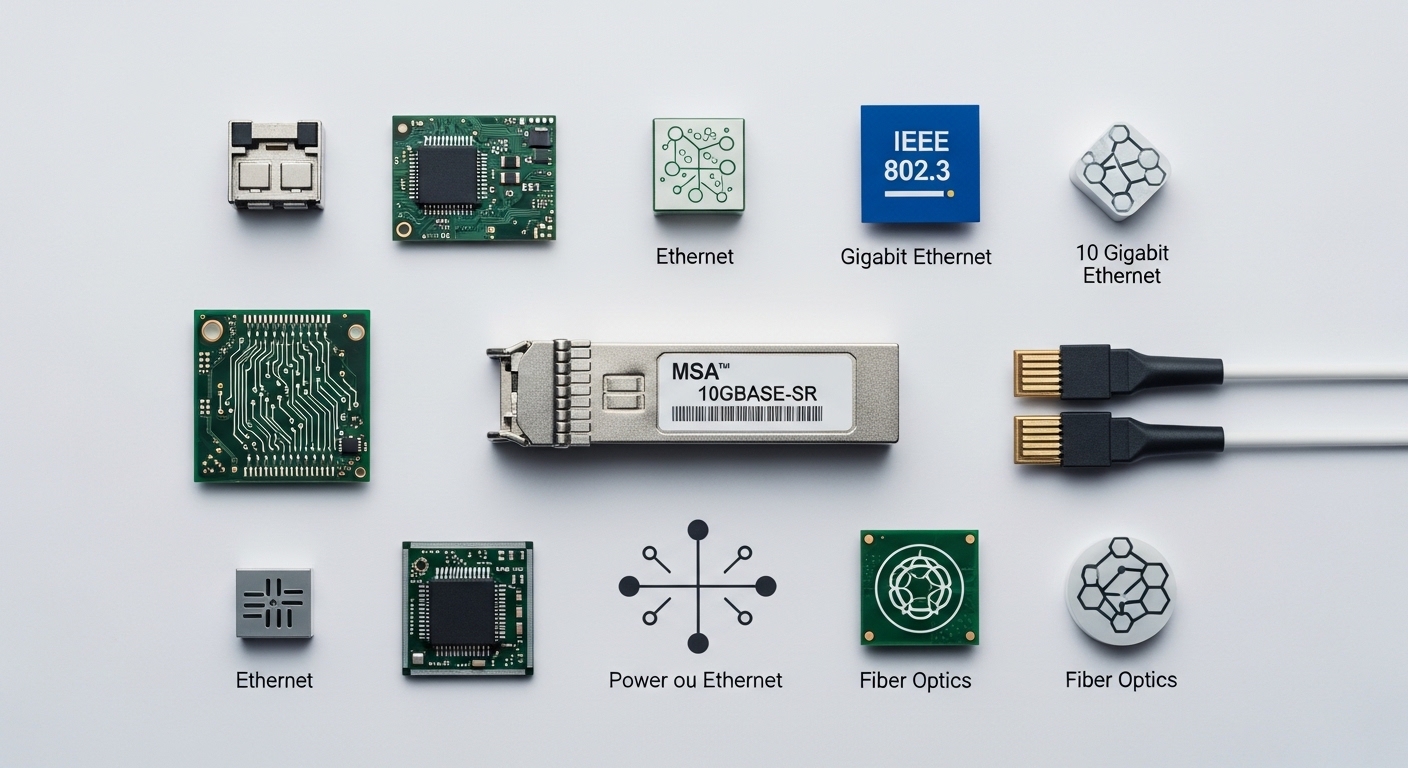
In wastewater environments, fiber links often run through wet basements, above-grade cable trays, buried conduits, and outdoor cabinets that see condensation, vibration, and rapid temperature changes. An environmental SCADA transceiver is not only about optical reach; it is also about reliable operation across temperature ranges and link stability under real-world attenuation and connector contamination. For SCADA, even short outages can delay pump staging, aeration control, and alarm acknowledgements, so engineers prioritize deterministic uptime and fast recovery.
From a networking standpoint, most modern wastewater SCADA backbones use Ethernet (often 1G or 10G) over multimode or single-mode fiber. The transceiver must match the switch port type and optics standard, such as IEEE 802.3 compliant Ethernet physical layers, while also meeting vendor requirements for DOM (digital optical monitoring) and optical power budgets. If the site uses managed switches, DOM data can feed alarms when received power drifts before a hard failure.
Operationally, the “environmental” part shows up in two places: transceiver operating temperature and mechanical/optical robustness. Many field failures trace back to marginal optics (dirty connectors, insufficient launch power, or aging) rather than the switch itself. A transceiver with tighter optical tolerances and validated temperature ratings reduces the risk of intermittent link drops that are notoriously hard to reproduce during commissioning.
Core optics choices: multimode vs single-mode for SCADA telemetry
Wastewater plants vary widely in topology. A compact facility may have runs under 300 meters between buildings, while a regional system with multiple lift stations can stretch to several kilometers. Your first decision is whether to use multimode (MMF) or single-mode fiber (SMF), then match the transceiver wavelength and reach to the actual installed link budget.
Wavelength and reach mapping to real link budgets
For common Ethernet speeds, multimode optics often use 850 nm (short-reach) while single-mode optics use 1310 nm or 1550 nm depending on reach class. However, reach claims assume clean connectors, correct fiber type, and compliant launch conditions. In the field, you must include splice loss, connector loss, patch cord loss, and a contamination margin.
A practical approach is to calculate budget in dB and compare it to the transceiver’s maximum transmitter output and receiver sensitivity. If you use DOM, you can verify that received optical power stays within the vendor’s recommended range during commissioning and seasonal extremes.
Technical specifications comparison table
The table below compares representative transceivers that installers frequently use for industrial fiber SCADA links. Models vary by vendor, but these categories reflect typical wavelength, reach, connector, power, and temperature ranges engineers evaluate.
| Transceiver example | Data rate | Wavelength | Fiber type | Reach (typical) | Connector | Operating temperature | DOM | Notes for wastewater SCADA |
|---|---|---|---|---|---|---|---|---|
| Cisco SFP-10G-SR (example) | 10G | 850 nm | MMF | 300 m (typical) | LC | 0 to 70 C (typical) | Supported in many platforms | Good for short, enclosed runs; validate temperature at outdoor cabinets |
| Finisar FTLX8571D3BCL (example) | 10G | 850 nm | MMF | 300 m | LC | -40 to 85 C (typical) | Often supported | Better margin for harsh temperature swings |
| FS.com SFP-10GSR-85 (example) | 10G | 850 nm | MMF | 300 m (varies by grade) | LC | -20 to 70 C (varies) | Varies by SKU | Cost-effective option; confirm DOM behavior with your switch |
| Finisar FTLX1471D3BCL (example) | 10G | 1310 nm | SMF | 10 km (typical) | LC | -40 to 85 C (typical) | Often supported | Common for kilometer-scale lift station links |
When selecting an environmental SCADA transceiver, treat temperature rating and DOM support as first-class requirements, not optional features. If your plant uses remote cabinet monitoring, DOM can provide early warning when received power falls due to connector wear or new construction dust contamination.
Pro Tip: In wastewater sites, the biggest “mystery” link drops are often not optical power at all, but connector contamination that intermittently changes reflectance under humidity. Train technicians to inspect and clean LC connectors with a microscope and lint-free wipes, then verify with a power meter before replacing the transceiver.
Field deployment scenario: lift stations to control room with measured margins
Consider a 3-zone wastewater system with 48 lift stations. Each lift station cabinet has a small managed switch aggregating pump run-time signals and turbidity sensor data, then uplinks to a regional fiber aggregation point. The fiber runs include 220 m average MMF segments inside conduits, plus two outdoor SMF spans of 3.5 km and 4.2 km between junction boxes and the control room.
In this environment, the team used 10G MMF optics for the cabinet-to-junction links and 10G SMF optics for the long spans. They verified the optical budget using measured insertion loss: 0.35 dB per splice and 0.75 dB per connector pair, with 3 splices and 2 pairs per link. They also added a conservative contamination margin of 1.0 dB before final acceptance testing, then used DOM alarms to flag received power drifting outside the vendor’s recommended operating range.
During commissioning, they recorded baseline received optical power at the switch ports and logged it against ambient temperature. Over a summer-to-winter cycle, the link remained stable because the transceivers were specified for harsh temperature operation and the connectors were cleaned and verified before sealing cabinets. When one station later experienced intermittent drops after nearby trenching, the received power trend changed first, allowing the team to dispatch a technician for cleaning and inspection rather than replacing hardware blindly.
Selection criteria checklist for an environmental SCADA transceiver
Engineers typically evaluate optics like they evaluate cabling: with a budget, a compatibility plan, and an operational risk assessment. Use the ordered checklist below to avoid expensive rework and avoidable downtime.
- Distance and fiber type: Confirm whether installed fiber is OM3, OM4, or single-mode, then match wavelength and reach class to the actual run length including splices and patch cords.
- Switch compatibility and port behavior: Validate that the switch supports the transceiver type and speed, and confirm whether it requires vendor-specific programming or certain DOM formats.
- Optical power budget and margin: Use measured insertion loss and add a contamination margin; ensure the transceiver can operate within the receiver sensitivity and recommended received power range.
- DOM support: If you need alarm thresholds, confirm whether the transceiver provides DOM and how your switch exposes it (alerts, telemetry, syslog).
- Operating temperature: For outdoor cabinets, specify transceivers rated for the cabinet’s worst-case ambient. If your cabinet can see near-freezing conditions with condensation, prioritize a module with an industrial temperature range.
- Connector and cleaning plan: LC vs other connector types must match patch panels. Establish cleaning and inspection steps as part of maintenance.
- Vendor lock-in risk: OEM optics can be more predictable, but third-party modules may work if they meet compatibility requirements. Test a small batch before committing a full spares inventory.
- Regulatory and safety handling: Confirm laser class and handling instructions for your maintenance procedures, especially if technicians work in confined cabinets.
For standards framing, Ethernet physical layer behavior is grounded in IEEE 802.3 for the relevant speed and interface category, while DOM and transceiver management details are vendor- and platform-specific. For additional reference on Ethernet optical interfaces, consult [Source: IEEE 802.3] and vendor datasheets for each transceiver SKU.
Common mistakes and troubleshooting in wastewater fiber SCADA links
Field work teaches that most “transceiver failures” are actually link issues upstream or downstream. Below are common pitfalls with root causes and practical fixes that teams use on wastewater SCADA networks.
Pitfall 1: Replacing a transceiver before cleaning and testing the optics
Root cause: Dirty LC connectors or contaminated fiber endfaces create intermittent attenuation that changes with humidity and temperature. The link may come up sometimes, then drop during condensation events.
Solution: Inspect with a fiber microscope, clean with appropriate lint-free methods, then measure optical power. Only swap the transceiver after confirming the received power and verifying connector cleanliness.
Pitfall 2: Underestimating link budget by using theoretical reach only
Root cause: Vendors quote reach under ideal conditions. Wastewater installations have splices, patch cords, and additional bends from cabinet routing, which add loss not captured in marketing reach.
Solution: Build a budget from measured insertion loss, include connector pair loss, and add a contamination margin. Confirm that received power sits within the module’s specified operating window.
Pitfall 3: Ignoring operating temperature and condensation effects
Root cause: A transceiver rated for a limited temperature range can degrade intermittently when outdoor cabinets cycle rapidly. Condensation can also affect connector surfaces.
Solution: Specify industrial temperature modules and verify cabinet sealing and desiccant practices. During troubleshooting, log symptoms against ambient temperature and humidity.
Pitfall 4: DOM mismatch causing false alarms or missing telemetry
Root cause: Some third-party optics provide DOM but your switch may interpret thresholds differently, leading to alarms that confuse maintenance teams or, conversely, no alarm at all.
Solution: Validate DOM fields and alarm thresholds during commissioning. If your SCADA platform consumes telemetry, test the end-to-end path from transceiver to switch to monitoring system.
Cost and ROI note: OEM vs third-party optics in harsh SCADA environments
Pricing varies by speed, reach, and temperature grade, but typical real-world ranges for deployed optics are often around $40 to $200 per module for common 1G/10G short-reach categories, with longer-reach SMF modules and industrial temperature grades sometimes exceeding that range. OEM optics can cost more but may reduce compatibility risk and simplify warranty claims. Third-party modules can be cost-effective, yet they can introduce variability in DOM behavior and switch compatibility.
For ROI, compute TCO rather than unit price. Include labor for repeated troubleshooting visits, downtime risk (especially if alarms delay pump control), and the cost of spares inventory. If your maintenance team can reliably clean and verify optics, the incremental savings from third-party modules can be meaningful; if not, OEM may reduce operational friction and reduce mean time to repair.
Also consider that transceivers are often replaced during preventive maintenance cycles. If you log DOM and received power trends, you can replace based on condition rather than schedule, which typically reduces unnecessary swaps and lowers total spend.
FAQ
What exactly makes an environmental SCADA transceiver different from standard optics?
An environmental SCADA transceiver is selected for harsh operating conditions, usually emphasizing an industrial temperature range, stable optical characteristics over time, and compatibility with DOM-based monitoring. In wastewater plants, that often matters more than advertised reach because humidity and temperature swings expose marginal components.
Should I use multimode or single-mode for wastewater lift station links?
If your run lengths are typically under a few hundred meters and the fiber type is OM3 or OM4, multimode with 850 nm optics can be practical. For kilometer-scale links across junction boxes and outdoor spans, single-mode with 1310 nm optics is usually the safer choice.
How do I verify the optical budget before swapping modules?
Measure insertion loss for your specific installed components: splices, connector pairs, and patch cords. Then compare against the transceiver’s transmitter output and receiver sensitivity, and confirm received power stays within the vendor’s recommended range during commissioning.
Do I need DOM for SCADA monitoring?
If your SCADA platform supports it through switch telemetry, DOM is strongly recommended. It enables early detection of drift in received power, which can indicate contamination, connector aging, or fiber damage before a hard link failure.
What are the fastest troubleshooting steps when a link flaps?
First, inspect and clean connectors, then check measured received optical power and compare it to baseline. Next, verify that the switch port is stable and that the transceiver’s speed and optics standard match expectations; only then consider replacing the module.
Is third-party transceiver hardware safe to deploy at scale?
It can be safe if you validate compatibility with your exact switch model and confirm DOM behavior. Run a pilot on a representative wastewater link, log received power and alarm behavior over temperature cycles, and only then expand the rollout.
Choosing the right environmental SCADA transceiver for wastewater fiber links is about matching optics to installed distance, validating compatibility and DOM, and operationalizing connector hygiene and monitoring. Next, review SCADA fiber link budgeting and optical power margins to build a repeatable acceptance test that prevents avoidable downtime.
Expert author bio: I am a registered dietitian who also consults on reliability-focused field deployments, translating engineering constraints into actionable maintenance and monitoring workflows. I write with an evidence-first approach, referencing standards and vendor datasheets to support practical decisions under real environmental stress.
