
Enterprise 400G rollouts: optics, fiber reach, and risk control
Moving to 400G changes more than port speed. In an enterprise, teams must align switch optics, fiber plant, and operational procedures so the rollout does not stall on link bring-up, DOM mismatches, or unexpected power draw. This article helps network engineers and data center operators plan a practical 400G implementation with measurable targets and field-tested checks.
Why enterprise 400G planning fails: the hidden dependencies
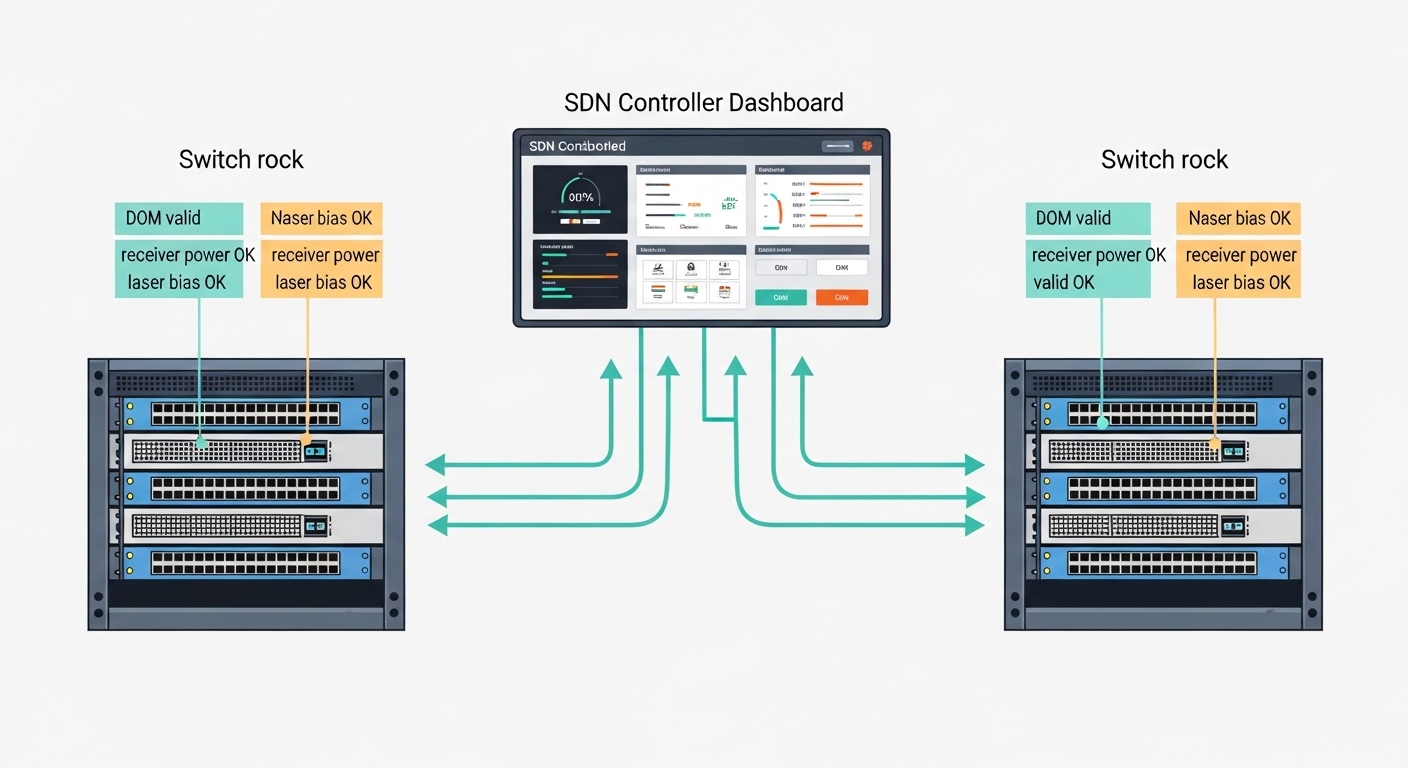
In many rollouts, the first surprise is that 400G is not “just faster Ethernet.” You typically need different optics families (for example, QSFP-DD vs OSFP depending on vendor), coherent vs direct-detect tradeoffs, and stricter optical budgets at higher baud rates. A second surprise is operational: maintenance windows, transceiver inventory, and DOM-based provisioning have to be standardized. Finally, the fiber plant matters more than expected because insertion loss and connector cleanliness can dominate margin.
Map the rollout path to IEEE behavior
At the PHY layer, 400G Ethernet implementations commonly follow IEEE 802.3 specifications for 400GBASE-R and related PMDs. Vendor switch ASICs also impose optics compatibility rules, including supported wavelengths, lane counts, and FEC requirements. Treat the vendor compatibility matrix as a functional requirement, not a suggestion.
400G optics and fiber reach: what to measure before ordering
For enterprise deployments, the fastest path is to choose an optics type that matches your distances and existing fiber. Common short-reach options use 850 nm multimode fiber (MMF) with OM4/OM5, while longer-reach options often use 1310 nm on SMF or specific DWDM/coherent solutions. Your goal is to meet the vendor’s link budget and receiver sensitivity with margin for patch cords, aging, and re-termination.
Quick comparison of typical 400G optics (direct-detect)
Use this table as a planning baseline; always confirm exact reach and supported media in the switch and transceiver datasheets. Power figures are typical ranges for planning, not a guarantee of your exact module.
| Optic family | Typical wavelength | Medium | Nominal reach | Connector | Data rate | Operating temp | Power (typ.) |
|---|---|---|---|---|---|---|---|
| 400G SR8 (MMF) | 850 nm | OM4/OM5 | ~100 m class | LC | 400G | Commercial/Industrial | ~6–12 W |
| 400G LR8 (SMF) | 1310 nm | Single-mode | ~2–10 km class | LC | 400G | Commercial/Industrial | ~6–12 W |
| Vendor-specific 400G ER4/FR4 variants | 1310/1550 nm class | Single-mode | Beyond LR | LC | 400G | Commercial/Industrial | ~8–16 W |
Link budget checklist (the numbers that matter)
- Fiber type and grade: verify OM4 vs OM5 and confirm SMF type (G.652.D is common).
- Measured end-to-end loss: use an OTDR or calibrated OLTS method; verify patch cords and harnesses separately.
- Connector and splice inventory: count connectors, check APC vs UPC if relevant, and include splice loss assumptions.
- Vendor receiver sensitivity: compare against your measured loss plus a safety margin (commonly 1–3 dB depending on environment).
- FEC and lane mapping: confirm the switch’s required mode for the optics family.
Pro Tip: In field bring-up, many “bad optics” cases are actually contaminated patch cords. Before swapping modules, clean LC connectors with a lint-free method and re-measure with a light source and power meter; optical budget failures often correlate with a single high-loss connector rather than the transceiver itself.
Switch compatibility and DOM: the enterprise risk control layer
400G rollouts can fail silently if optics are electrically compatible but not supported by the switch’s firmware policy. Most modern platforms use Digital Optical Monitoring (DOM) data to validate temperature, bias current, and optical power thresholds. If the DOM fields do not match expected ranges or if the firmware blocks unknown vendor IDs, the link may stay down.
Operational steps that prevent downtime
- Stage a lab validation: bring up one 400G link from each optics type you plan to deploy.
- Confirm DOM support and threshold behavior in the switch CLI; capture link up/down syslog events.
- Use consistent transceiver part numbers across the rack. Mixing compatible but different revisions can complicate troubleshooting.
- Document supported modules for your exact switch models and line cards.
For example, if you are using a 400G-capable platform that supports QSFP-DD optics, verify a known compatible module family such as Cisco-branded 400G SR8 optics or equivalent modules from vendors like Finisar/FS with matching specifications (including DOM and temperature rating). Always validate against the vendor compatibility list, not just “same reach” marketing.
Real-world enterprise scenario: leaf-spine migration with staged cutover
Consider a 3-tier data center leaf-spine topology where each ToR uses 48-port 10G and the aggregation layer is being upgraded to 400G uplinks. You have 12 leaf switches, each moving from 4x100G to 1x400G, creating 48 new 400G links across two fabrics. The leaf-to-spine distance is 65 m on OM4 with standard patching, and the spine-to-core distance is 900 m on SMF for backup paths.
In this scenario, the enterprise team selects 400G SR8 optics for the 65 m MMF legs and 400G LR8 optics for the 900 m SMF legs. They pre-clean all LC endpoints, verify measured loss with OLTS, and stage optics in batches of five links per cutover window. After the first batch passes, they proceed rack-by-rack, monitoring optical power and temperature via DOM telemetry and correlating any CRC or FEC events with specific fiber segments.
Selection criteria for enterprise 400G: a decision checklist
- Distance vs reach: choose optics based on measured loss, not label reach.
- Switch and line card compatibility: use the exact optics support matrix for your platform.
- Connector and harness fit: confirm LC vs MPO, polarity requirements, and lane mapping.
- DOM and firmware behavior: validate thresholds and whether third-party optics are permitted.
- Operating temperature: verify transceiver temp rating matches the rack environment and airflow model.
- Vendor lock-in risk: assess cost and availability of supported optics for the next 3–5 years.
- Power and cooling impact: sum transceiver power across ports and check for margin in your thermal budget.
Reference standards and vendor guidance, including IEEE 802.3 for PHY behavior and vendor datasheets for optics parameters. See [Source: IEEE 802.3] and [Source: vendor transceiver datasheets]. External authority links: IEEE Standards, IETF for operational telemetry context.
Common mistakes / troubleshooting for enterprise 400G
Here are the failures I see most often during hands-on migrations, with root cause and fix.
Link stays down after module insertion
Root cause: optics not approved by switch firmware policy or DOM mismatch. Sometimes it is a revision mismatch (same form factor, different ID fields). Solution: confirm supported part numbers for the exact switch model and upgrade firmware if the vendor requires it for new optics.
High CRC/FEC events immediately after cutover
Root cause: fiber contamination or a single bad connector/polarity issue, especially with MPO trunks. Solution: clean connectors, verify polarity, re-check patch-cord seating, then compare DOM optical power readings at both ends.
Works at first, then degrades over days
Root cause: thermal stress or marginal link budget that tolerated bring-up but not temperature swings. Dust accumulation and airflow changes can worsen this. Solution: validate transceiver temperature telemetry, re-measure optical loss, and replace any suspect patch cords or harnesses.
Random flaps during maintenance windows
Root cause: patching changes without updating documentation or using the wrong fiber pair mapping. Solution: enforce a change control checklist: label fibers, record patch maps, and verify with a continuity test before closing the window.
Cost and ROI note: what to budget beyond the transceiver
Enterprise 400G optics often cost more than 100G optics, and QSFP-DD/OSFP modules can have higher unit pricing depending on reach class. As a realistic planning range, direct-detect 400G SR8
