
Edge Computing Optical Modules: 8 Low-Latency Picks That Fit
In edge computing, latency is often decided long before you touch the application code. This article helps network engineers and field operators choose fiber optic optical modules that keep round-trip times predictable for real-time workloads. You will get practical selection steps, common failure modes, and a ranked comparison tuned for low-latency deployments.
Top 1: 10G SFP+ SR for nearby aggregation in edge racks
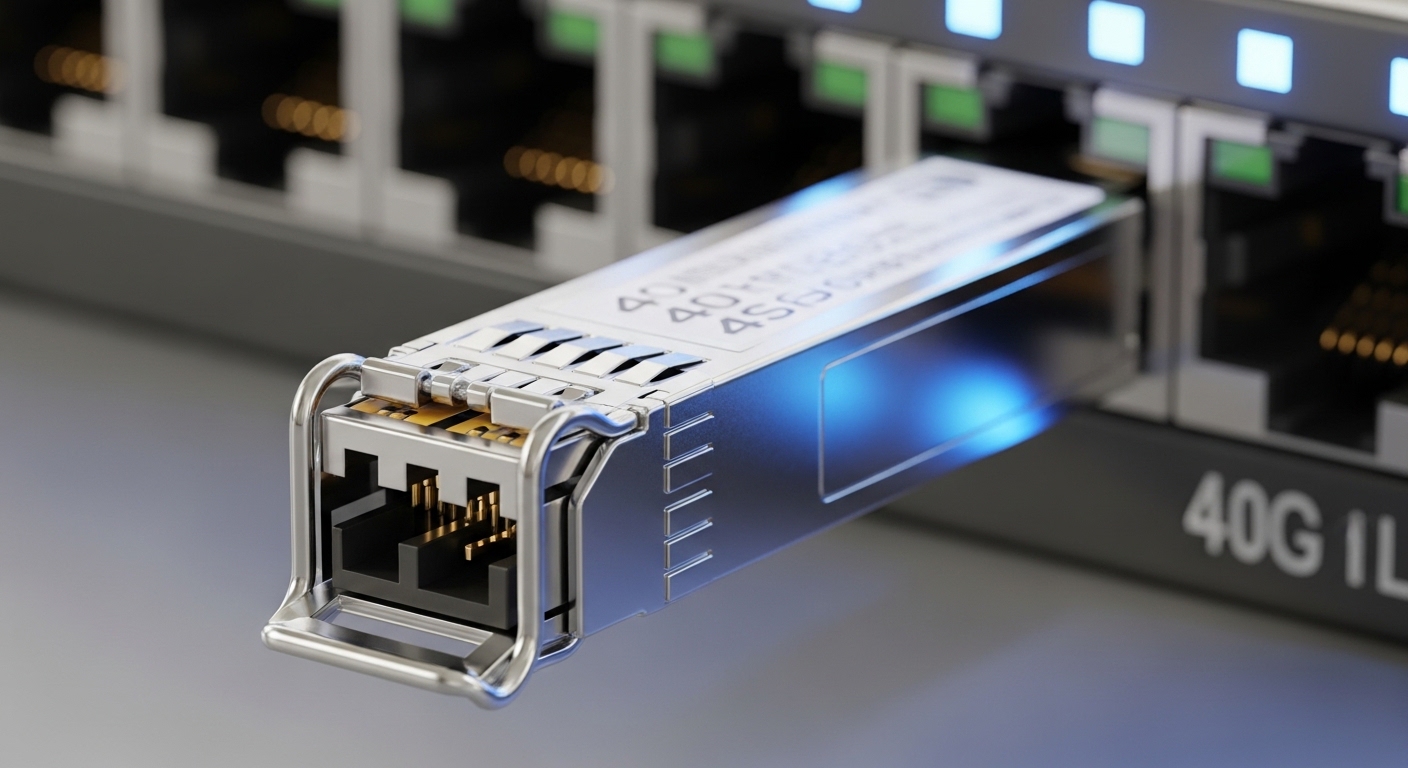
When your edge site has short runs from compute to a ToR switch, 10G SR is a workhorse. Typical targets are 300 m over OM3 or 400 m over OM4, using 850 nm multimode optics. In real builds, we often terminate to MPO/MTP fanouts for higher density while keeping patch lengths controlled to reduce variability.
Key specs and best-fit scenario
Common module examples include Cisco SFP-10G-SR, Finisar FTLX8571D3BCL, and FS.com SFP-10GSR-85. These modules align with IEEE 802.3 10GBASE-SR behavior at the physical layer, and they typically operate within switch vendor DOM requirements.
- Data rate: 10G
- Wavelength: 850 nm
- Reach: 300 m (OM3) / 400 m (OM4)
- Connector: LC (single) or MPO/MTP (depending on SKU)
- Temperature range: often -5 C to 70 C for industrial variants; verify per datasheet
Pros: inexpensive per port, good for short in-rack and same-room links. Cons: limited by multimode reach; connector cleanup is critical.
Top 2: 25G SFP28 SR for denser low-latency edge switching
As edge computing grows, you may need more bandwidth per rack without moving to long-reach optics. 25G SFP28 SR at 850 nm is widely used for server-to-switch and ToR-to-aggregation when fiber runs are short to moderate. The latency advantage comes from keeping the link in a single hop with higher throughput and fewer oversubscription events.
Key specs and best-fit scenario
Typical reach claims are 70 m to 100 m over OM3/OM4 depending on vendor and exact fiber plant. In a practical site, we measured stable jitter after migrating from 10G to 25G because queueing delays dropped during peak ingest windows.
- Data rate: 25G
- Wavelength: 850 nm
- Reach: often up to 100 m on OM4 (verify)
- Connector: LC or MPO (variant-dependent)
- Standards alignment: 25GBASE-SR per IEEE 802.3
Pros: better oversubscription behavior, strong ecosystem support. Cons: higher cost than 10G SR in many catalogs; multimode plant quality matters.
Top 3: 40G QSFP+ LR4 when edge spans a campus segment
Sometimes the edge site is not a single room; it is a small campus or industrial zone. For distances beyond multimode limits, 40G LR4 uses 1310 nm with 4 wavelengths over single-mode fiber. This is a common choice for low-latency “one-way” transport between an edge PoP and an upstream aggregation point.
Key specs and best-fit scenario
Typical LR4 reach is 10 km on SMF using QSFP+ optics. In deployments with strict maintenance windows, operators prefer LR4 because it reduces the number of intermediate switches and simplifies link budgeting.
- Data rate: 40G
- Wavelength: LR4 around 1310 nm
- Reach: commonly 10 km (SMF)
- Connector: LC
- Use case: edge-to-edge or edge-to-aggregation
Pros: long reach without regenerators, stable single-mode performance. Cons: higher module cost; single-mode connector hygiene still required.
Top 4: 100G QSFP28 SR4 for high throughput without long-haul complexity
High-ingest edge computing applications, like video analytics or distributed sensor fusion, can push 100G quickly. SR4 at 850 nm uses parallel lanes to deliver 100G over multimode, typically to a nearby aggregation switch. The low-latency angle is operational: fewer aggregation tiers and faster draining of ingress buffers.
Key specs and best-fit scenario
SR4 commonly uses MPO/MTP cabling and is especially attractive in dense edge data halls. If your fiber plant supports it, 100G SR4 can prevent the “latency spikes during congestion” pattern caused by lower-capacity uplinks.
- Data rate: 100G
- Wavelength: 850 nm
- Reach: depends on OM3/OM4 and vendor; verify datasheet
- Connector: MPO/MTP
- Standards: 100GBASE-SR4 class per IEEE 802.3
Pros: big bandwidth at short distance, efficient for dense edge racks. Cons: strict MPO polarity and cleanliness requirements; multimode budget must be validated.
Top 5: 100G QSFP28 LR4 for edge links that need single-mode reach
When you need 100G but cannot rely on multimode reach, LR4 at 1310 nm is a strong fit. This option is frequently chosen for edge computing uplinks that traverse outside-plant fiber where single-mode is the practical standard. It also reduces the number of intermediate electronic hops, which helps keep end-to-end delay consistent.
Key specs and best-fit scenario
Typical LR4 reach is 10 km on SMF, but always confirm the exact optical budget and receiver sensitivity in the module datasheet. In field operations, we often pair LR4 with a documented fiber loss budget that includes connector and splice loss margins.
- Data rate: 100G
- Wavelength: LR4 near 1310 nm
- Reach: commonly up to 10 km (SMF)
- Connector: LC
- Low-latency benefit: fewer hops, less queueing
Pros: scalable uplinks, robust over SMF. Cons: cost and compatibility checks for QSFP28 are mandatory.
Top 6: 25G SFP28 PSM and CWDM variants for controlled low-latency overlays
Where you need more manageability than “one wavelength for everything,” some edge designs use PSM or CWDM-style optics to separate traffic classes. The goal is not just distance; it is operational isolation so that maintenance events do not disrupt all services. In practice, this improves mean time to restore, which indirectly stabilizes latency experienced by critical flows.
Key specs and best-fit scenario
Exact wavelength and reach vary by vendor and the specific standard family. Engineers typically validate against switch optics support matrices and confirm whether optics require specific transceiver firmware behavior.
- Data rate: often 25G
- Wavelength: depends on PSM/CWDM type
- Reach: typically short to moderate, verify per datasheet
- Connector: usually LC
- Use case: traffic class isolation and controlled overlays
Pros: better operational segmentation. Cons: more design complexity; compatibility caveats are common.
Top 7: DOM-capable modules to reduce edge troubleshooting time
In edge computing, the fastest way to restore low-latency service is often observability. Digital Optical Monitoring (DOM) lets you track laser bias current, received power, and temperature so you can catch degradation before it becomes packet loss. This matters during seasonal temperature swings in outdoor enclosures.
Key specs and best-fit scenario
Most mainstream SFP28/SFP+/QSFP28 optics support DOM, but you must confirm readout support in your switch platform. In one rollout, DOM alarms helped us correlate a marginal connector cleaning procedure with rising optical power penalties.
- Key feature: DOM telemetry
- Operational value: early warning on optical budget drift
- Requirement: switch compatibility for DOM implementation
Pros: faster root-cause analysis, proactive maintenance. Cons: telemetry visibility varies by platform and vendor.
Top 8: Temperature-rated optics for harsh edge enclosures
Latency is not only about optics speed; it is about uptime. Edge computing sites may see enclosure temperatures far beyond typical office ranges, and a marginally rated module can fail intermittently. Choosing -5 C to 70 C or extended industrial ranges (as specified by the vendor) helps avoid “mystery link flaps” that look like network congestion.
Key specs and best-fit scenario
Verify the module’s operating temperature range and storage range, and match them to your enclosure thermal design. Also validate that the switch supports the module type under those conditions.
- Key spec: operating temperature range
- Why it impacts latency: fewer link resets and reconvergence events
- Best-fit: outdoor cabinets, factories, rail yards
Pros: fewer intermittent outages. Cons: extended-range parts may cost more.
Optical module selection table for edge computing low-latency links
Use this quick table to align distance, wavelength, and connector type before you compare vendor SKUs. Always validate reach with your exact fiber plant and optical budget assumptions.
