
In an AI data center, getting the interconnect right is not optional: you are choosing between DAC vs AOC every time you staff a rack build, qualify optics, and plan upgrades. This guide helps network engineers and field deployment teams select the right copper or optical active link for GPU clusters, leaf-spine fabrics, and high-speed east-west traffic. You will get practical specs, a decision checklist, and troubleshooting patterns that match what fails in real deployments.
Why AI racks make DAC vs AOC decisions harder than usual
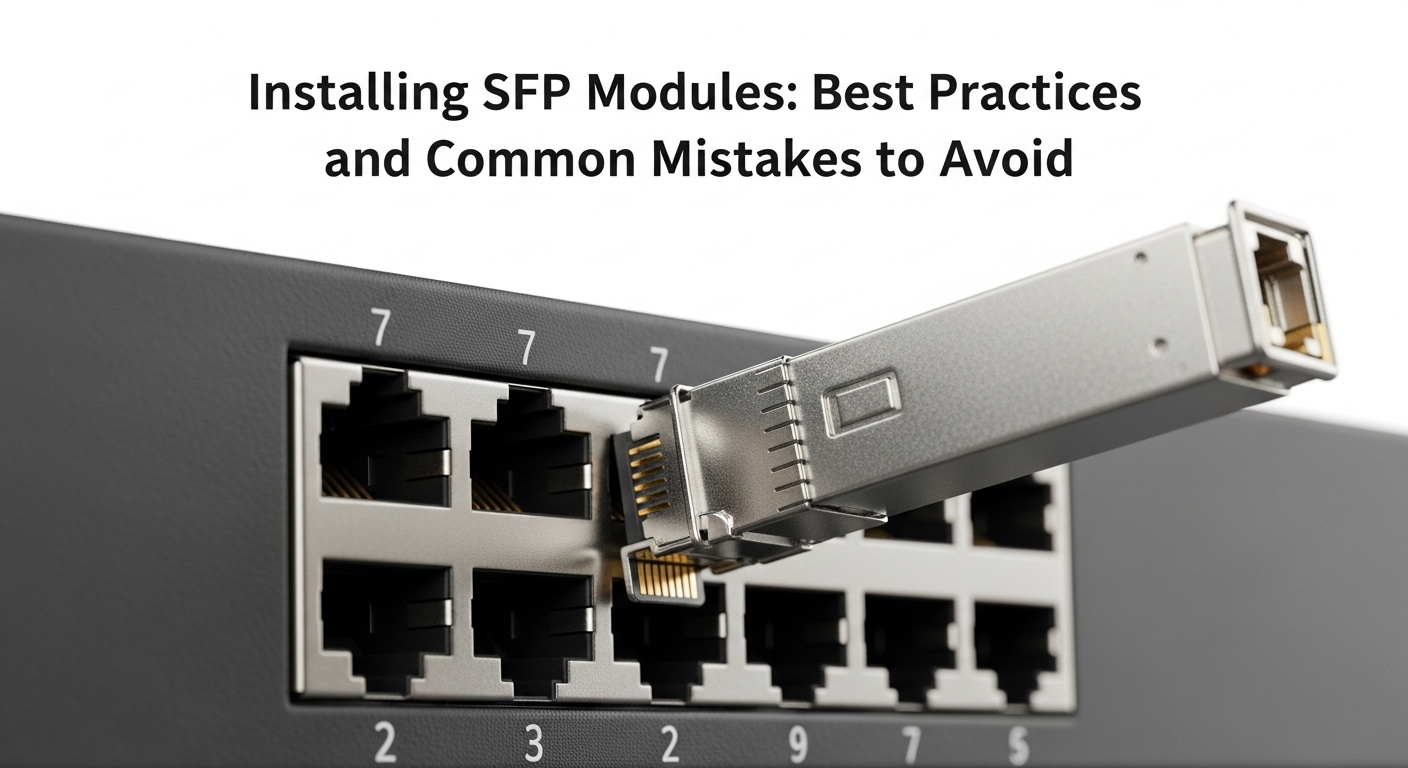
AI accelerators push short-reach bandwidth to extremes, and link stability matters more than peak theoretical throughput. In leaf-spine designs, optics often run at 25G, 50G, or 100G per lane, but the practical constraints are thermal, power, cable management, and switch qualification. DAC (Direct Attach Copper) typically wins on cost and simplicity for very short distances; AOC (Active Optical Cable) can win when you need cleaner signal integrity at slightly longer runs without deploying discrete optics.
IEEE 802.3 specifies the physical layer behavior for Ethernet links, but the real-world user experience is driven by vendor transceiver requirements, DOM handling, and host switch compatibility. For example, many switches expect specific transceiver management via I2C, and some platforms are selective about third-party modules. That is where DAC vs AOC becomes a deployment engineering problem, not just a procurement choice.
Key specs to compare DAC vs AOC for 25G to 400G fabrics
Before you compare prices, compare what the link will actually do in your rack: wavelength or electrical bandwidth, reach budget, connector type, power draw, and temperature envelope. DAC and AOC are often marketed as “short reach,” but the reach categories vary by data rate and vendor implementation.
| Spec | DAC (Direct Attach Copper) | AOC (Active Optical Cable) |
|---|---|---|
| Typical use case | In-rack and adjacent-rack links (short) | Short-to-mid rack spacing without discrete optics |
| Data rate examples | 25G, 50G, 100G per lane or bundled | 25G, 50G, 100G per lane or bundled |
| Reach (typical) | Often 1 m to 7 m depending on speed/quality | Often 10 m to 100 m depending on wavelength and class |
| Connector form factor | Usually SFP/SFP28/QSFP56/QSFP28-style direct-attach plugs | Usually QSFP/QSFP-DD-style active optical plugs |
| Optical interface | None (electrical) | Uses laser/VCSEL optics with standard fiber interface internally |
| Power | Often lower than AOC; depends on vendor and rate | Often higher than DAC; depends on optical module design |
| Operating temperature | Commonly industrial ranges; verify transceiver rating | Commonly industrial ranges; verify transceiver rating |
| DOM / diagnostics | Varies; many support I2C DOM | Varies; many support I2C DOM |
| Serviceability | Cable is passive; replace entire link | Cable is active; replace entire link |
For Ethernet PHY expectations, anchor your qualification to the relevant IEEE 802.3 clauses for the specific speeds and link types. For transceiver management and electrical/optical interface behavior, use vendor datasheets and platform transceiver compatibility matrices. References: IEEE 802.3 Ethernet standard and [Source: Cisco SFP and QSFP transceiver documentation], [Source: IEEE 802.3 Ethernet physical layer specifications].
Pro Tip: In AI clusters, the “works on the bench” transceiver can still fail under full thermal load. Always validate link error counters and DOM telemetry across the same ambient range you expect in the row (for example, hot-aisle inlet temperature targets), not just during a short installation test window.
Deployment scenario: GPU leaf-spine build with mixed link lengths
Consider a 3-tier leaf-spine topology supporting a GPU training cluster: 48-port 100G ToR switches connect to 2 spine layers. In one build, the leaf-to-spine spacing is 5 m, and the top-of-rack to adjacent device patching is 1 m to 2 m. The team uses DAC for in-rack connections up to 2 m to reduce inventory complexity and keep power down, while using AOC for the 5 m segments to avoid marginal high-frequency copper performance at longer runs.
Operationally, you schedule burn-in tests for each transceiver batch: 24 hours with continuous traffic while monitoring interface CRC errors, link flaps, and optical power if DOM is available. For failure triage, you swap transceivers across the same port pair and compare DOM readings; the goal is to isolate whether the issue is cable-related, port-related, or switch firmware related. This is where AOC can simplify troubleshooting compared to discrete optics, because the active electronics are integrated into one replaceable assembly.
DAC vs AOC: practical tradeoffs that affect uptime, power, and cost
DAC is fundamentally simpler: no optical conversion, no laser safety considerations, and typically less power per link than active optics. However, copper signal quality degrades with length and bend/handling, and higher data rates can reduce the maximum reliable reach. AOC adds optical conversion and active circuitry inside the cable, which can improve reach and resilience to longer runs, but increases power and introduces laser diagnostics as a new operational axis.
Performance and signal integrity considerations
DAC performance depends on the electrical channel design: connector quality, impedance control, shielding, and how the cable is routed. AOC performance depends on the optical budget: internal laser output, receiver sensitivity, and how aging affects optical power. In both cases, you must confirm that the module reaches the switch’s supported compliance level for that port and speed.
Power and thermal impact in dense AI rows
In dense GPU racks, tens of watts per link can matter at scale. Even when AOC costs more upfront, you still need to forecast its total cost of ownership: power draw over a 3 to 5 year lifecycle, cooling overhead, and replacement frequency. Measure actual consumption if you can; otherwise, use vendor power specs and compute worst-case scenarios for inlet temperatures and fan speed modes.
Compatibility and optics management
Switch vendors may require specific transceiver IDs, firmware compatibility, and DOM behavior. DAC vs AOC both can be impacted by these constraints, but AOC sometimes adds additional DOM fields tied to optical power and laser bias. If your platform is strict, you may reduce risk by standardizing on one vendor family across the fabric.
Selection checklist for DAC vs AOC in real AI data center procurement
Use this ordered checklist during design and qualification. The goal is to prevent last-minute swaps that trigger downtime or a rework of cable management and labeling.
- Distance vs reach budget: determine the physical path length including slack and bend radius; match to the module’s rated reach at your data rate.
- Switch compatibility: verify the exact switch model and port type supports the transceiver family; consult the compatibility matrix if available.
- DOM and diagnostics requirements: confirm required telemetry fields (for example, temperature, voltage, laser bias, optical power) integrate with your monitoring stack.
- Operating temperature and airflow: validate the transceiver rating against your hot-aisle inlet targets and expected thermal gradients.
- Power and cooling budget: estimate total link power; include fan speed impact and power supply efficiency assumptions.
- Vendor lock-in risk: assess whether third-party modules are accepted; if not, standardize early to reduce later procurement delays.
- Service and spares strategy: stock the exact part numbers and lengths; avoid mixing similar but non-identical variants across the fabric.
When DAC is the better default
- Runs are within the short reach envelope (often 1 m to 3 m at higher speeds, depending on module class).
- You want lower power and simpler physical handling.
- Your switch platform is sensitive to optics and you want fewer optical variables.
When AOC is the better choice
- Runs exceed the reliable copper reach or require cleaner signal integrity over longer cabling.
- You want a single integrated active cable rather than discrete optics plus patch cords.
- You can support DOM monitoring and accept higher power draw.
Common mistakes and troubleshooting tips for DAC vs AOC
Most incidents are avoidable with process discipline. Below are common failure modes observed during deployments, with root cause and mitigation steps.
Marginal reach causes intermittent CRC and link resets
Root cause: DAC channel loss or AOC optical budget is exceeded due to longer-than-planned routing, tight bends, or manufacturing variance in a specific batch. This shows up as CRC errors, link flaps, and occasional training failures.
Solution: re-measure the installed path length, loosen routing constraints, and replace with the next higher-rated length class or a different manufacturer. For AOC, compare DOM optical power readings between known-good and failing links.
DOM or transceiver management mismatch triggers alarms or port disable
Root cause: The switch firmware expects certain I2C behavior or transceiver identification fields. Some third-party modules report diagnostics differently, leading to “unsupported transceiver” events.
Solution: use vendor-qualified part numbers and ensure firmware compatibility. Validate alarms in a controlled lab using the same switch image and monitoring configuration.
Thermal stress accelerates failure during high-traffic periods
Root cause: The transceiver’s temperature rating is exceeded due to hot-aisle airflow short-circuiting, blocked intake, or high fan curve changes. Failures appear after hours of heavy traffic rather than at first boot.
Solution: confirm rack airflow paths, verify inlet temperature, and rerun traffic tests with telemetry logging. Replace modules that show abnormal temperature rise or DOM drift.
Mechanical handling damages cable shielding or bends
Root cause: Excessive cable bending at the QSFP exit, snagging during patch panel work, or repeated insertion cycles can degrade electrical contacts for DAC or stress internal fiber/optics for AOC.
Solution: enforce bend radius practices, use proper cable management rings, and standardize insertion procedures. If a port is suspect, swap the module first; if the problem follows the port, escalate to switch hardware diagnostics.
Cost and ROI: what changes when you scale to hundreds of links
DAC vs AOC cost differences are mostly about integrated electronics and optics. In typical enterprise and data center procurement, DAC assemblies are often cheaper per link than AOC for the same port type and target speed, but pricing swings by vendor, length, and certification. As a realistic planning range, many teams see DAC at roughly 20% to 60% lower unit cost than AOC for comparable data rates and “short reach” tiers, though actual quotes vary widely by OEM channel.
ROI is driven by total link lifecycle cost: power draw, failure rates, and downtime risk. If AOC consumes extra power per link, you can estimate annual energy impact using your measured rack power and local electricity pricing; also include cooling overhead. If DAC reduces failure risk due to simpler behavior in your specific switch ecosystem, its lower power and lower cost can dominate even if AOC has better reach margin.
When you calculate TCO, include spares and qualification time. OEM parts may cost more but reduce the probability of compatibility issues; third-party modules can cut unit cost but increase verification effort and lead-time risk. For standards-based Ethernet behavior, the PHY rules come from IEEE 802.3, but the operational acceptance comes from your switch vendor and your network management policies. References: [Source: IEEE 802.3], IEEE 802.3 working group resources and vendor transceiver datasheets for power and environmental ratings.
FAQ: DAC vs AOC buying questions engineers ask during AI rollouts
Which is more reliable for AI data center east-west traffic: DAC or AOC?
Reliability depends on reach margin, thermal environment, and switch compatibility. DAC often works extremely well within its short reach envelope, while AOC can be more forgiving when runs are longer. The best practice is to qualify both types with your exact switch model, firmware, and traffic profile before scaling.
Do I need DOM support for DAC vs AOC?
If your operations team relies on telemetry for proactive maintenance, DOM is strongly recommended. Many modern DAC and AOC assemblies support I2C diagnostics, but the exact fields and thresholds vary by vendor. Confirm that your monitoring system can parse the DOM output you will receive.
Can I mix DAC and AOC on the same switch ports?
In many deployments, yes, as long as the modules are compatible with the switch and match the configured speed and optics type. Mixing is usually safe when you standardize on the same transceiver family and length class strategy. Avoid mixing “similar” modules from different vendors without qualification.
What is the biggest cause of intermittent link drops?
The most common causes are insufficient reach budget, mechanical stress on the cable, and thermal conditions that push modules near their limits. For AOC, optical power drift can also contribute. Use error counters plus DOM telemetry to identify whether the issue follows the cable or the port.
Are AOC cables a substitute for discrete fiber optics?
They can be a practical substitute when you want integrated active electronics without managing separate transceivers and patch cords. However, you still need to verify that your switch supports the AOC type and that your optical budget matches the expected loss and connector count. For very long runs, discrete optics and fiber planning are usually more flexible.
How should I plan spares for DAC vs AOC?
Stock the exact part numbers and lengths that match your deployed topology. Keep a mix that covers your most common link distances and the highest-risk segments (for example, near maximum reach). Track failures by batch and vendor lot to refine future ordering.
DAC vs AOC is ultimately a reach, compatibility, and lifecycle-cost decision for AI data centers. If you want the fastest path to confident deployment, start with a qualification matrix for your switch models, then apply the checklist to lock in distances, DOM needs, and thermal constraints using the right part numbers.
Next, review optics compatibility and DOM monitoring to tighten your transceiver qualification workflow and reduce rollout risk.
Author bio: I deploy and validate high-speed Ethernet interconnects in GPU clusters, including transceiver qualification, DOM telemetry integration, and field troubleshooting under thermal load. I publish operator-focused guidance grounded in vendor datasheets, IEEE 802.3 behavior, and reproducible test procedures.
